Sep 21, 2023 | Advocacy, News
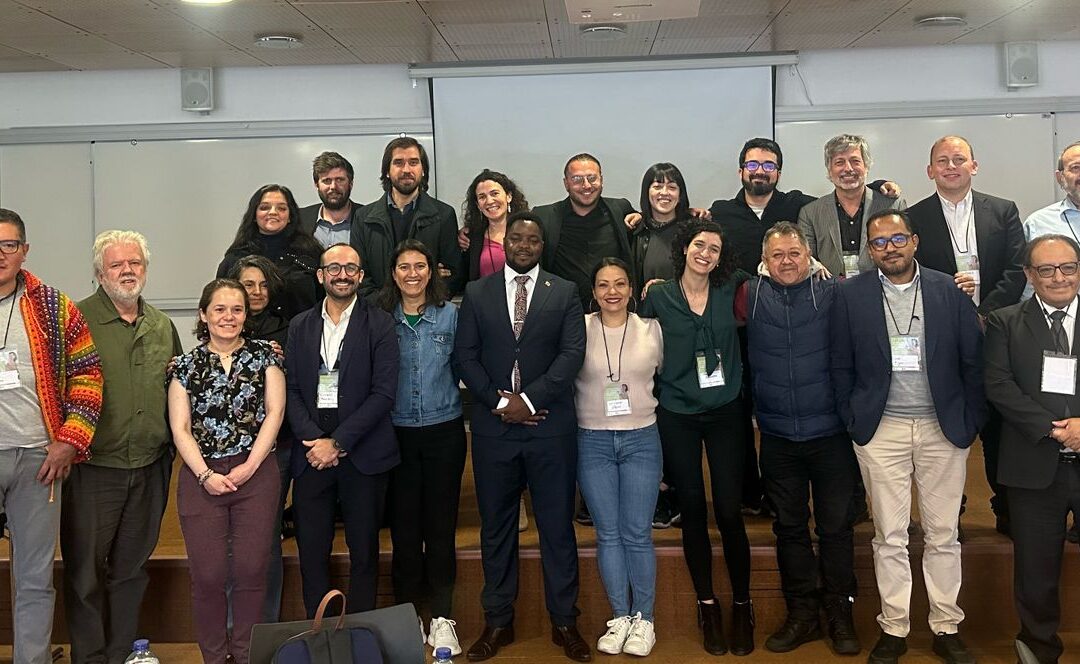
Between 18 and 20 September 2023, the International Commission of Jurists (ICJ), the Access to Justice Knowledge Hub and the Andes University’s Programme of Action for Equality and Social Inclusion (Programa de Acción por la Igualdad y la Inclusión Social -PAIIS) jointly held a regional workshop in Bogotá, Colombia, on the discriminatory, disproportionate and often arbitrary use of criminal justice systems against marginalized individuals and groups in Latin America. The event brought together approximately 30 members of civil society organizations, justice actors, judges and representatives of government institutions. Participants came from a range of Latin American countries, including Argentina, Chile, Colombia, Ecuador, Mexico, Paraguay, and Peru.
The workshop centred around the ICJ’s “8 March Principles for a Human Rights-Based Approach to Criminal Law Proscribing Conduct Associated with Sex, Reproduction, Drug Use, HIV, Homelessness and Poverty” (8 March Principles) as well as the UN Special Rapporteur on the rights of persons with disabilities’ “International Principles and Guidelines on Access to Justice for Persons with Disabilities”. Participants agreed that the alarming worldwide trend of over-criminalization was evident in Latin America too. This trend hinders the advancement of human rights, especially the rights of marginalized individuals and groups, such as LGBTI+ persons, people living with HIV, women with disabilities and women living in poverty.
In his keynote presentation, ICJ Commissioner Rodrigo Uprimny discussed “the inevitability of criminal law”, describing it as “a bitter necessity for social coexistence”. Certain conduct, he argued, such as acts constituting human rights abuses, must inevitably be criminalized by States. Against this background, Uprimny also noted that there is tendency towards “penal populism” in Latin America, often resulting in the disproportionate and discriminatory use of criminal law in various contexts, such as social protest, drug use and abortion. Commenting on the importance of the 8 March Principles in Latin America, he therefore said:
“Reality shows that the conduct addressed by the Principles is precisely the conduct where the discriminatory impact of criminal law tends to be very strong (…) on all grounds of discrimination: gender, race, disability, poverty, etc. (…). The Principles call for caution against the tendency toward over-criminalization. (…). overcriminalization is not only a matter of authoritarian right-wing governments in Latin America. In the human rights world, there is a movement towards retributivism. (…) [The use of criminal law] may sometimes be justified, but sometimes it can have perverse effects.”
The participants reflected on common predicaments and barriers that criminal justice systems impose against marginalized groups and individuals in Latin America, including in relation to the disproportionate impact of criminal law on women, homeless persons, persons living with HIV, people who use drugs and persons with disabilities.
A central element of the discussion was that human rights violations as a result of criminal proceedings involve the failure of a range of actors — including judges, prosecutors, police officers and other justice actors, but also of psychiatrists and social services — to understand and apply international human rights standards. In this regard, participants highlighted, inter alia, the lack of knowledge and application of the Convention on the Rights of Persons with Disabilities and of the jurisprudence of the UN Committee on the Rights of Persons with Disabilities in relation to access to justice for persons with disabilities. As a result, persons with disabilities in Latin America, and particularly those with psychosocial disabilities, face serious obstacles in exercising their right to legal capacity in the context of criminal proceedings.
Participants committed to a common agenda for joint advocacy, including through the provision of workshops to justice actors, such as judges, in Latin America. In particular, more in-depth knowledge of international human rights law and standards in the criminal justice context, as well as disability rights, is needed.
Contacts:
Rocío Quintero M, ICJ Legal Adviser for the Latin America Programme, e: rocio.quintero@icj.org
Timothy Fish Hodgson, ICJ Senior Legal Adviser, Economic, Social and Cultural Rights, e: timothy.hodgson@icj.org

Sep 18, 2023
Del 11 al 15 de septiembre de 2023, la Comisión Internacional de Juristas (CIJ) celebró tres seminarios sobre la rendición de cuentas por muertes ilegítimas y torturas. El primero fue realizado para víctimas y representantes de las víctimas (11 de septiembre), el segundo para jueces (12 y 13 de septiembre) y el último fue para fiscales e investigadores (14 y 15 de septiembre). Los seminarios tuvieron lugar en Bogotá, Colombia y resaltaron la importancia de garantizar el cumplimiento de las normas internacionales para abordar la impunidad.
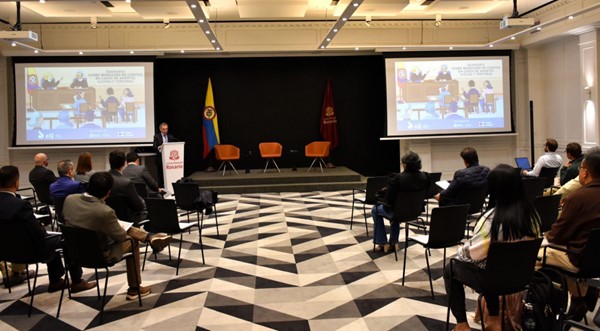
Los talleres fueron inaugurados por el secretario general de la CIJ, Santiago Cantón, quien destacó la importancia de la independencia judicial para mantener la democracia que hoy existe y la que se está perdiendo, especialmente en algunos países latinoamericanos.
Los seminarios tenían como objetivo capacitar a las y los participantes sobre las normas internacionales de derechos humanos que se aplican a las investigaciones penales en casos de muertes ilegítimas y tortura, con miras a garantizar que se respeten los derechos de las víctimas y otros participantes en los procesos penales.
Los seminarios abordaron estándares de derechos humanos a nivel internacional e interamericano. María Clara Galvis, profesora de la Facultad de Derecho de la Universidad Externado, destacó la jurisprudencia de la Corte Interamericana de Derechos Humanos en materia de investigaciones penales. Además, mencionó que la Corte Interamericana ha desarrollado estándares para las investigaciones y juicios penales a partir de las violaciones de derechos humanos encontradas en los casos que la Corte ha decidido.
Los casos que han llegado a la Corte [Interamericana de Derecho Humanos] de Colombia o México sobre falta de investigación con perspectiva de género, le han permitido a la Corte desarrollar estándares y decirles a las autoridades investigativas del continente cuáles son los pasos que deben seguir, como, por ejemplo, no tomar los testimonios de las víctimas (de tortura) más de una vez”, explicó Galvis.
Los seminarios también abordaron la importancia del aspecto forense en las investigaciones y de garantizar que los familiares de las víctimas de muertes ilícitas y torturas participen en las pruebas forenses que se realicen. Pablo Gallo, asesor del Equipo Argentino de Antropología Forense, destacó la importancia de la participación de la sociedad civil, familiares y víctimas en los procesos judiciales y de investigación:
La sociedad civil y los familiares [de las víctimas] han pasado por distintas etapas, por distintos tipos de violaciones en sus derechos y tienen la experiencia para poder monitorear, controlar y ser, de alguna manera, agentes del control de calidad de las investigaciones que se hacen”, señaló el asesor argentino de la EAAAF.
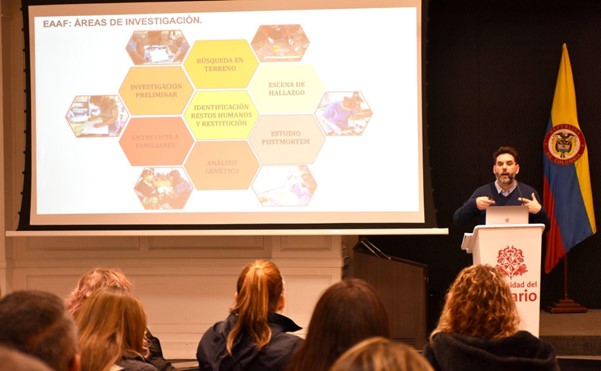
Las sesiones sobre el Protocolo de Minnesota y el Protocolo de Estambul (protocolos que brindan orientación práctica sobre la realización de investigaciones sobre muertes ilegítimas y torturas y que son fundamentales en la lucha contra la impunidad) fueron centrales en los seminarios. Luciano Hazán, coordinador del Programa contra la Violencia Institucional de la Defensoría General de la República Argentina, afirmó:
Estas herramientas son muy fuertes, porque de alguna forma le dan un espacio que hasta hace unos años no tenían los investigadores forenses. Si se hace un trabajo forense serio, se pueden romper las barreras de impunidad. Una autopsia hecha oportunamente y de manera transparente puede traer información muy valiosa en términos de la responsabilidad o de lo que ocurrió (…) Tenemos estos manuales que recomiendan iniciar las investigaciones tempranamente, documentar los hechos tempranamente para conocer a los posibles responsables y darle información a los familiares de las víctimas sobre lo que ocurrió”.
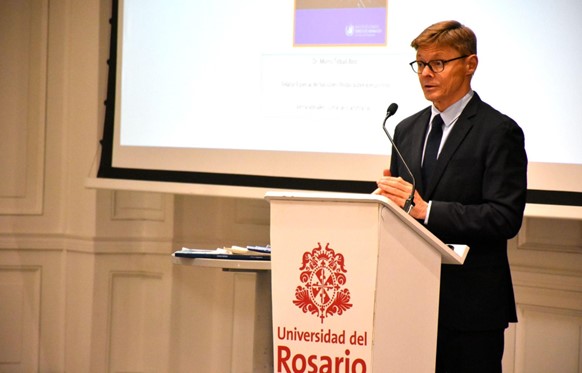
Morris Tidball-Binz, Relator Especial de la ONU sobre ejecuciones extrajudiciales, sumarias o arbitrarias, habló sobre la importancia del Protocolo de Minnesota en la investigación de muertes potencialmente ilícitas para tener resultados confiables en las investigaciones y asegurar verdad, justicia y reparación a las víctimas. El Relator de la ONU también instó a los Estados a comprometerse a cumplir con sus obligaciones internacionales bajo el derecho internacional de los derechos humanos, el derecho internacional humanitario y el derecho penal internacional.
Para hacer efectiva la prohibición absoluta y universal de toda muerte arbitraria se debe asegurar, en todo caso, que cuando sucede una de estas muertes sea investigada fehacientemente y de manera confiable, pronta, expeditiva, con debida diligencia y con la trasparencia que exige el Protocolo. Que los Estados cumplan con ello es fundamental”, concluyó Tidball-Binz.
Finalmente, los seminarios también resaltaron las barreras de acceso a la justicia para personas pertenecientes a grupos históricamente discriminados, como las personas con discapacidad. Al respecto, Diana Sheinbaum Lerner, socia fundadora y Coordinadora del Programa de Discapacidad y Justicia de Documenta, explicó que las principales barreras que enfrentan las personas con discapacidad están relacionadas con los estereotipos de discapacidad, que asumen que las personas con discapacidad carecen de la capacidad de testificar y plenamente participar en procesos penales.
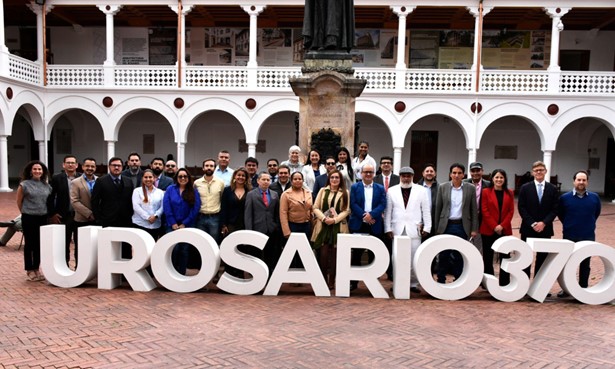
Los seminarios se realizaron con el apoyo de la Facultad de Derecho de la Universidad del Rosario y el Ministerio de Relaciones Exteriores de Finlandia.
- Obstáculos que enfrentan las víctimas de violaciones de derechos humanos cuando buscan justicia. Disponible aquí.
- Falta de voluntad investigativa, dilaciones y corrupción como obstáculos en el acceso a la justicia. Disponible aquí.
- Herramientas necesarias para llevar a cabo investigaciones y enjuiciamientos rápidos y eficaces. Disponible aquí.
- Medidas para proteger a las víctimas de violaciones a los derechos humano. Disponible aquí.
- Rendición de cuentas a nivel internacional en casos de violaciones a los derechos humanos. Disponible aquí.
- Rol de la comunidad jurídica y organizaciones civiles en casos de violaciones a los DDHH. Disponible aquí.
- Entrevista al Relator Especial sobre las ejecuciones extrajudiciales, sumarias o arbitrarias. Disponible aquí.

Sep 18, 2023
From 11 to 15 September 2023, the International Commission of Jurists (ICJ) held three seminars on accountability for unlawful deaths and torture for victims and victim representatives (September 11), judges (September 12 and 13), and prosecutors and investigators (September 14 and 15) in Bogotá, Colombia. The seminars highlighted the importance of ensuring compliance with international standards in addressing impunity.
The workshops were inaugurated by the Secretary General of the ICJ, Santiago Canton, who highlighted the importance of judicial independence in maintaining the democracy that exists today and the democracy that is being lost, especially in some Latin American countries.
The seminars aimed to train participants on international human rights standards that apply to criminal investigations in cases involving unlawful deaths and torture, with a view to ensuring that the rights of victims and other participants in criminal proceedings are respected.
The seminars addressed human rights standards at the international and inter-American levels. María Clara Galvis, Professor in the Faculty of Law at Externado University, highlighted the Inter-American Court of Human Rights’ jurisprudence on criminal investigations. Professor Galvis mentioned that the Inter-American Court has developed standards for criminal investigations and trials based on the human rights violations found in the cases that the Court has decided.
The cases that have reached the [Inter-American Court of Human Rights] (…) regarding the lack of investigation with a gender perspective have allowed the Court to develop standards and tell the investigative authorities of the continent what steps they should take, such as, for example, not taking the testimonies of the victims [of torture] more than once,” Galvis explained.
The seminars also addressed the importance of forensic investigations and ensuring that the relatives and victims of unlawful deaths and torture participate in forensic examinations. Pablo Gallo, advisor to the Argentine Forensic Anthropology Team, highlighted the importance of the participation of civil society, relatives, and victims in judicial and investigation processes:
Civil society and the relatives [of the victims] have gone through different stages, different types of violations of their rights and have the experience to be able to monitor, control and be, in some way, agents of quality control of the investigations,” said the Argentine advisor to the EAAAF.
Sessions on the Minnesota Protocol and the Istanbul Protocol – protocols providing practical guidance on the conduct of investigations into unlawful deaths and torture and that are fundamental in the fight against impunity – were central to the seminars. Luciano Hazan, coordinator of the Program against Institutional Violence of the General Defender’s Office of Argentina, stated:
These tools are very strong because (…) if serious forensic work is done, the barriers to impunity can be broken. An autopsy done in a timely and transparent manner can provide very valuable information in terms of responsibility or what happened (…) We have these manuals that recommend starting investigations early, documenting the facts early to know the possible responsible parties, and giving information to the families of the victims about what happened.”
Morris Tidball-Binz, UN Special Rapporteur on extrajudicial, summary, or arbitrary executions, spoke about the importance of the Minnesota Protocol in the investigation of potentially unlawful deaths to have reliable results in investigations and ensure truth, justice, and reparation for victims. The UN Rapporteur also urged States to commit to comply with their international obligations under international human rights law, international humanitarian law, and international criminal law.
To make effective the absolute and universal prohibition of all arbitrary deaths, it must be ensured, in all cases, that when one of these deaths occurs, it is investigated reliably, promptly, expeditiously, with due diligence and with the transparency required by law. That States comply with this is essential,” concluded Tidball-Binz.
Finally, the seminars also highlighted the barriers to access to justice for people belonging to historically discriminated groups, such as people with disabilities. In this regard, Diana Sheinbaum Lerner, founding partner and Coordinator of the Disability and Justice Program at Documenta, explained that the main barriers faced by people with disabilities are related to disability stereotypes, which assume that people with disabilities lack the capacity to testify and fully participate in criminal proceedings.
The seminars were carried out with the support of the Faculty of Law of the Universidad del Rosario and the Ministry of Foreign Affairs of Finland.

Sep 4, 2023
The International Commission of Jurists (ICJ) and the Due Process of Law Foundation (DPLF) submitted written legal comments to the Inter-American Court of Human Rights (IACHR) in relation to the Advisory Opinion requested by Mexico on “the activities of private companies engaged in the firearms industry and their effects in human rights”.
In their submission, the ICJ and DPLF set out some main tenets of international law and jurisprudence as developed by Inter-American human rights Court and Commission and the UN human rights treaty bodies.
Jul 12, 2023
everal civil society organizations, members of theObservatory of International Organizations on Guatemala, deeply regretted that the State of Guatemala has not accepted 81% of the recommendations aimed at guaranteeing judicial independence, resuming the fight against corruption and impunity, strengthen the justice system and stop the criminal and spurious persecution against justice operators, journalists, and human rights defenders,received during the Universal Periodic Review (UPR).