
A holistic TJ process should ensure that reparative social and economic justice and criminal prosecutions work together to deliver comprehensive justice for victims.
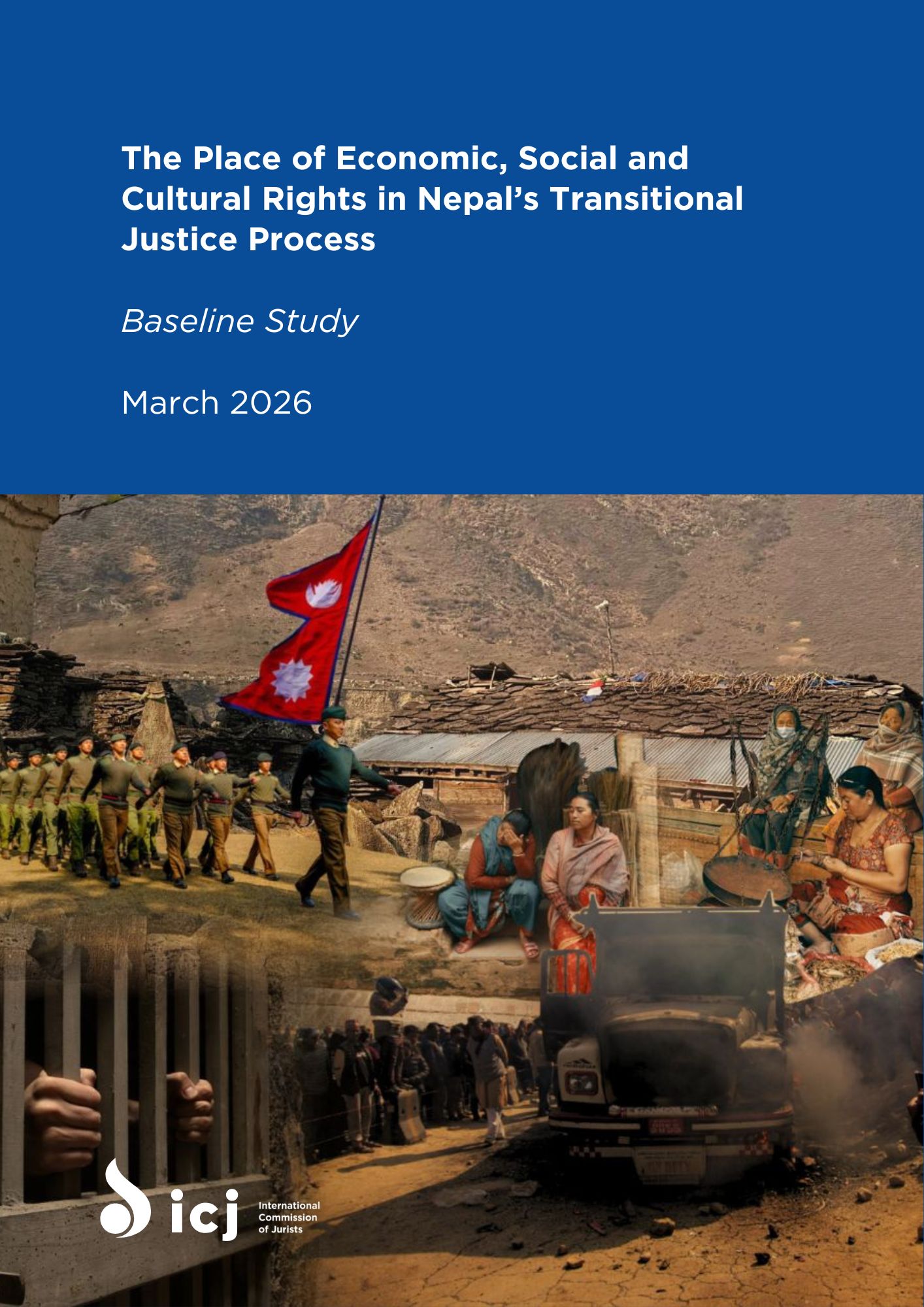
A baseline study by International Commission of Jurists titled The Place Of Economic, Social And Cultural Rights In Nepal’s Transitional Justice Process studies the major ESCR violations committed during the armed conflict and assess their implications for transitional justice, accountability, and guarantees of non-recurrence in the post-conflict context.
This study draws on a literature review and nine focus group discussions (FGDs), preceded by a pre-study consultation with victim group leaders in Kathmandu (October 2024) to identify participants and key ESCR violations. FGDs, conducted across Banke, Bardiya, Morang, Sunsari, and displaced persons from Rolpa now in Kathmandu, explored ESCR violations, transitional justice experiences, government responses, and reparations. Findings were validated through follow-up consultations in December 2024, and supplemented by a review of relevant policy documents and national and international legal frameworks.
Further the report make recommendations on how a reparations programme in Nepal may fully consider, cater for and address ESCR violations in the transitional justice process that is currently underway that includes
- Legislative Authorities: Reform and Align Laws
Amend the TRC Act to recognize ESCR violations as serious crimes and strengthen accountability and reparations provisions, while revising labor and housing laws to address conflict-related harms and promote inclusion of victims.
- Executive Authorities: Develop and Implement Comprehensive Policies
Adopt a holistic reparations policy that goes beyond compensation to include livelihoods, housing, education, healthcare, and social security, and ensure alignment with international standards and ESCR obligations.
- Transitional Justice Bodies: Ensure Inclusive and Effective Processes
Build institutional capacity on ESCRs, ensure proper victim identification and needs assessments, and design reparations programs that address both individual and community-level harms with active victim participation.
- Local and Provincial Governments: Deliver Essential Services and Social Support
Ensure equitable access to education, healthcare, housing, and cultural rights, while supporting livelihoods, social protection, and community-based healing initiatives for conflict-affected populations.
- Judicial Authorities: Strengthen Oversight and Accountability
Ensure enforcement of court decisions, monitor state compliance with legal obligations, and support alignment of transitional justice processes with constitutional and international human rights standards.
Background
Nepal’s decade-long armed conflict ended in 2006, leaving behind thousands of unresolved cases of gross human rights violations and abuses and serious violations of international humanitarian law committed by both parties to the conflict: the Government, including the then Royal Nepal Army; and the Communist Party of Nepal (Maoist). These abuses include unlawful killings; torture, including rape and sexual violence, and other ill-treatment; and enforced disappearances.
In 2015, the Supreme Court determined that an earlier transitional justice law was unconstitutional and violated Nepal’s international human rights obligations, and after years of delay, in August 2024, Nepal’s parliament adopted a law that victims’ groups broadly accepted as a viable foundation for advancing the long-postponed transitional justice process to address widespread human rights violations committed during the armed conflict.
Download
The Baseline Study on “The Place of Economic, Social and Cultural Rights in Nepal’s Transitional Justice Process” is now available for download here.