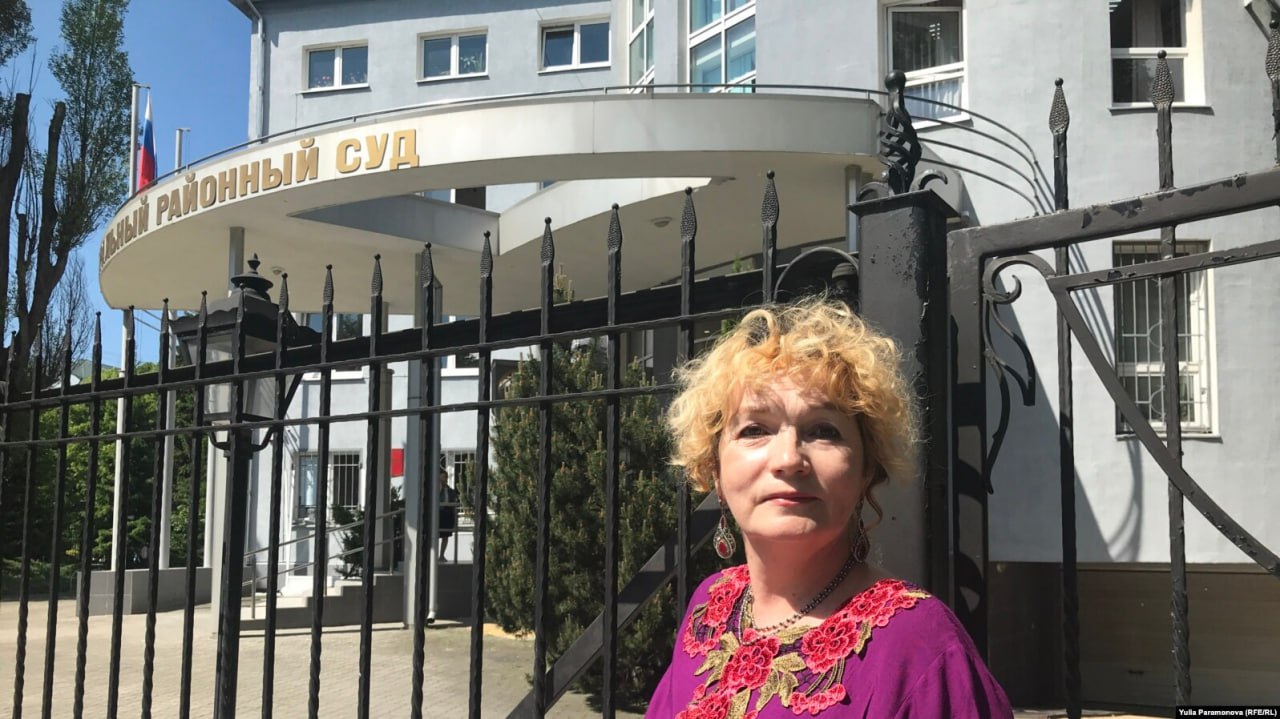
The International Commission of Jurists (ICJ) condemns the decision by the Russian investigative authorities to charge Kaliningrad lawyer and human rights defender Maria Bontsler with “State treason”, which carries a sentence of up to 20 years of imprisonment.
The ICJ considers that Bontsler, who was previously charged with “confidential cooperation with a foreign State”, is being prosecuted for the exercise of her legitimate professional activities.
The ICJ calls on the Russian authorities to release Maria Bontsler immediately and drop all charges against her.
“The decision to charge Maria Bontsler with State treason, based on no new facts or circumstances, confirms the arbitrary nature of the prosecution. The authorities are retaliating against a lawyer for defending individuals in politically sensitive cases, and in doing so are sending a chilling message to the entire legal profession in Russia,” said Temur Shakirov, Director of the ICJ Europe and Central Asia Programme.
According to her lawyer, Ilya Sidorov, the requalification of the charges is not based on any new facts or circumstances discovered during the investigation, but solely on an assessment carried out by the Kaliningrad FSB department of Telegram correspondence allegedly found on Bontsler’s phone. The charge of State treason thus rests entirely on the same material that underpinned the original, less grave charge.
The ICJ also expresses its grave concern at reports that Maria Bontsler was subjected to ill-treatment, in violation of Russia and international law, at the time of her arrest in order to obtain access to her mobile phone. According to the lawyer, officers twisted Bontsler’s arms behind her back while she was handcuffed and wrenched her fingers, causing severe physical pain.
The ICJ further deplores the conditions of Maria Bontsler’s detention. Bontsler, who is 65 years old and suffers from chronic hypertension and multiple gastrointestinal conditions including duodenal ulcers, was denied essential medication for approximately one month, suffering a hypertensive crisis during a court hearing before the medication was provided. Reports indicate that she was deliberately left outside in the exercise yard during heavy rain, that her chronic conditions have not been formally diagnosed by prison medical staff, and that when she was hospitalized in July 2025 she was constantly handcuffed to her hospital bed. The denial of adequate medical care and subjecting a detainee to such conditions may constitute inhuman or degrading treatment contrary to Articles 7 and 10 ICCPR and denial of the right to health protected under article 12 of the International Covenant on Economic, Social and Cultural Rights.
“Particularly given Maria Bontsler’s severe chronic health conditions and the documented pattern of inadequate medical care and ill-treatment in detention, we have grave concerns regarding her health and well-being. It is inappropriate to keep Bontsler in pre-trial detention under such conditions, and all the more so in pursuit of charges that appear to be entirely without foundation,” Shakirov added.
The ICJ urges the Russian authorities to release Maria Bontsler immediately, drop the charges against her, conduct a prompt, thorough, and impartial investigation into the allegations of ill-treatment, and take measures to ensure that she and other lawyers in Russia can carry out their professional functions without intimidation, hindrance or reprisal.
The ICJ also recalls that the seizure of Bontsler’s electronic devices and confidential legal materials protected by attorney-client privilege at the time of her arrest violated the principle of confidentiality of lawyer-client communications, which is a necessary guarantee for the right to a fair trial protected by article 14 ICCPR. Under the UN Basic Principles, governments must recognize and respect that communications and consultations between lawyers and their clients “within their professional relationship are confidential” (Principle 22). Searches were also allegedly carried out at the homes of her colleagues, Roman Morozov and Ekaterina Selizarova, with electronic devices and legal documents seized, further compounding interference with the independence of the legal profession.
Background
Maria Bontsler is a prominent human rights lawyer based in Kaliningrad. In 1995, she founded and headed the Committee of Soldiers’ Mothers of the Kaliningrad Region, which defended the rights of conscripts, service members, and their families. Since the beginning of Russia’s full-scale military intervention in Ukraine in February 2022, Bontsler has been among the few lawyers in Kaliningrad willing to defend individuals charged in politically motivated cases, including critics of the war.
Bontsler has been held in pre-trial detention since 28 May 2025. She was initially charged under Article 275.1 of the Russian Criminal Code (“confidential cooperation with a foreign State”), which carries a penalty of three to eight years of imprisonment.
According to the Investigative Committee in Kaliningrad, she was accused of having handed over information about law enforcement officials of the Kaliningrad region, obtained in the course of her work as a lawyer. In March 2026, the charges were requalified to Article 275 (“State treason”), carrying a penalty of up to 20 years’ imprisonment. The proceedings have been conducted largely in secrecy, with court hearings on her detention held behind closed doors at the Prosecutor’s request on grounds of State secrecy. She had previously been subjected to an administrative fine for courtroom statements made in defence of her clients.
The criminal prosecution of a lawyer for activities connected to her professional functions is incompatible with international human rights law and standards. Under the UN Basic Principles on the Role of Lawyers, governments must ensure that lawyers “shall not suffer, or be threatened with, prosecution or administrative, economic or other sanctions for any action taken in accordance with recognized professional duties, standards and ethics” (Principle 16). The UN Basic Principles further provide that lawyers “shall not be identified with their clients or their clients’ causes as a result of discharging their functions” (Principle 18).
The UN Special Rapporteur on the situation of human rights in the Russian Federation condemned Bontsler’s arrest and arbitrary detention on 9 July 2025.
Article 275.1 of the Russian Criminal Code, introduced in recent years, criminalises “confidential cooperation” with foreign States intended to harm Russia’s security, with penalties ranging from three to eight years’ imprisonment. The terms of this provision are overbroad and vague, in contravention of the principle of legality, and facilitate its misuse against individuals involved in legitimate legal advocacy and human rights defence. Russian domestic law itself, including Article 6 of the Federal Law “On Advocate’s Activities and Advocacy in the Russian Federation” and Article 53 of the Russian Criminal Procedure Code, authorises lawyers to gather and utilise information relevant to the defence of their clients.
The ICJ issued a statement on 10 June 2025 condemning Bontsler’s arrest and calling for her immediate release.