Dec 3, 2015 | News
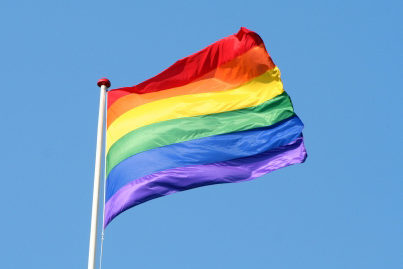
The Indian government should support a comprehensive law guaranteeing equal rights and non-discrimination to transgender persons, consistent with India’s international human rights obligations, the ICJ said today.
This law must be developed and passed after adequate consultation with the transgender community in India, the Geneva-based organization added.
“The transgender community in India has faced stigma, discrimination and violence for years,” said Sam Zarifi, ICJ’s Asia-Pacific Director. “It is time for the Indian Parliament to pass comprehensive anti-discrimination legislation as an essential first step towards guaranteeing the transgender community’s internationally recognized, and constitutionally protected, human rights.”
Earlier this year, the Rajya Sabha (Upper House of the Indian Parliament) passed the Rights of Transgender Persons Bill, 2014, a private member’s Bill, that is, a bill introduced by a Member of Parliament rather than the Government.
The Bill guaranteed a wide range of rights to transgender individuals, including the right to be free from discrimination, the right to life and personal liberty, the right to protection from abuse, violence and exploitation, as well as equality in educational opportunities, employment, social security, and health care.
The Lok Sabha (Lower house of the Indian Parliament) will discuss a revised version of this Bill in the current session. The Government’s Ministry of Social Justice and Empowerment is reportedly developing its own draft.
“Any transgender rights legislation must fully comply with India’s international human rights obligations,” Zarifi added. “An essential element of this is that the Indian government must ensure that the transgender community participates in, and is meaningfully consulted on, the new law’s provisions.”
India has ratified several international instruments, including the International Covenant on Civil and Political Rights, the International Covenant on Economic, Social and Cultural Rights and the Convention on the Elimination of all forms of Discrimination against Women. They prohibit discrimination and guarantee full equality for everyone, including transgender people.
Successive pronouncements by international bodies, including the UN, have affirmed that these rights apply to transgender persons.
The Yogyakarta Principles – which reflect the specific application of international human rights law in the context of sexual orientation and gender identity – recognize transgender people’s human rights, including the right to equality before the law, equal protection of the law and the principle of non-discrimination, as well as the right to self-defined sexual orientation and gender identity, the right to expression, to privacy, to health, to housing, to education, and the right to participate in policies affecting one’s welfare.
India’s transgender rights Bill should respect, protect and fulfill this range of rights. It should also ensure that the definition of who constitutes a transgender person, as well as the process of determining this, is consistent with international standards, the ICJ said.
In 2014, in the case of National Legal Services Authority v Union of India (NALSA), the Indian Supreme Court recognized transgender persons’ right to self-identification and to the legal recognition of their gender identity. However, a year after the Supreme Court’s judgment, its directions are yet to be effectively implemented, making the passage of a comprehensive bill on transgender persons’ human rights all the more crucial. At the same time, the legislative process culminating in the adoption of the legislation needs to be adequately consultative.
“A comprehensive transgender rights bill is long overdue in India,” Zarifi said. “It is crucial that the Indian government take advantage of the current political momentum to reaffirm the rights of transgender persons, and pass a strong and progressive law.”
Contact:
Sanhita Ambast, ICJ International Legal Adviser (Delhi), t: +91 9810962193; e: Sanhita.ambast(a)icj.org
Background
A report by India’s Ministry of Social Justice and Empowerment – Report of the Expert Committee on the Issues relating to Transgender Persons –has acknowledged the range and impact of discrimination faced by the transgender community in India.
It makes note of the stigma, discrimination and violence they face from their families, communities, and state institutions, including the police. It also highlights the difficulties faced by them in accessing services like housing and education.
In the NALSA case, the Supreme Court found that discrimination faced by the transgender community in India violated the rights to equality, non-discrimination, free speech and expression, and life in the Indian constitution. The Court gave specific directions to address this discrimination.
It also noted that the absence of “suitable legislation protecting the rights of the members of the transgender community” has resulted in their facing discrimination in various areas. A clarification petition, filed by the government, regarding this case is currently pending at the Supreme Court.
Following the Supreme Court’s 2013 NALSA judgment, several states have put in place progressive policies to address the discrimination faced by transgender groups.
However, the implementation of this judgment is far from adequate, and a lot more needs to be done.
A 2011 Report of the United Nations High Commissioner for Human Rights has recommended that states “Enact comprehensive anti-discrimination legislation that includes discrimination on grounds of sexual orientation and gender identity among prohibited grounds and recognizes intersecting forms of discrimination”.
It also asked states to “Facilitate legal recognition of the preferred gender of transgender persons”.
In its 2015 report, the United Nations High Commissioner for Human Rights recommended that anti-discrimination legislation should “include[s] sexual orientation and gender identity among prohibited grounds, and also protect[s] intersex persons from discrimination” and that “LGBT and intersex persons and organizations [should be] consulted with regard to legislation and policies that have an impact on their rights”.
Oct 6, 2015 | News
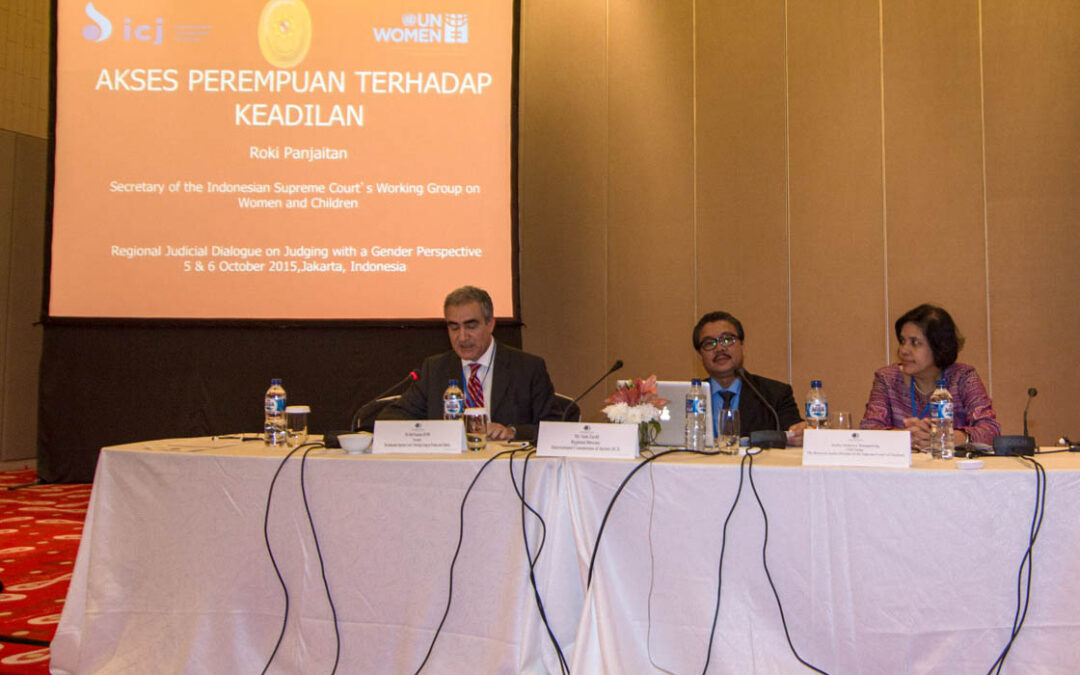
Judges and representatives of judicial training institutions from 9 countries across Southeast Asia gathered in Jakarta, Indonesia, to discuss how judicial decision-making can be further strengthened from a gender perspective.
A two-day event (5-6 October 2015), this judicial dialogue, entitled Regional Judicial Dialogue on Judging with a Gender Perspective, was organized by the ICJ, in collaboration with the Supreme Court of Indonesia and UN Women.
Participants discussed key topics such as initiatives of various courts in Southeast Asia that promote and protect women’s human rights, what are gender stereotypes and how gender stereotyping could be avoided in judicial decisions.
Speakers from the Supreme Court of Mexico were invited to speak about the initiative taken by the judiciary in the country to establish a protocol on judging with a gender perspective.
Senior judges from courts in Southeast Asian countries attended the event: Justice Dr. Takdir Rahmadi of the Supreme Court of Indonesia, Justice Suntariya Muanpawong, Chief Judge of the Research Division of the Supreme Court of Thailand; Justice Teresita De Castro of the Supreme Court of the Philippines, Justice Maria Natercia Gusmao Pereira of the Court of Appeal of Timor Leste; and Ms. Natalia Calero Sanches and Ms. Macarena Saez of the Mexican Supreme Court.
This dialogue is aimed at strengthening the participants’ ability to make decisions based on the rights to equality and freedom from discrimination.
UN Women also launched an online interactive platform that seeks to enhance dialogue among judges, prosecutors, court personnel, judicial training institutions, women’s machineries, scholars and other experts in the region.
The platform called, “Equality for All: community of change makers”, will enable users to access tools such as e-discussion forums, blogs and quick fact sheets that offer tailored learning solutions.
Jun 9, 2015 | News
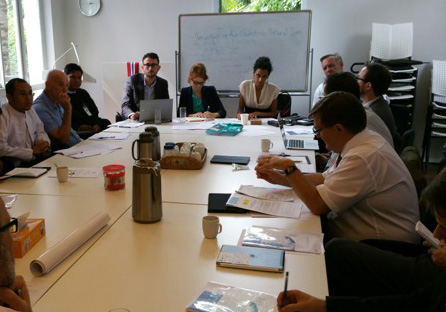
The ICJ today organized a diplomatic dialogue, in advance of the Universal Periodic Review (UPR), with ambassadors and high-level diplomatic representatives, to share the state of human rights in Myanmar.
May 13, 2015 | News
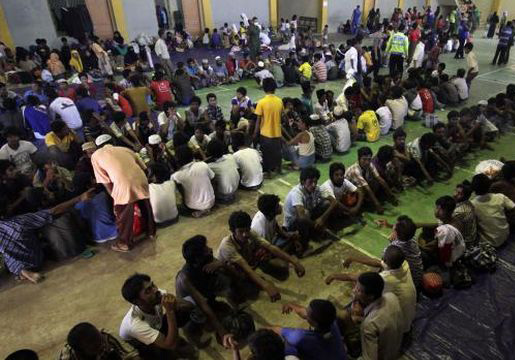
The ICJ today condemned the decisions of the governments of Indonesia and Malaysia to turn away and push back boats carrying hundreds of Bangladeshis and Rohingyas, including women and children, out to sea.
The ICJ emphasized that the increase in the number of Rohingya arrivals in Indonesia and Malaysia underscores the need to address the root causes that drive these people to set off on these perilous journeys, including the longstanding human rights abuses to which Rohingyas are subjected.
The decision by the two governments to return the boats to sea came after the arrival of about 2,000 people, mostly believed to be Rohingya and Bangladeshi nationals, onto the shores of Malaysia and Indonesia earlier this week.
“This should be a wake-up call to ASEAN that human rights is not an internal affair of one Member State,” said Sam Zarifi, ICJ’s Regional Director for Asia and the Pacific.
“Had there been action on the part of ASEAN early on to protect the rights of Rohingyas in Myanmar, this looming humanitarian crisis would not have happened,” he added.
The large majority of Rohingyas have fled Myanmar because of the discrimination and deadly violence they face there as members of a religious minority.
Many of them had no choice but to resort to callous smugglers.
However, a recent crackdown on human trafficking in both Thailand and Malaysia has spooked smugglers who, in order to avoid arrest, have abandoned boatloads adrift at sea instead of taking them ashore.
It is reported that approximately 6000 Rohingyas and Bangladeshi are now on boats adrift in the Andaman Sea in poor and overcrowded conditions.
“The decisions of the Indonesian and Malaysian governments constitute an abject failure of their duty to increase search-and-rescue efforts at sea and to provide humanitarian relief to those in need. Moreover, pushing these people back out to sea is a life-endangering practice and in no way does it provide a safe and effective solution,” said Zarifi.
Under international law, the act of pushing those boats back to the high seas constitutes a collective expulsion and may constitute a violation of the principle of non-refoulement.
Such a practice is also likely to lead to violations of the right to seek and enjoy asylum from persecution, of the right not be subjected to torture and other ill-treatment, and of the right to life.
On 29 May 2015, senior officials and representatives from at least 6 ASEAN member states will be in Thailand to have a “Special Meeting on Irregular Migration in the Indian Ocean”.
“ASEAN member states must ensure that any regional decision taken on this issue will be one that adequately and meaningfully protects the lives of people who embark on those desperate journeys across the Indian Ocean,” added Zarifi.
The ICJ urges ASEAN member states to stop the practice of returning boatloads of asylum-seekers and migrants to the sea and to immediately adopt effective regional measures in line with international human rights standards.
The ICJ also urges ASEAN to strengthen its regional human rights mechanism so that it would be able to effectively address violations of human rights in the region.
Contact:
Emerlynne Gil, ICJ Senior International Legal Adviser, in Bangkok, email: emerlynne.gil(a)icj.org or mobile: +66 84 092 3575
Picture: EPA/Zikri Maulana
Mar 3, 2015 | News
Myanmar’s parliament must reject or extensively revise a series of proposed laws that would entrench already widespread discrimination and risk fuelling further violence against religious minorities, Amnesty International and the ICJ said today.
A package of four laws described as aimed to “protect race and religion” – currently being debated in parliament – include provisions that are deeply discriminatory on religious and gender grounds.
They would force people to seek government approval to convert to a different religion or adopt a new religion and impose a series of discriminatory obligations on non-Buddhist men who marry Buddhist women.
“Myanmar’s parliament must reject these grossly discriminatory laws which should never have been tabled in the first place. They play into harmful stereotypes about women and minorities, in particular Muslims, which are often propagated by extremist nationalist groups,” said Richard Bennett, Amnesty International’s Asia-Pacific Director.
“If these drafts become law, they would not only give the state free rein to further discriminate against women and minorities, but could also ignite further ethnic violence,” he added.
The draft laws have been tabled at a time of a disturbing rise in ethnic and religious tensions, as well as ongoing systematic discrimination against women, in Myanmar.
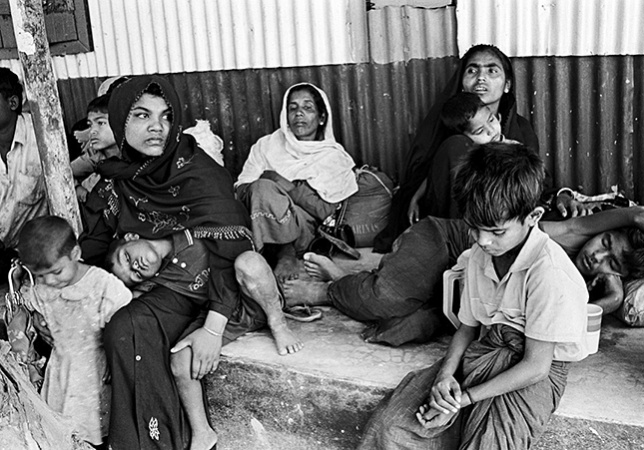
In this context, where minority groups – and in particular the Rohingya (photo) – face severe discrimination in law, policy and practice, the draft laws could be interpreted to target women and specific communities identified on a discriminatory basis.
“The passage of these laws would not only jeopardize the ability of ethnic and religious minorities in Myanmar to exercise their rights, it could be interpreted as signalling government acquiescence, or even assent, to discriminatory actions,” said Sam Zarifi, ICJ’s Asia Director. “The introduction of these discriminatory bills is distracting from the many serious political and economic issues facing Myanmar today.”
Of the four draft laws, two – the Religious Conversion Bill and the Buddhist Women’s Special Marriage Bill – are inherently flawed and should be rejected completely.
The remaining two – the Monogamy Bill and the Population Control Healthcare Bill – need serious revision and the inclusion of adequate safeguards against all forms of discrimination before being considered, let alone adopted.
These bills do not accord with international human rights law and standards, including Myanmar’s legal obligations as a state party to the UN Convention on the Elimination of all Forms of Discrimination against Women and the UN Convention on the Rights of the Child.
Amnesty International and the ICJ have conducted a legal analysis of the four laws and have found that:
- The Religious Conversion Bill stipulates that anyone who wants to convert to a different faith will have to apply through a state-governed body, in clear violation of the right to choose one’s own religion. It would establish local “Registration Boards”, made up of government officials and community members who would “approve” applications for conversion. It is unclear whether and how the bill applies to non-citizens, in particular the Rohingya minority, who are denied citizenship in Myanmar. Given the alarming rise of religious tensions in Myanmar, authorities could abuse this law and further harass minorities
- The Buddhist Women’s Special Marriage Bill explicitly and exclusively targets and regulates the marriage of Buddhist women with men from another religion. It blatantly discriminates on both religious and gender grounds, and feeds into widespread stereotypes that Buddhist women are “vulnerable” and that their non-Buddhist husbands will seek to forcibly convert them. The bill discriminates against Buddhist women as well as against non-Buddhist men who face significantly more burdens than Buddhist men should they marry a Buddhist woman.
- The Population Control Healthcare Bill – ostensibly aimed at improving living standards among poor communities – lacks human rights safeguards. The bill establishes a 36-month “birth spacing” interval for women between child births, though it is unclear whether or how women who violate the law would be punished. The lack of essential safeguards to protect women who have children more frequently potentially creates an environment that could lead to forced reproductive control methods, such as coerced contraception, forced sterilization or abortion.
- The Monogamy Bill introduces new provisions that could constitute arbitrary interference with one’s privacy and family – including by criminalizing extra-marital relations – instead of clarifying or consolidating existing marriage and family laws.
Contact
In Bangkok – Sam Zarifi, ICJ Regional Director for Asia and the Pacific, sam.zarifi(a)icj.org; m +66807819002
In London – Olof Blomqvist, Amnesty International Asia-Pacific Press Officer, olof.blomqvist(a)amnesty.org; t: +44 20 7413 5871, m +44 790 4397 956
An extensive legal analysis of the laws by Amnesty International and the ICJ can be found here:
Myanmar-Reject discriminatory race and religion draft laws-Advocacy-2015-ENG (full text in PDF)