Aug 24, 2017 | News
Today, the Indian Supreme Court delivered a landmark judgment declaring the right to privacy an intrinsic part of the right to life and liberty under Article 21 of India’s Constitution.
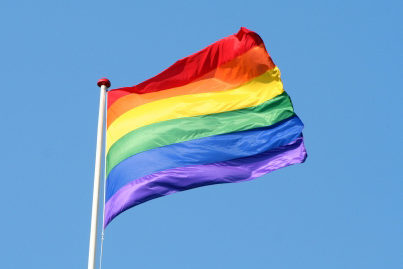
The ICJ welcomed a momentous and courageous judgment, where the Supreme Court took an expansive view of the right to privacy, and held that, at its core, privacy includes “the preservation of personal intimacies, the sanctity of family life, marriage, procreation, the home and sexual orientation…”
As such, this judgment is an important step towards scrapping laws criminalizing same-sex activity in the country, the ICJ said.
“The judgment is a testament to the inspiring work of human rights activists and lawyers in India, who have shown the potential of the law to affirm human rights and equality,” said Frederick Rawski, ICJ’s Asia Director.
“The ruling could have far-reaching implications for a number of cases -including with respect to the criminalization of consensual same-sex relations – where laws, policy and practices have been challenged on the basis that they violate the right to privacy,” he added.
The judgment clarified that the right to privacy is not spatially bound and exists beyond four walls as it “attaches to the person” and is not “lost or surrendered merely because the individual is in a public place.”
Significantly, in explaining the ambit of the right to privacy, the Supreme Court held that sexual orientation is “an essential component of identity” and “equal protection demands protection of the identity of every individual without discrimination.”
The Court also highlighted that laws criminalizing same-sex activity have a “chilling effect on the exercise of the right”, posing “a grave danger to the unhindered fulfillment of one’s sexual orientation, as an element of privacy and dignity.”
Section 377 of the Indian Penal Code criminalizes voluntary “carnal intercourse against the order of nature with any man, woman or animal” and prescribes a range of penalties including life imprisonment.
In Naz Foundation v. Govt. of NCT of Delhi, the Delhi High Court in 2009 read down the application of section 377, holding, among other things, that insofar as it criminalizes consensual sexual acts, it violates Articles 21 (right to life and liberty), 14 (equal protection of the law) and 15 of the Constitution (freedom from discrimination) of the Indian Constitution.
However, in Suresh Kumar Koushal in December 2013, the Supreme Court reversed the 2009 Delhi High Court ruling, effectively recriminalizing homosexuality.
The petitioners challenged the ruling in Koushal, and in February 2016, the Indian Supreme Court referred a “curative petition” to a five-judge bench of the Supreme Court for consideration.
In today’s judgment, the Supreme Court questioned the rationale in Koushal, and expressed disagreement with the manner in which Koushal dealt with the “privacy–dignity based claims of LGBT persons.”
It also found the reasoning in Koushal flawed and unsustainable for being discriminatory towards LGBT persons by calling them “a miniscule fraction of the country’s population” and making that the basis for denying their right to privacy.
However, the Court held that since a challenge to section 377 is pending before a larger bench, its constitutional validity would be decided in the appropriate proceedings.
“The Supreme Court’s judgment is indeed historic, but the real test of its impact will be whether the right to privacy it affirms is given effect in its true spirit in individual cases, so as to ensure that laws, policies and practices meet India’s obligations under the Constitution as well as international standards,” added Rawski.
Contact:
Frederick Rawski (Bangkok), ICJ Asia Pacific Regional Director, e: frederick.rawski(a)icj.org
Ajita Banerjie, ICJ Consultant in Delhi, t: +918447784157; e: ajita.banerjie(a)icj.org
India-Privacy & section 377-News-web stories-2017-ENG (full story in PDF)
Apr 27, 2017 | News
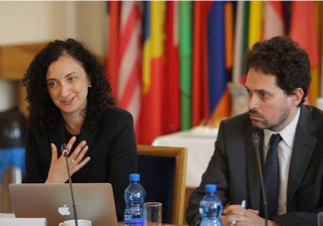
An expert meeting organized by the OSCE Office for Democratic Institutions and Human Rights (ODIHR) in Warsaw focused on the human rights-compliant implementation of legislation and policies to counter the foreign terrorist fighter phenomenon. The ICJ partnered in the event.
The two-day meeting (25-26 April) brought together 21 participants (11 men and 10 women) – including experts from international and national organizations, civil society, academia and OSCE staff – to reflect on experiences and human rights challenges in responses aimed at countering the threat posed by foreign terrorist fighters.
“Human rights compliance is essential both for the short and the long-term effectiveness of any measure to address the phenomenon,” said Omer Fisher, Head of the ODIHR Human Rights Department. “Jeopardizing human rights protection in the course of responding to the threat will not solve, but rather exacerbate the problem, because human rights violations provide fertile ground in which terrorism can thrive.”
Over the past few years, OSCE participating States have taken a wide range of administrative and criminal law measures to prevent the movement of terrorists or terrorist groups, to suppress the provision of support for them, and to counter the incitement and recruitment of foreign terrorist fighters.
“Broadly defined criminal offences and administrative measures based on vague definitions – including of terrorism and related offences – are open to abusive, arbitrary or discriminatory application,” said Róisín Pillay, Director of the Europe Programme of the ICJ.
“Legislation criminalizing acts such as travel for the purpose of terrorism must, therefore, be narrowly defined, clear and accessible, and provide for appropriate legal and procedural safeguards,” she added.
The expert meeting will inform a policy guidance document, which ODIHR will prepare in the coming months to assist OSCE participating States in the human rights-compliant and gender sensitive implementation of legislation and policies to address the phenomenon of foreign terrorist fighters.
Feb 27, 2017 | Multimedia items, News, Video clips
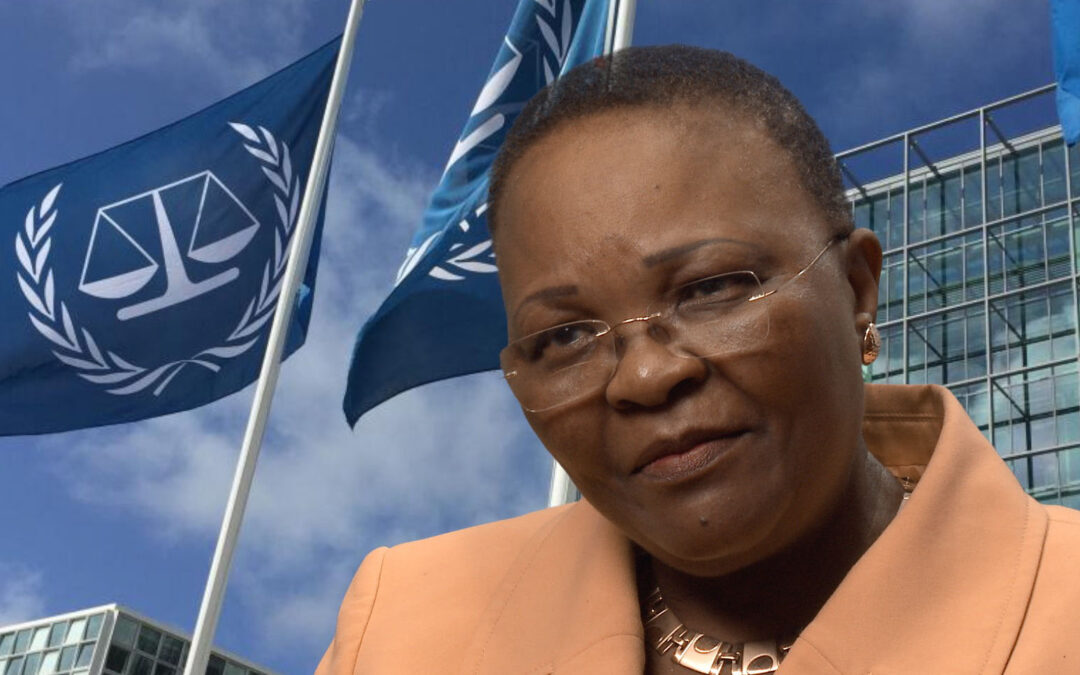
The ICJ continues it’s monthly profile series on women’s rights defenders with an interview with ICJ Commissioner and International Criminal Court Justice Sanji Monageng.
Justice Monageng told the ICJ that her interest in women’s rights began when she went through her own divorce and encountered the injustices that Botswana women suffered. This motivated her to pursue a career in law and align herself with the women’s rights movement that was establishing itself in southern Africa.
She became the Founder and Chief Executive of the Law Society in Botswana, a Magistrate in Botswana and High Court Judge in the Gambia and Swaziland. She was elected a Commissioner of the African Commission on Human and Peoples’ Rights and served as Chair of the Commission. She has been a Judge of the International Criminal Court since 2009 and served as First Vice-President between 2012-2015.
Justice Monageng commented that in Botswana, and elsewhere in southern Africa, women were at a serious disadvantage when it came to access to justice because of cultural, customary and religious restraints as well as economic inequality.
For example, up until only a few years ago women in Botswana were unable to inherit their parent’s property, on the basis of customary law, but a progressive judge was not afraid to challenge this and when this judgement was supported this led to a real change in the lives of women.
Sanji spoke of the importance of a strong civil rights movement and noted how instrumental this had been in Africa in leading the agenda to promote progressive rights protection for women. The African Commission on Human and Peoples’ Rights has a Special Rapporteur on Women and the Protocol to the African Charter on Human and Peoples Rights on the Rights of Women in Africa (the Maputo Protocol) has been hailed as the best in the world.
At the International Criminal Court (the ICC) there is a coalition of some 2,500 NGOs that work very closely with the court and have been instrumental in driving key aspects of the Court’s work including addressing sexual violence and ensuring victim and women’s participation. ‘Without civil society, without NGOs, and we have witnessed very credible civil society organisations’, Sanji says, ‘we cannot move.’
However, Justice Monageng commented that the ICC has not done very well in prosecuting sexual and gender based violence so far but acknowledges that the Court is still young and that progress is being made.
The new Chief Prosecutor, Fatou Bensouda, has undertaken a lot of endeavours to promote this aspect of the Court’s mandate such as creating a policy on sexual violence and gender issues, establishing a dedicated unit to address these crimes and appointing the highly qualified Brigid Inder as her Special Gender Advisor. Sanji commented that it is now evident in the cases she sees as a judge that a lot more attention is being paid to sexual violence.
Justice Monageng suggests that young women interested in defending women’s rights must internalize the importance of human rights. They should start associating themselves with women’s rights organizations even if only in a small way.
Defending women’s rights is difficult work and those that are interested in this must be prepared for criticism, and other unpleasantness but this work needs to be done. ‘The world is upside down and human rights are forgotten in most instances’, Sanji says, so she looks forward to girls joining the women’s rights movement.
Watch the interview:
The series of profiles introducing the work of ICJ Commissioners and Honorary Members on women’s rights was launched on 25 November 2016 to coincide with the International Day to Eliminate Violence against Women and the first day of the 16 Days of Activism Against Gender-Based Violence Campaign.

Feb 24, 2017 | News, Publications, Reports, Thematic reports
The Indian authorities must end discrimination against people based on sexual orientation and gender identity in the formal justice system, the ICJ said in a report released today.
The 60-paged report “Unnatural Offences”: Obstacles to Justice in India Based on Sexual Orientation and Gender Identity documents the challenges queer persons in India face while trying to access justice, starting from the impact of laws that criminalize people for their real or imputed sexual orientation and gender identity; to police harassment, violence and abuse; and to discrimination and other hurdles within the justice system.
Based on 150 interviews across nine cities in India, including with people who identified as lesbian, gay, bisexual, and transgender, the report uses the term “queer” to refer to any individual who identifies with a non-normative sexuality or gender identity.
It includes individuals who identify as lesbian, gay, bisexual, transgender, intersex and gender-queer, and also encompasses persons who may not fit into any of these identity categories.
“Criminalization, police violence, and the prejudiced attitudes of officials in the courts’ system have a profoundly detrimental impact on the ability and willingness of queer persons to resort to legal avenues to obtain justice,” said Sam Zarifi, ICJ’s Asia Director.
“The systemic discrimination and violence faced by queer persons in India, and the challenges they face accessing justice, are clearly contrary to India’s international human rights law obligations and the Indian Constitution,” he added.
The report also draws on responses from various government departments to ICJ’s requests under the Right to Information Act, both on the enforcement of the law against queer individuals and on gauging how legal entitlements have operated.
It describes how:
- Laws like Section 377 of the IPC and some other broad and vaguely formulated laws, such as those that criminalize sex work and begging, are used by the police to persecute people based on their real or imputed sexual orientation and gender identity, and inhibit queer persons from accessing justice.
- Even where the law purportedly provides legal entitlements and protections, queer persons continue to face a range of difficulties in accessing them.
- Police violence, abuse and harassment are one of the biggest barriers to queer persons’ access to the justice system in India.
- The challenges that lawyers who argue cases involving the human rights of queer persons combine with the biases of officials in the formal justice system compounding the difficulties queer persons face in obtaining justice.
“The inspiring work of activists and human rights lawyers in India has led to positive judicial decisions showing the potential of the law to affirm human rights and ensure justice for all persons, irrespective of their sexual orientation or gender identity,” Zarifi said.
“Indian authorities should build on this momentum and take immediate steps to end the discrimination and violence queer persons face,” he added.
The ICJ report makes a number of recommendations to Indian authorities, which include:
- Ensure that police officers promptly register and investigate any complaint regarding violence or any other criminal act filed by a queer person and/or on their behalf;
- Provide legal and sensitization training relating to sexual orientation and gender identity to lawyers and judges under the State and District Legal Services Authority along with outreach programmes to facilitate queer individuals’ access to the justice system;
- Repeal section 377 of the Indian Penal Code and vaguely worded criminal laws that invite discriminatory application, or substantially revise them to ensure there is no scope for abuse in their enforcement;
- Withdraw the Transgender Persons (Protection of Rights) Bill 2016 as currently drafted, engage in meaningful and substantial public consultation with members of the transgender community; and ensure that any process introduced for the legal recognition of gender identity is consistent with international human rights law and the NALSA.
Contact
Sam Zarifi (Bangkok), ICJ Asia Pacific Regional Director, t: +66 807819002; e: sam.zarifi(a)icj.org
Ajita Banerjie, ICJ Consultant in Delhi, t: +91 9920995526 ; e: ajita.banerjie@icj.org
Additional information
The Indian authorities have an obligation to respect, protect and fulfill the rights to equality before the law, equal protection of the law and freedom from discrimination; the rights to privacy, liberty and security of the person, including the right not to be subjected to arbitrary arrest and detention; the right to life, to freedom from torture and other ill-treatment; and the right to access justice and to an effective remedy, for all persons, including queer people, without discrimination as to their real or imputed sexual orientation and gender identity.
As the Supreme Court of India has reaffirmed, the Indian Constitution also guarantees several of these rights.
For example, in the seminal case of NALSA v UOI, the Court affirmed transgender persons’ right to their self-identified gender identity, based on the rights to equality, non-discrimination, freedom of expression and dignity.
India-SOGI report-Publications-Reports-Thematic report-2017-ENG (full report in PDF)

Jan 31, 2017 | Multimedia items, News, Video clips
The ICJ continues its series of profiles of ICJ’s women Commissioners with an interview with ICJ Vice-President Michèle Rivet.
Michèle Rivet was a judge for 30 years. Previously a Children’s Judge, she was appointed the first President of the Quebec Human Rights Tribunal when it was first established in 1990 and remained in that position until 2010.
In the interview she explains how the Human Rights Tribunal was constituted and how the Tribunal gave itself the mission to develop jurisprudence on equality and non-discrimination by referring to the fundamental international standards elaborated in the ICCPR and the ICESCR, by giving them the broadest interpretation possible.
A key goal of the Tribunal was to ensure that it was as accessible and as effective as possible, so that the people who came to the Tribunal could express themselves freely. Careful measures were taken to ensure that the Tribunal would work well and to ensure that anyone putting questions or issues to the Tribunal could know that the judges were listening to them and would provide an answer.
Michèle spoke of the advances that were achieved in the Tribunal. Some of the most significant decisions handed down by the Tribunal refer to cases of multi-faceted systemic discrimination. Justice Rivet explained that discrimination is about daily life: for example it may be a woman who is fired because she is pregnant, or it could be about a homosexual person who is refused accommodation.
A particular case referred to a large Canadian gas company, a big employer in Quebec, where women were never being appointed to certain posts, as there were a whole series of barriers at the point of recruitment, at the level of tests, and other conditions. After a series of profound reflections, evidence gathering and a long hearing the Tribunal reached the decision that the five women plaintiffs had been discriminated against.
However, the Tribunal also went further in its judgement by requesting that an equal access employment programme be implemented for the whole staff. The Court of Appeal upheld the decision on appeal and that decision marked a real victory for women in the recognition of their rights.
Michèle considers that the ICJ, with its mandate to promote the rule of law, acts as a laboratory of great ideas and carries out fundamental and far-reaching work to advance the rights for those who otherwise would not be able to speak.
Those who work in the field of human rights form a global village, said Michèle, and members have a duty to help women victims of violence: those forced to marry when they are 13 years old, those forced to keep their children because abortion is not an option and all those who are battered or disfigured by relatives because they dare to leave the home.
“This eventually led to the establishment of an international community of women and of all those who are fighting for equality, and for a society where everyone is fully integrated,” she said.
Justice Rivet considers herself privileged to work in the field of human rights as it is such rewarding work, and although it can be also be very challenging she says “we must all walk together on the long march towards equality.”
Watch the interview:
The series of profiles introducing the work of ICJ Commissioners and Honorary Members on women’s rights was launched on 25 November 2016 to coincide with the International Day to Eliminate Violence against Women and the first day of the 16 Days of Activism Against Gender-Based Violence Campaign.