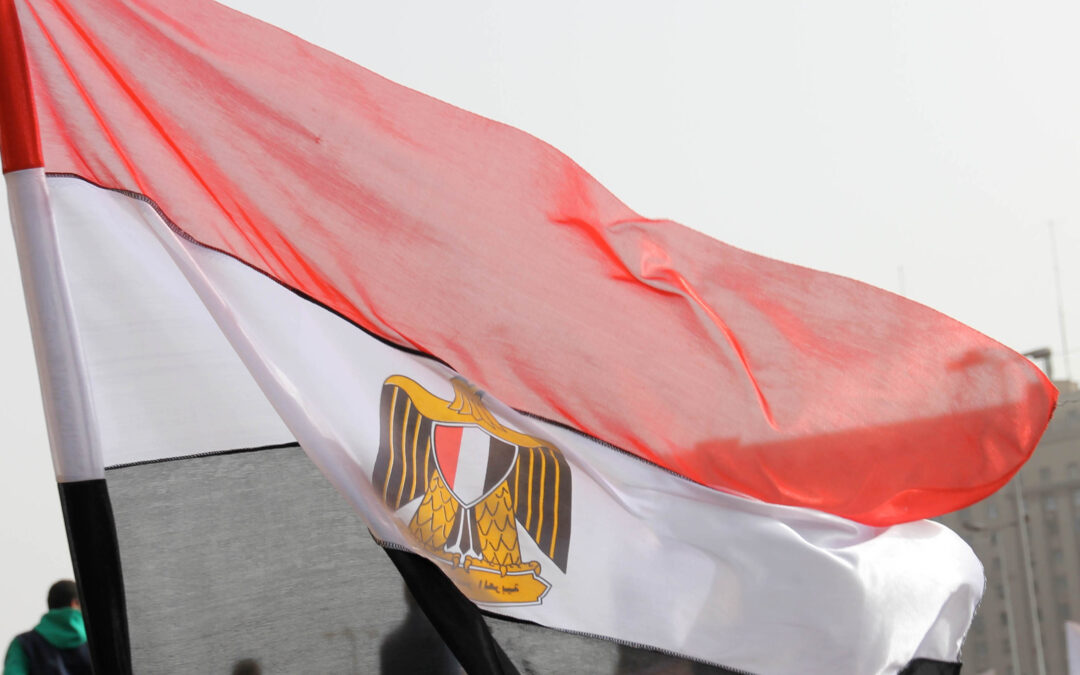
Egypt: ICJ condemns further mass death sentences
The ICJ strongly condemns two rulings by the Minya Criminal Court issued today. In the first ruling, the court convicted and sentenced to death 683 individuals.

The ICJ strongly condemns two rulings by the Minya Criminal Court issued today. In the first ruling, the court convicted and sentenced to death 683 individuals.
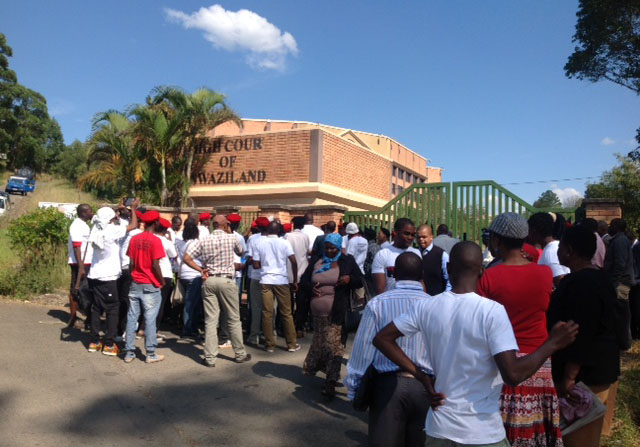
On Tuesday 22 April 2014 Judge Mpendulo Simelane began hearing evidence in the High Court in Swaziland in the trial of human rights lawyer Thulani Maseko and journalist Bheki Makhubu for contempt of court.
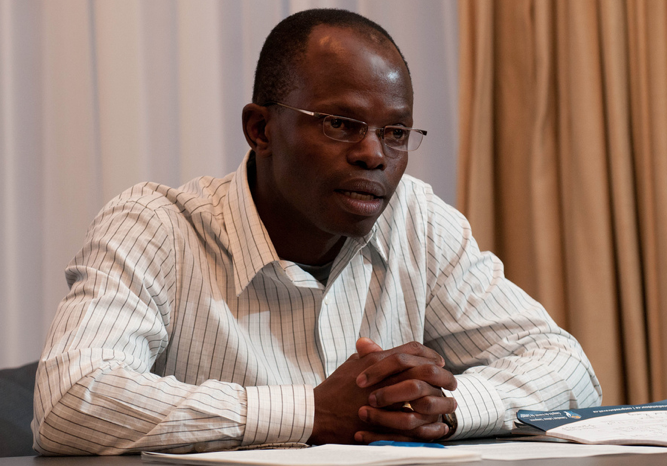
The ICJ is gravely concerned at reports that fresh arrest warrants have been issued for human rights lawyer Thulani Maseko and journalist Bheki Makhubu following efforts by the court to have them remanded in custody.

The ICJ today made a further submission to the UN Working Group on Arbitrary Detention.
The ICJ submission addressed a number of issues for a draft set of “Basic Principles and Guidelines” on the right of anyone deprived of liberty to challenge the lawfulness of his or her detention, and the right of victims of arbitrary or unlawful detention to an effective remedy.
The document supplements an earlier submission by ICJ, delivered in November 2013, and responds to a number of questions raised by members of the Working Group when the ICJ appeared before it in its November session. The new submission addresses the following issues:
The United Nations Working Group on Arbitrary Detention, which will next meet in Geneva 22 April to 1 May 2014, was requested by the Human Rights Council to prepare the draft “Principles and Guidelines” before the end of 2015. The Working Group is presently developing a first draft. A stakeholder consultation on the draft is contemplated for September 2014.
The new supplemental submission may be downloaded in PDF here: ICJ-Advocacy-WGADhabeas-2ndSubmission-03042014
The earlier submission may be downloaded here.

The indictment of General Pervez Musharraf on charges of treason marks a milestone for Pakistan’s judiciary, which must ensure his trial fully complies with international standards, the ICJ said in a briefing paper released today.
“General Musharraf’s treason trial is unprecedented in Pakistan’s political and legal history,” said Sam Zarifi, ICJ’s Asia Director. “This is an opportunity for Pakistan’s judiciary to demonstrate that no-one is above the law and that everyone accused of an offence has the right to a trial that is, and is seen to be, impartial, independent and expeditious.”
In its briefing paper, the ICJ highlights the legal framework and political context of the high treason trial against Pakistan’s former president and army general, Pervez Musharraf, in a Question and Answer format.
The Pakistan Government has established a special court to try General Musharraf for high treason on charges relating to his allegedly unconstitutional imposition of emergency rule and unlawful dismissal of judges on 3 November 2007. Under the law, high treason is punishable by death or life imprisonment.
On Monday, 31 March, Pervez Musharraf was formally indicted on five charges. He pleaded not guilty on all charges.
“This trial marks the first time a senior Pakistani military figure could be held to account for trampling on the rule of law and human rights in the country,” Zarifi said. “General Musharraf should be facing a proper trial for the many human rights violations that took place during his rule and under his command. But this case is at least a start.”
The lead-up to the trial has been marked by confusion, including erroneous reports last week suggesting that Justice Faisal Arab had quit the three-member special court, a move that could possibly have aborted the trial.
There have been many hurdles in the proceedings so far, including General Musharraf’s health, security threats, and concerns about whether he can be guaranteed a fair trial.
Many in Pakistan are celebrating the trial as a victory of rule of law, but others have expressed reservations about the selective nature of the proceedings: General Musharraf is only being tried for imposition of emergency rule on 3 November 2007, not for the military coup through which he usurped power in October 1999.
There are also serious allegations that widespread gross violations of human rights, including enforced disappearances, extrajudicial killings and torture, were carried out by the security forces while General Musharraf was the head of State and the military, yet no case has been instituted in relation to these gross violations of human rights thus far.
“Every effort must be taken to ensure that General Musharraf’s rights as an accused are protected and that the trial complies with Pakistani and international fair trial standards. If convicted of high treason he should be sentenced to life imprisonment, rather than the death penalty.”
The ICJ considers the death penalty in all cases to constitute a violation of the right to life and the right not to be subjected to cruel, inhuman or degrading punishment.
To read the full text of the ICJ Briefing Paper, click on the following PDF file
icj pakistan – musharraf – Q&A
Sam Zarifi, ICJ Asia Pacific Regional Director (Bangkok), t: +66 807819002; email: sam.zarifi(a)icj.org
Reema Omer, ICJ International Legal Advisor for Pakistan (London), t: +447889565691; email: reema.omer(a)icj.org
![Smoke rises after an Israeli air strike on the village of Taybeh in southern Lebanon [Source: Al Jazeera]](https://www.icj.org/wp-content/uploads/2026/03/Screenshot-2026-03-20-at-15.56.24-300x200.png) Lebanon: Israel must immediately stop using unlawful mass displacement orders and inflicting terror on civilians
Lebanon: Israel must immediately stop using unlawful mass displacement orders and inflicting terror on civilians Olympics: Sex Testing Harms All Women and Girls
 Erosion Of Fair Trial Rights And Threats To Lawyers in Myanmar
 Systematic Attacks And Judicial Harassment Against Lawyers In Belarus