Jan 29, 2016 | News
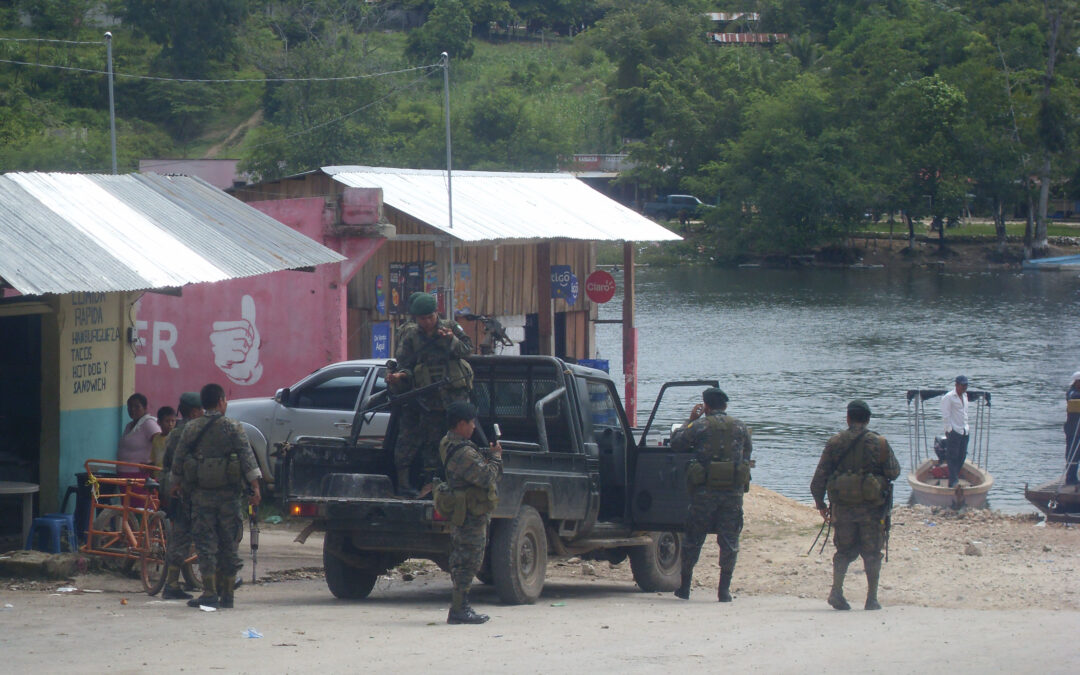
La CIJ expresa su preocupación frente a una nueva denuncia abusiva de la Fundación contra el Terrorismo, esta vez contra el Director de la CIJ para Centroamérica y un consultor que contribuye con el Bufete de Derechos Humanos, y contra el Director de Centro de Acción Legal, Ambiental y Social.
Esta denuncia se suma a otras en contra de abogados y abogadas de Guatemala. A través de querellas y acusaciones falsas, esta Fundación pretende afectar la función que estos profesionales cumplen como defensores de los derechos humanos.
Estas denuncias falsas son parte de una campaña iniciada hace más de un año y que ha querido afectar a más de cien personas, a quienes la Fundación contra el Terrorismo ha calificado como terroristas y guerrilleros (as), sin aportar pruebas.
Efectivamente se han presentado denuncias contra funcionarios y ex funcionarios del Ministerio Público, como la ex Fiscal General Claudia Paz y Paz y la actual Fiscal General Thelma Aldana, el Fiscal de Derechos Humanos o en contra de jueces y juezas del Organismo Judicial que ejercen su función en forma independiente, promoviendo un discurso de odio en contra de estas personas que actúan como defensores y defensoras de derechos humanos.
Ante esto hechos, la CIJ demanda:
- Que el Estado de Guatemala, por medio de las autoridades correspondientes, inicie una investigación exhaustiva e imparcial acerca de las actividades que realiza la Fundación contra el Terrorismo sobre todo, que investigue el origen de aquellas actividades que dirige en contra de defensores y defensoras de Derechos Humanos;
- Que el Estado de Guatemala, por medio de las autoridades correspondientes, brinde la protección debida a defensores y defensoras de derechos humanos;
- Que una vez finalizada la investigación el Estado de Guatemala, a través de las autoridades y mecanismos correspondientes, adopte las medidas necesarias de acuerdo a derecho con respecto a la Fundación contra el Terrorismo y su Director, por llevar a cabo campañas de odio en contra de defensores y defensoras de derechos humanos.

Jan 20, 2016 | News
The Indonesian government’s efforts to counter and punish attacks such as the deadly assault in central Jakarta last week can only succeed if they strengthen respect for rights and rule of law, said the ICJ today.
Indonesia’s National Counterterrorism Agency (BNPT) and the State Intelligence Agency (BIN) claimed that they lacked sufficient authority under the country’s existing Anti-Terrorism Law to stop the attacks.
Eight people were killed in an attack by armed men in central Jakarta on 14 January.
“Plans discussed by Indonesian authorities to amend the 2003 Anti-Terrorism Law to make it ‘more effective’ in addressing terrorist threats mostly focus on weakening hard-won protections for suspects and the rule of law,” said Emerlynne Gil, ICJ’s Senior Legal Adviser for Southeast Asia.
“In order to help the Indonesian government meet its obligation to protect its people from acts of terrorism, experience from around the world and Indonesia’s Suharto era shows that security can only be achieved through justice,” she added.
The head of the National Police, Gen. Badrodin Haiti, said that the Anti-Terrorism Law prevents police from prosecuting Indonesians returning home after allegedly serving as combatants in Syria.
One of the proposals is to give intelligence officers the authority to make arrests under the Anti-Terrorism Law.
“Giving intelligence officers the authority to make arrests will likely lead to an increase in violations of human rights,” said Gil.
“The roles of intelligence and of law enforcement are fundamentally different and need to remain separate,” she added.
The ICJ pointed out that there were not enough safeguards under Indonesia’s laws, specifically the State Intelligence Law, to ensure the accountability of the intelligence agency or its officers.
Another proposal is that authorities be given the power to arrest anyone they see as having a “strong indication” to be planning acts of terrorism.
The ICJ, however, observes that this proposal appears to allow Indonesian authorities to avoid judicial oversight so that it would be easier for them to arrest any person, irrespective of whether there is sufficient evidence of criminal activity or an intent to prosecute.
This proposal also appears to allow authorities to detain and interrogate persons suspected of involvement in terrorist acts with a view to gaining intelligence information without necessarily contemplating the filing of criminal charges.
As ICJ’s Eminent Jurists Panel on Terrorism, Counter-terrorism, and Human Rights has underscored, the practice of arrest and detention for the sole purpose of intelligence gathering may mean the arrest and detention of those “who are not necessarily criminal suspects, but who are also believed to have information that will ‘substantially’ assist the collection of intelligence relating to terrorism.” Detaining people for the sole purpose of intelligence gathering in the absence of evidence of criminal activities is a form of arbitrary detention.
Such a practice can also lead to secret or unacknowledged detention, which under international law constitutes enforced disappearance and is absolutely prohibited, the Geneva-based organization adds.
“The obligation to protect human rights and keep people safe from acts of terrorism are not at opposing poles,” said Gil. “They are complimentary and mutually reinforcing duties of protection incumbent on the State.”
“In fact, protecting human rights can be an effective shield in defending societies from acts of terrorism,” she added.
All measures to counter terrorism must strictly comply with obligations Indonesia has under international law.
Contact:
Emerlynne Gil, Senior International Legal Adviser of ICJ for Southeast Asia, t: +66 840923575 ; e: emerlynne.gil@icj.org
Background:
Indonesia’s Anti-Terrorism Law requires judicial approval to arrest a suspect in a terrorism case. Under the law, authorities may arrest any person “strongly suspected of committing a crime of terrorism on the basis of sufficient initial evidence.”
The Chairperson or Deputy Chairperson of a District Court determines whether sufficient initial evidence exists or has been obtained by authorities.
Under article 42 of Indonesia’s State Intelligence Law, the accountability of intelligence operations of the State Intelligence Agency is in principle ensured through a written report on these operations submitted to the President of Indonesia.
This provision has been criticized for failing to provide sufficient accountability, as the presidency is firmly within the Executive branch and lacks capacity to investigate and prosecute in the ordinary criminal justice system.
Furthermore, article 24 of the State Intelligence Law provides that the State has the obligation to give “protection” to all intelligence personnel when carrying out their intelligence duties and functions. Such protection is extended to their family members.
The law does not define “protection” and hence may be construed as the State being obliged to grant immunity to intelligence personnel and their family members from criminal prosecution or civil liability.

Nov 11, 2015 | News
While welcoming the Maldives government’s revocation of the emergency yesterday, the arbitrary manner in which the emergency was first imposed and then suddenly revoked within the span of a week reflects a deeper erosion of the rule of law in the country, the ICJ said today.
On 10 November, a week after declaring a 30-day state of emergency, the Maldives lifted the emergency reportedly because authorities had arrested several people in connection with an alleged plot to “use dangerous weapons and explosives”, thereby neutralizing the purported national security threat cited as the grounds for the emergency.
Maldivian authorities have not provided any information as to who or how many individuals were arrested or the nature of the charges.
“The imposition of a state of emergency is not a political tool to be used willy-nilly as a matter of convenience to suspend human rights protections and suppress political opposition,” said Nikhil Narayan, ICJ’s South Asia Senior Legal Adviser.
“A state of emergency that suspends constitutional rights is not to be declared lightly,” he added. “It has serious implications for human rights and the rule of law in the country, and must only be invoked in the most extreme situations and in accordance with international law.”
International law expressly permits derogations of certain human rights only in times of public emergency which threatens ‘the life of the nation’.
“Declaring a 30-day emergency and then suddenly lifting it a week later only reinforces the serious concerns previously raised as to the legitimacy of the emergency in the first place, and speaks to the larger rule of law crisis in the country,” Narayan said.
The emergency decree issued by the Maldives government last week suspended several constitutional rights, including the right to freedom of peaceful assembly, and reduced the constitutionally mandated period for the vice president to respond to impeachment charges from 14 to 7 days.
The opposition Maldivian Democratic Party (MDP) had planned a public anti-government demonstration for 6 November, two days prior to which the emergency was declared.
Meanwhile, the vice president was removed from his post the day after the emergency decree, 5 November, in a swift and seemingly arbitrary impeachment hearing.
“The circumstances surrounding events in the Maldives this past week clearly suggest that the government was using the emergency as a ploy to prevent the planned opposition rally and to eliminate the vice president as a political threat,” said Narayan.
The emergency also granted sweeping powers of search, arrest and detention without warrant to the police, who reportedly raided several buildings and arrested an unknown number of individuals under its emergency powers over the past week.
“The Maldives government cannot flout international law by invoking emergency powers as a means to deny the due process rights of the vice president and others arrested or detained for alleged crimes,” added Narayan. “The government must ensure that the individuals arrested during the emergency are afforded their full fair trial and due process rights in accordance with international law.”
Additional Information:
The ICJ previously raised concerns that the alleged grounds for the emergency did not appear to establish a threat to the life of the as required by the high threshold set by international law, and could not in any event justify the complete suspension of constitutional rights.
In August 2015, following a joint fact-finding mission to the Maldives, the ICJ and South Asians for Human Rights (SAHR) documented the breakdown of the rule of law and human rights in the Maldives in a 35-page report, Justice Adrift: Rule of Law and the Political Crisis in the Maldives.
Contact:
Nikhil Narayan, ICJ Senior Legal Adviser for South Asia, t: +977 9813187821 ; e: nikhil.narayan(a)icj.org

Aug 17, 2015 | News
The ICJ today condemned the promulgation of the Counter-Terrorism Law by the Egyptian President, Abdel Fattah el-Sisi, as a new, repressive move that would erode the rule of law and brush aside fundamental legal and human rights guarantees.
Calls to revise the draft Counter-Terrorism Law by the ICJ and other international and national human rights organizations and stakeholders, including Egypt’s quasi-governmental National Human Rights Council, were disregarded.
“The promulgation of the Counter-Terrorism Law by President el-Sisi expands the list of repressive laws and decrees that aim to stifle dissent and the exercise of fundamental freedoms,” said Said Benarbia, Director of the ICJ’s Middle East and North Africa Programme.
“Egypt’s authorities must ensure the law is not used as a tool of repression and, to this end, comprehensively revise it so that it fully complies with international human rights law and standards,” he added.
In a position paper published on 9 July, the ICJ detailed how the law is inconsistent with, and in numerous ways violates, Egypt’s obligations under international law, including those relating to the right to life, the right to liberty and not to be subjected to arbitrary detention, the right to privacy, and fair trial rights.
Further, the law gives state officials broad immunity from criminal responsibility for the use of force in the course of their duties, including the use of lethal force when it is not strictly necessary to protect lives, grants sweeping surveillance and detention powers to prosecutors, entrenches terrorism circuits within the court system (which have in the past frequently involved fair trial violations), and grants the President far-reaching, discretionary powers to “take the necessary measures” to maintain public security, where there is a “danger of terrorist crimes.”
Contact:
Alice Goodenough, Legal Adviser, ICJ Middle East and North Africa Programme, t: +44 7815 570 834; e: alice.goodenough(a)icj.org
Nader Diab, Associate Legal Adviser, ICJ Middle East and North Africa Programme, t: +41 229 793 804; e: nader.diab(a)icj.org
Egypt-Counter-Terrorism Law Promulgated-News-Press releases-2015-ARA (full text in pdf, ARABIC)
Aug 7, 2015 | News
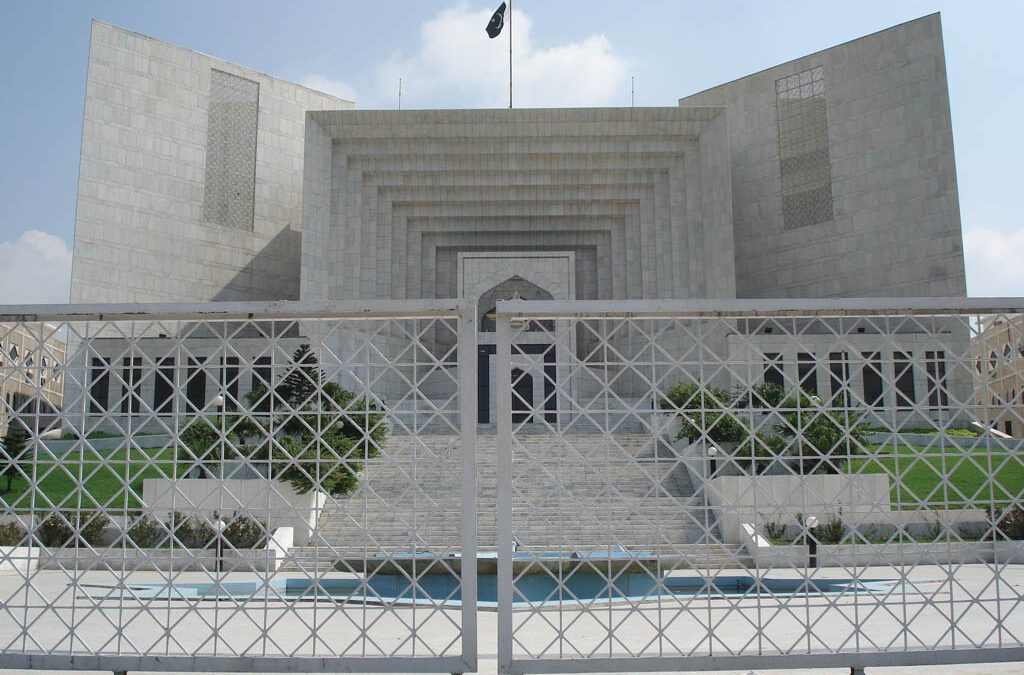
The SC’s decision to uphold the possibility of trial before military courts of individuals accused of committing terrorism related offences and belonging to “any terrorist group or organization using the name of religion or a sect” is a blow to human rights and the rule of law, said the ICJ.
In a split decision on the validity of the 21st amendment to the country’s Constitution, delivered on Wednesday, nine judges of the Supreme Court held that the trial of suspected terrorists, including civilians, by military courts was within the constitutional framework of the country and met principles of criminal justice.
The judges also ruled that individuals who claim to, or are known to belong to “any terrorist group or organization using the name of religion or a sect” constituted a valid classification allowing for differential treatment under the constitution.
Six dissenting judges expressed the view that the 21st constitutional amendment was incompatible with the right to a fair trial and independence of the judiciary. Two judges did not give an opinion on the merits, but suggested that the Supreme Court did not have the jurisdiction to review constitutional amendments.
The 902-page judgment also responds to challenges to the 18th amendment to the Constitution, including the procedure for judicial appointments.
“This judgment squarely puts Pakistan at odds with its international obligations and weakens the Supreme Court’s hard won reputation as the last resort for protecting the rights of Pakistani people,” said Sam Zarifi, ICJ’s Asia Director. “The Court has missed an important opportunity to reverse the militarization of justice in progress under the guise of combatting terrorism and to reinforce independence of the judiciary in the country.”
The trial of civilians in military courts for terrorism-related offences is incompatible with international standards, which require that those accused of any criminal offence are guaranteed a fair trial by an independent, impartial and competent tribunal.
ICJ’s briefing paper, published in April, provides a detailed assessment of the incompatibility of military trials in Pakistan with its international law obligations.
The Supreme Court, however, did not engage with international standards of fair trial and independence of the judiciary.
At least eight judges of the Supreme Court were of the opinion that it is for the Federal Government alone to ensure that their conduct “does not offend against the Public International Law or any International Commitment made by the State”.
“It is very disappointing that the Supreme Court has abdicated its primary role in acting with the other branches of the State to implement its obligations under international law,” added Zarifi. “International law is clear -all organs of the State, including the judiciary, must respect international human rights commitments, which include the right to a fair trial. Indeed, it is a core judicial responsibility to state what the law provides, whether the source of the law is international or domestic.”
The majority judgment also goes against previous Supreme Court rulings on military courts. In the past, the Court had reasoned that military courts do not meet the requirements of independence and impartiality; the establishment of military courts for trial of civilians amounts to creating a “parallel judicial system”; and that impeding the right to a fair trial cannot be justified on the basis of the public emergency or the “doctrine of necessity.
Military courts in Pakistan also have the power to award death sentences. On 2 April 2015, military courts convicted seven people of undisclosed offences in secret trials.
Of them, six were sentenced to death and one was sentenced to life in prison. The Supreme Court’s judgment has cleared the way for their execution.
Contact
Sam Zarifi, ICJ Asia Pacific Regional Director (Bangkok), t: +66 807819002; email: sam.zarifi(a)icj.org
Reema Omer, ICJ International Legal Advisor for South Asia (Lahore), t: +923214968434; email: reema.omer(a)icj.org
Read also:
ICJ denounces law permitting military trials of civilians
Trials of civilians before military tribunals a subversion of justice
HRCP, ICJ demand clarification on juveniles’ trial by military courts
Additional information
In a significant development, by a 13-4 majority the Supreme Court held it has jurisdiction to review constitutional amendments passed by Parliament on the touchstone of the “salient features” and the preamble of the Constitution. What those salient features are, however, was left unaddressed.
On 6 January 2015, less than a month after a terrorist attack on an army public school in Peshawar that killed nearly 150 people, most of them children, the Pakistani Parliament unanimously voted to amend the Constitution of Pakistan, 1973, and the Army Act, 1952, to allow military courts to try civilians for offences related to terrorism.
Military courts in Pakistan are not independent or impartial. Trials before military courts in Pakistan fall far short of national and international fair trial standards.
Pakistan has resumed executions since December 2014, in response to a spate of terrorist attacks in the country. At least 196 people on death row have already been executed. According to available data, only a small fraction – less than 10 pecent – of those executed were convicted of terrorist offences.
ICJ opposes capital punishment in all cases without exception. The death penalty constitutes a violation of the right to life and the right not to be subjected to cruel, inhuman or degrading punishment.

![Smoke rises after an Israeli air strike on the village of Taybeh in southern Lebanon [Source: Al Jazeera]](https://www.icj.org/wp-content/uploads/2026/03/Screenshot-2026-03-20-at-15.56.24-300x200.png)