Jul 30, 2015 | News
The ICJ strongly condemned the execution of Yakub Memon, who was hanged in Nagpur Central Jail, India this morning.
“Yakub Memon’s execution is a distressing and regressive move, keeping India in the minority of countries which continue to carry out executions,” said Sam Zarifi, ICJ Asia Pacific Regional Director. “While Yakub Memon was convicted of terrible crimes, executing him was not the solution. India should immediately put in place a moratorium on the death penalty.”
A court set up under the Terrorist and Disruptive Activities (Prevention) Act (TADA) convicted and sentenced Yakub Memon to death for a range of offences, including conspiracy to commit terrorist acts, in connection with the deadly terrorist attacks in Mumbai in 1993.
These attacks killed more than 250 people and injured more than 700. The main accused in this case, including Yakub Memon’s brother Tiger Memon, have still not been apprehended or tried.
“In executing Yakub Memon, the Indian government has only fulfilled a desire for retribution and added to the disturbing trend of executions in the name of fighting terrorism in South Asia”, Zarifi added. “The death penalty has not been shown to have any deterrent effect on crime or terrorism anywhere in the world.”
The Indian Supreme Court had confirmed Yakub Memon’s conviction and sentence on appeal from the court set up under the TADA in March 2013.
The Indian government repealed the TADA in 1995, after sustained national and international criticism for its incompatibility with human rights law, particularly the right to fair trial.
Yakub Memon was tried under provisions of the TADA as it was the law in force in 1993, when the terrorist attacks in Mumbai occurred.
The Indian president rejected a first mercy petition on his case in April 2014.
He subsequently filed a review petition challenging his sentence before the Indian Supreme Court, which was rejected on 9 April 2015.
On 21 July 2015, the Indian Supreme Court dismissed his curative petition for the commutation of his death sentence.
A court had authorized his execution before his curative petition was dismissed.
Yakub Memon then approached the Indian Supreme Court challenging, both, the manner in which his curative petition was heard and dismissed, and the validity of the order authorizing his execution. However, the Supreme Court dismissed both these arguments yesterday.
Over the past week, Yakub Memon filed fresh mercy petitions to commute his death sentence before the Governor of the State of Maharashtra and the President of India. Both were rejected yesterday.
Yakub Memon’s lawyers challenged the rejection of the mercy petition, and asked the Indian Supreme Court to stay the execution as per the guidelines issued in the 2014 case of Shatrughan Chauhan v Union of India, for “safeguarding the interests of the death row convicts”.
These included ensuring a minimum period of 14 days “between the receipt of communication of the rejection of the mercy petition and the scheduled date of execution”.
But the Court – in a hearing early this morning – rejected this final plea.
Background:
This is India’s third execution in the past five years. India resumed executions in 2012, after a gap of eight years. Since November 2012, two other people have been executed, Ajmal Kasab and Afzal Guru.
They also were both charged and convicted for their role in terrorist attacks.
The ICJ expresses its solidarity with the victims of the 1993 attack, and their families.
India is a party to the International Covenant on Civil and Political Rights, which guarantees the right to a fair trial as well as the right to life and freedom from cruel, inhuman, or degrading treatment or punishment.
The UN Human Rights Committee, the supervisory authority for the ICCPR, has emphasized: “In cases of trials leading to the imposition of the death penalty scrupulous respect of the guarantees of fair trial is particularly important. The imposition of a sentence of death upon conclusion of a trial, in which the provisions of article 14 of the Covenant have not been respected, constitutes a violation of the right to life.”
In December 2014, the UN General Assembly adopted a resolution, for the fifth time since 2007, emphasizing that the use of the death penalty undermines human dignity and calling on those countries that maintain the death penalty to establish a moratorium on its use with a view towards its abolition. Some 117 UN Member States, a wide majority, voted in favor of a worldwide moratorium on executions as a step towards abolition of the death penalty.
The ICJ opposes capital punishment in all cases without exception. In line with the present international trend, the ICJ calls on India to impose an official moratorium on the death penalty, with a view to abolishing the death penalty.
Contact:
Sam Zarifi, ICJ Asia Pacific Regional Director (Bangkok), t: +66 807819002; email: sam.zarifi(a)icj.org
Jul 23, 2015 | News
The ICJ today called on the Tunisian authorities to amend the deeply flawed draft Counter-Terrorism and Money Laundering law with a view to ensuring its full compliance with international standards.
“Tunisian authorities have obligations under international law to protect individuals under their jurisdiction against all acts of terrorism,” said Said Benarbia, Director of the Middle East and North Africa Programme at the ICJ.
“At the same time, all counter-terrorism measures must fully respect human rights guarantees and the rule of law,” he added.
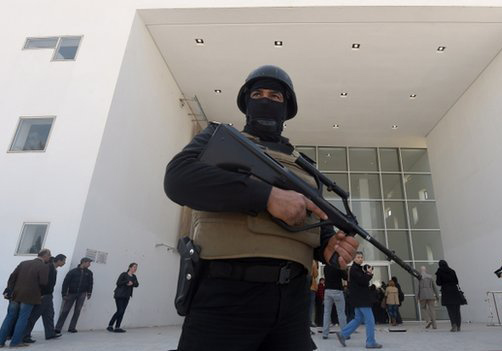
The draft Counter-Terrorism and Money Laundering law, revised since it was first introduced last year, was revived following a series of attacks against members of the security forces and the army and the deadly Bardo Museum (photo) attack on 18 March 2015.
In response to the killing of 38 tourists in Sousse on 26 June and the following declaration of a state of emergency on 4 July 2015 by the Tunisian President, the Tunisian Assembly of the People’s Representatives has accelerated the process of discussing and adopting the Draft Law.
The Draft Law criminalizes a wide range of acts through overbroad and imprecise definitions of terrorism and terrorism-related acts.
Such definitions could potentially have the effect of criminalizing activities not actually related to terrorism, or even the lawful and peaceful exercise of fundamental rights and freedoms, including the right to freedom of expression, the ICJ says.
The ICJ is particularly concerned that the draft law grants, in its article 68, immunity from criminal prosecution for security forces, outside cases of self-defence, when using force in the course of their duties.
This provision requires amendment to ensure that it does not immunize use of force that violates the right to life in violation of international law and standards, including for instance intentional use of lethal force when it is not strictly unavoidable in order to protect life, the Geneva-based organization adds.
“The draft law should not dilute the specificity of terrorist acts by drawing ordinary crimes within the scope of the counterterrorism legislation, nor should it be used as a tool to shield members of security forces from accountability in cases of human rights violations committed in the course of their functions,” Benarbia said.
Furthermore, the bill contains provisions that could potentially result in undue prosecution of whistleblowers and journalists, or otherwise disproportionally limit the freedoms of expression and information in violation of international law, the ICJ notes.
A number of offences under the Draft Law are punishable with the death penalty.
The ICJ opposes the death penalty in all circumstances as a violation of the right to life and the prohibition of torture and other cruel, inhuman or degrading punishment.
The Draft Law also creates an exceptional regime for police custody, allowing the prosecutor to order up to a period of 15 days of detention (articles 37 and 39) without access to a lawyer or a judge, in violation of the right to liberty, fair trial guarantees, and guarantees for the prevention of torture and other abuses in detention.
It further provides for extensive infringements of the right to privacy through various forms of surveillance, and potentially breaches lawyers’ duties of confidentiality in ways that have not been justified.
“In reviewing and approving the Draft Law, members of the Assembly must ensure that it is fully in line with Tunisia’s obligations under international law, including those relating to the right to life, to liberty and to a fair trial,” Benarbia added.
Contact
Theo Boutruche, Legal Adviser of the ICJ Middle East and North Africa Programme, t: +96 170 888 961 ; e: theo.boutruche@icj.org
Tunisia-Counter Terrorism Draft Law-2015-ARA (Full text in Arabic, PDF)
May 21, 2015 | News
The ICJ and the Human Rights Commission of Pakistan (HRCP) have expressed deep concern that following the 21st amendment, juveniles suspected of committing offences related to terrorism could end up being tried by the newly constituted military courts.

Mar 31, 2015 | News
The present form of the recently tabled draft Prevention of Terrorism Act, also known as POTA, violates international standards and seeks to reintroduce detention without trial, said the ICJ.
The Malaysian government claims that the draft POTA, which was tabled yesterday in Parliament for its first reading, together with 7 other amendments, is aimed at curbing terrorist threats in the country.
“The draft law, as it is now, is susceptible to abuse,” said Emerlynne Gil, ICJ’s International Legal Adviser for Southeast Asia. “It is very disturbing that the POTA has very similar elements that were in the problematic and now repealed 1960 Internal Security Act that was previously used to silence government opposition and curtail freedom of expression in the 1980s.”
For example, the ICJ notes with concern that the draft law allows a “board” that is not a court to order and extend detention for up to four years.
Only one of the members of the board is required to have any legal training at all.
Detention orders issued by the “board” cannot be challenged in any court, except on procedural issues.
The ICJ urges members of Parliament in Malaysia to amend the existing draft law so that it will not reintroduce draconian preventive detention measures, as in the repealed Internal Security Act.
The Parliament of Malaysia should either reject the draft law or amend its provisions to respect human rights.
CONTACT:
Emerlynne Gil, ICJ International Legal Adviser, e: emerlynne.gil(a)icj.org or m: +668 4092 3575
Mar 26, 2015 | News
The conviction of the Maldives’ former president, Mohamed Nasheed, on terrorism charges after a grossly unfair trial marks a significant deterioration of the independence and impartiality of the country’s judiciary, said the ICJ.
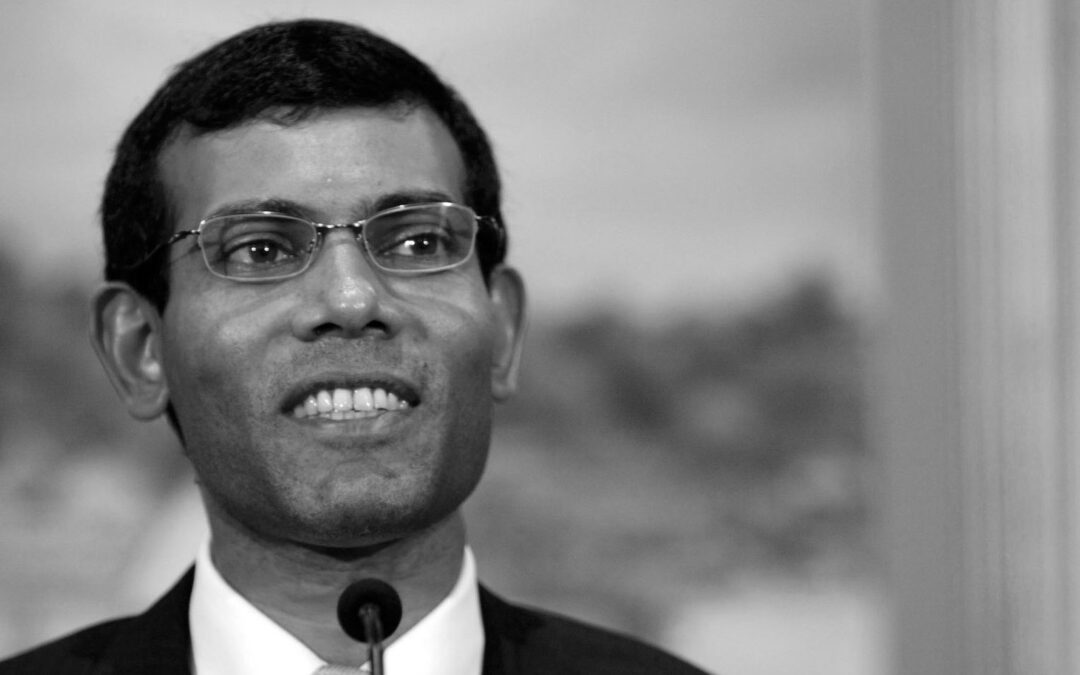
On 13 March, Mr. Nasheed (photo) was sentenced to 13 years in prison for the dismissal and alleged unlawful detention of the Chief Judge of the Criminal Court, Mr. Abdullah Mohamed, in 2012, when Mr. Nasheed was president.
He was convicted of an “act…of kidnapping or abduction of person(s) or of taking hostage(s)” under Section 2(b) of the Prevention of Terrorism Act 1990.
“The Maldivian judiciary’s independence has been compromised for years by serious pressure from the government, and this grossly unfair conviction highlights the numerous problems with the politicization of the judiciary in the country,” said Sam Zarifi, the ICJ’s Regional Director for Asia and the Pacific. “It is crucial for Maldivian authorities to allow Mr. Nasheed to appeal his case effectively, with transparency and monitoring by Maldivian and international observers.”
The case’s pre-trial phase and trial were marked by gross violations of international standards of fair trial, including Article 14 of the International Covenant on Civil and Political Rights, to which the Maldives acceded in 2006.
Two of the judges on the three-judge bench testified as witnesses against Mr. Nasheed in the 2012 investigation; these statements were submitted as evidence in the present trial.
Mr. Nasheed’s defense team was not allowed to be present on his behalf during the first proceeding, nor was he given the opportunity to seek bail.
The defense team was repeatedly denied full access to prosecution evidence and witnesses or to regularly consult with Mr. Nasheed during the course of the trial.
When Mr. Nasheed’s defense team recused itself in protest of the lack of fairness, the court proceeded with the trial without legal representation present for Mr. Nasheed rather than granting him the opportunity to obtain new counsel. The defense was also denied the opportunity to call its own witnesses.
Mr. Nasheed now has the right to appeal the conviction, but his right to appeal has been infringed by the unprecedented amendment of the statutory period for appeal from 90 days to 10 days, via Supreme Court circular six weeks prior to the trial.
In addition, the court has still not released to Mr. Nasheed’s defense team the full court record required to prepare and present an effective appeal within this accelerated timeframe.
The ICJ has previously documented the politicization of the judiciary and the polarized political climate in the Maldives, calling attention to a justice system characterized by vested interests and political allegiances rooted in the country’s authoritarian past (See Maldives: Securing an Independent Judiciary in a Time of Transition (February 2011)).
“Recent events reflect a justice system that still remains deeply politicized along the same lines of entrenched political loyalties that pre-date the transition period,” Zarifi said. “The Maldivian judiciary must allow a proper appeal in this case if it is to establish itself as a separate and equal branch of the government dedicated to supporting the rule of law.”
The ICJ urged Maldivian authorities to ensure Mr. Nasheed’s defense team full access and adequate opportunity to prepare an effective appeal, and to ensure that the appeal proceeding is conducted fairly and transparently, with full access to media and domestic and international observers, in compliance with fair trial and due process standards under both Maldivian and international law.
The Maldives must also take effective measures to ensure that such violations do not reoccur in this or future cases.
Background information can be downloaded here:
Maldives-Background Brief Nasheed Trial-Advocacy-Anylysis brief-2015-ENG (full text in PDF)

![Smoke rises after an Israeli air strike on the village of Taybeh in southern Lebanon [Source: Al Jazeera]](https://www.icj.org/wp-content/uploads/2026/03/Screenshot-2026-03-20-at-15.56.24-300x200.png)