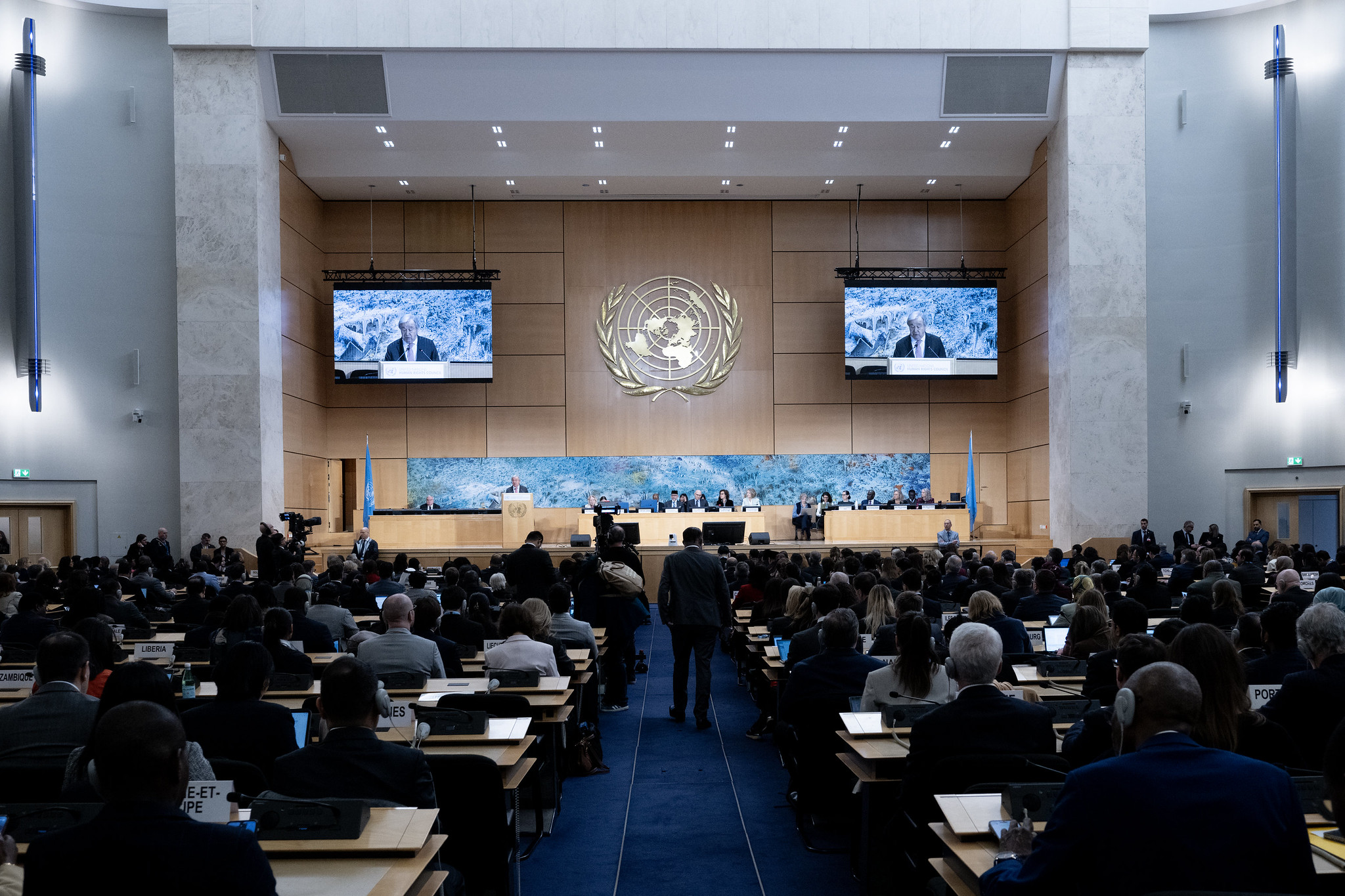
Geneva, 1 April 2026. The UN Human Rights Council (HRC), has concluded its 61st regular session 23 February to 31 March), advancing the protection of human rights by adopting 38 resolutions, out of which 28 without a vote, on a variety of country situations and thematic issues including Belarus, Myanmar, Palestine, South Sudan, Syria and Ukraine, as well as the rights of the child affected by armed conflict, human rights defenders, mental health and human rights, freedom of opinion and expression, the right to food, the right to housing, or the rights of persons with disabilities.
While the session took place amidst rising geopolitical tensions and a raging armed conflict in the Middle East, the Council nonetheless continued to fulfil its function in providing a universal platform for dialogue and action in response to the world’s most serious human rights situations. Despite its limitations owing to declining commitments, especially by some of the most powerful States, it proved that it could still provide a unique global space where victims and survivors of human rights violations and abuses, and human rights defenders and civil society more generally, have a voice and can participate meaningfully in proceedings.
The performance of States at the HRC was compromised and beset by competing reproaches of double standards as the HRC struggled to address the latest conflict in the Middle East, triggered by the aggression against Iran by the US and Israel, which began on 28 February during the first week of the session.
The result was the deplorable failure of the HRC to substantially address the massive violations of human rights and international law arising from the conflict, despite the convening of two urgent debates requested respectively by competing parties to the conflict.
On 25 March, the first debate initiated by Bahrain on behalf of the Cooperation Council for Arab States of the Gulf (GCC) and Jordan to address “the recent military aggression launched by Iran against Bahrain, Jordan, Kuwait, Oman, Qatar, Saudi Arabia and the United Arab Emirates on 28 February 2026,” resulted in the adoption without a vote of a thin, one-sided symbolic resolution. The second urgent debate, on 27 March, was called for by Iran, China, and Cuba to discuss a single incident, “the aerial attack on Shajareh Tayyebeh Girl’s School in Minab, Iran, as a grave breach of international humanitarian law and international human rights.”
The ICJ intervened in both debates, addressing these dismal approaches to tackling the human rights crisis in the region, where geopolitical considerations trumped human rights objectives. The interventions urged States to denounce and address the range of human rights violations and abuses and violations of international humanitarian law by all parties to the conflict. The ICJ insisted that the Council’s response must take account of the unlawful attacks in the Gulf States and in Iran against civilians and civilian objects in the broader context of the aggression by the US and Israel against Iran.
During the negotiations and adoption of the resolution pursuant to the first urgent debate, there was a ringing failure by a large number of States to condemn the aggression by the US and Israel that triggered the current situation between Iran and the Gulf States. The ICJ welcomes the firmer stand to uphold international law taken by a few States in their interventions, including Switzerland and South Africa.
The resolution adopted by the Council on the situation in Myanmar univocally condemns ongoing atrocities in the conflict and, in particular, the grave violations of international human rights and humanitarian law committed by the military junta. The country, ruled by this illegitimate junta that seized power in a coup d’etat in 2021, has recently held sham elections and continues to be fighting multiple internal armed conflicts, in the course of which it has sharply increased aerial bombings against the civilian population in several regions of the country, resulting in widespread unlawful killings. The ICJ brought local human rights defenders from Myanmar to the session to give testimony about the widespread and systematic human rights violations and abuses, as well as the hindrance of access to the most needed humanitarian aid. The engagement by these human rights defenders and an update by the UN Special Rapporteur on the situation in Myanmar were critical in informing the HRC’s deliberations on the adopted resolution.
The ICJ participated in side events with partners to convey the dire situation, with new legislation passed by the Junta to further repress democratic forces and human rights work. The ICJ called for the strengthening of accountability measures, as the International Court of Justice recently completed its hearings on the case brought by the Gambia against Myanmar for violating the Genocide Convention.
The ICJ welcomed the action taken by the Council to address the situations in South Sudan, Syria, and the occupied Palestinian territory. The resolutions, however, on South Sudan and Palestine could not reach consensus and were adopted after a contested vote despite the massive atrocity crimes in both countries, as documented by HRC mechanisms, including the Commission on Human Rights on South Sudan and the Commission of Inquiry on Syria.
The ICJ again condemned the personal attacks against Francesca Albanese, the Special Rapporteur on the situation of human rights in the Palestinian territories occupied since 1967 (OPT), and her important work on this mandate. The Special Rapporteur presented her last report to the session, focusing in particular on testimonies of the systematic use by Israel of torture and ill treatment against Palestinians.
The ICJ also addressed important thematic human rights issues grounded in its work in various countries, including through engagement with the Special Rapporteurs on counter-terrorism and human rights, and on the rights of persons with disabilities.
On counterterrorism, the ICJ drew attention to the situation in Tunisia, where laws and measures to purportedly counter terrorism are being used to repress the legitimate work of independent judges, lawyers, human rights defenders, and journalists.
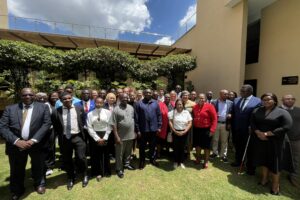
The ICJ in collaboration with the Friedrich-Ebert Foundation and a large group of civil society and States supporters held a side event to discuss and launch a publication on the crucial role of civil society in the development of standards and institutions for the protection of human rights since the creation of the UN 80 years ago and the critical importance of preserving and strengthening this role in the midst of human rights backsliding and retrogressive “reforms”.
***
The full list of events and statements of the ICJ at the 61st session of the HRC can be found here:
Oral Statements
Agenda Item 3
Oral statement of the International Commission of Jurists (ICJ) in the interactive dialogue with the Special Rapporteur on Counter-terrorism and Human Rights
The ICJ and co-signatories condemned the use of counter-terrorism laws as a tool to suppress critics, focusing on Tunisia’s systematic misuse of its 2015 Counter-Terrorism Law to arbitrarily arrest and prosecute political opponents, lawyers, and judges for legitimate speech and professional conduct. The statement called attention to the so-called “Conspiracy Case,” which upheld the convictions of 34 political opponents without evidence in November of 2025.
Agenda Item 3
Oral statement of the International Commission of Jurists (ICJ) in the interactive dialogue with the Special Rapporteur on the Rights of Persons with Disabilities
The ICJ discussed four kinds of persistent barriers for people with disabilities globally: attitudinal, communicational, physical, and institutional. The ICJ noted how these barriers exclude people with disabilities from political participation on an equal basis and leave judges with disabilities significantly underrepresented, creating a cycle of limited judicial understanding of disability rights and insufficient domestic policies.
Agenda Item 2
Oral statement of the International Commission of Jurists (ICJ) in the general debate on attacks against the rule of law and independent legal professionals — highlighting situations in Afghanistan and Guatemala.
The ICJ first called attention to the systematic gender-based persecution by the Taliban regime in Afghanistan, explaining how the newly codified criminal code has reduced women, girls, and LGBTQI+ persons to second-class status under the law, while penalizing noncompliant men and boys. The statement then turned to the erosion of democratic processes in Guatemala, where concurrent elections for the Constitutional Court, the Supreme Electoral Tribunal, and the Attorney General in 2026 create a serious risk of co-optation and illegitimate interference.
Agenda Item 4
Oral statement of the International Commission of Jurists (ICJ) in Interactive dialogue with the Special Rapporteur on Myanmar
The ICJ concurred with the findings of the Special Rapporteur, which detailed the substantial degradation of the rule of law in Myanmar following the military coup in 2021. The statement, reflecting the fate of many human rights defenders in and from Myanmar, underscored the harrowing conditions activists face through the weaponization of trial courts, the suppression of free speech, and attacks against lawyers and civil society.
Agenda Item 4
Joint Oral Statement of the International Bar Association’s Human Rights Institute and the International Commission of Jurists in the Interactive dialogue with the Group of Independent Experts on Belarus
The International Bar Association’s Human Rights Institute and the ICJ jointly condemned the systematic repression of civil society in Belarus, including the forced removal of nearly 600 lawyers from the profession since 2020, the subordination of the judiciary to executive control, and the designation of the Belarusian Association of Human Rights Lawyers as an extremist formation. The statement called on the Council to adopt a strong resolution renewing the mandates of the Special Rapporteur and the Group of Independent Experts on Belarus, and urged the immediate release of all arbitrarily detained individuals and an end to the persecution of Belarusians both at home and in exile.
Agenda Item 6 – Universal Periodic Review
Oral Statement of the International Commission of Jurists (ICJ) on Libya’s Universal Periodic Review outcome
The ICJ welcomed Libya’s adoption of resolutions aimed at ending arbitrary detentions and forced disappearances, but expressed concern for Libya’s refusal to criminalize domestic violence, repeal “honour killing” provisions, or enact a long-awaited draft law on protecting women from violence. The organization additionally urged Libyan authorities to immediately end the systematic abuse of migrants and refugees by establishing a rights-compliant asylum system. Decriminalizing so-called “irregular migration,” and resume its rights-based national reconciliation and transitional justice process.
Urgent Debate
Oral statement of the International Commission of Jurists (ICJ) in the Urgent Debate to discuss recent military aggression launched by the Islamic Republic of Iran against Bahrain, Jordan, Kuwait, Oman, Qatar, Saudi Arabia, and the United Arab Emirates on 28 February 2026
The ICJ condemned the unlawful attacks by Israel and the United States against Iran, as well as the reports of attacks by Iran on civilians and civilian infrastructure, including those around the Straits of Hormuz, as violations of the UN Charter and international law. The ICJ also urged the Council to recognize the deteriorating humanitarian situation in Lebanon resulting from Israel’s displacement of over one-fifth of the Lebanese population.
Side Events
Side event – Decriminalizing homelessness and poverty as a human rights response
Tuesday, March 3, 2026 13:00 – 14:00
The ICJ, the Commonwealth, the Institute of Commonwealth Studies, and the Permanent Mission of Fiji co-hosted a side event presenting their practitioners’ guide on a Human Rights-Based Approach to Criminal Law, including the Decriminalization of Conduct Associated with Poverty and Status. The event explored the legal imperative upholding a human rights-based approach to criminal law by drawing on synergies with ongoing HRC initiatives, such as the UN System Common Position on Incarceration and the Council’s work on the human rights of people in street situations, and discussed the urgent need to reduce criminalization of vulnerable populations and support their social reintegration.
Side event – Human Rights Protection in the Digital Age through Universal Principles
Tuesday, March 10, 2026 14:00 – 15:00
The Danish Institute for Human Rights and the ICJ co-hosted a side event discussing the draft Copenhagen Principles and Guidance for the Protection of Human Rights in the Digital Age, developed by a group of 18 leading legal experts to clarify how existing human rights obligations apply in the digital sphere. Panelists discussed how protecting dignity and privacy online demands collective action across states, international organizations, civil society, and the private sector to apply the Principles, strengthen corporate responsibility, and provide reasonable access to remedies.
Side event – Human Rights in El Salvador
Wednesday, March 11, 2026 15:00 – 16:00
Organized by a coalition of human rights organizations, including the ICJ, International Federation for Human Rights, Cristosal, and the Due Process of Law Foundation, this side event examined growing concern over serious human rights violations committed under El Salvador’s state of emergency. Speakers addressed the evidence on the ground, the legal standards for crimes against humanity, and the urgent case for establishing an international investigative mechanism to ensure accountability for alleged atrocities.
Side event – Human Rights in Myanmar
Thursday, March 12, 2026 14:00 – 15:00
Alongside Special Rapporteur Tom Andrews, speakers from Myanmar civil society organizations, including the Women’s Union and the Human Rights Foundation of Monland, highlighted the frontline role of local CSOs and women human rights defenders in documenting violations, addressing conflict-related sexual violence, and advocating for accountability. Five years after the coup, they characterized Myanmar’s crisis as a full humanitarian and human rights emergency, calling on the international community to move beyond expressions of concern and take concrete action in support of survivor-centered justice and local civil society.
Side event – Civic Space at the United Nations
Tuesday, March 17, 2026 14:00 – 15:00
This event marked the launch of a joint report by the ICJ and the Friedrich Ebert Foundation on the role of civil society in safeguarding civic space and supporting the UN human rights system during a period of global crises and institutional reform. Ambassadors, experts, and civil society leaders emphasized that civic space is foundational to the credibility, legitimacy, and accountability of the multilateral human rights framework. A central warning from participants was that shrinking civic space creates a protection vacuum: without robust civil society engagement, there is no one left to defend human rights when crises emerge.