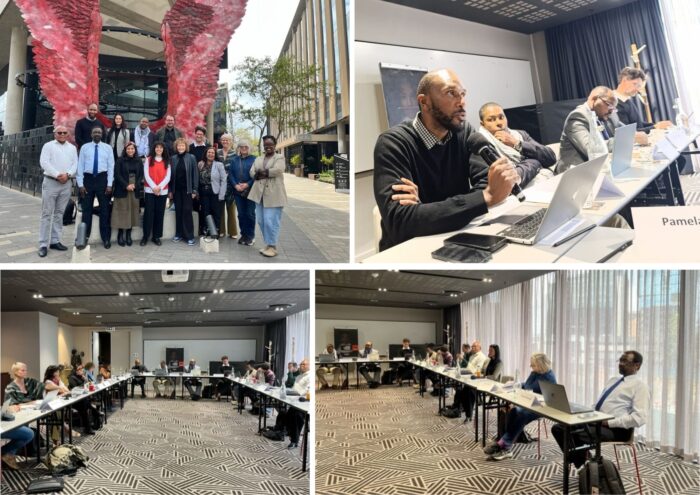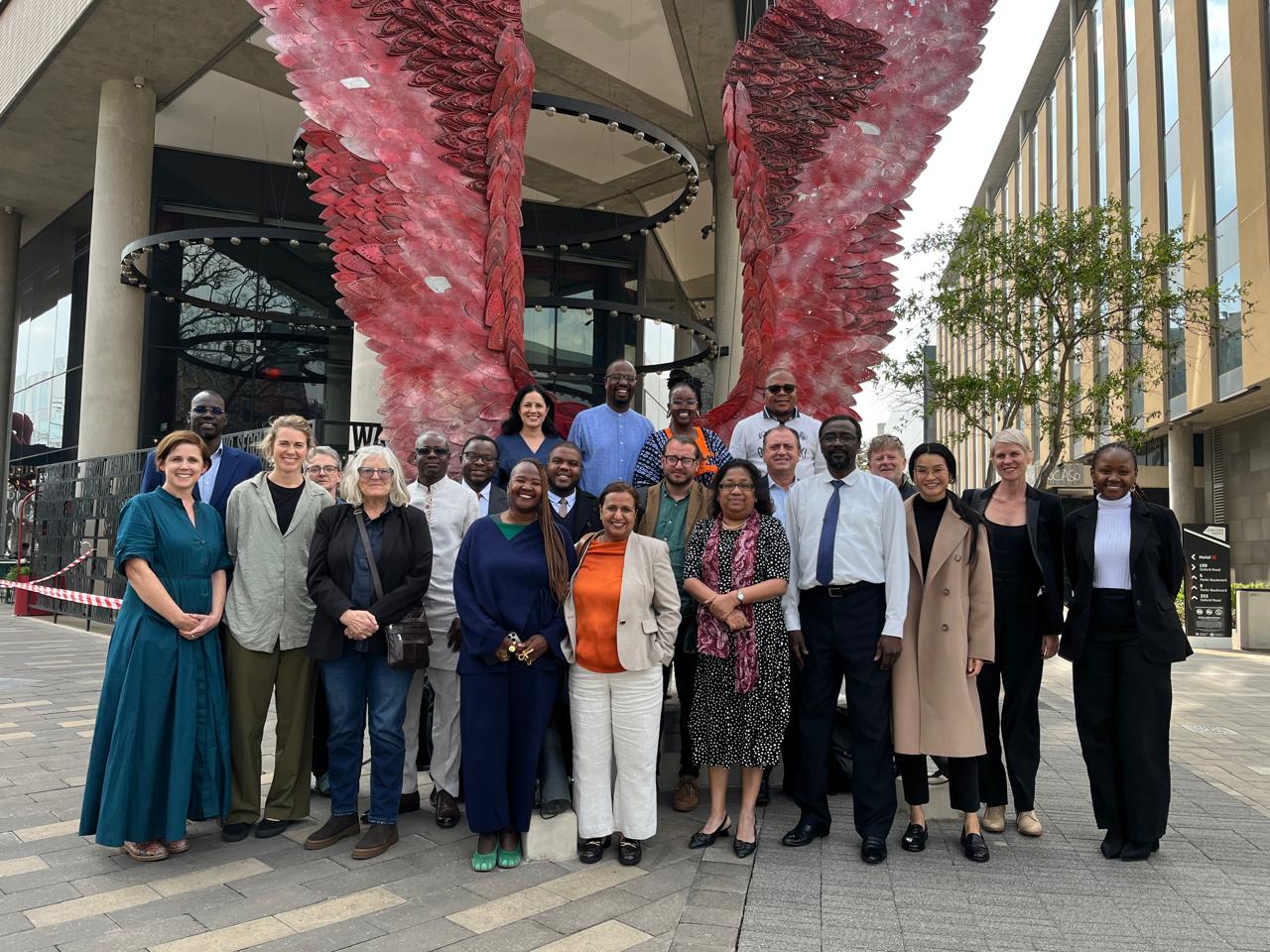
JOHANNESBURG, South Africa — On 9-10 September the International Commission of Jurists (ICJ) gathered legal practitioners, civil society representatives, and victim advocates from across anglophone Africa in Johannesburg, to consider means of strengthening access to justice in non-criminal processes.
The regional consultation was convened as part of a wider global initiative to elaborate guidance for human rights advocates in efforts to secure effective redress for gross human rights violations and abuses and serious violations of international humanitarian law.
The consultation focused on strengthening non-criminal justice pathways, including through judicial and administrative processes, customary and traditional legal systems, and strategic civil litigation.
“Alongside criminal pathways a wide spectrum of non-criminal justice processes which are civil, administrative, traditional and hybrid have developed within national and regional systems. These mechanisms can deliver outcomes that criminal trials alone cannot deliver, such as restitution, compensation, rehabilitation, satisfaction and guarantees of non-occurrence.” said Kaajal Ramjathan-Keogh, ICJ Africa Regional Programme Director.
Participants addressed persistent gaps between official legal recognition of harm and actual delivery to survivors, noting how administrative reparation awards and truth commission recommendations, such as in South Africa, The Gambia, and Kenya, routinely stall due to such factors as political inertia and administrative bottlenecks. Practitioners mapped strategies to close these accountability deficient gaps, including record-building efforts that harmonize narrative truth-seeking with the strict evidentiary standards and archive disclosure rules required by domestic and regional courts.
Participants also examined the interface of customary and traditional justice systems, such as those in South Sudan and Rwanda, which were purported to operate on principles of restorative harmony and local reconciliation, while stressing the need for adherence to human rights norms around gender equality and conditional amnesties.
In contexts of severe civic space closure or systemic State immunity, litigators explored extraterritorial jurisdictions and sub-regional courts like the East African Court of Justice (EACJ) and ECOWAS Community Court of Justice to bypass domestic blockades. Varioius participants drew particular attention to the need to ensure that redress is gender-responsive and intersectional, with explicit inclusion for LGBTQI+ and disabled survivors and victims of conflict-related sexual violence. It was important that such redress processes and embed trauma-informed mental health care in justice processes, and removes administrative burdens that may serve effectively to turn survivor participation into uncompensated labour.
Finally, experts reviewed the full lifecycle of strategic civil litigation, highlighting innovative claims targeting corporate accountability and securing structural interdicts for long-term state compliance.
“On top of striving to adopt a more victim-oriented approach in the criminal justice system, non-criminal justice avenues at local, regional, and international levels must be explored, reassessed, and strengthened with a view to implementing the rule of law effectively” stated Justice Aruna Devi Narain, ICJ Commissioner and Judge of the Supreme Court of Mauritius.
The Johannesburg gathering represents the third stage of the ICJ’s multi-year initiative on non-criminal justice mechanisms, following global and regional forums in Geneva (November 2025) and Bogotá (June 2026) The insights gathered in Johannesburg will feed directly into the ICJ’s elaboration of practical global guidance for jurists, litigators, and policymakers on designing and implementing non-criminal justice mechanisms.
The initiative is supported by the Republic and Canton of Geneva.