Sep 1, 2017 | News
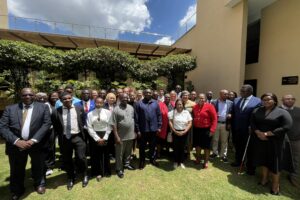
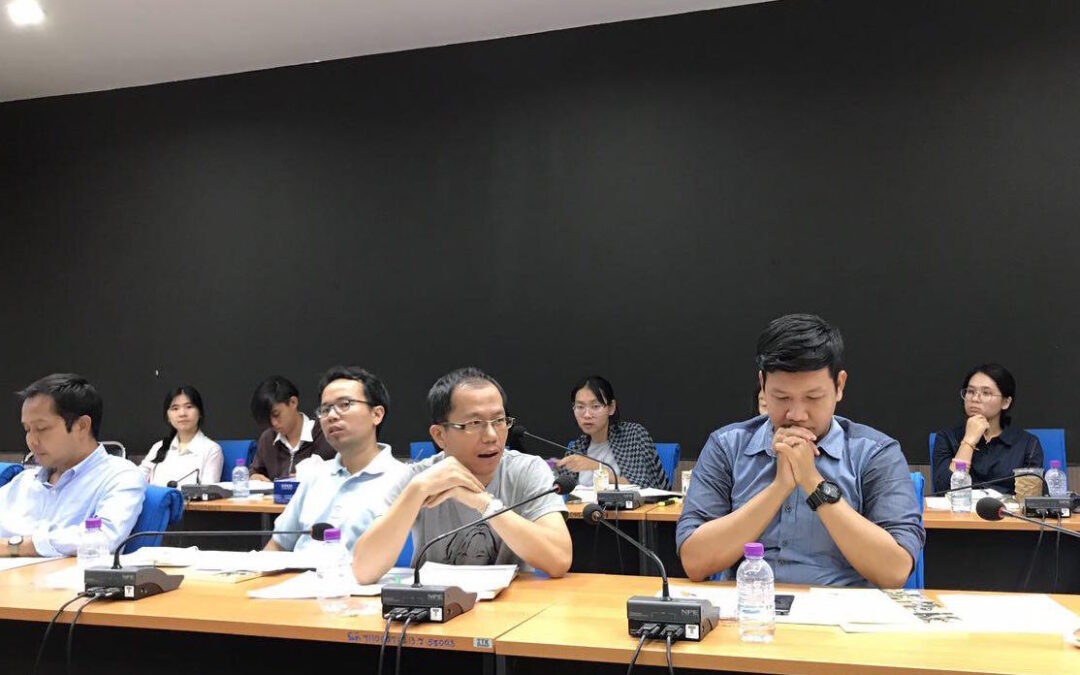
On 1 September, the ICJ, in collaboration with Chiang Mai University’s Faculty of Law and Chiang Mai University’s Center for Ethnic Studies and Development under its Faculty of Social Science, conducted a workshop on how effectively to conduct trial observation.
Participants in the Workshop included undergraduate and postgraduate students and lecturers from Chiang Mai University, lawyers and representatives from Thai civil society organizations.
The workshop was held at Chiang Mai University’s Faculty of Law campus.
The objective of the workshop was to provide participants with an overview of international law and standards governing right to a fair trial and due process in the administration of criminal justice.
The workshop used the ICJ’s Practitioners Guide No. 5, the Trial Observation Manual for Criminal Proceedings, as the basis of training.
The workshop trained participants on practical preparation techniques before undertaking trial observations, critical elements of trial observations, drafting of trial observation reports, general international legal standards governing fair trials, international legal standards applicable to arrest and pre-trial detention in criminal proceedings and international legal standards applicable to trial proceedings.
The speakers at the workshop were Kingsley Abbott, ICJ Senior International Legal Adviser, Southeast Asia and Sanhawan Srisod, ICJ Associate National Legal Adviser, Thailand.
Aug 30, 2017 | News
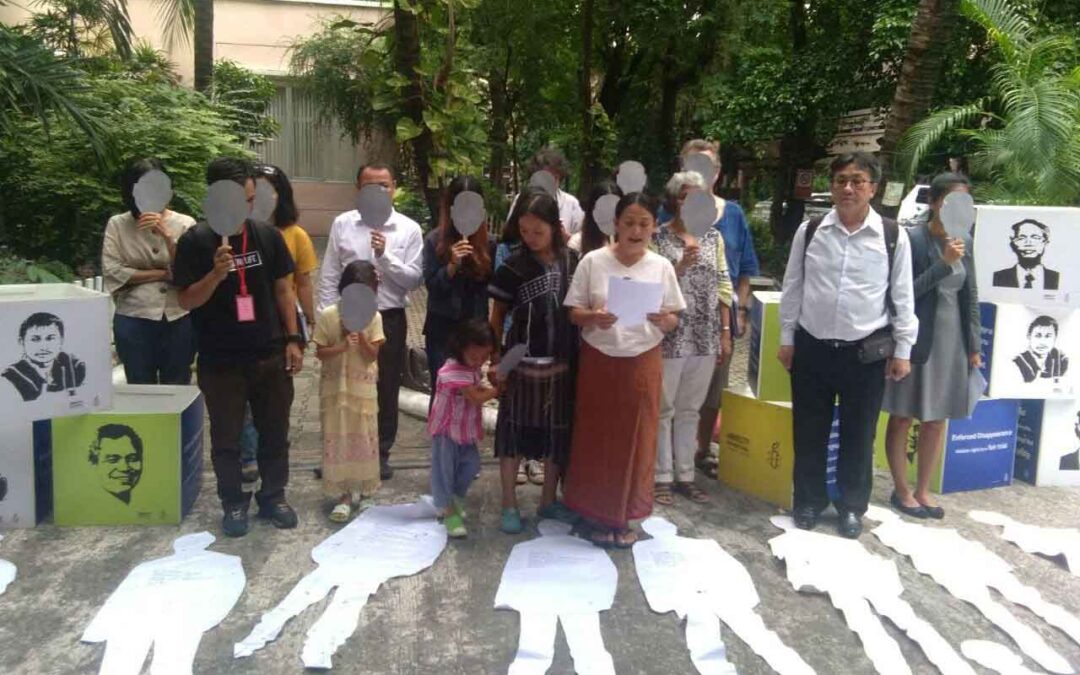
On 30 August, the ICJ co-hosted an event in Bangkok, Thailand, named “International Day of the Victims of Enforced Disappearance: Human Rights Defenders & the Disappeared Justice”.
The event began with opening remarks by South-East Asia’s Regional Representative of the United Nations Office of the High Commissioner for Human Rights (OHCHR) Cynthia Veliko.
Thereafter, Kingsley Abbott, ICJ Senior International Legal Adviser, spoke in a panel discussion about enforced disappearances in Thailand, highlighting the need for Thailand to comply with its human rights obligations under international law.
This panel discussion also included Ms. Oranuch Phonpinyo, Community Representative, forensics expert Dr. Pornthip Rojanasunan and former National Human Rights Commissioner Dr. Niran Pitakwatchara.
In a second panel discussion held during the event, speakers included Ms. Phinnapha Phrueksaphan, Victim Representative, Ms. Angkhana Neelapaijit, National Human Rights Commissioner and Victim Representative, Ms. Nareeluc Pairchaiyapoom from Thailand’s Ministry of Justice and prominent human rights lawyer Mr. Somchai Homlaor.
The event focused on the lack of progress in Thailand with regard to investigating cases of apparent enforced disappearance and called for the Royal Thai government to amend and pass legislation criminalizing torture, ill-treatment and enforced disappearance without further delay.
Thailand is a State party to the International Covenant on Civil and Political Rights (ICCPR), the Convention against Torture and other Cruel, Inhuman or Degrading Treatment or Punishment (CAT) and has signed, but not yet ratified, the International Convention for the Protection of All Persons from Enforced Disappearance (ICPPED).
The other organizers of the event were OHCHR’s South-East Asia Regional Office, the Cross Cultural Foundation (CrCF), Human Rights Lawyers Association (HRLA), the Esaan Land Reform Network, Amnesty International Thailand, Thailand’s Ministry of Justice and the Association for the Prevention of Torture (APT).
Copies of an open letter sent by the ICJ and other human rights groups to the Royal Thai government on 30 August were distributed to the event’s participants.
Contact
Kingsley Abbott, ICJ Senior International Legal Adviser for Southeast Asia, kingsley.abbott(a)icj.org
See the full open letter here in English and Thai
Read also
Ten Years Without Truth: Somchai Neelapaijit and Enforced Disappearances in Thailand
Aug 30, 2017 | Comunicados de prensa, Noticias
La CIJ considera que la crisis institucional que se vive en Guatemala requiere la intervención directa del Secretario General de Naciones Unidas Sr. Antonio Guterres.
La CIJ a la comunidad nacional e internacional expresa:
1. El Acuerdo entre La Organización de las Naciones Unidas y el Gobierno de Guatemala, relativo al establecimiento de una Comisión Internacional contra la Impunidad en Guatemala (CICIG), en su punto 10 numeral 4. , establece el compromiso del Gobierno, de proporcionar a la CICIG y a su personal, en todo el territorio, “la seguridad necesaria para el cumplimiento eficaz de sus actividades”. Además, el punto 10 citado anteriormente, compromete al Gobierno de Guatemala a velar por que el personal de la CICIG, nacional o internacional, no sea objeto de abusos, amenazas, represalias o intimidaciones, por el desempeño de su trabajo.
2. Los actos unilaterales del Presidente Jimmy Morales constituyen una violación a dichas garantías y pueden interpretarse como un mecanismo para afectar el eficiente trabajo que viene realizando el Comisionado Iván Velásquez al frente de la CICIG; para obstaculizar la justicia, para interferir en la Independencia del Poder Judicial y promover así, más impunidad en el país.
3. La decisión de la Corte de Constitucionalidad de dejar en suspenso en forma definitiva el acto reclamado por el Procurador de los Derechos Humanos y de esa forma, dejar sin efecto el acto unilateral por medio del cual el Presidente Jimmy Morales declaró “persona non grata” al Comisionado Velásquez, viene a reforzar el Estado de Derecho en Guatemala y fortalece al máximo Tribunal Constitucional.
Sam Zarifi, Secretario General de la Comisión Internacional de Juristas expresó:
“Ante la crisis institucional que se vive en Guatemala, la Comisión Internacional de Juristas considera que es necesaria la intervención directa del Secretario General de Naciones Unidas Sr. Antonio Guterres mediante una Misión de Alto Nivel, que permita evaluar “in loco”, si el Gobierno de Guatemala está dispuesto a honrar el Acuerdo firmado en la ciudad de Nueva York el 12 de diciembre de 2006.”
“El Gobierno de Guatemala debe dar a la Organización de las Naciones Unidas, garantías convincentes de que la CICIG, el Comisionado Iván Velásquez y todo su personal nacional e internacional, podrán cumplir en el futuro con sus funciones, sin abusos, amenazas, represalias o intimidaciones de ningún tipo,” concluyó.

Aug 29, 2017 | News, Publications, Reports, Thematic reports
South Asian states can only address the tens of thousands of cases of enforced disappearances by recognizing enforced disappearance as a serious crime in domestic law, said the ICJ today.
On the eve of the International Day of the Victims of Enforced Disappearances, the ICJ 58-page report No more ‘missing persons’: the criminalization of enforced disappearance in South Asia analyzes States’ obligations to ensure that enforced disappearance constitutes a distinct, autonomous crime under national law.
It also provides an overview of the practice of enforced disappearance, focusing specifically on the status of the criminalization of the practice, in five South Asian countries: India, Pakistan, Bangladesh, Sri Lanka and Nepal.
For each State, the report briefly examines the national context in which enforced disappearances are reported, the existing legal framework, the role of the courts; and the international commitments and responses to recommendations concerning criminalization.
“It is alarming that despite the region having some of the highest numbers of reported cases of disappearances in the world, enforced disappearance is not presently a distinct crime in any South Asian country,” said Frederick Rawski, ICJ’s Asia Director.
“This shows the lack of political will to hold perpetrators to account and complete apathy towards victims and their right to truth, justice and reparation,” he added.
In Nepal and Sri Lanka, draft legislation to criminalize enforced disappearance is under consideration.
Though the initiatives are welcome, the draft bills in both countries are flawed and require substantial improvements to meet international standards.
In the absence of a clear national legal framework specifically criminalizing enforced disappearance, unacknowledged detentions by law enforcement agencies are often treated by national authorities as “missing persons” cases.
On the rare occasions where criminal complaints are registered against alleged perpetrators, complainants are forced to categorize the crime as “abduction”, “kidnapping” or “unlawful confinement”.
These categories do not recognize the complexity and the particularly serious nature of enforced disappearance, and often do not provide for penalties commensurate to the gravity of the crime.
They also fail to recognize as victims relatives of the “disappeared” person and others suffering harm as a result of the enforced disappearance, as required under international law.
“Like torture and extrajudicial execution, enforced disappearance is a gross human rights violation and a crime under international law,” said Rawski.
“South Asian States must recognize that they have an obligation to criminalize the practice with penalties commensurate with the seriousness of the crime–filing “missing” person” complaints in cases of disappearance is not enough, and in fact, it trivializes the gravity of the crime,” he added.
Other barriers to bringing perpetrators to account are also similar across South Asian countries: military and intelligence agencies have extensive and unaccountable powers, including for arrest and detention, often in the name of “national security”; members of law enforcement and security forces enjoy broad legal immunities, shielding them from prosecution; and military courts have jurisdiction over crimes committed by members of the military, even where these crimes are human rights violations, and proceedings before such courts are compromised by their lack of independence and impartiality.
Victims’ groups, lawyers, and activists who work on enforced disappearance also face security risks including attacks, harassment, surveillance, and intimidation.
A comprehensive set of reforms, both in law and policy, is required to end the entrenched impunity for enforced disappearances in the region – criminalizing the practice would be a significant first step, said the ICJ.
Contacts:
Frederick Rawski (Bangkok), ICJ Asia Pacific Regional Director, e: frederick.rawski(a)icj.org
Reema Omer, ICJ International Legal Advisor (South Asia) t: +923214968434; e: reema.omer(a)icj.org
Thyagi Ruwanpathirana, ICJ National Legal Advisor (Sri Lanka), e: thyagi.ruwanpathirana(a)icj.org
Background
Under international law, an enforced disappearance is the arrest, abduction or detention by State agents, or by people acting with the authorization, support or acquiescence of the State, followed by a refusal to acknowledge the detention or by concealing the fate or whereabouts of the “disappeared” person which places the person outside the protection of the law.
The UN General Assembly has repeatedly described enforced disappearance as “an offence to human dignity”.
South Asia-Enforced Disappearance-Publications-Reports-Thematic Reports-2017-ENG (full report in PDF)
Aug 29, 2017 | News
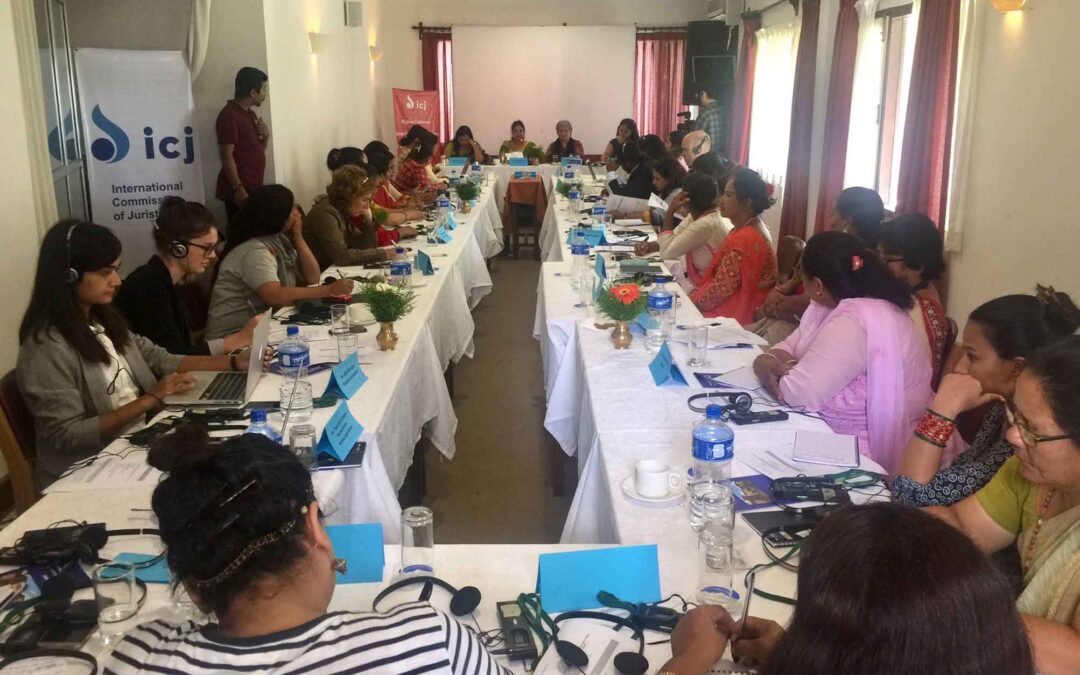
Today, the ICJ concluded its Regional Conference on Women Human Rights Defenders as Political Actors, which gathered in Kathmandu women human rights defenders (WHRDs) from all over Nepal who were recently elected during the local elections in May 2017.
They were joined by Bushra Gohar, a former Member of Parliament in Pakistan, Ahmed Naaif of the Maldivian Democracy Network, and Sherene Xavier, a filmmaker and WHRD from Sri Lanka.
The discussions focused on how the newly-elected WHRDs can continue to advance human rights in their new roles as elected officials.
Under Nepal’s Local Level Election Act 2017, political parties are required to field female candidates for half of the executive posts (mayor/deputy mayor) and at least 40% for membership at the local community councils.
In May 2017, during the first local election held in the country in almost 20 years, approximately 20,000 women stood for elections, including WHRDs.
Most of the women candidates, however, were fielded by the political parties for the deputy mayor posts. At least 92% of the candidates fielded for the mayoral posts were men.
The discussions during the two-day conference (28-29 August 2017) focused on how these affirmative measures should be utilized by women human rights defenders in Nepal to advance equal participation of women in public affairs and further their advocacy for human rights.
There was some caution expressed by some of the women that these measures may reinforce the already disadvantaged place women hold in public life and may also be viewed as tokenism.
Participants in the conference discussed as well how as WHRDs, they would need to deal with human rights abuses allegedly committed by their political parties against women.
The need for WHRDs in politics to have their own support system was also emphasized during the conference.
The participants of the conference ran under the banner of various political parties in Nepal.
The National Alliance of Women Human Rights Defenders of Nepal collaborated with ICJ in organizing the conference.
The conference was opened with a keynote speech from Justice Sapana Pradhan Malla of the Supreme Court of Nepal, who spoke about the challenging path women politicians face.
Former Chief Justice Kalyan Shrestha, Commissioner of the ICJ, chaired the opening ceremonies.