Apr 14, 2013 | Articles, Nouvelles
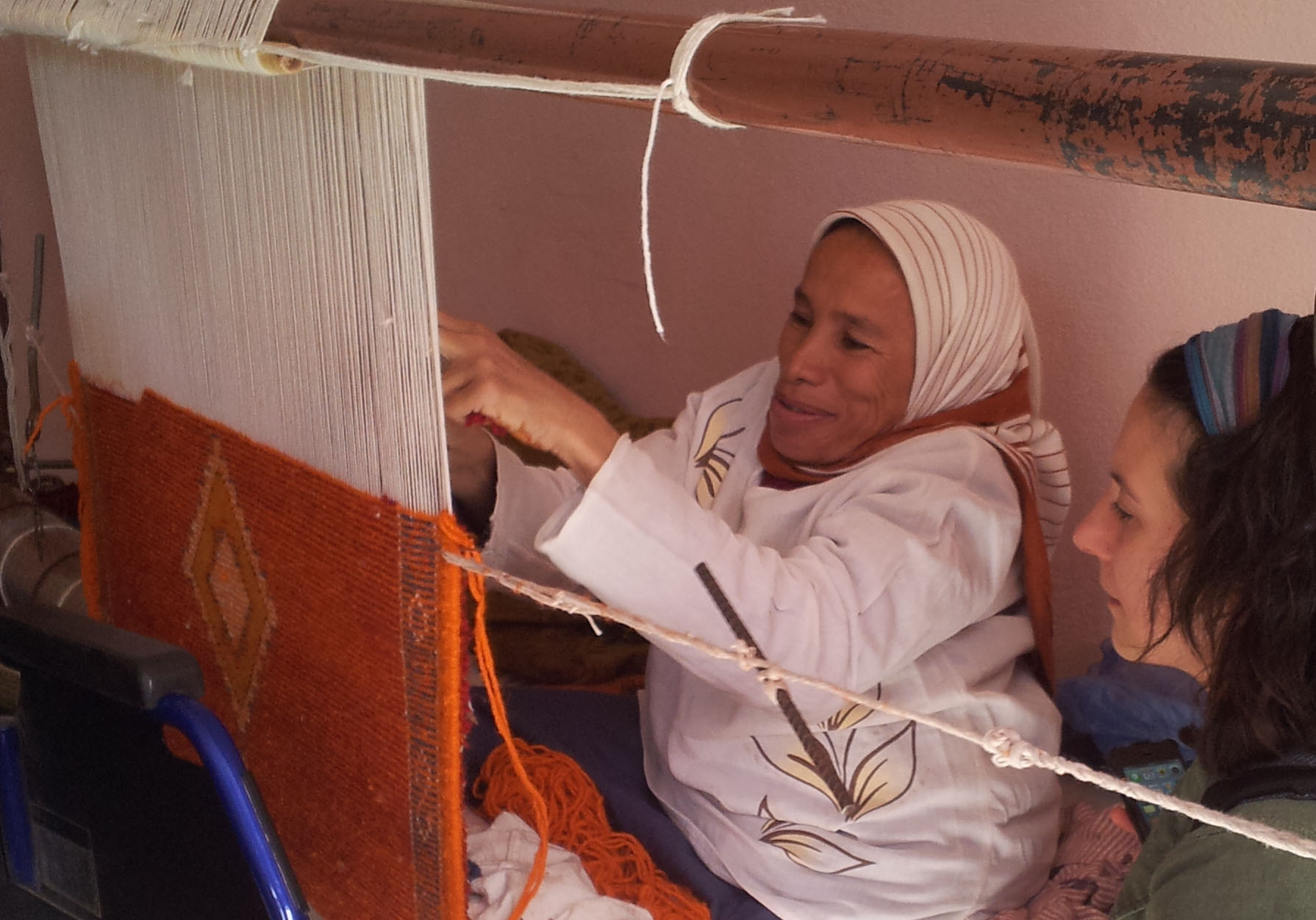 Du 7 au 13 avril 2013, la CIJ a organisé une mission de recherche sur l’accès à la justice pour les victimes de violations des DESC au Maroc.
Durant la mission, organisée par le Programme sur les droits économiques, sociaux et culturels en collaboration avec le Programme régional Afrique du Nord et Moyen Orient, la CIJ s’est entretenue avec un large éventail d’acteurs impliqués dans la protection des droits économiques, sociaux et culturels, notamment les Présidents des Chambres administrative, civile et sociale de la Cour de Cassation du Royaume du Maroc ; des membres du Conseil National des Droits de l’Homme ; des représentants de syndicats de travailleurs dont l’Union Marocaine du Travail (UMT) et la Confédération Démocratique du Travail (CDT), ainsi que des associations de protection des consommateurs telles que la Fédération Nationale des Associations du Consommateur (FNAC), la section UNICONSO de Casablanca ainsi que l’Association Marocaine de Protection et d’Orientation du Consommateur (AMPOC) à Kenitra.
La CIJ a également rencontré des représentants de la société civile marocaine, y compris l’Union d’Action Féminine (UDF) et l’Association Démocratique des Femmes du Maroc (ADFM) ainsi que des victimes de violations des DESC.
Les entretiens menés durant la mission ont permis d’identifier les avancées mais aussi un nombre d’obstacles tant juridiques que pratiques empêchant un accès efficace à la justice pour les victimes de violations des DESC ainsi que les causes profondes de ces violations.
Les personnes rencontrées ont principalement insisté sur le fait que malgré qu’une nouvelle Constitution progressiste ainsi que de nouvelles lois respectueuses des droits de l’homme aient été adoptées ces dernières années, leur application demeure problématique.
Cette mission a permis de récolter de nombreuses informations qui complèteront celles déjà compilées depuis juillet 2012 par le biais de recherche documentaires et ateliers, et permettront de publier un rapport sur l’accès à la justice pour les violations des DESC au Maroc, qui sera publié au courant de l’année 2013.
Contexte de la mission
Dans le cadre de projets nationaux tels que celui sur le Maroc, le Programme sur les droits économiques, sociaux et culturels de la CIJ vise à contribuer à l’amélioration de la responsabilité pour les violations de droits de l’homme et l’accès à la justice pour tous, notamment les victimes de violations et de menaces à l’encontre des droits économiques, sociaux et culturels.
La CIJ a démarré un processus de recherches au niveau national afin d’identifier les obstacles et les possibilités pour l’accès à la justice, ainsi qu’un processus de consultations et de collaborations avec ses partenaires locaux afin de déterminer des stratégies pouvant remédier aux manquements identifiés.
Selon les besoins identifiés, la CIJ appuiera la mise en œuvre de recommandations et interviendra à travers des actions telles des formations et des contributions juridiques.
Apr 12, 2013 | News
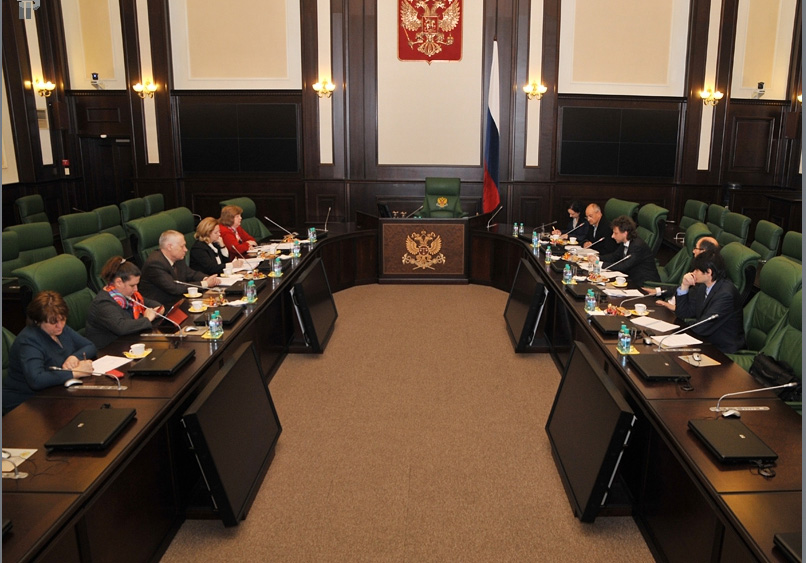
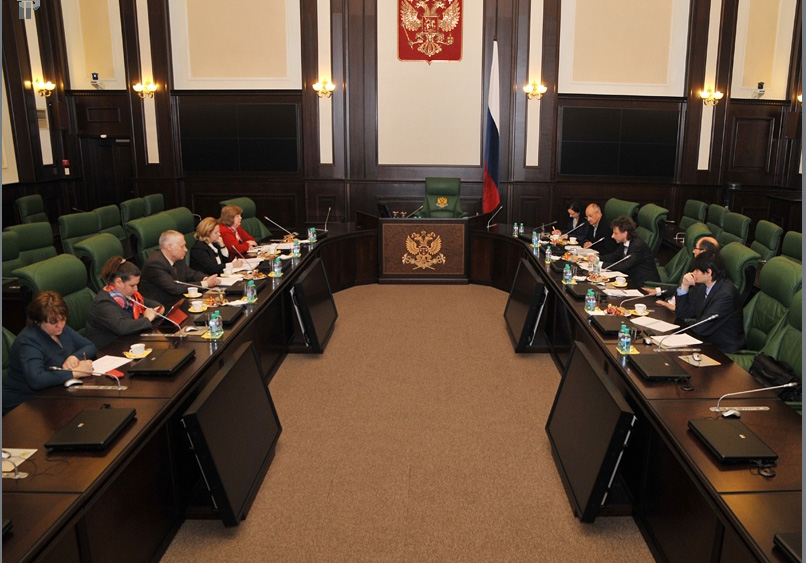 On Monday 15 April, the ICJ will hold a roundtable seminar with judges of the Russian Federation’s highest courts, on disciplinary action against judges in the Russian Federation.

Apr 8, 2013 | News
On 5 April, Vietnam’s Hai Phong court sentenced Doan Van Vuon and three of his male relatives to imprisonment sentences ranging from two to five years, for attempted murder. The ICJ condemns this decision.
Mr. Doan’s wife and sister-in-law received suspended sentences in the form of 18 and 15 months respectively for resisting persons in the performance of their official duties.
Vuon, along with his brothers Doan Van Quy and Doan Van Sinh, as well as Sinh’s son Doan Van Ve, were initially arrested on 5 January 2012 for injuring four policemen and two soldiers with homemade weapons when more than 100 security forces tried to forcibly evict them from their fish farm in a district approximately 90 kilometres from Hanoi.
The four men had remained in detention for more than a year waiting for the commencement of last week’s trial.
Under Article 9(3) of the International Covenant on Civil and Political Rights, which Vietnam is a signatory to, states that “anyone arrested or detained on a criminal charge shall be brought promptly before a judge…and be entitled to trial within a reasonable time or to release”.
“Pre-trial detention should only be used in criminal proceedings as a last resort, and for the shortest possible time period, when required to meet the needs of justice,” said Emerlynne Gil, ICJ’s International Legal Advisor for Southeast Asia in Bangkok. “The prolonged period of detention in this case is detrimental as it could possibly have violated the defendants’ presumption of innocence and due process.”
During the trial, it was concerning to note that all the judges involved in the case were members of the ruling Vietnamese Communist Party and were carrying out their judicial duties under the central government’s directions.
Article 14 of the ICCPR further guarantees that a person is “entitled to a fair and public hearing by a competent, independent and impartial tribunal established by law”.
“Vietnam’s blatant disregard of the right to fair trial violates not only their international law obligations, but also the proper administration of justice in a criminal proceeding,” said Emerlynne Gil.
The ICJ also observed that the court’s judgment failed to incorporate the fact that the defendants had acted in such a manner only as an attempt to defend and protect their land, which was legitimately given to them by the Vietnamese government in 1993.
The right to receive a reasoned judgment is an inherent principle in safeguarding fair trial rights and it is the general rule that court rulings must include the essential findings, evidence and legal reasoning.
“The failure to adhere to the minimum international fair trial standards reveals Vietnam’s serious lack of commitment towards upholding the rule of law and protecting human rights in the country; a violation most certainly not in line with the profile of a country wishing to obtain a seat at the UN Human Rights Council 2014-2016 tenure,” Gil added.
In the event of an appeal, the ICJ calls that the Vietnamese Court of Appeal be consistent with the international basic judicial guarantees and the principles of independence, impartiality and competency.

Apr 5, 2013 | News
The ICJ urged the Cambodian Bar Association to make it clear that its new Code of Ethics, launched today, does not restrict the freedom of lawyers to express their opinions.
Article 17 of the new Code of Ethics states (in an informal translation by the ICJ) that “All interventions made publicly or through public media by lawyers in their capacity as lawyers may be permitted only within the framework of strict compliance with the duties of the legal profession. Such interventions require diligence.”
This language replaces Article 15 of the 1995 Code, which demanded all lawyers in Cambodia to “inform” or “consult” the Bar President before making media statements.
“The language of the new Article 17 is an improvement over the old Code, but it is ambiguous and raises fears that lawyers will not be able to exercise their right to express their opinions freely,” said Emerlynne Gil, ICJ’s International Legal Advisor on Southeast Asia. “The Cambodian Bar Association must clarify that under Article 17, lawyers, like all others, can address important legal and policy issues publicly and openly.”
The ICJ asserted that the Bar Association must clearly and publicly state that Article 17 shall not be construed to mean that lawyers must seek permission prior to engaging in public activities in their professional capacity.
The ICJ also expressed concern over the previous statements made by the Bar Association implying that lawyers could be sanctioned for expressing certain views of the country’s laws or legal reforms. During a press conference on 15 March 2013, the Bar Association said that the purpose of Article 17 was to prevent lawyers from misinterpreting the law and thus “making society chaotic”.
“The best means of increasing public awareness of the laws and strengthening the rule of law is to encourage greater public discussion,” said Emerlynne Gil. “Disagreements about the meaning of laws are part of the nature of the legal process and should be encouraged publicly.”
The ICJ recognizes the grave difficulties of facing the legal system in Cambodia, where fewer than 1000 active lawyers must provide services for a population of more than 14 million people. “We share the Cambodian Bar Association’s concerns about the need to uphold the professional competence and integrity of its members,” said Emerlynne Gil. “However, this concern should be addressed through efforts to improve legal education expertise rather than limiting the right of lawyers to freedom of expression.”
For questions and clarifications, please contact Ms. Emerlynne Gil, International Legal Adviser for Southeast Asia, tel. no. +662 619 8477, fax no. +662 6198479 or emerlynne.gil@icj.org
Apr 2, 2013 | News
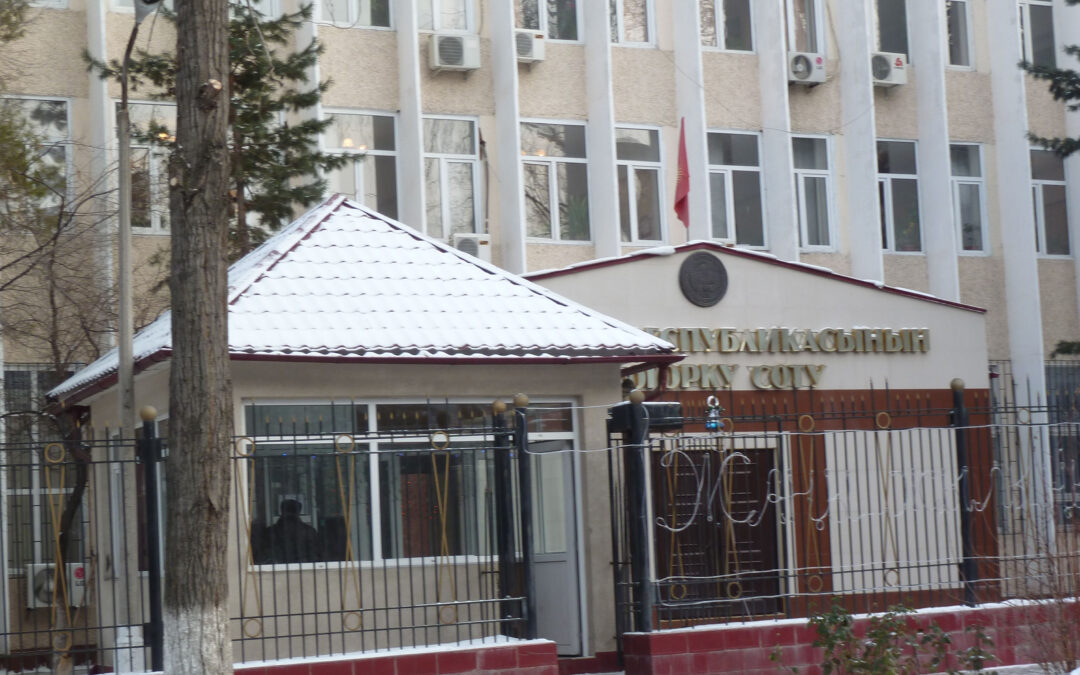
The ICJ today expressed serious concern at the physical assault of lawyers Tatiana Tomina and Ulugbek Usmanov at a Supreme Court hearing in Bishkek this morning.
The ICJ called on the Kyrgyzstan authorities to take effective measures to protect the physical security of lawyers as well as all other parties in court proceedings, and to hold accountable those responsible for today’s attacks.
The assaults took place during the Supreme Court hearing in the case against Shamshidin Niyazaliyev, who was recently acquitted of charges relating to the outbreak of widespread ethnic violence in the South of Kyrgyzstan in June 2010. During the hearing, several persons present in the courtroom subjected the two lawyers and the mother of Shamshidin Niyazaliyev to beatings. No immediate steps were taken by the Court to prevent the beatings, which continued for several minutes before security officers intervened.
“There has been a pattern of serious attacks on lawyers in Kyrgyzstan, but this is the first time that the authorities have failed to guarantee the security for lawyers at the Supreme Court”, Róisín Pillay, Director of the ICJ Europe Programme said today. “These attacks violate the international obligations of the Kyrgyz authorities to ensure the security of lawyers and to protect the right to a fair trial. No justice is possible unless all the parties to the judicial process are fully protected and lawyers are able to discharge their functions without harassment, or attack”.
International standards, including the UN Basic Principles on the Role of Lawyers, require that “where the security of lawyers is threatened as a result of discharging their functions, they shall be adequately safeguarded by the authorities”.
It is now essential for the credibility of the judicial system that today’s assaults are thoroughly and independently investigated and that those responsible are brought to justice, the ICJ emphasised.
According to lawyer Tatiana Tomina, the attacks began when about 15 men and women started insulting, pushing and punching the lawyers as they walked into the courtroom. The defendant’s mother, the only apparent supporter of the defendant allowed into the Court, was kicked and punched in the head. When the defence lawyers began to read a statement, several women attacked Tatiana Tomina and attempted to take documents from her by force. The panel of presiding judges did not attempt to prevent the beatings and security officers only appeared after several minutes had passed. Tatiana Tomina and the mother of the defendant were able to escape through the back door of the court. However Ulugbek Usmanov was unable to escape and suffered more serious injuries.
The Court adjourned the hearing for two hours. After the hearing resumed, only a few security persons were present in the courtroom and the defendant’s mother did not attend this part of the hearing. Following five minutes of deliberations the Supreme Court overturned the earlier acquittal.
Reportedly, at the hearing, defence statements were constantly interrupted, lawyers were insulted and prevented from speaking in defence of their clients and the Court refused to call any of the five witnesses of the defence. In her comments to the ICJ, lawyer Tatiana Tomina stated: “[i]n three years nothing has changed either in terms of the attitude towards lawyers or in terms of the investigation of criminal cases, which has not improved at all.” The ICJ has previously raised concerns at violence against lawyers in cases related to ethnic disturbances in the south of Kyrgyzstan in 2010.
CONTACTS
Róisín Pillay, Director, ICJ Europe Programme, roisin.pillay@icj.org
Temur Shakirov, Legal Adviser, ICJ Europe Programme, temur.shakirov@icj.org
ICJ condemns assaults on lawyers in Supreme Court (Full Text in Russian, PDF)