Feb 15, 2013 | News
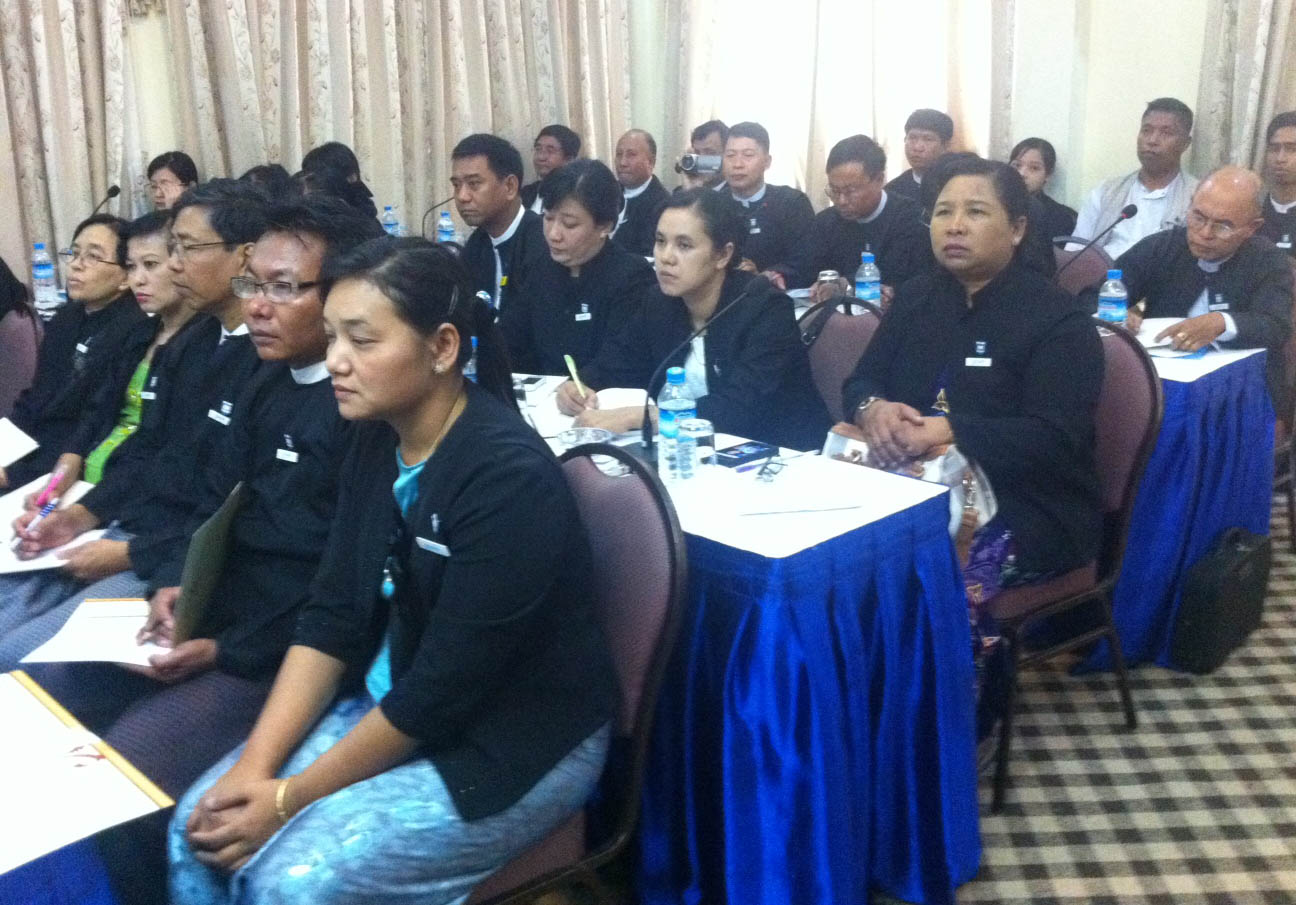 The ICJ, in collaboration with the Office of the Attorney General of the Union of Myanmar, held a two-day academic seminar in Naypyitaw entitled “The Prerogative Writs under the 2008 Constitution of Myanmar”.
At the event, which took place on 14 – 15 February 2013, opening remarks were given by His Excellency Dr. Tun Shin, Attorney General of the Union of Myanmar and Mr. Saman-Zarifi, Regional Director for Asia and the Pacific of International Commission of Jurists, to a total of approximately 40 public prosecutors and judges.
The aim of the seminar was to discuss and contribute to the application of the recently re-introduced prerogative writs, namely, habeas corpus, mandamus, prohibition, quo warranto and certiorari, under Myanmar’s 2008 Constitution which came into force in early 2011.
The seminar allowed ICJ to not only gain a deeper insight into the current writ practices in Myanmar but also permitted the Office of the Attorney General to draw best practices from other countries, such as Australia, Philippines and Malaysia.
The topics addressed during the seminar were the importance of prerogative writs in ensuring justice and upholding the rule of law; specific international standards on the independence of prosecutors and their role in the justice system; how writ cases are handled, challenges faced by the prosecutors and the burden of proof; and the powers of the judiciary to promulgate its own rules to ensure fundamental rights, as in the case of the Supreme Court in Philippines.
Panelists included Justice John Dowd AO QC, former Chairman of the International Commission of Jurists; Justice Adolfo Azcuna, Chancellor of the Philippine Judicial Academy and former Justice of the Supreme Court of the Philippines; and Mr. Andrew Khoo of the Malaysian Bar Council.

Feb 15, 2013 | News
The ICJ today expressed its great concern at reports that the police in Zimbabwe have carried out what appears to be an unjustifiable raid against human rights defenders, Zimbabwe Peace Project (ZPP).
On 11 February 2013, police reportedly raided the offices of ZPP, a non-profit organization comprising of non-governmental organizations (NGO) and church-based organizations, and confiscated mobile phones, wind up radios, files with donor information, political violence reports and DVDs.
“The continuous attacks against NGOs by law enforcement agencies clearly shows that there are systematic assaults on human rights defenders which are closing the democratic space within which human rights defenders operate”, said Martin Masiga, Deputy Director of the ICJ Africa Regional Program. “It appears that the police are trying to discourage human rights defenders from engage with citizens of Zimbabwe to exchange information concerning their rights and freedoms, as the country heads for a referendum and election during the course of the current year”.
The police undertook the raid pursuant to a search warrant issued by the Superintendent of the C.I.D Law and Order Division of the Zimbabwe Republic Police (ZRP).
The search warranted stated that there were reasonable grounds to believe that ZPP had committed offences in terms of the Criminal Law (Codification and Reform) Act, the Immigration Act, and the Customs and Excise Act.
On the same evening eight police officers were discovered by the security team that provides rapid response for the ZPP at the ZPP premises, after an alarm had been tripped.
The police officers demanded to gain access into the office of ZPP Director, Jestina Mukoko. However the office was locked and they could not enter. These officers did not have a search warrant.
The ICJ welcomes the statement of the Co-Minister of Home Affairs, the honourable Theresa Makone, which says that the Cabinet is concerned “over the overzealousness of some police officers”, and that the police “must follow the basic principle of policing” which is to investigate “to arrest rather than arresting to investigate”.
The ICJ urges the Zimbabwean government to ensure that it protects human rights defenders in accordance to United Nations Human Rights Defenders Declaration, endorsed by all the States including Zimbabwe.
The ICJ further urges the Zimbabwean government to stand by its commitments to the Zimbabwean Constitution, the African Charter on Human and Peoples’ Rights and the International Covenant on Civil and Political Rights, to which it is a state party. These instruments expressly guarantee the right to the freedom of opinion, expression and association.
Lastly, the ICJ further urges the police in Zimbabwe to conduct impartial investigations into allegations of violations of human rights, to hold accountable those responsible for human rights abuse and to protect human rights defenders and NGOs that work for the protection of human rights in Zimbabwe.
Contact:
Martin Okumu-Masiga, Deputy Director of the ICJ Africa Regional Programme, t: +27110248268; e-mail: martin.okumu-masiga@icj.org

Feb 13, 2013 | Адвокаси, Юридические заявления
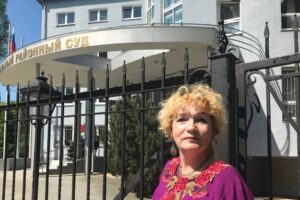
Международная комиссия юристов представляет свое юридическое заключение, относительно возможного лишения адвокатской лицензии Разии Нурмашевой и Искандера Алимбаева, адвокатов Алматинской городской коллегии адвокатов.
Производство, возбужденное в отношении адвокатов, ставит вопрос о соблюдении норм и стандартов международного права, в частности, международных обязательств Казахстана по защите роли адвокатов и их права на справедливое судебное разбирательство.
Kazhakstan-Expert legal opinion Nurmasheva-legal submission-2012-RUS (полный текст, PDF)
Feb 5, 2013 | News
The 10th ratification of the Optional Protocol to the International Covenant to Economic, Social and Cultural Rights (OP-ICESCR) is an historical boost for the international protection of these rights, the ICJ said today.
“With the deposit today at the UN of the 10th instrument of ratification by Uruguay, we are very close to the long awaited entry into force of this new treaty”, said Sandra Ratjen, ICJ Senior Legal Adviser on Economic, Social and Cultural Rights (ESCR).
The OP-ICESCR will enter into force in three months from today and will provide for remedies at the international level to victims of violations of economic, social and cultural rights.
The Protocol establishes mechanisms that enable the UN Committee on Economic, Social and Cultural Rights to examine complaints and initiate inquiries in cases of violations of these rights in the State parties whenever the victims could not obtain justice at the national level.
“We warmly welcome the 10th ratification of the Optional Protocol and we congratulate Uruguay on this decisive step for the protection of economic, social and cultural rights nationally and internationally”, said Wilder Tayler, ICJ’s Secretary General. “This is an important moment for the ICJ. We have a long-standing commitment and work in favour of the recognition of ESCR as legal and justiciable rights, on the same footing as other human rights.”
The ICJ urges States parties to the ICESCR to join the first ten States who became party to the Optional Protocol – Ecuador, Mongolia, Spain, El Salvador, Argentina, Bolivia, Bosnia and Herzegovina, Slovakia, Portugal and Uruguay.
The ICJ stresses that only when a significant number of States will have become party to the Protocol, the mechanisms it offers will be effectively accessible to a great number of victims of violations of ESCR.
Contact:
Sandra Ratjen, ICJ Senior Legal Adviser on Economic, Social and Cultural Rights, t: +41 22 979 38 35 ; e-mail: sandra.ratjen(at)icj.org
NOTE:
The ICJ is a member of the International NGO Coalition for the OP to the ICESCR. Together with the other members of the Coalition, the ICJ is involved in the Campaign in favour of the ratification of the OP-ICESCR.
Feb 1, 2013 | Communiqués de presse, Nouvelles, Publications, Rapports
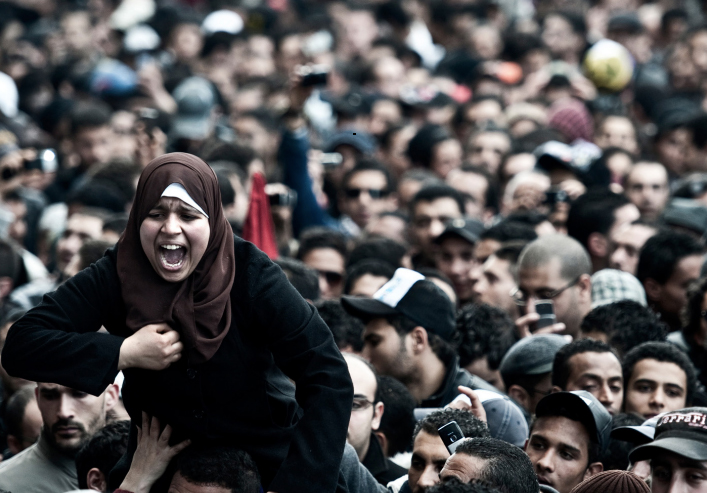
Dans un nouveau rapport, la CIJ appelle les autorités, en particulier l’Assemblée nationale constituante, à élaborer et adopter une constitution qui tienne compte de l’emsemble des points de vue du peuple tunisien et adhère aux droits et normes internationales.
Publié aujourd’hui, le rapport intitulé Renforcer l’Etat de droit et garantir les droits de l’Homme dans la Constitution – Un rapport sur le processus de réforme constitutionnelle en Tunisie.
Il analyse le processus de réforme constitutionnelle en Tunisie et propose des recommandations pour des réformes juridiques et institutionnelles visant à assurer une Constitution qui reflète le droit et les normes internationales.
Contact
Said Benarbia, Conseiller juridique à la CIJ pour le programme sur le Moyen Orient et l’Afrique du nord, m: 216 21 765 152, e-mail: said.benarbia(a)icj.org
Tunisie-Rapport Constitution-publications-2013-FRA (Rapport complet en PDF)
Credit photo: © Copyright Remi OCHLIK/IP3