Dec 11, 2012 | Événements, Nouvelles
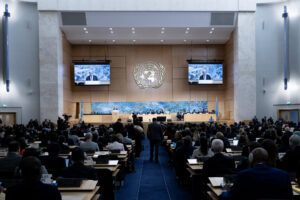
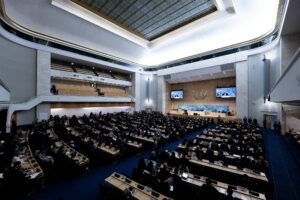
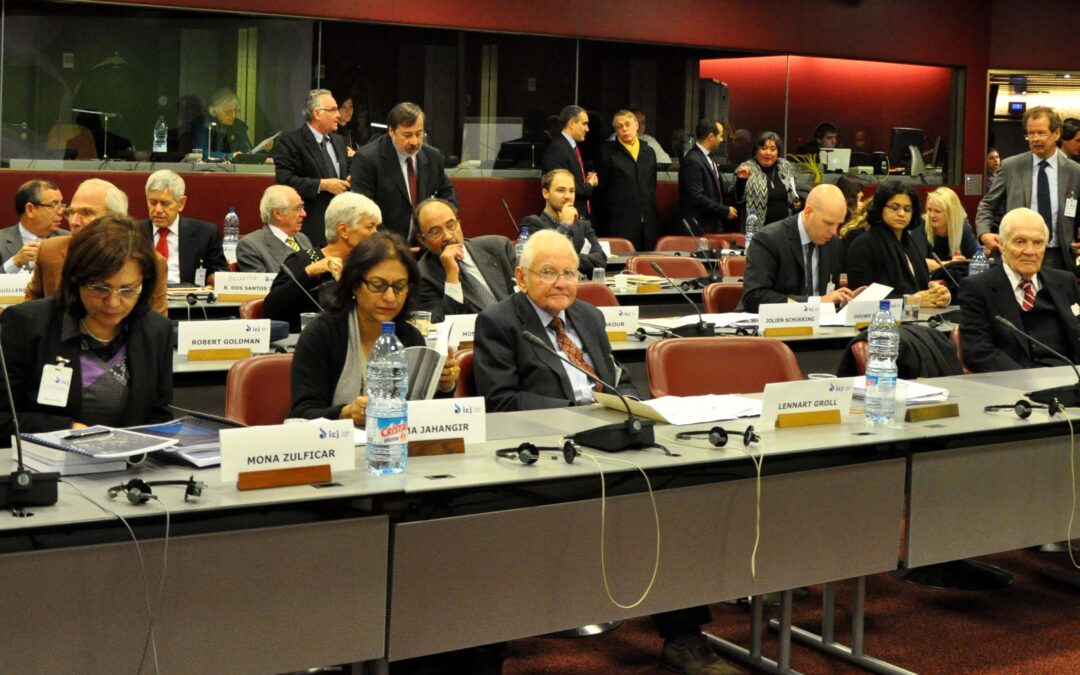
Le 17ème Congrès mondial de la Commission Internationale de Juristes (CIJ) s’est ouvert aujourd’hui à Genève.
Plus d’une centaines de magistrats, d’avocats et de défenseurs des droits de l’Homme réputés, venus des cinq continents, vont travailler sur une déclaration finale visant à développer et renforcer les systèmes de justice et les mécanismes internationaux de recours en cas de violations des droits de l’Homme.
Le Congrès, qui marque le 60ème anniversaire de la CIJ, a l’ambition d’influencer significativement les systèmes judiciaires internationaux en élaborant des principes et des objectifs susceptibles de faire progresser l’Etat de droit et les droits de l’Homme.
Suite dans le PDF ci-dessous:
Congress ICJ2012-Press release-2012-fr (Communiqué de presse complet en PDF)

Dec 6, 2012 | News
The impeachment process against Chief Justice Shirani Bandaranayake ignores international standards and practice, says the ICJ.
The ICJ urges the government of Sri Lanka to take immediate steps to uphold the independence of the judiciary and adhere to international standards and practice on the removal of judges.
Today, the Chief Justice and her team of lawyers walked out of the impeachment hearing in protest over the denial of a fair hearing.
Protests supporting and opposing the impeachment process erupted on Tuesday 4 December 2012 as the Chief Justice appeared before the Parliamentary Select Committee for the second time.
Over two hundred judges, several hundred lawyers, trade union leaders and a large number of religious dignitaries assembled to show their support for the Chief Justice.
Opposition members of parliament publicaly called on the Government to adhere to principles of fair trial and due process in the impeachment process.
Reportedly the Chief Justice has been denied the right to cross-examine potential witnesses and has not been provided full disclosure of the allegations against her.
The Parliamentary Select Committee has also denied the request for a public hearing and prohibited observers from attending.
“Parliament is pushing ahead with an impeachment process that fails to adhere to fundamental principles of due process and fair trial,” said Sam Zarifi, ICJ Asia Pacific Director. “The Chief Justice’s impeachment is part of a relentless campaign waged by the Rajapaksa Government to weaken the judiciary. An independent judiciary is the principle check on the exercise of executive and legislative powers – vital to the functioning of a healthy democracy.”
As recalled by the United Nations Special Rapporteur on the independence of judges and lawyers in a statement last month, international standards require that judges be removed only in exceptional circumstances involving incapacity or gross misconduct.
A cornerstone of judicial independence is that tenure of judges be secure.
“Any process for removal must comply with all of the guarantees of due process and fair trial afforded under international law, notably the right to an independent and impartial hearing,” Zarifi added.
The United Nations Human Rights Committee, in its 2003 concluding observations on Sri Lanka, expressed concern that the procedure for removing judges under Article 107 and the complementary Standing Orders of Parliament was not compatible with Article 14 of the International Covenant on Civil and Political Rights.
The Parliamentary Select Committee, presiding over the impeachment hearings is composed exclusively of members of parliament, the majority of which are drawn from the Government coalition. No members of the judiciary are permitted to sit on the Select Committee.
Comparatively in India, an impeachment hearing is presided over by a three-member committee comprised of a Supreme Court justice, a Chief Justice of any High Court and an eminent jurist.
In South Africa, a judge may only be removed after a hearing by the Judicial Service Commission, a body composed of members of the judiciary.
In Canada, all removal proceedings are conducted by the Judicial Council, a body composed of 38 chief and associate chief justices of the superior courts and chaired by the Chief Justice of Canada.
The United Nations Special Rapporteur on the independence of judges and lawyers warned against the misuse of disciplinary proceedings as a reprisals mechanism against independent judges.
The timing of the impeachment motion raises questions. The impeachment motion was initiated just days after the Chief Justice ruled against the Government on a controversial bill – the Divi Neguma Bill – before Parliament.
If the bill passed, the Minister of Economic Development (who is also the President’s brother Basil Rajapakse) would have had control over a fund of 80 billion Sri Lankan rupees (611 million USD).
Attacks on the judiciary have been escalating in recent months. In July 2012, Government Minister Rishad Bathiudeen threatened a Magistrate in Mannar and then allegedly orchestrated a mob to pelt stones at the Mannar courthouse.
In early October, the ICJ condemned the physical assault on the secretary of the Judicial Service Commission, Manjula Tillekaratne.
In early November, the ICJ issued a report, Sri Lanka’s Crisis of Impunity, documenting how the erosion of state accountability and judicial independence, has led to a crisis of impunity in Sri Lanka.
The ICJ calls on the Government of Sri Lanka to take active measures to promote the independence of the judiciary and rule of law by adhering to international standards and practice in impeachment hearings.
Contact:
Sam Zarifi, ICJ Asia-Pacific Regional Director, (Bangkok), t:+66(0) 807819002; email: sam.zarifi@icj.org
Sheila Varadan, ICJ Legal Advisor, South Asia Programme (Bangkok), t: +66 857200723; email: sheila.varadan@icj.org

Dec 6, 2012 | News
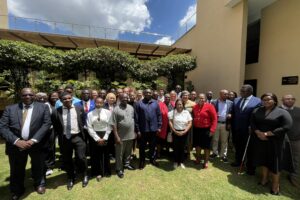
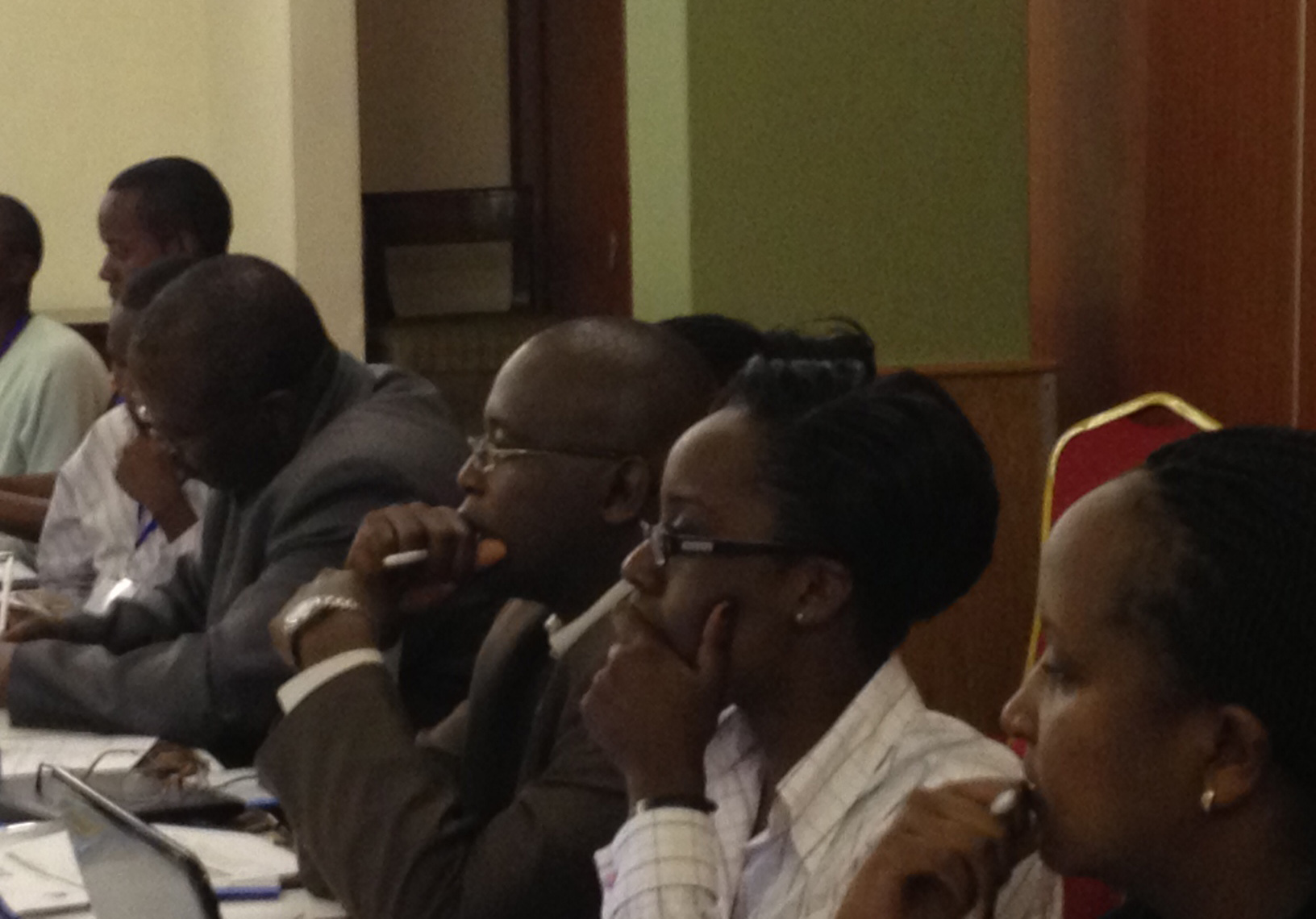 On 6 December 2012, the ICJ and ICJ-Kenya convened a roundtable entitled “LGBT Human Rights” in Nairobi.
The event brought together members of the Kenyan bar with LGBT human rights activists for a full discussion of criminal and constitutional law and international human rights standards, as well as possibilities for reform through either judicial or parliamentary processes.
The event was opened by Lawrence Mute, a former national human rights commissioner, signatory of the Yogyakarta Principles, and winner of ICJ-Kenya’s Jurist of the Year award.

Dec 4, 2012 | Доклад миссии установления фактов, Доклады, Новости, Пресс-релизы, Публикации
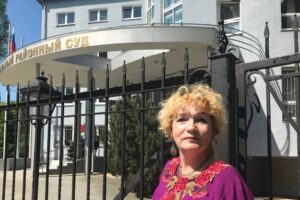
В опубликованном сегодня докладе Международная комиссия юристов призывала к проведению комплексных реформ дисциплинарной системы в отношении судей в Российской Федерации, как средства обеспечения независимой судебной власти, являющейся реальным блюстителем верховенства права.
Доклад МКЮ «Защита правосудия: дисциплинарное производство в отношении судей в Российской Федерации» описывает дисциплинарные меры в отношении судей, в частности, прекращение полномочий судей.
В докладе рассматривается, как увольнения и дисциплинарная система влияют на независимость судей, имеющей ключевое значение для верховенства права и права на справедливое судебное разбирательство.
Число судей, чьи полномочия ежегодно прекращаются в России необычно высоко, говорится в докладе.
«Угроза прекращения судейских полномочий, и неопределенность оснований, по которым судейские полномочия могут быть прекращены, влияет на способность всех судей действовать независимо», – сказала Роушин Пиллей, директор программы МКЮ по Европе. «Угроза дисциплинарного взыскания может «висеть» над судьей в течение многих лет, так как нет срока давности для таких деяний. Это делает судью восприимчивым к давлению со стороны судебной иерархии или исполнительной власти».
При принятии дисциплинарных мер, не обеспечиваются в достаточной степени гарантии справедливых процедур в отношении судей, отмечается далее в докладе.
В докладе содержатся рекомендации по реформе российского законодательства и процедур, касающихся судебного дисциплиного производства, направленные на укрепление гарантий для судей от злоупотреблений.
Кроме того, подчеркивается, что более глубокая и универсальная культура уважения к судебной власти, ее независимость, а также ощущение автономности и реальной судейской власти в рамках самой судебной системы, необходимы для предотвращения злоупотреблений в судебном дисциплинарном производстве.
“Такая реформа должна проводиться на основе консультаций с представителями гражданского общества, академических кругов и правовых экспертов, а также с органами судебной власти”, добавила Роушин Пиллей.
Настоящий доклад составлен по результатам миссии МКЮ в Российскую Федерацию в апреле 2012 г. для оценки гарантий в отношении дисциплинарной процедуры, оснований для дисциплинарного производства и прекращения полномочий судей и их потенциального эффекта на гарантии пребывания в должности судьи и независимость судебной власти.
В состав миссии вошли: Азар Качалия, судья Высшего апелляционного суда ЮАР и комиссар МКЮ; Алехандро Салинас, чилийский юрист и член Консультативного совета Центра независимости судей и адвокатов; Роушин Пиллей, директор Региональной программы МКЮ по Европе, и Тимур Шакиров, правовой советник Региональной программы МКЮ по Европе.
Участники миссии встретились с Председателем Верховного Суда; с судьями Высшего Арбитражного Суда, в том числе членами Дисциплинарного судебного присутствия и Комиссии по этике Совета судей; с Судебным департаментов при Верховном Суде; с членами Совета по развитию гражданского общества правам человека при Президенте Российской Федерации и его главой, Советником Президента РФ; с рядом бывших судей, которые были уволены или ушли в отставку; с учеными-экспертами по вопросам дисциплинарной ответственности судей и судебной системы; а также с адвокатами и правозащитными НПО.
Контакты:
Роушин Пиллей, директор Региональной программы МКЮ по Европе, roisin.pillay(a)icj.org
Тимур Шакиров, правовой советник Региональной программы МКЮ по Европе, temur.shakirov(a)icj.org
Russia-ICJ Mission-Press release-2012-rus (full text in pdf)
Russia-ICJ Mission Reprot-Publications-2012-rus (full text in pdf)
![Arthur Chaskalson mourned]()
Dec 3, 2012 | News
 It was with great sadness that the ICJ learned of the death of its former President Arthur Chaskalson at the age of 81 this weekend.
A renowned human rights lawyer and a tenacious opponent of the apartheid government, Arthur Chaskalson was part of Nelson Mandela’s defence team in the 1963 Rivonia Trial, which saw Mandela and other ANC leaders sentenced to life.
He then helped establish the Legal Resources Centre, a non-profit organization seeking to use the law to pursue justice and human rights around South Africa. He ran the Centre from 1978 until 1993.
President of South Africa’s Constitutional Court (1994-2001), Chaskalson became Chief Justice of the same court from 2001 to 2005, after which he retired.
He was elected as an ICJ Comissioner in 1995 and served as President of the organization from 2002 to 2008.
In 2005, the ICJ convened the Eminent Jurists Panel, comprising eight leading international experts who spent three years conducting a worldwide investigation into the impact of counter-terrorism laws and practice on human rights globally.
Arthur Chaskalson chaired the panel, which held 16 hearings covering forty countries in all regions of the world.
Chaskalson also played a major role in the panel’s report, which concluded that many States had confronted the threat of terrorism with ill-conceived measures undermining the Rule of Law and human rights, which has proved to be an important reference for the post 9/11 era.