Aug 28, 2020 | Agendas, Events
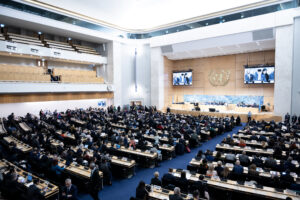
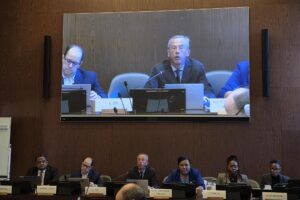
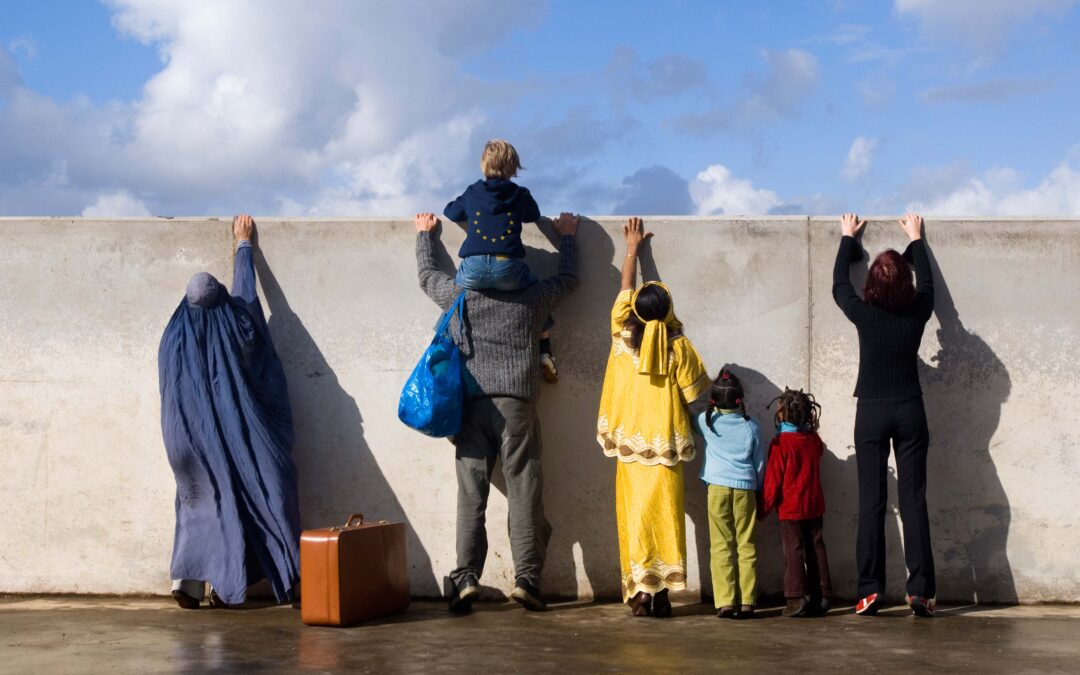
Today, the ICJ and LPRC began a series of online seminars on international human rights mechanisms for the protection of migrants, refugees and asylum seekers for 44 Kazakh defense lawyers and human rights defenders of NGOs.
The seminars took plance via online communication on 28 and 29 of August and 12 of September. The event was of particular importance given the impact of COVID-19 on migration processes in Kazakhstan and Central Asia region.
The seminar lectures were delivered by prominent international experts in the field of migration from the International Commission of Jurists, representatives of the UNHCR Complaints Division, the European Council for Refugees and Exiles (ECRE) and the Greek National Human Rights Commission.
The participants discussed international principles and fundamental documents on expulsion, detention and protection, briefly overviewed the economic, social and cultural rights of migrants, and considered the hierarchy of legal acts in Kazakhstan, the relationship between international law and national legislation. The training program consisted of theoretical and practical components to strengthen the gained knowledge and develop practical skills for the protection of migrants at the international level. A training module was prepared for the participants with an overview of access to international human rights mechanisms.
This seminar complements previously conducted trainings for 105 defense lawyers and human rights defenders of non-profit organizations on strategic judicial protection of migrants and ensuring the exchange of best practices and strategies between Kazakhstani and European lawyers.
The seminar was organized by the Legal Policy Research Center (LPRC) in cooperation with the International Commission of Jurists (ICJ) and the International Commission of Jurists – European Institutions (ICJ-EI), with financial support from the European Union under the project “Strengthening Legal Protection of Migrants’ Rights in Kazakhstan”. The project aims to improve the access of migrants to national and international instruments for the protection of human rights in Kazakhstan, as well as to stimulate professional training and cooperation between specialized lawyers from Kazakhstan and their European counterparts.
Aug 14, 2020 | Новости
Сегодня МКЮ опубликовала, в переводе на русский язык, сборник дел, рассмотренных Комитетом ООН по правам человека (КПЧ) в связи с жалобами на пытки и иные виды жестокого обращения.
В сборнике представлены соображения КПЧ по всем индивидуальным сообщениям по статьям 7 и 10 МПГПП, рассмотренным по существу в отношении Республики Таджикистан с 1999 по 2019 год.
Сборник представляет собой справочное пособие для адвокатов, судей, представителей гражданского общества и других заинтересованных сторон, работающих над защитой от пыток и жестокого обращения в Таджикистане. Представленные дела показывают, как Комитет ООН по правам человека применяет принципы своей практики в отношении пыток и других видов жестокого обращения в конкретном правовом и фактическом контексте Таджикистана. Авторитетное толкование МПГПП со стороны Комитета может помочь при рассмотрении этих вопросов в национальных судах, а также в ходе законодательной реформы и при разработке государственной политики по вопросам борьбы с пытками.
Кроме того, благодаря подборке и анализу фактических обстоятельств индивидуальных обращений из Таджикистана, сборник также служит выявлению основных системных проблем, которые представляют сложность для таджикских правоохранительных органов и национальной системы правосудия. Сборник открывается введением, в котором освещаются основные проблемы, выявленные Комитетом почти за 20 лет рассмотрения дел из Таджикистана. В решениях Комитета можно проследить несколько закономерностей относительно фактического функционирования системы уголовного правосудия Таджикистана. Взятые в совокупности, данные решения представляют собой важный источник фактологических данных, при помощи которых можно установить, где система правосудия на практике не в состоянии защитить права человека, гарантированные МПГПП, а часто – и законодательством и процедурами Таджикистана.
Хотя свобода от пыток и других жестоких, бесчеловечных или унижающих достоинство видов обращения и наказания по статье 7 является основной темой публикации, она логически включает ссылки и на другие статьи МПГПП, включая статью 2(3) (право на эффективное средство правовой защиты от нарушения прав, закрепленных в Пакте), статью 6 (право на жизнь), статью 10 (условия содержания под стражей), статью 9 (право на свободу) и статью 14 (право на справедливое судебное разбирательство). Эти права анализируются только в том случае, если заявители ссылаются на них по делам, связанным с жалобами на нарушение прав, предусмотренных статьями 7 или 10 МПГПП.
Настоящий сборник дел публикуется в рамках Глобальной инициативы МКЮ по восстановлению прав и подотчетности, с тем чтобы сделать доступными дела Комитета по правам человека, связанные с пытками и другими видами жестокого обращения, широкому кругу работников системы правосудия и взаимодействующих с ней лиц. Он будет полезен как независимым практикам, таким как адвокаты, правозащитники и организации гражданского общества, так и судебным органам, а также Министерству юстиции, Министерству здравоохранения и Министерству внутренних дел, к компетенции которых могут относиться некоторые из рассматриваемых вопросов. Публикация может представлять не меньший интерес для МПО, работающих в Таджикистане или заинтересованных в такой работе.
Aug 10, 2020 | News
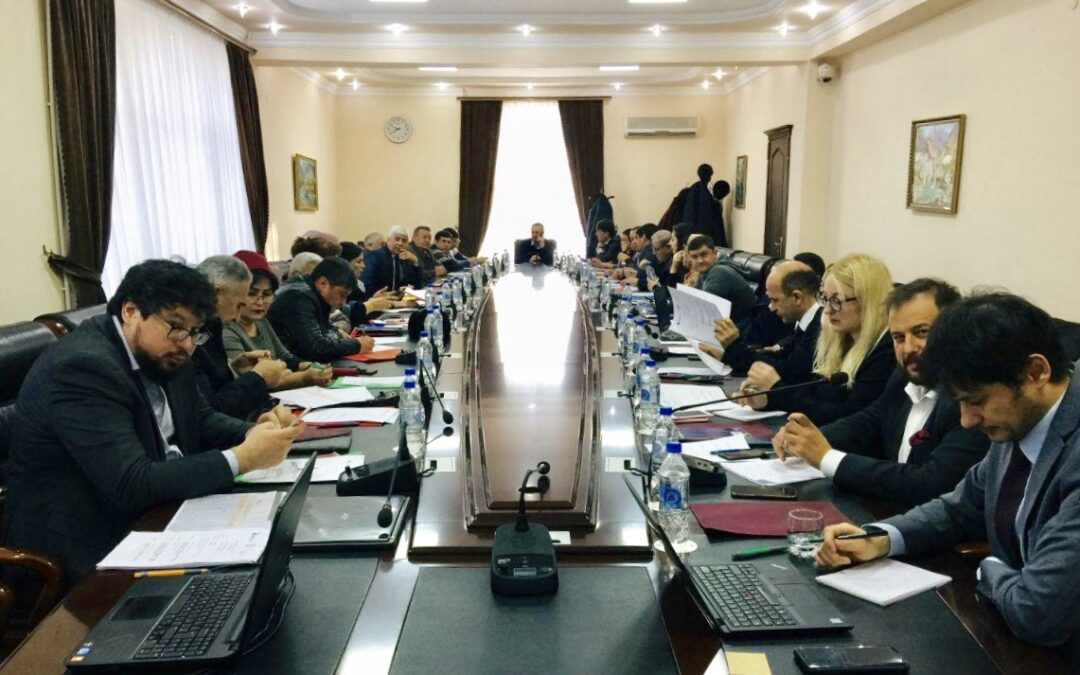
Today, the ICJ published the recommendations from a workshop on strengthening the work of the specialized bodies of the Bar Association on the protection of the rights of lawyers in Tajikistan, held in December 2019.
The event was held on 16 and 17 December 2019 in the city of Gulistan in the North of Tajikistan for members of the Commission for the Protection of the Rights of Lawyers (CPRL) of the Union of Lawyers of the Republic of Tajikistan.The ICJ organized this seminar in cooperation with the Union of Lawyers of Tajikistan and the Legal Policy Research Centre, Kazakhstan.
The President of the Tajikistan Union of Lawyers, heads of regional departments of the Union of Lawyers, who are members of the Commission on the protection of the rights of lawyers, and other lawyers took part in the two-day discussion.
Based on the outcome of this discussion, the participants elaborated the recommendations to strengthen the work of the Commission. Those recommendations are provided below.
The recommendations have been formulated on the basis of the views expressed by members of the Tajikistan Union of Lawyers addressing the situation in Tajikistan, and are not intended necessarily to reflect the legal or policy positions or other views of the ICJ or to be applicable to other contexts.
This set of recommendations deals with key challenges faced by the CPRL in upholding the independence, security and effective work of lawyers in Tajikistan. However, the list of these issues is not exhaustive nor comprehensive and should be further reviewed in light of ongoing developments in the legal profession and the justice system as a whole.
The recommendations should be read in light of the international law obligations of Tajikistan to protect the right of access to a lawyer, to a fair trial and to effective remedies for violations of human rights, including under the International Covenant on Civil and Political Rights, and international standards on the role of lawyers, including the UN Basic Principles on the Role of Lawyers.
Recommendations in English (PDF)
Recommendations in Russian (PDF)
Aug 10, 2020 | Новости
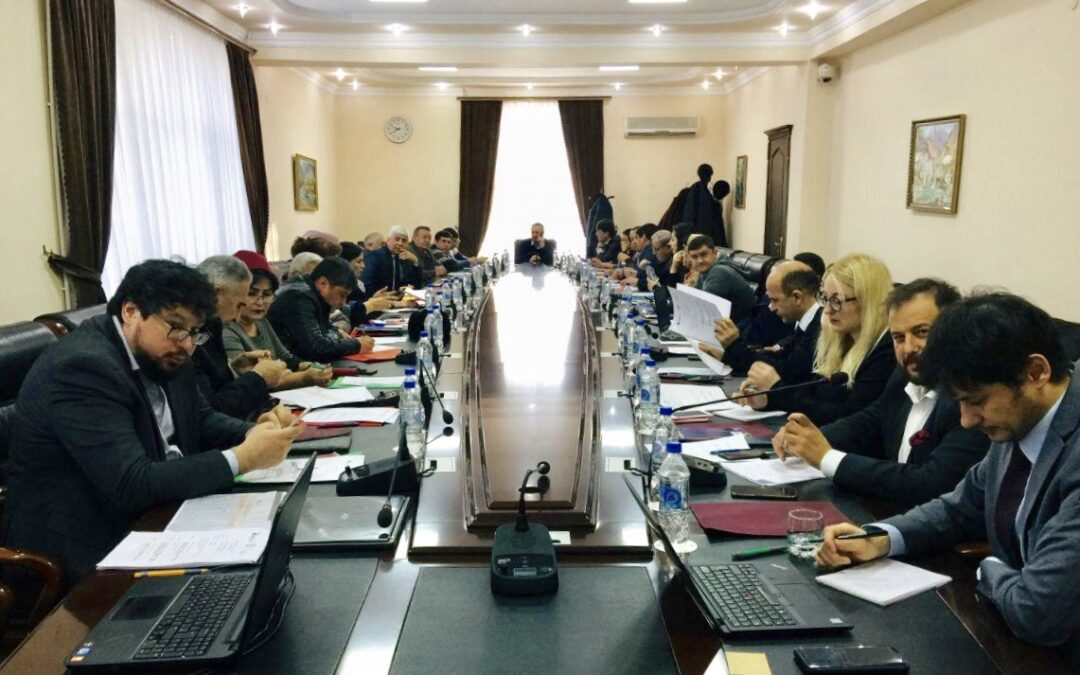
Сегодня Международная комиссия юристов (МКЮ)_опубликовала рекомендации по итогам семинара по усилению работы специализированных органов Коллегии адвокатов по защите прав адвокатов в Таджикистане, проведенного в декабре 2019 года.
Данное мероприятие было проведено 16-17 декабря 2019 года в городе Гулистан на севере Таджикистана и было организовано для членов Комиссии по защите прав адвокатов («Комиссия») Союза адвокатов Республики Таджикистан. Семинар проводился МКЮ совместно с Союзом адвокатов Таджикистана и Центром исследования правовой политики (Казахстан).
За два дня в обсуждении приняли участие председатель Союза адвокатов Таджикистана, руководители региональных подразделений Союза адвокатов, которые являются членами Комитета по защите прав адвокатов, и другие адвокаты. По итогам обсуждения участники подготовили рекомендации по усилению деятельности Комиссии, которые приведены ниже.
Рекомендации были разработаны на основе мнения членов Союза адвокатов Таджикистана относительно ситуации в Таджикистане и не обязательно отражают правовую или политическую позицию и иные взгляды МКЮ, а также могут не быть применимыми в других контекстах.
Данный перечень рекомендаций касается основных проблем, с которыми сталкивается Комиссия при обеспечении независимости адвокатов, их безопасности и эффективной работы в Таджикистане. При этом перечень рассматриваемых вопросов не является исчерпывающим и всеобъемлющим, но подлежит дальнейшему редактированию в свете происходящих процессов в адвокатуре и системе правосудия в целом.
Рекомендации подлежат прочтению в свете международно-правовых обязательств Таджикистана по защите права на доступ к адвокату, справедливое судебное разбирательство и эффективные средства правовой защиты от нарушения прав человека, в том числе в соответствии с Международным пактом о гражданских и политических правах, а также международными нормами в отношении роли адвокатов, включая Основные принципы ООН, касающиеся роли юристов.
Рекомендации на русском языке (PDF)
Рекомендации на английском языке (PDF)
Aug 7, 2020 | News
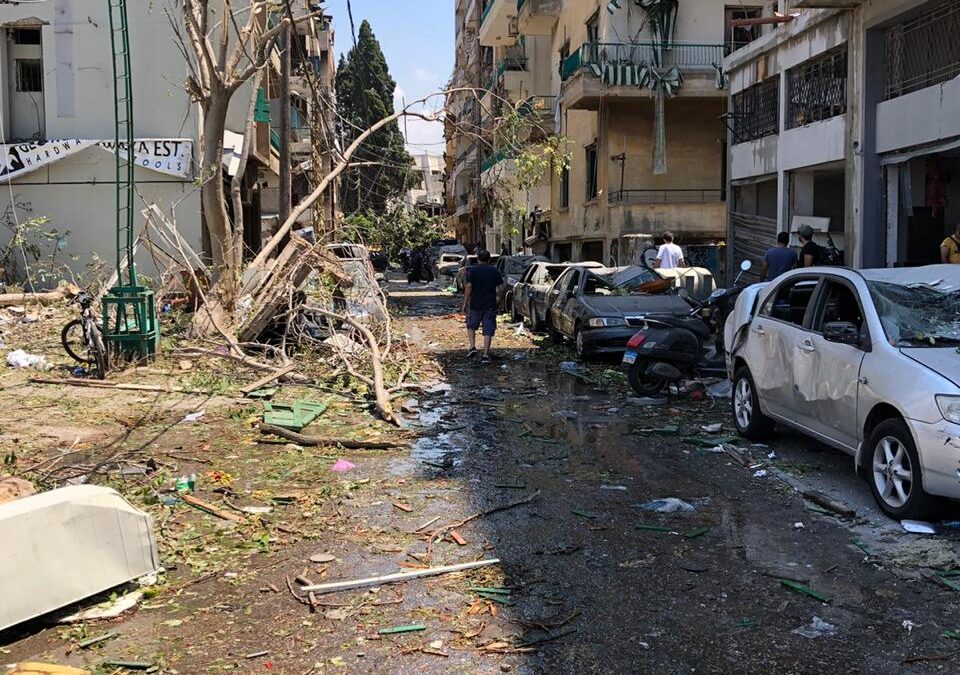
The ICJ deplores the explosion at Beirut’s port district on 4 August 2020 that caused a large number of fatalities and casualties and calls for the prompt establishment of a special, independent, impartial and transparent mechanism to investigate the devastating blast with a view to ensuring accountability and redress for the victims.
The shockwave from the blast rippled across Lebanon’s capital, killing at least 157 people and injuring some 5,000 others, according to latest figures. The death toll is expected to rise as emergency services continue to search for dozens of missing persons under the debris of destroyed buildings. The Governor of Beirut estimates that the widespread destruction caused by the explosion has left some 300,000 people without shelter after their homes were rendered uninhabitable.
“Tuesday’s explosion has immeasurably compounded the suffering of a society already reeling from political unrest, prolonged economic mismanagement and a surge in COVID-19 cases,” said Said Benarbia, Director of the ICJ’s Middle East and North Africa Programme.
“Given the Lebanese legal system’s politicization and lack of independence and accountability, Lebanon should work with the United Nations to establish a special, independent mechanism to carry out the investigation in line with international law and standards with a view to establishing the facts, making recommendations for appropriate accountability measures, including criminal prosecutions if warranted, and for preventing such a catastrophe from happening again.”
According to international human rights law and standards, and specifically the Minnesota Protocol on the Investigation of Potentially Unlawful Death, the probe into the explosion must be prompt, thorough, independent, impartial and transparent.
While the Lebanese authorities have pledged to conduct a “transparent investigation” into the blast and mete out “severe punishment” to those responsible, given the Lebanese justice system’s systemic flaws and shortcomings, the persistent allegations of corruption, and a long-entrenched culture of impunity and de facto immunity of the country’s political leadership, the ICJ considers that the Lebanese authorities would not be capable of conducting such an investigation in a manner compatible with international human rights law and standards. The organization has extensively documented how improper executive influence and interference have continued to undermine the independence of the Office of the Public Prosecutor and of Lebanon’s judiciary. As a result, allegations of political corruption, chronic mismanagement and systematic abuses of power have not been investigated and have therefore gone unpunished over the years, eventually fuelling the 2019-2020 popular uprising against the government and the political system.
The ICJ has called on the Lebanese authorities to introduce and implement extensive legal and policy reforms to strengthen judicial independence and accountability in the country. None of these reforms have materialized.
“The independent mechanism should have a mandate to establish the truth, provide adequate, effective and prompt redress and reparation to the victims for the harm suffered, including through the award of compensation, and by ensuring that those responsible are held to account,” Benarbia concluded.
The ICJ further calls on the international community to support the establishment of such a mechanism.
The international community should also provide humanitarian aid and facilitate its delivery within the country ensuring that it reaches first the most in need and vulnerable among the population as they struggle to access healthcare, shelter, food and water.
The Lebanese authorities must be transparent and ensure the right of each individual to receive the necessary information on the potential health risks in the aftermath of the explosion, including as result of exposure to toxic fumes. Consistent with their obligations under international human rights law and standards to guarantee the rights to life and health, the Lebanese authorities must also take all necessary measures to prevent people from suffering additional harm.
Thus far, a number of Beirut port officials have been placed under house arrest pending the Lebanese authorities’ investigation into the explosion. With respect to this, the ICJ calls on the authorities to ensure due process and fair trial guarantees to persons deprived of their liberty who may eventually be charged with criminal offences.
Background information
President Michel Aoun and Prime Minister Hassan Diab have linked the blast to a stockpile of approximately 2,750 tons of ammonium nitrate, which had been stored in a waterfront warehouse at Beirut’s Port district for at least six years. The circumstances surrounding the ignition of the highly combustible material, however, remain unclear.
Furthermore, reports indicate that customs officials overseeing the ammonium nitrate’s storage at the warehouse contacted Lebanese officials, including members of the judiciary, on multiple occasions to alert them to the danger posed by such storage and to seek guidance on how to deal with it, but their repeated calls were ignored.
The explosion strikes Lebanon as it grapples with multiple crises, including the COVID-19 pandemic, and against the backdrop of an ongoing popular protest movement against rampant corruption, dysfunctional institutions and sectarian power structures, in addition to an acute State-induced socio-economic crisis that has eroded living standards and left many destitute and literally hunger-stricken. Successive governments and legislative authorities have consistently failed to effectively address these hardships and institute comprehensive and necessary reforms.
Contact
Said Benarbia, Director of the ICJ Middle East and North Africa Programme, t: +41 22 979 38 17; e: said.benarbia(a)icj.org.
Download
English (PDF)
Arabic (PDF)