Jul 28, 2020 | Advocacy, Cases, Legal submissions, News
The ICJ intervened today in the case of the potential surveillance by Polish secret services of Mikołaj Pietrzak, lawyer and chair of the Warsaw Bar Association, Dominika Bychawska-Siniarska et Barbara Grabowska-Moroz of the Helsinki Foundation of Human Rights, and Wojciech Klicki and Katarzyna Szymielewicz of the foundation Panoptykon.
The five applicants applied to the European Court of Human Rights claiming a violation of their rights to privacy and to an effective remedy because the system of secret surveillance and collection of metadata created by the Law amending the Law of the Police of 15 January 2016 and the Anti-Terrorism Law of 16 June 2016 does not provide sufficient guarantees for this rights’ protection.
In its third party intervention, the ICJ addressed (1) the application of the principles of prescription by law, necessity and proportionality, in circumstances when mass and targeted surveillance interferes with the right to respect for private life under Article 8 ECHR, in particular when it affects lawyers and human rights defenders; (2) the obligations of States under Article 8 and 6 ECHR to ensure respect for the confidentiality of lawyer-client relations and the principle of legal professional privilege.
The ICJ argued that secret surveillance, in particular where it interferes with the confidentiality of communications of lawyers and human rights defenders, and endangers lawyer-client privilege protected under Articles 8 and 6 ECHR, should be subject to specific safeguards and to particularly strict scrutiny of its necessity and proportionality.
The third party intervention can be found here: PIetrzak&HF_v_Poland-AmicusCuriae-ECtHR-Cases-2020-ENG
Jul 22, 2020 | Advocacy, Cases, Legal submissions, News
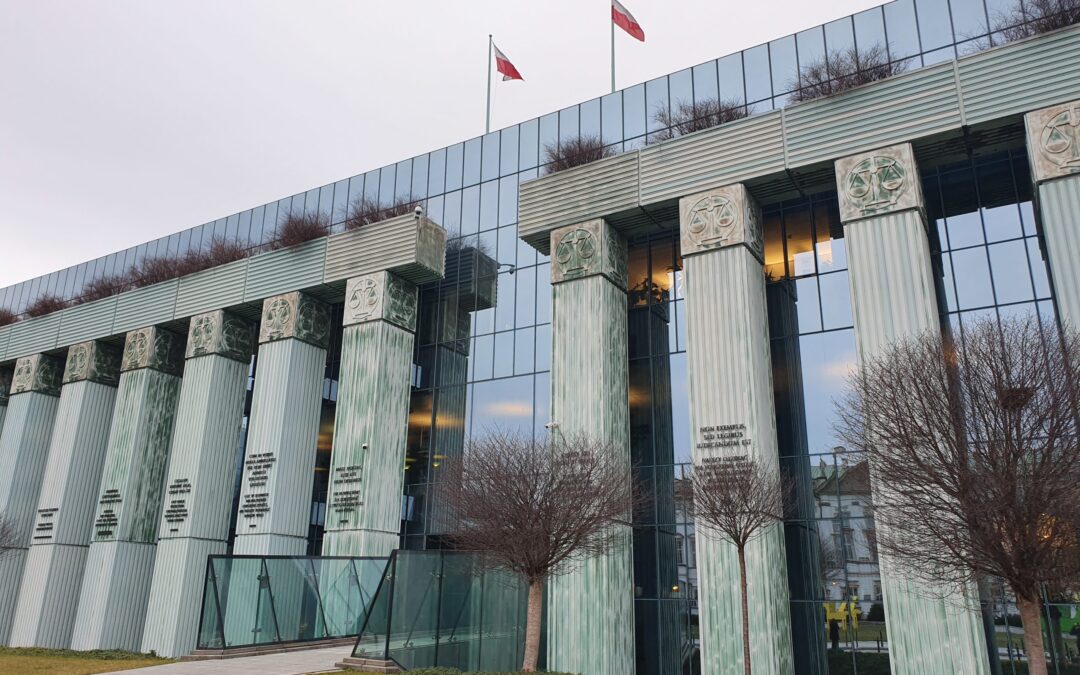
The ICJ and Amnesty International have submitted a joint third party intervention before the European Court of Human Rights in the case of Judges Mariusz Broda and Alina Bojara.
The case concerns the premature termination of their mandates as vice-presidents of the regional tribunal of Kielce in Poland. The two judges, that had been appointed to six-year terms in 2014, had their position revoked by the Minister of Justice in 2018.
The revocation was based on article 17.1 of the Law of 12 July 2017 modifying the Law on the Judicial System. This provision, presented and approved by the ruling Law and Justice Party (PiS), gave the Minister of Justice the power to revoke courts’ presidents and vice-presidents without justified grounds and with no possibility of appeal.
The two judges applied to the European Court of Human Rights alleging that they had been denied access to a tribunal to challenge the termination of their mandate .
In their third party intervention, the ICJ and Amnesty International analyze international standards on judicial independence, including as regards the role court presidents and vice-presidents, and the consequences of these standards for the right of access to court under Article 6.1 ECHR. The intervention also analyses the recent legislative and policy developments that have seriously undermined the independence of the Polish judiciary.
Read the full intervention here: Broda_v_Poland-AmicusCuriae-ICJ&AI-Cases-2020-ENG.
Jul 10, 2020 | Events, News
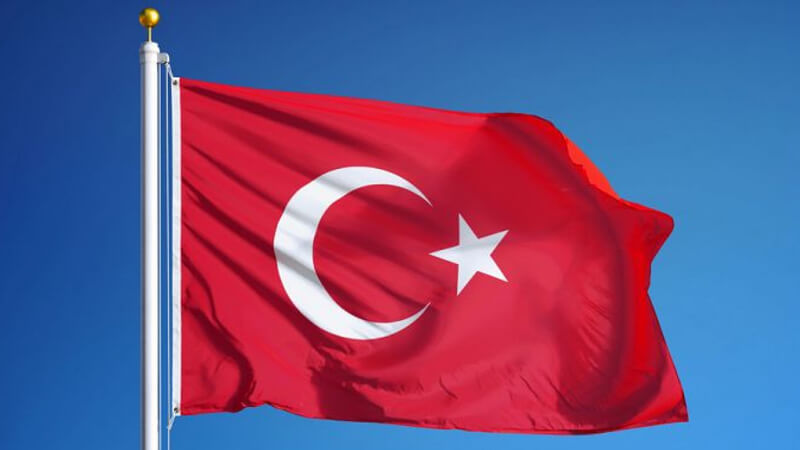
Today, the ICJ and the Human Rights Joint Platform (IHOP) are hosting an online conference to take stock of the current situation of access to justice and the rule of law in Turkey and discuss compliance with international standards and the Turkish Constitution.
The online conference features international and European experts and will address the shortcomings in accessing justice in the country both in terms of the capacity of the justice system to ensure the respect and protection of human rights and of the independence and effectiveness of the justice system itself.
The conference will take stock of the state of access to justice in Turkey after four years of extraordinary and worrisome events for the Rule of Law and human rights in the country. During this period, Turkey has experienced a severe deterioration in the rule of law. The state of emergency, in force between 2016 and 2018, has led to the cleansing of the judiciary and restricted the capacity of lawyers and civil society to act, and increasingly dramatically the arrests and trials of some of their members under spurious charges of terrorism, offences against the State, insult to the nation or its President, and hate speech crimes.
Many of the measures undertaken under the state of emergency included mass dismissal of public servants, judges and prosecutors without ensuring due process guarantees and the degradation of the justice system, depriving the judiciary of essential guarantees to ensure its independence from the political authorities.
The conference will address how these developments impacted the capacity of people in Turkey, and in particular those belonging to marginalised groups, to access justice for their human rights, and what should be done to ensure that such access exists and is effective.
As a result of the conference, a draft statement on the state of access to justice in Turkey will be issued to provide Turkish authorities with recommendations on how to ensure effective and independent access to justice for human rights protection.
Jun 4, 2020 | News
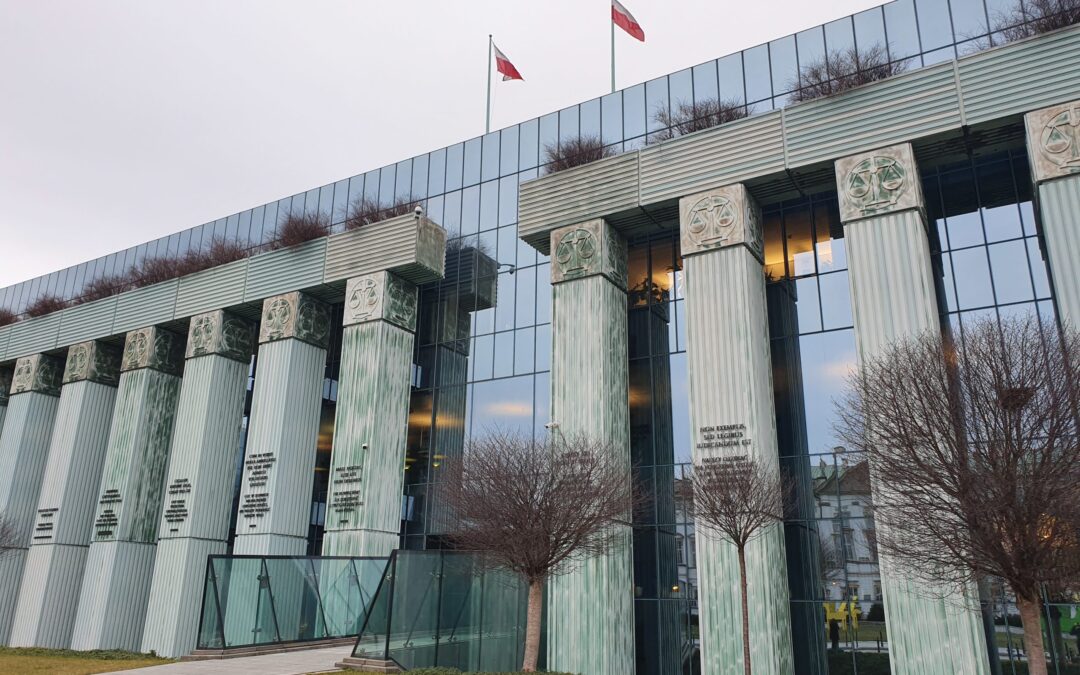
The ICJ today raised concern at the threat of criminal proceedings against Judge Igor Tuleya on charges arising from the judge’s independent exercise of his judicial functions. The ICJ called on the Disciplinary Chamber of the Supreme Court not to lift his immunity at its 9th June hearing.
Judge Tuleya faces prosecution for having allowed the presence of media in a sensitive case concerning the investigations on the 2017 budget vote in the Polish House of Representatives (Sejm) that took place without the presence of the opposition.
He has been charged with ‘failing to comply with his official duties and overstepping his powers’ for having allegedly disclosed a secret of the investigation to ‘unauthorized parties’.
The accusations stem from the initiative of the judge to allow media and the public in the courtroom while issuing his ruling. Usually rulings on investigations are issued behind closed doors in Poland but the criminal procedure code allows judges to make the hearing public “in the interest of justice”.
“Judge Tuleya should not face any criminal proceedings to begin with for his actions in delivering his ruling in public, which is in accordance with national law”, said Massimo Frigo, Senior Legal Adviser for the ICJ Europe and Central Asia Programme. “His immunity must be maintained and the ‘Muzzle Act’ that allowed for these abusive prosecutions should be immediately scrapped.”
These proceedings are the first case of implementation the draconian Act amending the Law on the Common Courts, the Law on the Supreme Court and Some Other Laws, signed into law on 4 February and widely known as the ‘Muzzle Act’, which gave competence to waive judicial immunity to the Disciplinary Chamber of the Supreme Court.
“As highlighted by the recent ruling of the EU Court of Justice, the Disciplinary Chamber of the Supreme Court is not independent and is open to undue influence or interference by political authorities. It should therefore not rule on issues pertaining to the disciplinary or criminal responsibility of judges, including a waiver of their immunity,” Massimo Frigo added.
Background
On 19 November, the Court of Justice of the European Union (CJEU) delivered a ruling in the case A.K. and others (C-585/18, C-624/18, C-625/18), on a preliminary question by the Supreme Court of Poland. The preliminary question asked whether the recently established Disciplinary and Extraordinary Chambers of the Supreme Court could be considered to be independent.
The CJEU ruled that a court cannot be considered independent “where the objective circumstances in which that court was formed, its characteristics and the means by which its members have been appointed are capable of giving rise to legitimate doubts, in the minds of subjects of the law, as to the imperviousness of that court to external factors, in particular, as to the direct or indirect influence of the legislature and the executive and its neutrality with respect to the interests before it and, thus, may lead to that court not being seen to be independent or impartial with the consequence of prejudicing the trust which justice in a democratic society must inspire in subjects of the law.”
Based on this ruling, the Labour, Criminal and Civil Chambers of the Supreme Court declared that the Disciplinary and Extraordinary Chambers of the Supreme Court were not properly constituted and independent.
According to the UN Basic Principles on the Independence of the Judiciary, judges are entitled to a fair hearing in all disciplinary proceedings (principle 17). In order for such a hearing to be fair, the decision-maker must be independent and impartial.
International and European standards on the independence of the judiciary provide that judges should have immunity from criminal prosecution for decisions taken in connection with their judicial functions in the absence of proof of malice, and any procedure for removing immunity must itself be independent (see for instance, UN Special Rapporteur on the Independence of Judges and Lawyers, paras 65-67 and 98; Council of Europe Committee of Ministers, para 68; Consultative Council of European Judges, para 20; ICJ Practitioners Guide no 13, pp. 27-30).
On 26 February 2020, the Polish Prosecutor’s Office requested a waiver of Judge Tuleya’s immunity in order to press criminal charges which might lead to imprisonment. The waiver will be examined on the 9 June 2020 by the Disciplinary Chamber of the Supreme Court appointed by the government.
In an open letter of 5 February 2020, 44 ICJ Commissioners and Honorary Members denounced the recent legislative changes adopted by the Polish government threatening the role and the rights of judges and denouncing the risks faced by legal practitioners when fighting for the rule of law. Two weeks later, the risks highlighted by the letter have become reality for an increasing number of Polish judges, including Judge Tuleya.
Contact:
Massimo Frigo, Senior Legal Adviser, Europe and Central Asia Programme, e: massimo.frigo(a)icj.org, t: +41 22 979 38 00
Jun 3, 2020 | Advocacy, Cases, Legal submissions
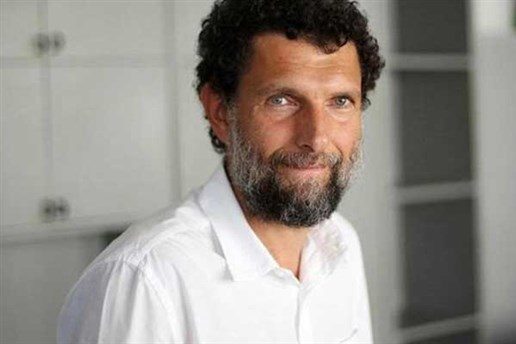
The Council of Europe Committee of Ministers should issue a decision at its 4 June 2020 meeting directing Turkey to release the human rights defender Osman Kavala and drop all charges against him, the ICJ, Human Rights Watch and the Turkish Human Rights Litigation Support Project said today.
The three groups have submitted a detailed submission to the Committee of Ministers of the Council of Europe, which oversees enforcement of European Court of Human Rights judgments. The groups outlined how Turkey continues to violate Kavala’s rights by flouting a landmark judgment, that became final on May 11 requiring his immediate release.
“The European Court ruled that Kavala’s detention is unlawful, and their binding judgment requires Turkey to release him immediately,” said Emma Sinclair-Webb, Turkey director at Human Rights Watch. “The Committee of Ministers, at its June 4 meeting, should press Turkey to comply and issue a clear message that no Council of Europe member state should be silencing human rights defenders.”
The judgment is particularly significant because it is the first final ruling against Turkey in which the court determined that in interfering with an individual’s rights Turkey acted in bad faith and out of political motivations, violating Article 18 of the European Convention on Human Rights. The court said that by detaining Kavala since November 2017 and prosecuting him, the Turkish authorities had “pursued an ulterior purpose, namely to silence him as human rights defender.”
The European Court judgment in Kavala v. Turkey (Application no. 28749/18) found violations of Article 5(1) (right to liberty and security), Article 5(4) (right to a speedy decision on the lawfulness of detention), and the rarely used Article 18 (limitation on use of restrictions on rights) taken together with Article 5(1). It required Turkey to release Kavala and said that any continuation of his detention would prolong the violations and breach the obligation to abide by the judgment in accordance with Article 46(1) of the European Convention on Human Rights..
A court ordered Kavala’s detention on November 1, 2017 on bogus allegations that he used the 2013 Istanbul Gezi Park protests as a pretext for an attempted coup, and that he was involved in the July 15, 2016 attempted military coup. On February 18, 2020, Kavala and his eight co-defendants were acquitted on charges of “attempting to overthrow the government by force and violence” in the Gezi Park trial .
But Kavala was not released, and a court detained him again immediately on the charge of “attempting to overthrow the constitution by force and violence” because of an ongoing 2016 coup-related investigation against him. Turkey’s President Recep Tayyip Erdoğan had publicly criticized his acquittal just before he was detained again. Weeks later a court ordered his detention a second time on another charge (“espionage”) but relying on the same evidence and investigation file.
“The sequence of court orders prolonging his detention and the lack of objective deliberation as to the lawfulness of any deprivation of liberty indicates that decisions have been guided by political considerations and there has been a concerted official effort to prevent Kavala’s release,” said Róisín Pillay, Director of ICJ’s Europe and Central Asia Programme . “Since the European Court’s judgment, Turkey has continued to violate Kavala’s human rights.”
The targeted harassment in Turkey of rights defenders is part of a wider trend of arbitrary detentions and abusive prosecutions of journalists, elected politicians, lawyers, and other perceived government critics. This trend has been well-documented in many reports by the Council of Europe, the European Union, and human rights organizations.
“The campaign of persecution against Osman Kavala and the failure to release him and drop all charges have perpetuated a chilling environment for all human rights defenders in Turkey,” said Ayşe Bingöl Demir, Co-Director of the Turkish Human Rights Litigation Support Project.
The three organizations made detailed recommendations to the Committee of Ministers, urging it to:
- Call on the government of Turkey to ensure the immediate release of Osman Kavala as required by the European Court’s judgment, stressing that the judgment clearly applies to his ongoing detention and persecution;
- Place the Kavala v. Turkey judgment under “enhanced procedures” and treat it as a leading case under Article 18 of the European Convention;
- Recognize that Kavala’s continuing detention violates Article 46 of the convention, concerning the binding nature of final judgments of the European Court, and that a failure to release Kavala may trigger an Article 46(4) procedure (infringement proceedings);
- Emphasize to the Government of Turkey that Kavala’s release is of added urgency in the context of the Covid-19 pandemic, which increases the risk to his health in detention;
- Ask the Government of Turkey to drop all charges under which Kavala has been investigated and detained to silence him, in conformity with the court’s findings that his rights have been violated and that his exercise of rights to freedom of expression, assembly and association was wrongfully used as evidence to incriminate him.
The groups also identified the general measures that Turkey needs to take to carry out the judgment to end politically motivated detention and prosecution of human rights defenders and other perceived government critics. These measures focus on Turkey’s structural rule of law problems. They include executive control over Turkey’s judiciary and prosecutorial authorities, and the evidence of a clear pattern of direct political interference in court decisions through frequent public speeches by Turkey’s president and proxies. A pattern of criminalizing the exercise of convention-protected rights defines many of the cases against human rights defenders and other perceived government critics.
Turkey’s international partners, including the European Union, should make it clear that the full implementation of the court’s judgment in Osman Kavala’s case will be key in measuring the credibility of any government pledges for reform, the three groups said. Any justice reform and any human rights action plan would remain hollow until the reasons that unjustly led Kavala to prison are addressed and fixed.
Kavala_v_Turkey-Execution-JointSubmissionR9_2-ICJHRWTLP-LegalSubmission-2020-eng (downaload the submission)
Kavala_v_Turkey-Execution-JointSubmissionR9_2-ICJHRWTLP-LegalSubmission-2020-tur (download the submission in Turkish)
Türkiye: AİHM Kararı Sonrası Hak Savunucusu Serbest Bırakılsın
Avrupa Konseyi Bakanları Osman Kavala’nın tahliyesinde ısrar etmelidir
(Strazburg, 3 Haziran 2020) – İnsan Hakları İzleme Örgütü, Uluslararası Hukukçular Komisyonu ve Türkiye İnsan Hakları Davalarına Destek Projesi, Avrupa Konseyi Bakanlar Komitesinin 4 Haziran 2020 tarihli toplantısında Türkiye’yi insan hakları savunucusu Osman Kavala’nın serbest bırakılmasına ve ona yönelik tüm suçlamaların düşürülmesine yöneltecek bir karar alması gerektiğini belirttiler.
Bu üç grup, Avrupa İnsan Hakları Mahkemesi kararlarının uygulanmasını denetleyen Avrupa Konseyi Bakanlar Komitesi’ne detaylı bir bildirim sundu. Gruplar, Türkiye’nin 11 Mayıs’ta kesinleşen ve Kavala’nın derhal tahliye edilmesini gerektiren bu önemli kararı göz ardı ederek, Kavala’nın haklarını ihlal etmeye devam ettiğini belirtti.
İnsan Hakları İzleme Örgütü Türkiye Direktörü Emma Sinclair-Webb, “Avrupa Mahkemesi, Kavala’nın alıkonmasının hukuka aykırı olduğuna ve bağlayıcı kararının gereği olarak Türkiye’nin Kavala’yı derhal tahliye etmesi gerektiğine karar verdi” dedi. Emma Sinclair-Webb, “Bakanlar Komitesi, 4 Haziran toplantısında, hiçbir Avrupa Konseyi üyesi devletin insan hakları savunucularını susturmaması gerektiğine dair net bir mesaj vererek buna uyması için Türkiye’ye baskı yapmalıdır” dedi.
Bu karar, Türkiye’nin kötü niyetle ve siyasi amaçlarla bir bireyin haklarına müdahale ettiğini ve Avrupa İnsan Hakları Sözleşmesi’nin 18. maddesini ihlal ettiğini tespit eden Türkiye aleyhindeki ilk nihai karar olduğundan özel bir önem taşımakta. AİHM, Osman Kavala’yı Kasım 2017’den bu yana alıkoyup yargılayan Türk makamlarının “başvuranın bir insan hakları savunucusu olarak susturulmasını sağlamak için örtülü bir amaç taşıdığını” tespit etmişti.
Avrupa Mahkemesi, Kavala/Türkiye kararında (Başvuru no. 28749/18), madde 5/1 (özgürlük ve güvenlik hakkı), madde 5/4 (alıkonmanın yasaya uygunluğuna ilişkin ivedi karar alma hakkı) ve nadiren kullanılan madde 18 (haklara getirilecek kısıtlamaların sınırlanması) ile birlikte madde 5/1’in ihlal edildiğine karar vermiştir. Karar, Türkiye’nin Kavala’yı tahliye etmesini zorunlu kılmış, tutukluluğunun devam etmesinin ihlalleri devam ettireceğini ve Sözleşmenin 46(1) maddesi uyarınca AİHM kararlarına uyma yükümlülüğünü ihlal edeceğini belirtmiştir.
Bir hakimlik 2013 İstanbul Gezi Parkı protestolarını darbe girişimine bahane olarak kullandığı ve 15 Temmuz 2016 askeri darbe girişimine müdahil olduğu iddiasıyla, Kavala’nın 1 Kasım 2017’de tutuklanmasına karar vermiştir. 18 Şubat 2020’de Kavala ve diğer sekiz sanık, Gezi Parkı davasında “cebir ve şiddet kullanarak hükümeti ortadan kaldırmaya teşebbüs” suçlamasından beraat etmiştir.
Ancak Kavala cezaevinden tahliye edilmemiş ve bir hâkim kararıyla 2016 darbesiyle ilgili devam eden bir soruşturmayla ilişkili olarak “anayasal düzeni cebir, şiddet kullanarak ortadan kaldırmaya teşebbüs” suçlamasıyla tekrar tutuklanmıştır. Tekrar tutuklanmasından kısa bir süre önce Cumhurbaşkanı Recep Tayyip Erdoğan halka açık şekilde Kavala’nın beraatini eleştirmiştir. Kavala haftalar sonra, aynı delillere ve soruşturma dosyasına dayanan bir başka suçlama ile (casusluk) bir kez daha tutuklanmıştır.
Uluslararası Hukukçular Komisyonu Avrupa ve Orta Asya Programı Direktörü, Róisín Pillay, “Tutukluluğun devamına ilişkin yargı kararlarının silsilesi ve tutuklamanın yasallığı konusunda nesnel bir değerlendirmenin olmaması, kararların siyasi beklentiler tarafından yönlendirildiğini ve Kavala’nın tahliyesini önlemek için düzenlenmiş bir siyasi çaba olduğunu göstermektedir.” dedi. Pillay, “Avrupa Mahkemesi’nin kararından bu yana Türkiye, Kavala’nın insan haklarını ihlal etmeye devam etti” tespitinde bulundu.
Türkiye’de insan hakları savunucularına yönelik taciz daha genel olarak gazetecilere, seçilmiş siyasetçilere, hukukçulara, hükümeti eleştirdiği düşünülenlere yönelik keyfi alıkoymalar ve yargısal tacizin bir parçası. Bu eğilim Avrupa Konseyi, Avrupa Birliği ve insan hakları örgütlerine ait birçok raporla belgelendirilmiştir.
Türkiye İnsan Hakları Davalarına Destek Projesi Ortak Direktörü Ayşe Bingöl Demir “Kavala’ya karşı yürütülen yıldırma kampanyası, onun tahliye edilmemesi ve hakkındaki suçlamaların düşürülmemesi, Türkiye’deki tüm insan hakları savunucuları için oluşan baskı ortamının sürmesine sebep olmuştur” dedi.
Üç örgüt, detaylı tavsiyelerde bulunarak Bakanlar Komitesi’ni:
- Avrupa Mahkemesinin kararı gereği Osman Kavala’nın derhal tahliyesinin sağlanması için Türkiye Hükümetine çağrıda bulunmaya, kararın açık şekilde devam eden tutukluluğa ve baskıları da kapsaması gerektiğini vurgulamaya,
- Kavala/Türkiye kararını nitelikli denetim prosedürü altında izlenmek üzere sınıflandırmaya ve Sözleşmenin 18. maddesi altında öncü dava olarak kabul etmeye,
- Kavala’nın devam eden tutukluluğunun kesinleşen AİHM kararlarının bağlayıcılığına ilişkin Sözleşmenin 46. maddesini ihlal ettiği tespit etmeye ve Kavala’nın tahliye edilmemesinin Madde 46/4 prosedürünü (ihlal işlemleri) başlatacağını tespit etmeye,
- Türkiye Hükümetine, Kavala’nın serbest bırakılmasının Covid-19 salgını bağlamında ek bir aciliyete sahip olduğunu ve salgının alıkonma esnasında sağlığına yönelik mevcut tehlikeyi artırdığını vurgulamaya
- Mahkemenin, Kavala’nın haklarının ihlal edildiğine, toplantı, örgütlenme ve ifade özgürlüğünü kullanmasının hatalı şekilde kendisini suçlamak için delil olarak kullanıldığına ilişkin tespitleri doğrultusunda, Türkiye Hükümeti’nden Kavala’nın susturulmak amacıyla soruşturulduğu ve alıkonduğu tüm dosyalarda tüm suçlamaların düşürülmesini talep etmeye davet etmiştir.
Örgütler ayrıca, Türkiye’nin insan hakları savunucularının ve diğer hükümeti eleştirdiği düşünülenlerin siyasi amaçlarla alıkonmalarına ve yargılanmalarına son verilmesine yönelik kararın uygulanması için alınması gereken genel tedbirleri belirlediler. Genel tedbirler, Türkiye’nin hukukun üstünlüğüne ilişkin yapısal sorunlarına odaklanmaktadır. Bu yapısal sorunlar arasında yürütmenin Türkiye’de yürütmenin yargısı ve savcılıkları üzerindeki kontrolü; Cumhurbaşkanı ve ona bağlı diğer yetkililer tarafından, sıklıkla yapılan halka açık konuşmalar aracılığıyla mahkeme kararlarına doğrudan siyasi müdahalede bulunmaya yönelik yaygın eğilime ilişkin açık deliller yer almaktadır. Sözleşme ile korunan hakların kullanılmasının suç haline getirilmesi, insan hakları savunucularına ve hükümeti eleştirdiği düşünülenlere karşı açılan birçok davanın ortak yönünü oluşturmaktadır.
Kavala_v_Turkey-Execution-JointSubmissionR9_2-ICJHRWTLP-LegalSubmission-2020-tur (download the submission in Turkish)
Kavala_v_Turkey-Execution-JointSubmissionR9_2-ICJHRWTLP-LegalSubmission-2020-eng (downaload the submission)
For more information, please contact:
Massimo Frigo (English) massimo.frigo(a)icj.org, +41229793800