
Nov 28, 2019 | Events, News
Today, the ICJ, together with the Constitutional Chamber of the Supreme Court of Kyrgyzstan, OHCHR and UNODC are holding a meeting of judges from Central Asia to discuss international law and standards in the field of extradition, expulsion, the rule of law and human rights.
The workshop aims to facilitate exchange of experiences regarding the law and practice of extradition and expulsion in European and Central Asian countries. Presentations at the workshop will analyse international law and standards on effective criminal justice co-operation and the protection of human rights in extradition and expulsion, and their application in practice.
The workshop will present cases from national courts as well as from international mechanisms such as the European Court of Human Rights, the UN Committee against Torture and the UN Human Rights Committee.
The workshop is taking place in Bishkek (Kyrgyzstan) and is hosted by the Constitutional Chamber of the Supreme Court of Kyrgyzstan.
Judges from Kazakhstan and Uzbekistan are participating in the event that includes international experts from UNODC, ICJ, and Italian Judge Elena Masetti Zannini.
See the agenda of the day in English and in Russian.

Nov 22, 2019 | Advocacy, Cases, Legal submissions
Today, the ICJ intervened before the European Court of Human Rights in the case challenging the blocking of the website Wikipedia by the Turkish Government throughout the country.
In its intervention the ICJ addressed issues related to the compliance of Turkey’s Internet law and its application in practice, with rights under Article 10 ECHR to freedom of expression and to receive information.
In particular it addresses:
- international standards relating to freedom of expression on the Internet;
- evaluation of the Turkish Internet Law by international authorities, including bodies of the Council of Europe and United Nations;
- blocking of websites and other internet under Article 8/A of Law no. 5651 on Regulation of Publications on the Internet and Suppression of Crimes Committed by Means of Such Publications, and the judicial safeguards applying to such measures; and
- whether remedies including the individual application to the Constitutional Court can redress the deficiencies of the law.
Europe-Wikimedia v Turkey_TPI-Advocacy-Legal submissions-2020-ENG (download the intervention)
Nov 18, 2019 | News
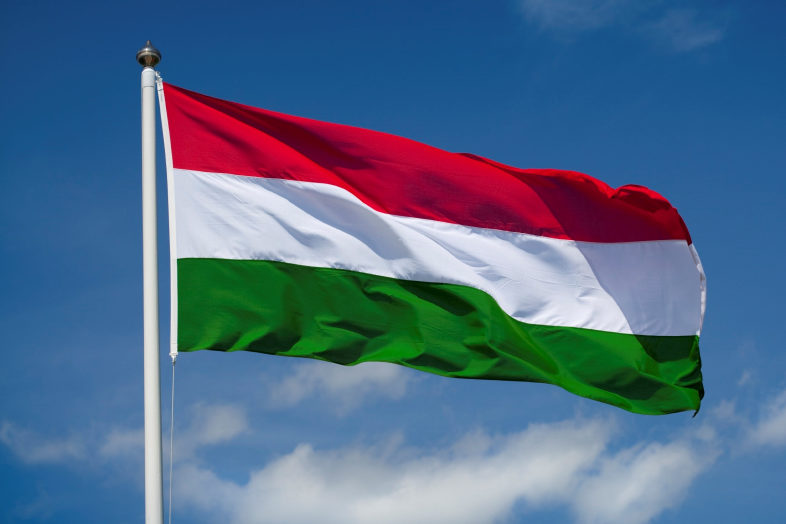
The ICJ today called on the Hungarian authorities to desist from instigating disciplinary proceedings threatened against Judge Csaba Vasvári, a judge of the Central District Court of Pest and a member of the Hungarian National Judicial Council.
The imminent threat of disciplinary action is a consequence of a preliminary reference Judge Vasvári made to the Court of Justice of the European Union.
“Judge Vasvári faces disciplinary action as a direct result of his request for a preliminary ruling of the Court of Justice of the EU on the very question of judicial independence in Hungary. This is an extremely concerning attempt to interfere with the independence of a judge in discharging his judicial function which, if it proceeds any further, will set a dangerous precedent.” said Róisín Pillay, Director of the ICJ’s Europe and Central Asia programme.
A motion to begin disciplinary proceedings against Judge Vasvári was brought by the Acting President of the Budapest Regional Court in October, following Judge Vasvári’s request in criminal proceedings before him last July, for a preliminary ruling the Court of Justice of the EU (CJEU) under Article 267 of the Treaty on the Functioning of the European Union (TFEU).
In the request to the CJEU, Judge Vasvári raised questions regarding compliance with the principle of judicial independence under Article 19.1 of the Treaty of the European Union (TEU), in particular the appointment procedures for court presidents, and remuneration for judges, as well as questions regarding the right to interpretation in court.
Following a decision of the Hungarian Supreme Court in September that the reference was contrary to Hungarian law since it was irrelevant to the case, disciplinary action against judge Vasvári was sought on the grounds that in making the reference, he violated the requirement to conduct himself with dignity and refrain from action which would undermine the dignity of the judiciary.
The motion for disciplinary proceedings is now expected to be considered by a panel of the Service Court, which will decide if disciplinary proceedings will commence.
“The actions of Judge Vasvári in making a preliminary reference to the CJEU were an entirely legitimate exercise of his judicial functions in accordance with EU law. It is essential that judges are able to use all appropriate judicial avenues to address and uphold the rule of law, including to protect the right to a fair trial and the independence of the judiciary” said Róisín Pillay. “It is also necessary for the proper application of EU law, that judges are able refer questions to the CJEU under Article 267 of the Treaty without undue hindrance.”
The ICJ recalls that under international standards on the independence of the judiciary, judges must decide matters before them impartially, without any restrictions, improper influences, inducements, pressures, threats or interferences, direct or indirect, from any quarter or for any reason (Principle 2, UN Basic Principles on the Independence of the Judiciary). Council of Europe Recommendation CM/Rec (2010) 12 of the Committee of Ministers specifies that “the interpretation of the law, assessment of facts or weighing of evidence carried out by judges to determine cases should not give rise to civil or disciplinary liability, except in cases of malice and gross negligence.”
The UN Basic Principles on the Independence of Judiciary (principle 8) also affirm that “members of the judiciary are like other citizens entitled to freedom of expression, belief, association and assembly; provided, however, that in exercising such rights, judges shall always conduct themselves in such a manner as to preserve the dignity of their office and the impartiality and independence of the judiciary.”

Nov 11, 2019 | Advocacy, Cases, Legal submissions
Today, the ICJ, the AIRE Centre, ECRE and DCR have submitted a third party intervention before the European Court of Human Rights in the case of a 2017 rescue operation of migrants, including refugees, in the Mediterranean Sea that involved the SeaWatch rescue vessel.
The case, S.S. and Others v. Italy, concerns the facts occurred during a rescue operation coordinated by the Maritime Research and Rescue Centre of Italy in Rome in the middle of the Mediterranean Sea.
It is currently litigated before the European Court of Human Rights where the victims of human rights violations at the hand of the Libya Coast Guard during the operation are suing Italy for breach of their rights under the European Convention on Human Rights.
During the operation, the involved the rescue boat SeaWatch, a French navy vessel and a Libyan Coast-Guard boat. It is reported certain migrants were taken and ill-treated by the Libyan Coast Guard and sent back to Libya.
It is also alleged that actions undertaken by the Lybian Coast Guard boat during the rescue operation caused the death of several persons to be rescued, including children.
The ones rescued by the SeaWatch vessel could join safety on Italian shores.
The interveners have submitted that, in accordance to the Court’s jurisprudence under the European Convention on Human Rights, other sources of international human rights law and international maritime law standards, Italy had jurisdiction for the purpose of the Convention and had, therefore, to ensure that persons involved in the rescue operation would not be exposed to serious violations of their human rights.
ECtHR-SS_v_Italy_final-JointTPI-ICJECREAIREDCR-English-2019 (download the joint third party intervention)
Video
Watch our interview with ICJ Senior Legal Adviser Massimo Frigo as he further defines S.S. and Others v. Italy and what ICJ intends to do.

Oct 19, 2019 | Events, News
On 18 October, Scuola Superiore Sant’Anna, Juezas y Jueces para la Democracia and the ICJ held a a closed-door roundtable discussion in Madrid on the impact of the application of counter terrorism legislation on freedom of expression and association: implementing the EU Directive 2017/541 on combating terrorism.
The discussion took place in the framework of the EU funded project “Judges Uniting to Stop Terrorism with International, Constitutional and European law (JUSTICE) project”.
Judges, prosecutors and lawyers from 10 EU countries shared their practices and experiences in the implementation of the EU Directive 2017/541 on combating terrorism and the application of counter-terrorism legislation and its impact on freedom of expression and association, including humanitarian work within the different legal systems of the European Union (EU) Member States.
The discussion covered the offences of glorification of terrorism and apology for terrorism and its different implementation in various jurisdictions and how legal certainty and proportionality can be ensured. The roundtable further focused on the freedom of expression on-line and the impact of the application of counter-terrorism law on freedom of association and legitimate activities, including humanitarian assistance. These practices were be assessed in light of international human rights law principles in order to identify best practices that could be promoted throughout the EU.
This was a third out of four round-tables organized within this project between April and November 2019 by the ICJ and partners.
See the agenda here.