Sep 30, 2019 | Agendas, Events, Uncategorized
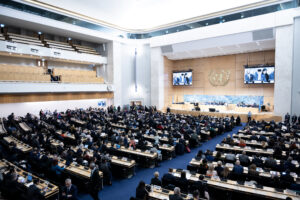
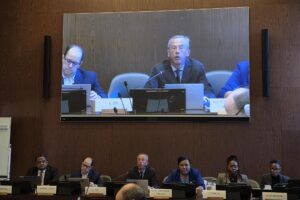
Today, in the framework of the EU funded project “Enhancing legal protection of migrants rights in Kazakhstan”, the Legal and Policy Resource Center (LPRC) and the ICJ began a series of three trainings linked to this issue for lawyers and civil society organizations.
Three two-day trainings on “International and national Law on the protection of migrants in legal practice” will take place from 30 September to 5 October in Nur-Sultan, Shymkent and Almaty.
The trainings will address international and national law and standards relevant to the protection of the rights of migrants, including in situations of expulsion and detention, as well as with regard to the respect, protection and fulfilment of their economic, social and cultural rights.
During the trainings, 100 attorneys and lawyers of non-governmental organizations from 10 regions of Kazakhstan will be trained.
Kazakhstan-Training-Agenda-MigrationIHRL-NurSultan-2019-engrus (download the agenda of the Nur Sultan training in Russian and English)
Kazakhstan-Training-Agenda-MigrationIHRL-Shymkent-2019-engrus (download the agenda of the Shymkent training in Russian and English)
Kazakhstan-Training-Agenda-MigrationIHRL-Almaty-2019-engrus (download the agenda of the Almaty training in Russian and English)
Sep 26, 2019 | Events, News
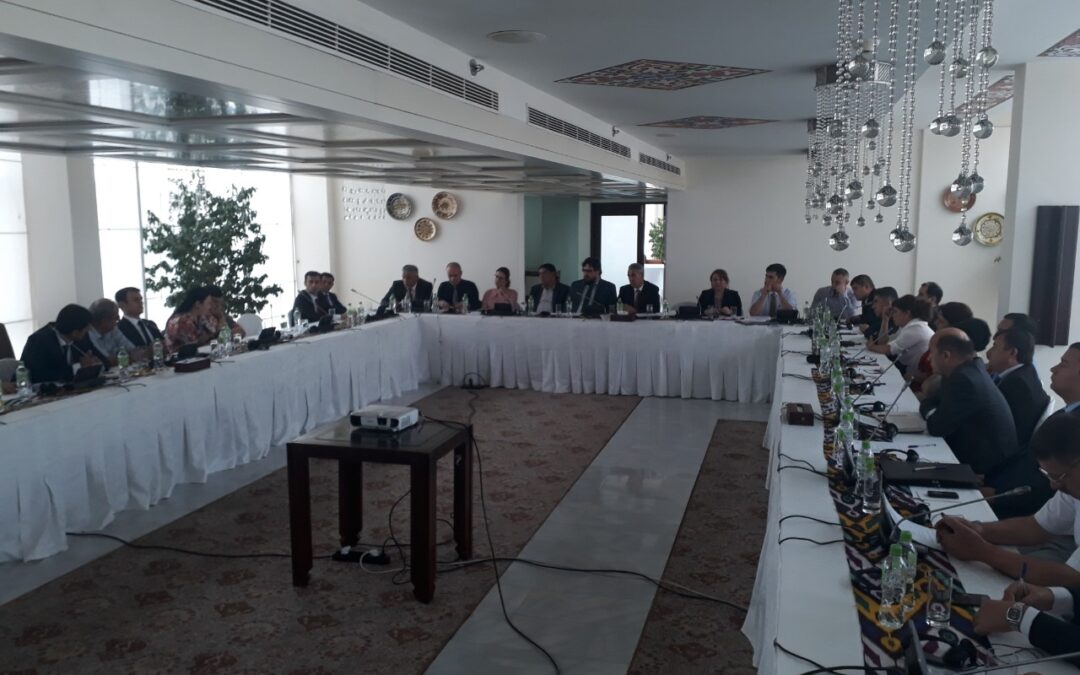
Today, the International Commission of Jurists (ICJ) in cooperation with the Civil Society Coalition Against Torture and Impunity in Tajikistan and the Union of Lawyers of the Republic of Tajikistan hold the final event within the framework of its Global redress and accountability initiative.
This event presents an opportunity to discuss measures to prevent impunity and ensure accountability for the use of torture and cruel, inhuman and degrading treatment (CIDT) in Tajikistan.
The findings of the research on the key challenges for effective investigation of torture and CIDT, carried out by the Coalition Against Torture under the initiative, will be presented at the event. The ICJ will launch its compilation of the cases decided by the UN Human Rights Committee concerning allegations of torture in Tajikistan.
Background information:
The ICJ’s Global redress and accountability initiative focused on seven countries (Cambodia, Mozambique, Myanmar, Nepal, Tajikistan, Tunisia and Venezuela) and it aimed to combat impunity and promote redress for gross human rights violations.
It concentrates on the transformative role of the law, justice mechanisms and justice actors, seeking to achieve greater adherence of national legal and institutional frameworks with international law and standards so as to allow for effective redress and accountability; more independent justice mechanisms capable of dealing with challenges of impunity and access to redress; and judges, lawyers, human rights defenders, victims and their representatives that are better equipped to demand and deliver truth, justice and reparation.
Agenda here.

Sep 24, 2019 | Events, News
The ICJ in cooperation with a number of other leading international NGOs has organised a discussion on key challenges and opportunities for the legal profession in a number of CIS countries. The discussion aimed to share the experience of bar associations in achieving greater independence from the governmental authorities and any other undue influences.
The participants have shared their legislation and practices, specific challenges and lessons learned in taking steps to achieve institutional sustainability and independence to date, and opportunities for the legal profession, domestically and in coordination with other associations and international NGOs, to raise awareness and build legal and practical framework to enable a stronger institutional capacity and independent functioning. In addition, the ICJ, ABA, IBA, Lawyers for Lawyers, representatives of bar associations and legal experts have discussed what steps should be taken to support these efforts.
Sep 16, 2019 | Advocacy, Non-legal submissions
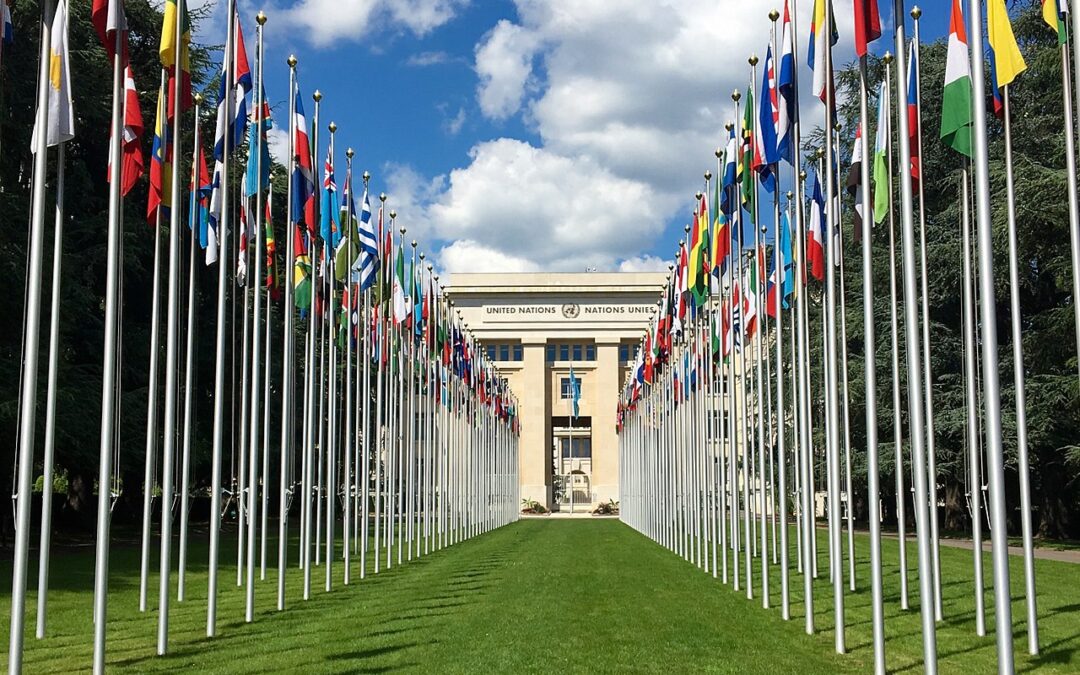
The ICJ today put the spotlight the increase and “normalisation” of enforce disappearances and abductions worldwide, with examples about Turkey, Egypt and Saudi Arabia, speaking at the UN Human Rights Council in Geneva.
The statement, made during the general debate, reads as follows:
The International Commission of Jurists (ICJ) shares concerns highlighted by the Working Group on Enforced and Involuntary Disappearances in its report (UN doc. A/HRC/42/40) at the “increasing use of extraterritorial abductions” and at the “normalization of these practices” globally. ICJ previously documented such practices in our 2017 report, Transnational Injustices.
The killing of Jamal Khashoggi by Saudi Arabia is an example of particular concern, as is the reported abduction, by Turkish authorities, of persons they claim to be linked to “terrorist organisations.” Several of these people, who later reappeared in Turkish prisons, are currently facing serious challenges in mounting a proper legal defence. Complaints of the families have not been properly investigated.
In Egypt, the National Security Agency (NSA) has been abducting and forcibly disappearing hundreds as a technique to suppress dissent. This year, the ICJ and Adalah reported on the disappearance of 138 detainees for between 10 to 219 days, many of whom were subjected to torture.
The ICJ urges the Council to address these worrying developments and calls on all countries:
- to stop all practices of enforced disappearance, abduction or informal international transfer;
- to ratify the International Convention for the Protection of All Persons from Enforced Disappearance, and
- to provide to the victims of enforced disappearance and their families full access to their rights, including an effective remedy.
Aug 27, 2019 | News
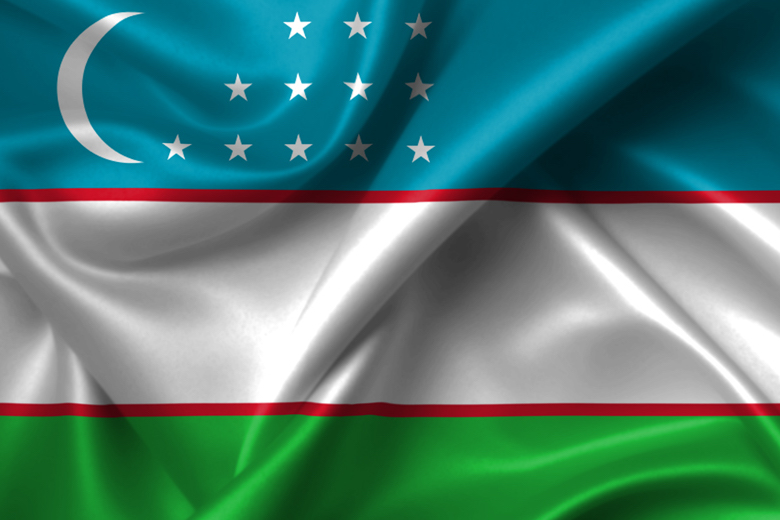
The ICJ welcomes yesterday’s ratification by Uzbekistan of the CIS Convention on Legal Assistance and Legal Relations in Civil, Family and Criminal Matters 2002, also called the Chisinau Convention. The law on ratification was signed by President Shavkat Mirziyoyev.
The ICJ calls on the Uzbek authorities to take measures to make the Convention’s protective guarantees effective.
“This is a major step forward by Uzbekistan to get its extradition system up to standard with the rest of the world”, said Massimo Frigo, ICJ Senior Legal Adviser. “. “Its ratification of this treaty considerably steps up human rights guarantees in extradition.”
The Chisinau Convention enshrines several human rights guarantees to protect against extraditions that may breach the human rights of the transferred person, including the prohibition to transfer persons where they risk the death penalty or torture or cruel, inhuman and degrading treatment.
“The ratification of the Convention is a very important first step. An effective implementation of these guarantees in the legal and law enforcement systems is necessary now.” said Dmitry Nurumov, ICJ Central Asia Legal Consultant.
Background
Last May, the ICJ held, together with the General Prosecutor’s Office of Uzbekistan, UNODC Regional Office for Central Asia and the Regional Office for Central Asia of OHCHR, a regional and a national seminar on comparative practices in extradition in the CIS and European legal systems, including with regard to human rights guarantees in these procedures.
In 2017, the ICJ issued a report documenting the shortcomings in the Russian Federation, Central Asia and European countries in their extradition systems and other transfer procedures.
The ratification by Uzbekistan of the Chisinau Convention meets part of the recommendations formulated by the ICJ in these occasions.
Contact:
Massimo Frigo, Senior Legal Adviser, e: massimo.frigo(a)icj.org , t: +41229793805