Jun 24, 2019 | Events, News
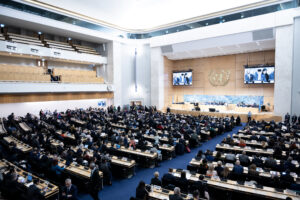
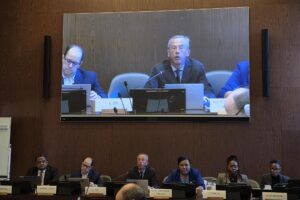
The OHCHR, ICJ and the Geneva Bar Association invite you to a discussion on the criminalization of solidarity in migration in Europe and State’s obligations under international law.
Thursday, 27 June, 13h00,
UN Cinema (Room XIV),
Palais des Nations, Geneva
The event will feature the screening of the movie “The Valley” by Nuno Escudeiro, documenting the situation of human rights defenders and migrants in South of France, with an introductory panel and a discussion session after the movie.
The Valley is a coproduction of Point du Jour (France) and Miramonte Film (Italy), and was awarded the Emerging international filmmaker at the HOT DOCS film festival, Toronto.
Panelists:
- Obiora C. Okafor, UN Independent Expert on human rights and international solidarity
- Nuno Escudeiro, Director of The Valley
- Zia Oloumi, Lawyer at the Paris and Nice Bar, Doctor at Law
- Carolina Hernandez, OHCHR
- Massimo Frigo, ICJ Senior Legal Adviser
If you do not already have a grounds pass to access the Palais des Nations, please send your name and surname at migration@ohchr.org before the end of Sunday 23 June.
For more information contact massimo.frigo(a)icj.org
A flyer for the event is avaiable here.

Jun 24, 2019 | News
The ICJ and the International Bar Association’s Human Rights Institute (IBAHRI) have jointly sent international observers to attend the first hearing of the criminal trial on the “Gezi Park” protest at the Silivri Prison Courthouse in Istanbul, scheduled to take place on 24 and 25 June 2019.
The International Observers who will be attending are Justice Ketil Lund, former judge of the Supreme Court of Norway and ICJ Commissioner, and Dr Mark Ellis, Executive Director of the International Bar Association.
Justice Lund and Dr Ellis will be observing a trial hearing before İstanbul 30th Assize Court with principal defendant Osman Kavala and 15 others: Ali Hakan Altınay, Ayşe Mücella Yapıcı, Ayşe Pınar Alabora, Can Dündar, Çiğdem Mater Utku, Gökçe Yılmaz, Handan Meltem Arıkan, Hanzade Hikmet Germiyanoğlu, İnanç Ekmekci, Memet Ali Alabora, Mine Özerden, Şerafettin Can Atalay, Tayfun Kahraman, Yiğit Aksakoğlu and Yiğit Ali Ekmekçi.
The observers will report directly to the IBAHRI and ICJ Secretariats on the proceedings following the mission.
The Gezi Park protests began in May 2013 as an effort by a group of environmentalists to save a park in central Istanbul from being rezoned, but soon turned into nationwide demonstrations. The protest was quelled by police with the use of tear gas and water cannons against the protesters in Taksim Square.
Following a six-year investigation into the events, the 657-page indictment issued by the Istanbul Chief Public Prosecutor’s Office was accepted by the 30th A Court in Istanbul on 4 March 2019.
The defendants are to be charged under Turkish Criminal Code Article 312 (attempt to overthrow the Turkish Government or attempt to prevent it from fulfilling its duties), Article 151 (damage to property), Article 152 (qualified damage to property), Article 174 (possession or exchange of hazardous substances without permission), Article 153 (damaging places of worship and cemeteries), Article 149 (qualified robbery), Article 86 (intentional injury); crimes under the Law on Firearms, Knives and Other Tools no. 6136, and crimes under the Law on Protection of Cultural and Natural Assets no. 2863. The total sentence asked for by the prosecution for these offences amounts to approximately 47,520 years imprisonment.
Contact:
Massimo Frigo, Senior Legal Adviser, t: +41 22 979 38 05 – e: massimo.frigo(a)icj.org
Jun 20, 2019 | Advocacy, Cases, Legal submissions, News
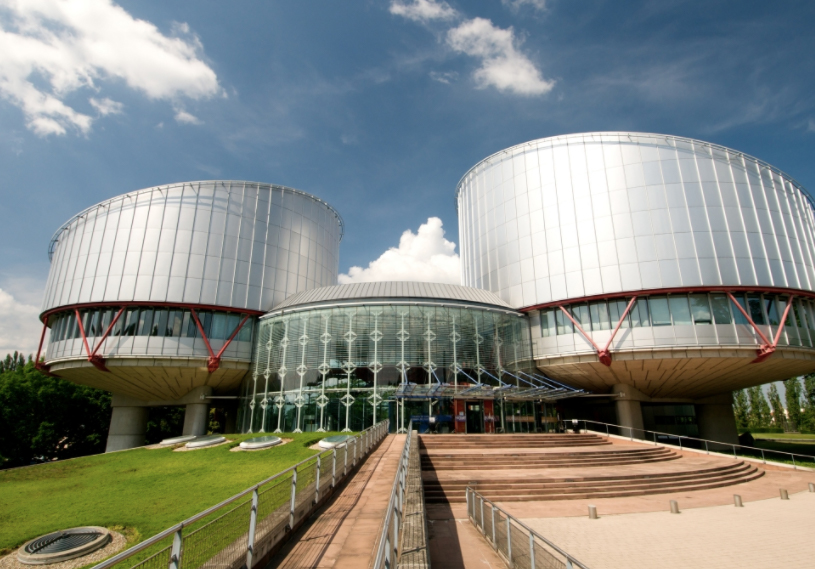
The International Commission of Jurists, jointly with Amnesty International and the Turkey Litigation Support Project intervened today before the European Court of Human Rights in the case of a Turkish public servant, Hamit Pişkin, who was dismissed by executive decrees during the State of Emergency.
The case is key with regard to the situation in Turkey now and under the State of Emergency, because it raises significant questions regarding procedural rights in employment proceedings leading to the dismissal of an employee working with or for a State agency on grounds related to national security, including under a State of Emergency, as well as the application of the principles of legality and legal certainty and non-retroactivity as applied to national security, including in counter-terrorism.
During the State of Emergency in Turkey, that lasted two years from 2016 to 2018, almost 130,000 employees in the public sector were dismissed under emergency legislation. Their dismissal however remained in force also after the end of the State of Emergency.
In the submission, the interveners provide the European Court of Human Rights with observations concerning:
- the applicability of the criminal limb of Article 6 of the European Convention on Human Rights (ECHR) to judicial proceedings leading to dismissal of an employee of a public institution;
- the lack of procedural guarantees in the dismissal process necessary to comply with Article 6 of the ECHR, in particular with the presumption of innocence Article 6(2), in such proceedings;
- the application of the principles of legal certainty and non- retroactivity to such decisions (by addressing the problems arising from the application of State of Emergency decrees to events that occurred before the declaration of the State of Emergency).
The full intervention can be downloaded here: Piskin_v_Turkey-ECtHR-TPI-ICJAITLSP-2019-eng
Jun 12, 2019 | News
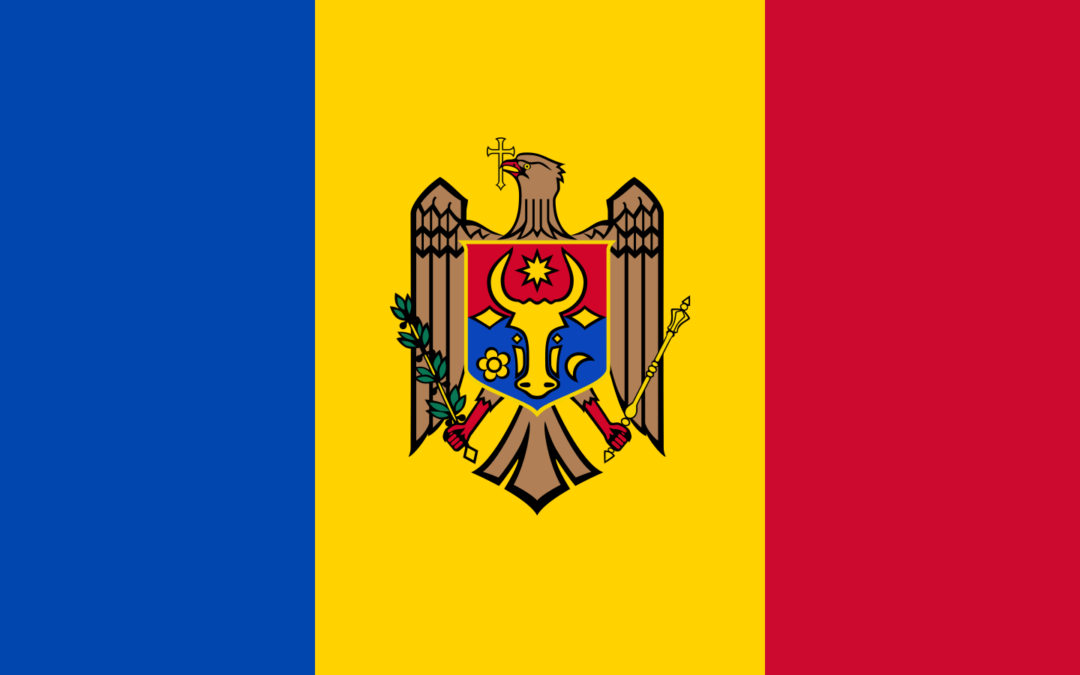
The ICJ today expressed concern at recent developments in Moldova, which are effectively paralyzing governance in the country.
During the past week, the Constitutional Court has ordered the dissolution of Parliament, suspended its functioning and invalidated its subsequent acts, including the appointment of a government and speaker, and has triggered the removal of the President.
The ICJ is particularly concerned at the excessively swift procedure through which the Constitutional Court reached its decisions to dissolve Parliament, remove a sitting President of the Republic and replace him with the Prime Minister. The ICJ calls attention to the unhelpful timing of the Constitutional Court ruling that was issued on the very day it identified as the end of the Parliamentary term, depriving Parliament of the clarity needed to exercise its powers.
These developments occur against the background of the manifest deficiencies in the institutional independence of the Moldova judiciary which were documented in a recent ICJ report.
In the report issued in March 2019, the ICJ highlighted the problematic appointment in 2018 of three judges of the Constitutional Court in circumstances that did not ensure a sufficient level of transparency, during an electoral campaign and without an open competition process. The report noted that the three appointed judges have previously been Prosecutor General, director of the intelligence service and chair of the legal committee of Parliament, part of the then ruling political majority.
The ICJ welcomes the announcement by the Secretary General of the Council of Europe that the Venice Commission has been asked to issue an urgent opinion on the constitutional crisis.
“The rule of law is the common ground on which constitutional conflicts must be solved”, said Massimo Frigo, Senior Legal Adviser of the Europe Programme of the ICJ. “We call on all institutions and parties in Moldova to seek a solution that squarely complies with the rule of law and the international law and standards to which Moldova has subscribed. In this regard, we urge all parties concerned to wait for the opinion by the Council of Europe Venice Commission in this matter and to reconsider the situation in light of its findings.”
Background
The Constitutional Court, in decisions issued on 7, 8 and 9 June 2019, held that Parliament should be dissolved for having been unable to establish a government within three months of the end of the previous Government’s term of office.
The decisions triggered the removal from office of the President of the Republic, Igor Dodon, for having refused to dissolve Parliament. This led to the interim appointment of Pavel Filip, as acting President of the Republic.
The Court also declared unconstitutional and void any act issued by Parliament after 7 June.
Neither Parliament nor President Dodon have accepted the decisions of the Constitutional Court on their removal or on the validity of their acts, nor do they consider as legitimate the appointment of Pavel Filip as acting President.
Parliamentary factions constituting the current majority in Parliament had reached a deal to form a coalition government and appointed a speaker and Prime Minister.
According to the Constitutional Court’s interpretation of article 85 of the Constitution, these agreements failed to respect the three-month deadline.
Others have put forward different interpretations of when the deadline of the three months period to appoint a Government would elapse, and of the obligation of the President of the Republic to dissolve Parliament.
Article 85 of the Constitution states:
(1) In the event of impossibility to form the Government or in case of blocking up the procedure of adopting the laws for a period of three months, the President of the Republic of Moldova, following consultations with parliamentary fractions, may dissolve the Parliament.
(2) The Parliament may be dissolved, if it has not accepted the vote of confidence for setting up of the new Government within 45 days following the first request and only upon declining at least two requests of investiture.
(3) The Parliament may be dissolved only once in the course of one year.
(4) The Parliament may not be dissolved within the last six months of the term of office of the President of the Republic of Moldova nor during a state of emergency, martial law or war.
Contact:
Massimo Frigo, ICJ Senior Legal Adviser: t: +41 22 979 3805; e: massimo.frigo(a)icj.org

Jun 4, 2019 | News
The ICJ, European Council on Refugees and Exiles (ECRE) and the Greek Council for Refugees (GCR) welcome the decision of the European Committee on Social Rights that Greece should take “immediate measures” to protect the rights of migrant children as required under the European Social Charter.
The Greek government should now take urgent steps to comply with the Committee’s decision, to prevent serious and irreparable injury or harm to the children concerned, including damage to their physical and mental health, and to their safety.
The Committee’s decision, issued on 23 May, requires the government to immediately provide migrant children with appropriate shelter, food, water, education and medical care; to remove unaccompanied migrant children from detention and from Reception and Identification Centers (RICs) at the borders, place them in suitable accommodation for their age and appoint effective guardians.
The Committee noted that “immediate measures” were exceptional, but found that they were necessary in this case given the government’s failure to dispel serious concerns about the gravity and urgency of the situation of migrant children in Greece.
This decision is in response to a collective complaint brought before the Committee by ICJ, ECRE and GCR, alleging systemic violations of migrant children’s rights on mainland Greece and the North Eastern Aegean islands. The complaint catalogues the numerous ways in which Greece has failed to fulfill its obligations under the European Social Charter to protect the rights migrant children, leaving them in conditions of squalor, insecurity and violence.
In addition to indicating immediate measures, the Committee found the complaint itself admissible. The complaint now awaits examination and determination on the merits by the European Committee on Social Rights.
Read the statement on the decision here in English and in Greek and full complaint here.