May 6, 2019 | Agendas, Events
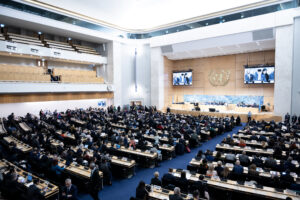
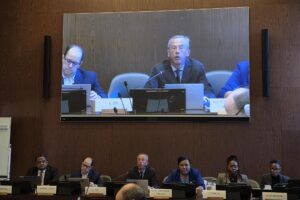
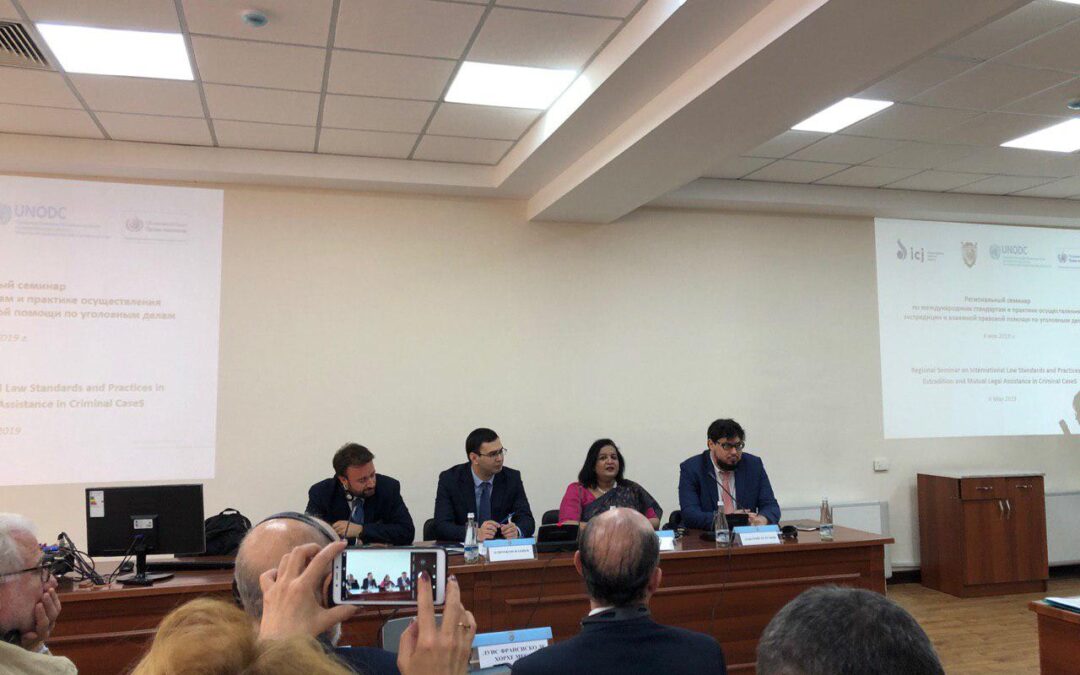
Today, the ICJ, together with the General Prosecutor’s Office of Uzbekistan, UNODC and OHCHR are holding the first regional meeting of prosecutors from Central Asia and the Russian Federation to discuss international law and standards in the field of extradition, mutual legal assistance, the rule of law and human rights.
The workshop aims to facilitate exchange of experiences regarding the law and practice of extradition in European and Central Asian countries. Presentations at the workshop will analyse international law and standards on effective criminal justice co-operation and the protection of human rights in extradition, and their application in practice..
The workshop will present cases of mutual cooperation in the field of criminal law from national courts as well as from international mechanisms such as the European Court of Human Rights, the UN Committee against Torture and the UN Human Rights Committee.
The workshop is taking place in Tashkent (Uzbekistan) and is hosted by the Prosecutor General’s Office of Uzbekistan.
More than twenty prosecutors from Kazakhstan, Kyrgyzstan the Russian Federation Tajikistan, Turkmenistan, and Uzbekistan are participating in the event that includes international experts from UNODC, ICJ, including ICJ Commissioner and Emeritus Spanish Supreme Court Justice, José Antonio Martin Pallin, and Italian Prosecutor Lorenzo Salazar.
Mar 28, 2019 | Events, News
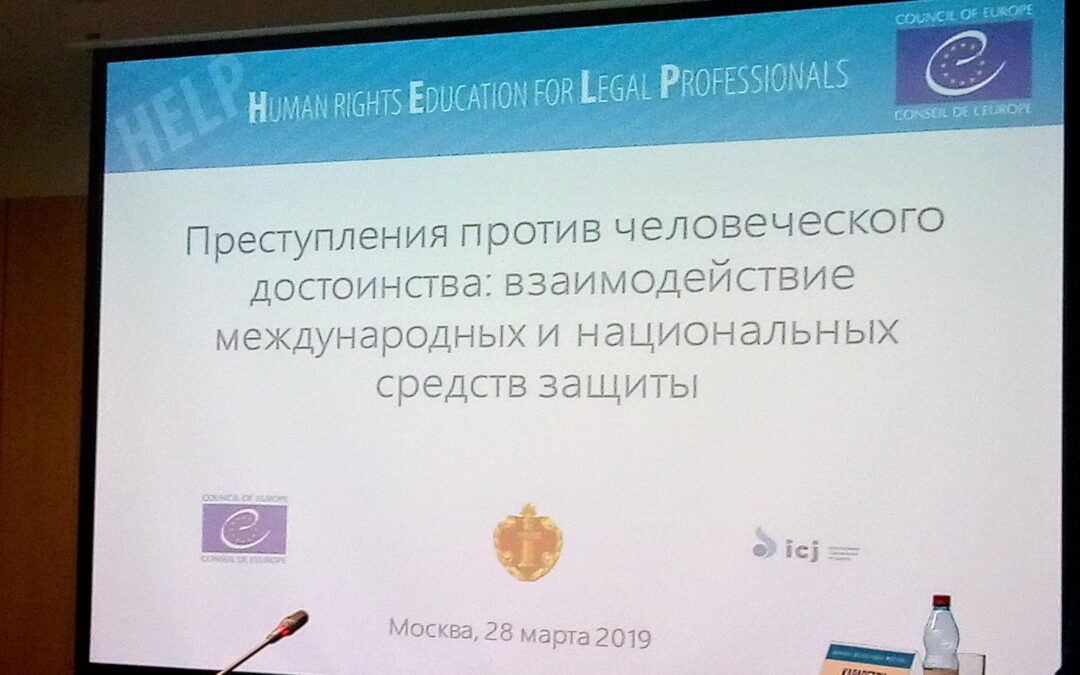
The ICJ is co-operating in a conference organized by the Council of Europe and the Federal Bar Association of Russia on “Crimes against Human Dignity: Interaction of International and National Remedies”, which will take place today, 28 March 2019 in Moscow.
The Conference will address crimes that affect physical and moral integrity of a person, notably through ill- treatment, domestic violence, trafficking in human beings and other forms of modern slavery. The core provisions of the European Convention on Human Rights and the related case-law of the European Court of Human Rights are of particular relevance in combatting these phenomena. The Conference will address national and international remedies against such crimes and serve for exchange of good legal practices in that regard.
Mikhail Lobov, Head of Human Rights Policy and Co-operation Department of the Council of Europe, Yuriy Pilipenko, President of the Federal Bar Association, Denis Novak, Vice-Minister of Justice of the Russian Federation, Radmila Dragichevich Dichich, Vice-President of the International Commission of Jurists, Judge of the Supreme Court of Serbia, Ilya Subbotin, Deputy Director of the Depratment of Paneuropean Co-operation of the Russian Foreign Ministry and Petr Sich, Head of Council of Europe Programme Office in the Russian Federation will open the Conference.
The Conference will give an overview of identification and qualification of crimes against human dignity, as well as of assessment of evidence and investigation of such violations. Special attention will be paid to such questions as professional training of practicing lawyers as a factor of strengthening of remedies’ efficiency and, in more general terms, the role of advocates in the framework of the Council of Europe conventions.
The event will take place on 28 March 2019 at 09.30 a.m., in Moscow, Hotel “Azimut Smolenskaya”, Smolenskaya street, 8.
The agenda for the conference is available here

Feb 19, 2019 | Advocacy, Cases, Legal submissions
On 19 of February the ICJ submitted a third party intervention to the European Court of Human Rights in the case of Telek and others v. Turkey.
In its intervention, the ICJ addresses two main questions considering the effectiveness of domestic remedies concerning passport cancellation as a consequence of dismissal under emergency decrees:
- Whether the State of Emergency Commission and/or judicial remedies subsequent to the decision of the Commission might constitute an effective remedy.
- Whether separate remedies for passport cancellation can provide effective relief for the applicants’ claims.
In that respect of mentioned systemic issues the ICJ presents the Court the observations concerning the capacity of the Turkish legal system to provide effective remedies for violations under the European Court of Human Rights, in light of its Convention obligations, in particular obligations under Article 13.
The ICJ submission includes analysis of the Turkish legal system based in part on an ICJ mission to Turkey undertaken in May 2018 that focused on the functioning of the State of Emergency Commission created by Legislative Decree no. 685.
Turkey-icj-Telek&Others-Advocacy-legal submission-2019-ENG (download the intervention in Telek and others v. Turkey).
Feb 13, 2019 | Advocacy, Non-legal submissions
The ICJ has opened a call for written submissions on the misuse of criminal law in the areas of sexuality, reproduction, drug use and HIV.
In 2016 the UN Secretary General called for the removal of punitive laws, policies and practices that violate human rights, stating that the misuse of criminal law often negatively impacts on health and human rights, particularly in areas of sexuality, reproduction, sex work, drug use and HIV.
Recognizing a need for greater guidance to achieve such law reform, ICJ is seeking inputs for the development of principles to address the detrimental impact on health, equality and human rights of criminalization with a focus on sexuality, reproduction, drug use and HIV.
This is an important opportunity for civil society, academics, law makers, human rights experts, community groups and persons affected by the relevant criminal laws, to provide input, including on the effect of such criminal laws, when and how criminal law should be used, what reforms are needed and what role criminal law should play in the relevant areas.
A background paper providing further information is annexed to the call for written submissions.
The deadline for submissions is the 31st of March 2019.
These submissions will feed into the development of a set of principles to address the detrimental impact on health, equality and human rights of criminalization with a focus on select conduct in the areas of sexuality, reproduction, drug use and HIV.
Please send your submissions, as well as any questions or clarifications, to decrimconsultation@icj.org
CallforSubmission-DecriminalizationProject-ICJ-2019-2-eng (download the call in English)
CallforSubmission-DecriminalizationProject-ICJ-2019-2-fra (download the call in French)
CallforSubmission-DecriminalizationProject-ICJ-2019-2-esp (download the call in Spanish)
CallforSubmission-DecriminalizationProject-ICJ-2019-2-rus (download the call in Russian)
Feb 4, 2019 | News
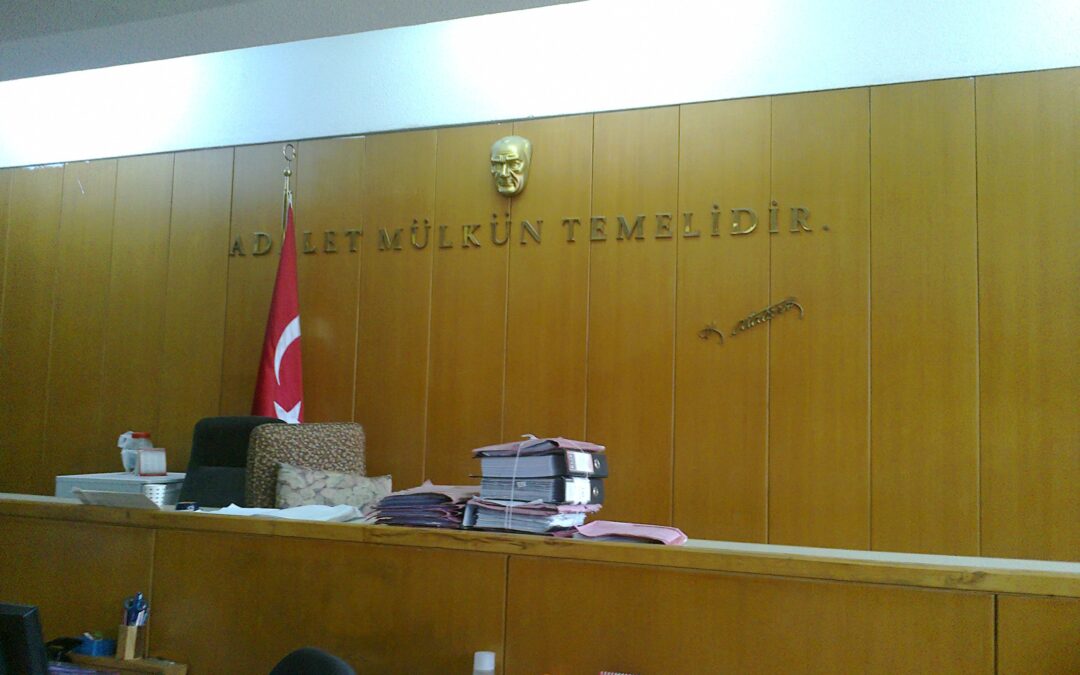
The ICJ is concerned that the dismissal of 17 judges and prosecutors by Turkey’s Council of Judges and Prosecutors on 10 January, for alleged membership of or connections with the “Fetullahist Terrorist Organisation” (FETÖ) did not respect their right to a fair trial.
The decision by the Council of Judges and Prosecutors (CJP) is particularly problematic because it lacks any reasoning on the individual situation of each judge and prosecutor.
The ICJ points out that international law provides that judges may be dismissed only through a fair hearing before an independent authority. The lack of individual reasoning in dismissal decisions strikes at the heart of the right to a fair hearing.
Furthermore, the ICJ recalls its conclusions in the 2018 report Justice Suspended that, within the current constitutional framework, the Council of Judges and Prosecutors (CJP) is not provided with the guarantees necessary to ensure its institutional independence.
Despite the state of emergency having been lifted since last July 2018, extraordinary powers given to the Council of Judges and Prosecutors to dismiss judges and prosecutors during the State of Emergency were extended for 3 years by Law no. 7145. It is unacceptable in a State governed by the rule of law that judges and prosecutors – whatever charges may be against them – be dismissed without respect for the right to a fair procedure, in disregard of international standards.
Considering that the Council of State has not delivered a single decision about dismissed judges and prosecutors during the state of emergency, in more than two years now, it seems likely that it would take at least two years before the recent decision of the CJP is reviewed by an independent judicial authority. Until then, absent further action by the CJP, the reasons for the dismissals will not be known by the purged judges and prosecutors, or by the general public.
The ICJ calls on the CJP to revoke its order and re-examine the cases under the ordinary dismissal procedures and on the Turkish Government and Parliament to modify the constitutional rules on the CJP to ensure its full independence.
Finally, the ICJ expresses concern at the conviction of the former head of the judges’ organisation YARSAV, Mr Murat Arslan, for alleged membership of FETÖ. There are credible reports of violations of the right to a fair trial in the proceedings, including four changes of judges during the proceedings, often without reasons given and without re-examination of witnesses, significant limitations to the defence access to evidence before trial and use of witnesses with undisclosed identity. The ICJ considers that these allegations of violations of the right to a fair trial should be thoroughly re-examined in appeal before an independent court and in full respect of Mr Arslan’s fair trial rights.
Background
On 10 January, the Council of Judges and Prosecutors made use for the first time of special powers to dismiss judges and prosecutors without complying with the ordinary procedure, invoking extraordinary powers enacted by Law No 7145 of 31.07.2018. This legislation inserted into ordinary law several powers that had previously existed under the state of emergency legislation.
One of the amendments made by Law No 7145 of 31.07.2018 was to the Decree Law No 375 dated 1989. A Temporary Article (Article 35) was added to the Decree. On the basis of this article, the General Assembly of the Constitutional Court, the Presidency Councils of Court of Appeal, the Council of State, the General Assembly of the Council of Judges and Prosecutors, a Commission set up by the Ministry of National Security, and the Presidency of the Court of Audit, were each authorised to take dismissal decisions for public officials/judges and prosecutors under their mandate for three years from the date of the endorsement of the law No 7145.
Based on this amendment, on 10 January 2019 the Council of Judges and Prosecutors took its first decision (Decision No. 2019/1) by dismissing 17 judges and prosecutors (6 Public prosecutors, 3 Members of Administrative Court, 7 judges of of Tax Court) based on the allegation of membership to FETÖ.
International law and standards provide that disciplinary proceedings should be conducted by an independent authority or a court with all the guarantees of a fair trial and provide the judge with the right to challenge the decision and sanction. Disciplinary sanctions should be proportionate.
The UN Basic Principles on the independence of the judiciary set out international standards for discipline, suspension and removal of judges, including in order to ensure impartiality and independence of courts and tribunals as required by international law (including the International Covenant on Civil and Political Rights and the European Convention on Human Rights). The Basic Principles state that a:
“charge or complaint made against a judge in his/her judicial and professional capacity shall be processed expeditiously and fairly under an appropriate procedure. The judge shall have the right to a fair hearing. The examination of the matter at its initial stage shall be kept confidential, unless otherwise requested by the judge. …
The Consultative Council of European Judges (CCJE) adds that “a Head of State, Minister of Justice or any other representative of political authorities cannot take part in the disciplinary body.”
Contact
Massimo Frigo, ICJ Senior Legal Adviser for the Europe and Central Asia Programme, t: +41 22 979 3805, e: massimo.frigo(a)icj.org