Jun 21, 2018 | Events, News
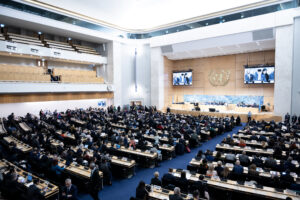
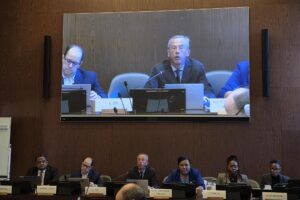
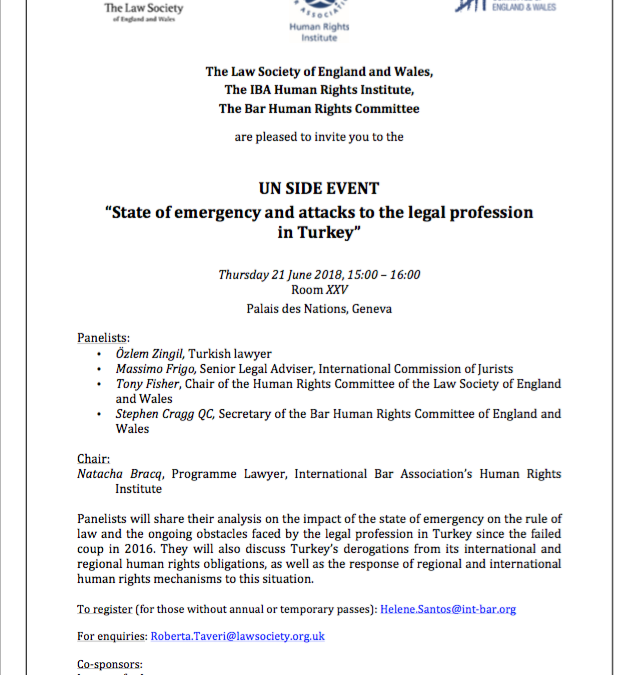
The ICJ will participate today in the side event “State of emergency and attacks on the legal profession in Turkey” organized by IBAHRI, the Law Society, and the Bar Human Rights Committee of England and Wales.
This side event at the Human Rights Council takes place on Thursday, 21 June, 15:00-16:00, room XXV of the Palais des Nations.
It is co-sponsored by Lawyers for Lawyers, Union Internationale des Avocats, Lawyers’ Rights Watch Canada.
In this side event, panelists will share their analysis on the impact of the state of emergency on the rule of law and the ongoing obstacles faced by the legal profession in Turkey since the failed coup in 2016.
They will also discuss Turkey’s derogations from its international and regional human rights obligations, as well as the response of regional and international human rights mechanisms to this situation.
Panelists:
- Özlem Zingil, Turkish lawyer;
- Massimo Frigo, International Commission of Jurists;
- Tony Fisher, Chair of the Human Rights Committee of the Law Society of England and Wales;
- Stephen Cragg QC, Secretary of the Bar Human Rights Committee of England and Wales;
- Natacha Bracq, Programme Lawyer, International Bar Association’s Human Rights Institute.
Geneva-SideEvent-StateofEmergencyLawyersTurkey-IBAHRI&others-June2018-ENG (download the flyer)
Jun 12, 2018 | Advocacy, Cases, Legal submissions
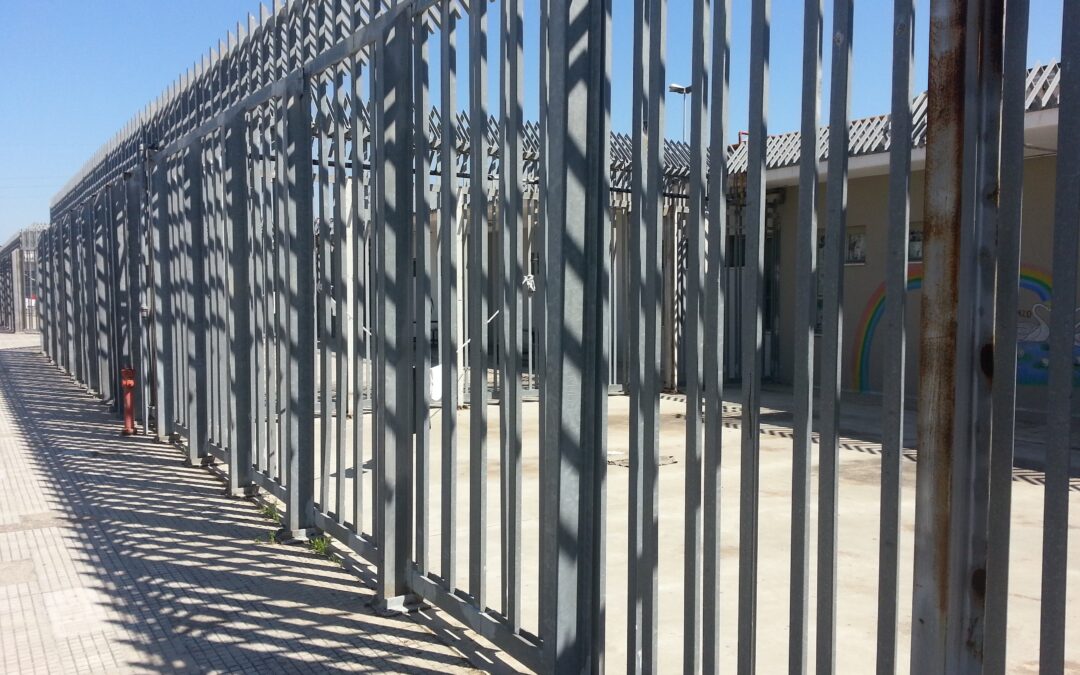
The ICJ and others intervened before the European Court of Human Rights in a case of thirteen undocumented children held in a hotspot in Italy.
The International Commission of Jurists (ICJ), the European Council on Refugees and Exiles (ECRE), the Dutch Council for Refugees and the AIRE Centre jointly intervened in the case of Trawalli and others v. Italy.
In this case, the European Court of Human Rights is called to rule, among other issues, on whether their detention and reception conditions were lawful and/or constituted an inhuman or degrading treatment under the European Convention on Human Rights.
In their third party intervention, the three human rights organizations submitted the following arguments:
a) Taking into consideration migrant children’s status as persons in situations of vulnerability and the principle of the best interests of the child, article 5 ECHR should be read in light of the rising consensus in international law towards a prohibition of detention of children on immigration grounds, in particular based on the consolidated and clear position of the UN Committee on the Rights of the Child. This applies to all instances of deprivation of liberty irrespective of their classification under domestic law.
b) In addition to the above, detention under article 5.1 ECHR will in any event be unlawful and arbitrary where it lacks a clear and accessible legal basis, outlining the permissible grounds of detention as well as the relevant procedural guarantees and remedies available to detainees, including judicial review and access to legal advice and assistance. In light of the obligations of EU Member States under EU law, the interveners submit that detention of asylum seeking children falling within the scope of the recast Reception Conditions Directive will result in a breach of the Convention standards also where it is not used as a measure of last resort, but rather is imposed without consideration of less onerous alternative measures and where the child’s best interests assessment has not been carried out and reflected in this decision.
c) Due to children’s extreme vulnerability, their detention for immigration purposes risks leading to a violation of Article 3 ECHR because of inadequate living conditions and/or to a violation of Article 8 ECHR because of a disproportionate and unnecessary interference with their development and personal autonomy, as protected under Article 8. In this sense, Article 8 must be regarded as affording protection from conditions of detention which would not reach the level of severity required to engage Article 3.
d) When the authorities deprive or seek to deprive a child of her or his liberty, they must ensure that he/she effectively benefits from an enhanced set of guarantees in addition to undertaking the diligent assessment of her/his best interest noted above. The guarantees include: prompt identification and appointment of a competent guardian; a child-sensitive due process framework, including the child’s rights to receive information in a child-friendly language, the right to be heard and have her/his views taken into due consideration depending on his/her age and maturity, to have access to justice and to challenge the detention conditions and lawfulness before a judge; free legal assistance and representation, interpretation and translation. The Contracting Parties must also immediately provide the child access to an effective remedy.
e) In order to fully comply with their obligations under the Convention, Contracting Parties must guarantee that asylum seeking children are accommodated in reception facilities which are adapted to their specific needs and provide adequate material conditions adapted to their age, condition of dependency and enhanced vulnerability. To do otherwise results in a failure by States to comply with their obligations under Article 3 ECHR and their specific obligations under EU law.
Italy-icj&others-Trawalli&others-Advocacy-legal submission-2018-ENG (download the intervention)
May 12, 2018 | Agendas, Events
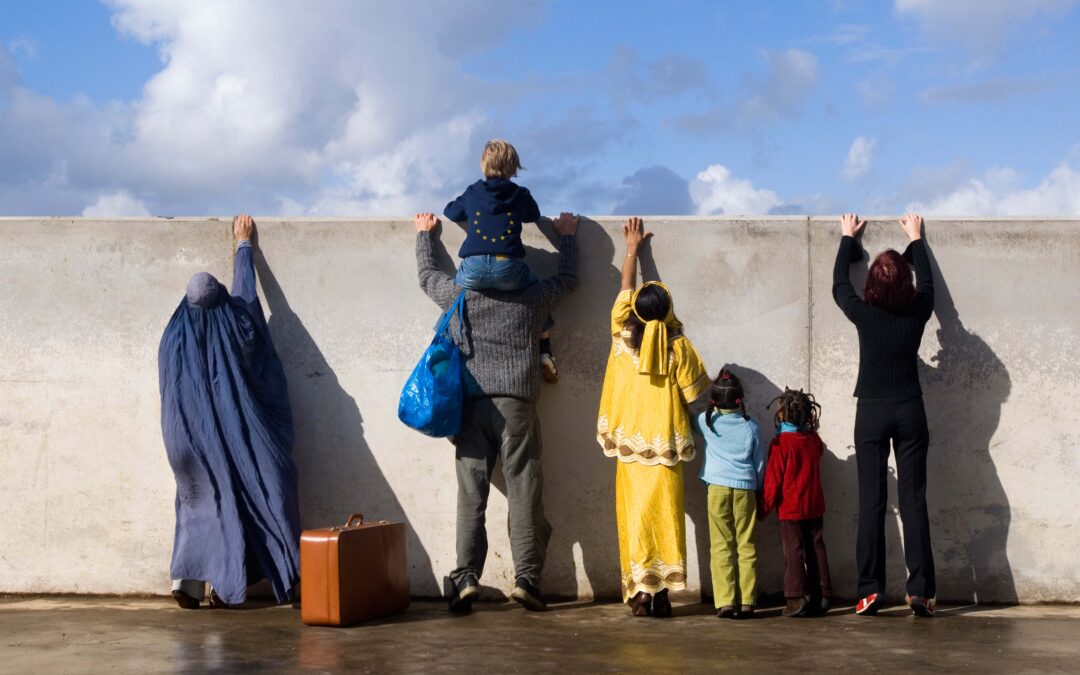
Today begins in Istanbul (Turkey) a two-day seminar for lawyers and CSO practitioners representing and working with migrants, refugees and asylum-seekers.
This event is organized by ICJ, in cooperation with its partners Refugee Rights Turkey, the European Council on Refugees and Exiles (ECRE), Mülteci-Der (MD) and ICJ-EI, as part of the EU co-financed project Fostering Access to Rights for Migrants, Refugees and Asylum-Seekers in Turkey.
40 lawyers and civil society practitioners – representing different bar associations and relevant organisations from the all over Turkey – are taking part in the seminar on 12 and 13 May.
The seminar aims to update lawyers and CSOs on the international law mechanisms in the United Nations and the Council of Europe, deputed to the protection of the rights of refugees, migrants and asylum-seekers . It aims at an effective implementation of the Turkish legal framework on asylum and migration.
The training will use as a basis the draft training materials prepared by the ICJ and its partners (to be published an the end of 2019) and, among other sources, the ICJ Practitioners Guide no. 6: Migration and International Human Rights Law.
The project “Fostering Access to Rights for Migrants, Refugees and Asylum-Seekers in Turkey” is funded by the European Instrument for Democracy and Human Rights (EIDHR) of the European Union.
Turkey-Seminar-Istanbul-MigrationAsylum-Agenda-2018-eng (download the agenda)
Apr 17, 2018 | Advocacy, Cases, Legal submissions, News
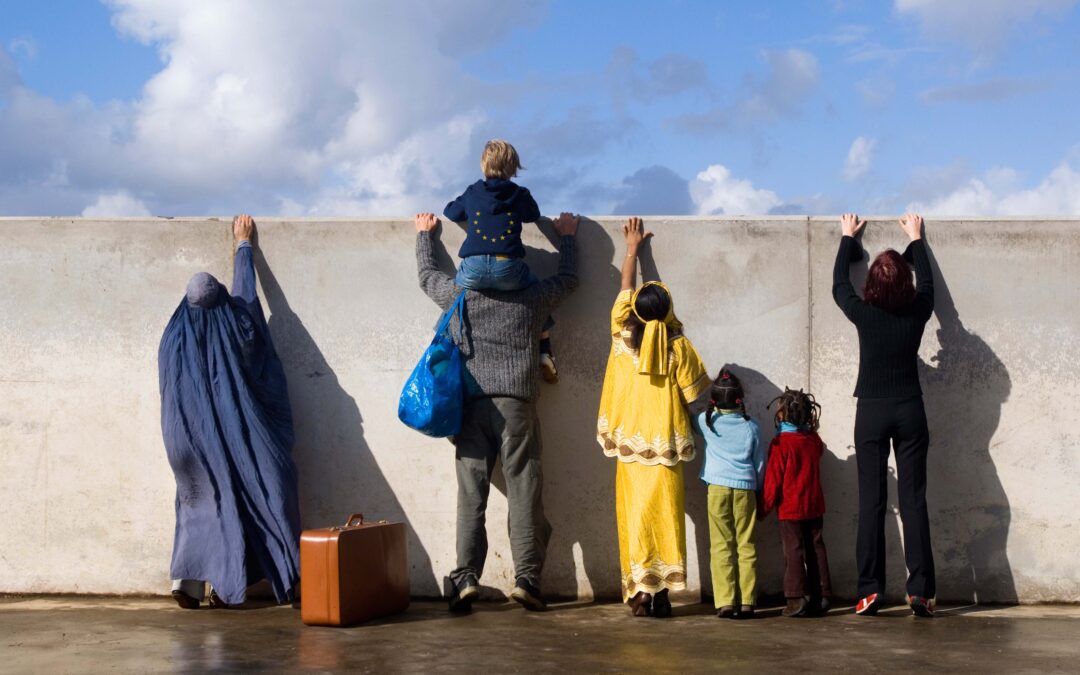
The ICJ and other NGOs jointly intervened before the Grand Chamber of the European Court of Human Rights in a case against Spain on the denial of entry of asylum seekers in the enclave of Melilla.
The ICJ, the European Council on Refugees and Exiles, the AIRE Centre, Amnesty International and the Dutch Refugee Council argued that the European Convention on Human Rights prohibits refusal of entry, and/or return of a person to face serious violations of human rights, including of the right to life, the prohibition of torture or inhuman or degrading treatment or punishment, or flagrant denial of justice and of the right to liberty.
They submitted that these refusals of entry are also contrary to the rights set out in the EU Charter of Fundamental Rights (CFR) and the prohibition on non-refoulement found in the 1951 Geneva Convention on the Status of Refugees (Refugee Convention).
The joint interventions presents the argument that, for these prohibitions to be practical and effective and not theoretical and illusory, Contracting Parties must have in place effective systems for identifying people within their jurisdiction who are entitled to benefit from the prohibition on refusing entry.
Spain-ICJ&others-AmicusBrief-ND&NT-ECtHR-GC-legalsubmission-2018 (download the thirty party intervention)
Apr 16, 2018 | Advocacy, News, Non-legal submissions
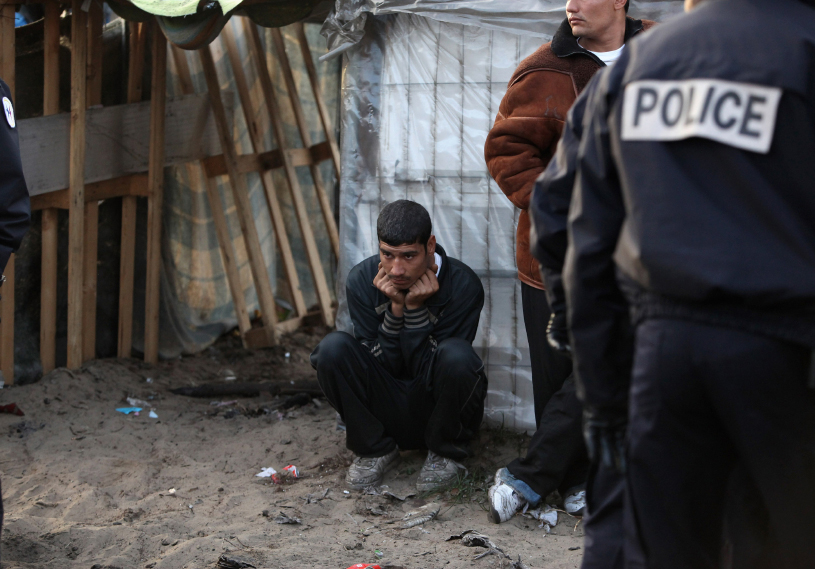
The ICJ and ECRE have presented today to the United Nations Special Rapporteur on the human rights of migrants a submission on access to justice for migrants in Europe.
The submission is an input for the forthcoming report of the UN Special Rapporteur on access to justice for migrants to the UN General Assembly.
The International Commission of Jurists (ICJ) and the European Council on Refugees and Exiles (ECRE) have provided a brief overview of aspects of access to justice for migrants, with a particular focus on asylum seekers and migrant children, in European countries.
The issues dealt with include:
- obstructions to access to justice in relation to access to the territory;
- the undue use of national security exceptions to weaken access to justice in immigration procedures;
- concerns with access to justice in expulsion and detention procedures;
- specific obstacles to access to justice for asylum seekers, including when appealing the rejection of their claims by first instance asylum authorities before a judicial or administrative appeal body;
- specific obstacles to access to justice for undocumented minors.
ICJECRE-NonLegalSubmission-SRMigrants-Access2JusticeEurope4Migrants-2018-ENG (download the submission)