Oct 5, 2017 | Advocacy, Non-legal submissions
Today, the ICJ made a submission to the Universal Periodic Review of Azerbaijan.
The submission brings to the attention of the members of the Human Rights Council’s Working Group on the UPR issues concerning:
- Azerbaijan’s legislation governing the legal profession;
- the situation of lawyers in practice;
- the lack independence of the legal profession;
- the role of the Bar Association with regard to attacks on lawyers;
- international human rights instruments.
With respect to each of the above-mentioned concerns, the ICJ calls upon the Working Group on the UPR and the Human Rights Council to make a number of recommendations to the authorities of Azerbaijan.
Azerbaijan-UPR-Advocacy-non-legal submissions-2017-ENG (download the submission)
Oct 3, 2017 | Advocacy, Cases, Legal submissions
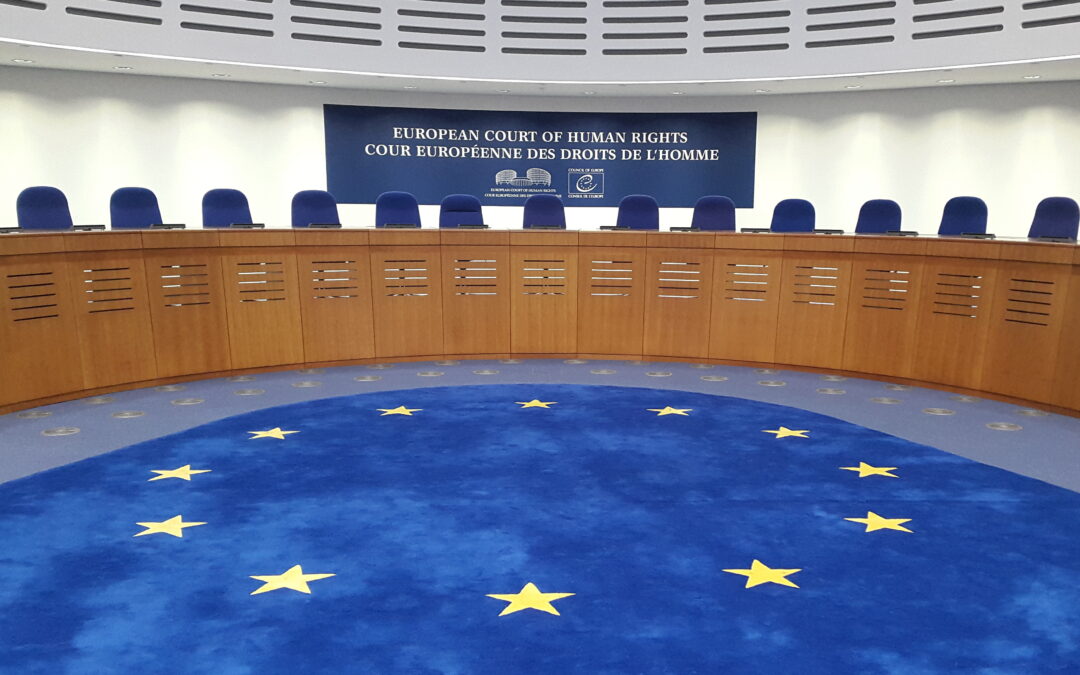
On 2 October, the ICJ and Amnesty International submitted an intervention before the European Court of Human Rights in the case Ecodefence and others v the Russian Federation, Application no. 9988/13 and 48 other applications, which concern labeling NGOs as foreign agents.
In this submission, the applicants provided the Court with an analysis, based on international law sources, of:
a) the scope of application of rights to freedom of expression and association guaranteed under Articles 10 and 11 of the European Convention on Human Rights (ECHR or the Convention) to restrictions on the activity of non-governmental organisations (NGOs);
b) application of the principle of legality to such restrictions;
c) the legitimacy of the aim, necessity and proportionality of measures regulating NGOs, including restrictions on funding, burdensome reporting requirements, sanctions and the stigmatizing effect of labelling NGOs as “foreign agents”; and
d) the scope of permissible restrictions under Article 18 of the ECHR, particularly the question of interferences used for purposes other than those which fall under Articles 10 and 11 of the Convention.
The submission addresses the obligations of State parties to the ECHR with account taken of the other international law obligations, such as those under the International Covenant on Civil and Political Rights (ICCPR) as well as other relevant standards under international law.
Russia-ECtHR-AmicusBrief-Ecodefence-legalsubmissions-2017-ENG (download the third party intervention)
Oct 2, 2017 | News
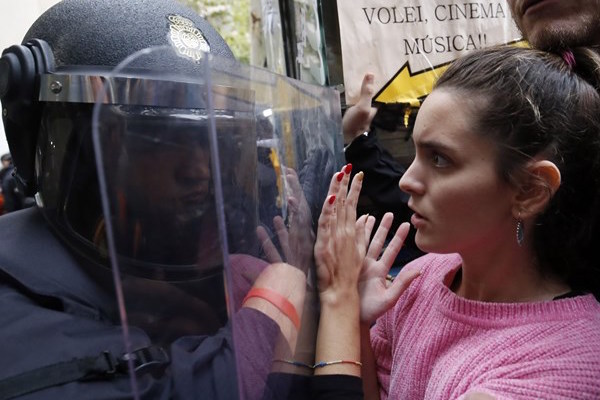
The ICJ today expressed concern at the apparently unlawful violence surrounding yesterday’s referendum in Catalonia, as Catalan authorities sought to hold a vote on the independence of the region. The Spanish Constitutional Court had ruled that the referendum was illegal.
The ICJ calls on all parties concerned to resolve the current crisis in accordance with international human rights law and in the framework of the rule of law.
The ICJ is particularly concerned at allegations of excessive use of force during police operations aimed at enforcing court orders to prevent the referendum being held.
International human rights obligations binding on Spain require that any use of force by agents of the State must be no more than is strictly necessary in the circumstances to meet a grave threat .
All aspects of police operations, including their planning and co-ordination, and the training, guidance and orders given to police officers on the ground, must be designed to minimize the use of physical force.
The ICJ calls for a thorough, prompt and independent investigation into the violence surrounding the referendum, and for those responsible for acts of violence in violation of human rights to be brought to justice.
Background
Spain has obligations to respect the right to life and the right to physical integrity of any person under its jurisdiction under articles 6 and 7 of the International Covenant on Civil and Political Rights, and articles 2, 3 and 8 of the European Convention on Human Rights.
Standards in this regard are re-enforced by the UN Code of Conduct for Law Enforcement Officials and the UN Basic Principles on the Use of Force and Firearms by Law Enforcement Officials.
Positive obligations under these provisions require that allegations of lethal or potentially lethal force, or force that could amount to cruel inhuman or degrading treatment or torture, be the subject of investigation that is independent and impartial, thorough and prompt.
The violence surrounding the referendum on Catalonia’s independence reportedly resulted in injuries to at least 844 civilians and 33 police offices.
Contacts:
Róisín Pillay, ICJ Europe Programme Director, t: +32 2 734 84 46 ; e: roisin.pillay(a)icj.org
Massimo Frigo, ICJ Senior Legal Adviser, t: +41 22 979 3805 ; e: massimo.frigo(a)icj.org
Sep 21, 2017 | Events, News
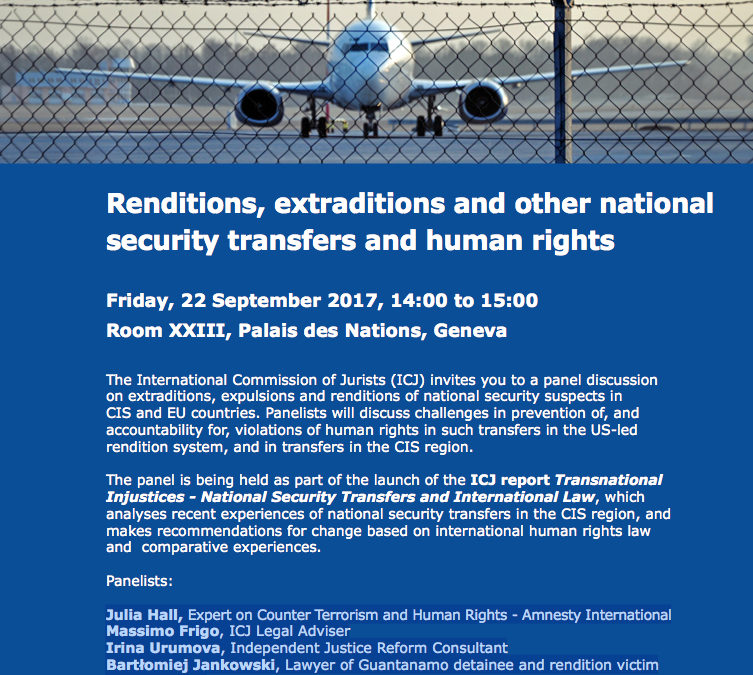
At a side event to the UN Human Rights Council on 22 September, the ICJ will discuss challenges in prevention of, and accountability for, violations of human rights in the US-led rendition system, and in the CIS region.
The event will address as well the challenges of extraditions, expulsions and renditions of national security suspects in CIS and EU countries.
The panel discussion is being held as part of the launch of the ICJ report Transnational Injustices – National Security Transfers and International Law, which analyses recent experiences of national security transfers in the CIS region, and makes recommendations for change based on international human rights law and comparative experiences.
The event will take place at the UN Human Rights Council in Geneva on Friday 22 September at 14:00 – 15:00 at Room no. XXIII.
Panelists:
- Julia Hall, Expert on Counter Terrorism and Human Rights – Amnesty International
- Bartłomiej Jankowski, Lawyer of Guantanamo detainee and rendition victim Abu Zubaydah
- Massimo Frigo, ICJ Legal Adviser
- Irina Urumova, Independent Justice Reform Consultant
Copies of the report in English will be available for the persons attending the meeting.
A flyer for this event is available in PDF format by clicking here.
For more information, contact massimo.frigo(a)icj.org and/or un(a)icj.org
Sep 14, 2017 | Advocacy, Cases, Legal submissions, News
On 13 September, the European Committee of Social Rights decided on the admissibility of the collective complaint submitted by the ICJ and Forum for Human Rights, against the Czech Republic.
The Committee assessed the admissibility conditions set out in the Protocol and the Committee’s Rules and the Government’s objections on admissibility and declared the complaint admissible. The Czech Government has now two months to make written submissions on the merits of the complaint.
The complaint argues that the Czech Republic fails to ensure equal legal protection and participation of children below the age of criminal responsibility in the pre-trial stage of juvenile justice procedures.
The ICJ and FORUM submit that serious systemic flaws in the Czech juvenile justice system deprive a specific group of particularly vulnerable individuals – children below the age of criminal responsibility – of an adequate level of social protection and leave them at risk of inappropriate or unfair procedures leading to arbitrary punitive measures, in violation of Article 17 of the European Social Charter, both alone and read in conjunction with the principle of equality in the preamble to the Charter.
Europe-ECSR-ICJvCzechRepublic-ChildrenJustice-AdmissibilityDecision-2017 (download the Committee’s decision)