Mar 24, 2016 | Advocacy, News
The ICJ and ECRE presented today a joint submission on the situation of the asylum and reception systems in Greece to the Committee of Ministers of the Council of Europe.
The submission was presented in view of a meeting of the Committee of Ministers of the Council of Europe on the implementation by Greece of the European Court of Human Rights’ judgment in the case of M.S.S. v Belgium and Greece that will take place next June.
The submission refers to the previous detailed joint submissions of ICJ and ECRE and provides recent information on the state of the asylum procedure, reception conditions and detention practices, which are likely to be of importance to the supervision of the execution of the M.S.S. v. Belgium and Greece ruling. It focuses on:
- ongoing obstacles to accessing the asylum procedure, namely concerning registration before the Asylum Service, the operation of appeals bodies, as well as the likely application of the “safe third country” concept regarding Turkey;
- the state of Greece’s reception system, with a view to properly assessing its capacity to accommodate asylum seekers and migrants on its territory; and
- updated information on the lawfulness and conditions of immigration detention, including new risks of detention stemming from nationality-profiling and the establishment of “hotspots” at points of arrival.
Greece-ICJECRE-MSS-CommitteeMinisters-5thsubmission-legal submission-2016-ENG (download the joint submission)

Mar 1, 2016 | Advocacy, News, Non-legal submissions
The ICJ joined today other prominent human rights organizations in urging the European Union and its Member States to respect and protect human rights and the rule of law in countering terrorism.
In their joint statement, the thirteen human rights organizations stressed the implications of Eu counter-terrorism laws and policies for human rights and the rule of law with regard to the right to be free from torture and cruel, inhuman or degrading treatment or punishment, the principle of non-refoulement, the right to liberty and security of the person, the right to a fair trial, the principle of legality, the principle of non-discrimination, the rights to freedom of expression and peaceful assembly, the right to privacy, the rights of asylum-seekers and migrants, the freedoms of movement, of religion or belief and other dimensions.
The human rights organizations that signed up to this statement are, apart from the International Commission of Jurists, the European Network Against Racism (ENAR), Amnesty International, the International Federation of Human Rights (FIDH), the Open Society European Policy Institute, the World Organisation Against Torture (OMCT), Fair Trials, European Digital Rights (EDRi), the Forum of European Muslim Youth and Student Organisations (FEMYSO), the International Federation of Action by Christians for the Abolition of Torture (FIACAT), the International Rehabilitation Council for Torture Victims (IRCT), the Association for the Prevention of Torture (APT), and the European Association for the Defense of Human Rights (AEDH).
EU-counter-terrorism&humanrights-jointstatement-2016-ENG (download the joint statement)

Feb 19, 2016 | E-bulletin on counter-terrorism & human rights, News
Read the 99th issue of ICJ’s monthly newsletter on proposed and actual changes in counter-terrorism laws, policies and practices and their impact on human rights at the national, regional and international levels. The E-Bulletin on Counter-Terrorism and Human...

Dec 16, 2015 | E-bulletin on counter-terrorism & human rights, News
Read the 98th issue of ICJ’s monthly newsletter on proposed and actual changes in counter-terrorism laws, policies and practices and their impact on human rights at the national, regional and international levels. The E-Bulletin on Counter-Terrorism and Human...
Nov 18, 2015 | Events, News
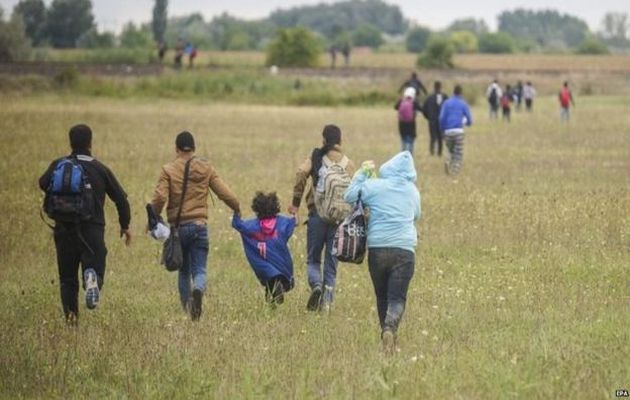
The ICJ, OSCE and Group 484 are holding a training on migration and international human rights law starting on Tuesday 17 November in Vrnjačka Banja (Serbia).
The training has been organised by the Organisation for Security and Cooperation in Europe (OSCE) and the Serbian NGO “Group 484” and will be given by the International Commission of Jurists.
It will focus on international protection of migrants and asylum seekers, access to territory and asylum and the principle of non-refoulement, in light of the current migrants and refugee crisis and drawing from the jurisprudence of the European Court of Human Rights, of the UN human rights systems and from EU law.
The training will be centred on the ICJ Practitioners Guide no. 6: Migration and International Human Rights Law.
Serbia-JointTrainingMigrationHR-Events-2015-ENG (download the agenda in English)