Oct 27, 2020 | Agendas, Events, News
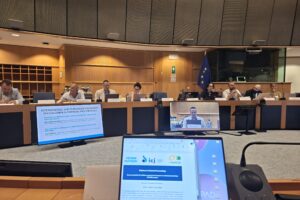
The International Commission of Jurists and the Human Rights Joint Platform (IHOP) invite you to a conversation on the past and current situation of the fight against impunity in Turkey with eminent international and Turkish expert.
Registation is on a first come first served basis by writing to: ihop@ihop.org.tr
Join our speakers:
– Juan Mendez, former UN Special Rapporteur on Torture
– Wilder Taylor, Former Secretary-General of ICJ and chair of Uruguary NPM
– Luciano A. Hazan, Member of the UN Working Group on Enforced and Involuntary Disappearance
– Melis Gebeş, Lawyer, Truth Justice and Memory Center:
– Feray Salman, General Coordinator of Human Rights Joint Platform
IHOPICJ-ZoomConference-ImpunityTurkey-Agenda-2020-ENG (download the agenda in English)
IHOPICJ-ZoomConference-ImpunityTurkey-Agenda-2020-TUR (download the agenda in Turkish)
The event is part of the REACT project: implemented jointly by ICJ and IHOP, this project seeks to support the role of civil society actors in turkey in ensuring effective access to justice for the protection of human rights. This project is funded by the European Union. The views expressed in the event do not necessarily reflect the opinion of the EU.
Oct 21, 2020 | News
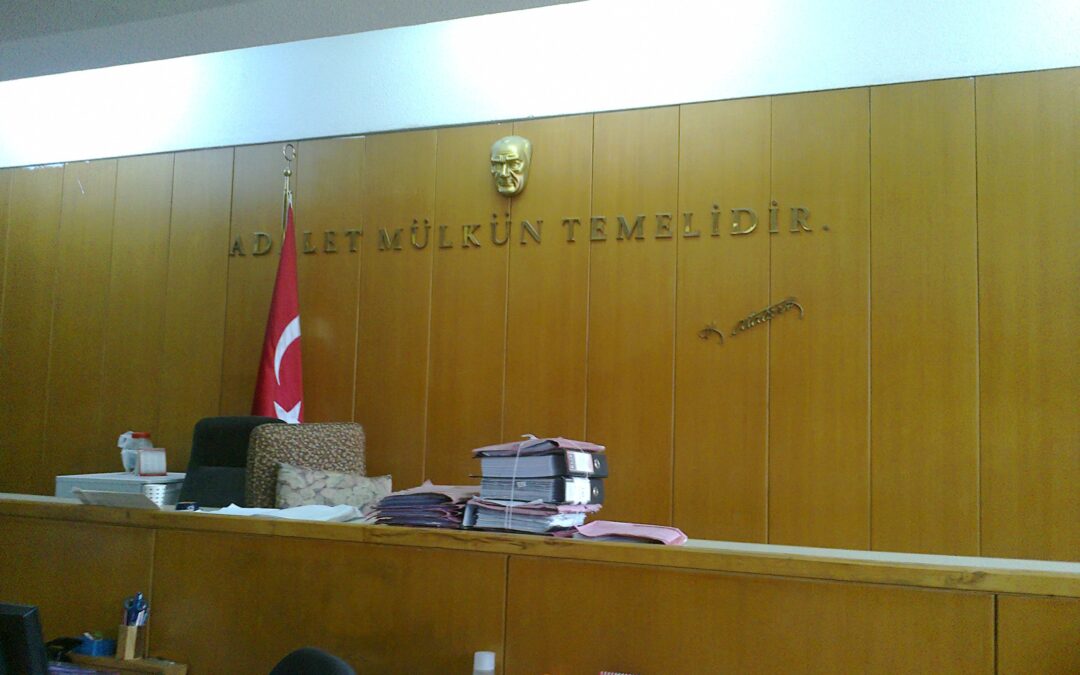
The ICJ condemned the dismissal of eight judges and three prosecutors by Turkey’s Council of Judges and Prosecutors (CJP) on 14 October 2020, for alleged membership of or connections with the Gülenist movement as a violation their right to a fair trial.
The ICJ calls on the CJP to revoke its order. In case any further is to be taken, the cases should be re-examined under the ordinary dismissal procedures. The ICJ also urges the Turkish Government and Parliament to modify the constitutional rules on the CJP to ensure its full independence.
“This decision not only affects the rights of the judges and prosecutors at stake, but also the Turkish population as whole, which damages the functioning of a fair and independent justice system bound by the rule of law,” said Massimo Frigo, Senior Legal Adviser with the ICJ Europe and Central Asia Programme.
The decision by the Council of Judges and Prosecutors (CJP) is particularly problematic because it was not accompanied by any reasoning on the individual situation of each judge and prosecutor.
International law provides that judges may be dismissed only through a fair hearing before an independent authority. The lack of individual reasoning in dismissal decisions strikes at the heart of the right to a fair hearing.
As the ICJ demonstrated in the 2018 report Justice Suspended, within the current constitutional framework, the Council of Judges and Prosecutors (CJP) is itself not provided with the guarantees necessary to ensure its institutional independence.
Despite the state of emergency having been lifted since July 2018, extraordinary powers given to the Council of Judges and Prosecutors to dismiss judges and prosecutors during the State of Emergency still apply, having been extended for three years by Law no. 7145.
“It is unacceptable in a State governed by the rule of law that judges and prosecutors – whatever charges may be against them – be dismissed without a fair procedure, in disregard of international law,” added Massimo Frigo.
Background
On 14 October the Council of Judges and Prosecutors made use of special powers to dismiss judges and prosecutors without complying with the ordinary procedure, invoking extraordinary powers enacted by Law No 7145 of 31.07.2018. The decision was issued in the Official Gazette on 30 October 2020. This legislation inserted into ordinary law several powers that had previously applied under the state of emergency legislation. More than 30 judges have so far been dismissed under this procedure since the end of the state of emergency.
One of the amendments made by Law No 7145 of 31.07.2018 was to the Decree Law No 375 dated 1989. A Temporary Article (Article 35) was added to the Decree. On the basis of this article, the General Assembly of the Constitutional Court, the Presidency Councils of Court of Appeal, the Council of State, the General Assembly of the Council of Judges and Prosecutors, a Commission set up by the Ministry of National Security, and the Presidency of the Court of Audit, were each authorized to take dismissal decisions for public officials/judges and prosecutors under their mandate for three years from the date of the endorsement of the law No 7145
The decision to dismiss the nine judges and two prosecutors was made on 14 October 2020 and published in the Official Gazette on 20 October 2020. After recalling Law no 7145 that enables the dismissal of judges and prosecutors by the Board, the decision states that all defendants have asked to submit their written defences. The decision also indicates that this is not a criminal conviction. The decision is based on complaints received and refers to investigations on their social environment, criminal investigations and prosecutors conducted by judicial authorities in general on the Gülenist organisation/FETÖ, minutes of hearings, contents of the communication app Bylock, statements by witnesses and suspects. However, the decision does not include any reasoning relating to the individual situation of each judge or prosecutor.
International law and standards provide that disciplinary proceedings should be conducted by an independent authority or a court with all the guarantees of a fair trial and provide the judge with the right to challenge the decision and sanction. Disciplinary sanctions should be proportionate.
The UN Basic Principles on the independence of the judiciary set out international standards for discipline, suspension and removal of judges, including in order to ensure impartiality and independence of courts and tribunals as required by international law, including the International Covenant on Civil and Political Rights and the European Convention on Human Rights. The Basic Principles state that a “charge or complaint made against a judge in his/her judicial and professional capacity shall be processed expeditiously and fairly under an appropriate procedure. The judge shall have the right to a fair hearing. The examination of the matter at its initial stage shall be kept confidential, unless otherwise requested by the judge.”
The Consultative Council of European Judges (CCJE) adds that “a Head of State, Minister of Justice or any other representative of political authorities cannot take part in the disciplinary body.”
Contact
Massimo Frigo, ICJ Senior Legal Adviser for the Europe and Central Asia Programme, t: +41 22 979 3805, e: massimo.frigo(a)icj.org
Oct 19, 2020 | News
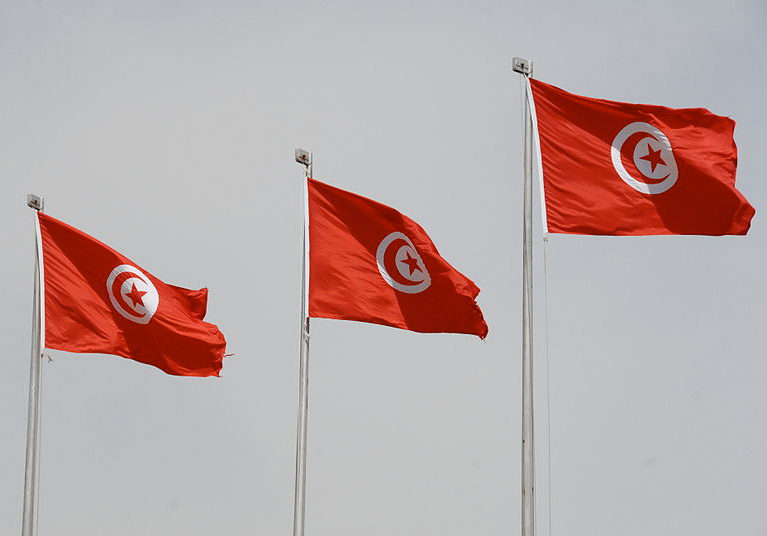
Tunisian Parliament should reject the revised Draft Law No. 91-2018 on the state of emergency when it is tabled in the plenary session starting tomorrow, said the ICJ today.
The Draft Law is inconsistent with the rule of law and Tunisia’s international human rights obligations and should be considered further to ensure its compliance with international law and standards.
The Draft Law was approved by the Parliament’s Committee on Rights, Freedoms and External Relations on 15 May 2019. Articles 2, 3 and 4 of the Draft Law authorize the President to declare a state of emergency for one month, renewable once, “in the event of catastrophic events” or “imminent danger threatening public order and security, the security of people and institutions and the vital interests and property of the state.”
Tunisia has remained under a continuous state of emergency since 24 November 2015.
“The Draft Law would entrench the President’s power to unilaterally determine what constitutes an emergency on broad grounds,” said Said Benarbia, the ICJ’s MENA Programme Director.
“It should be amended to enhance legislative oversight over the declaration of the state of emergency, provide for effective judicial review over emergency measures, and ensure that such measures do not unlawfully infringe on the enjoyment of recognized rights and freedoms.”
Under the law, regional governors could impose restrictions on movement and prohibit gatherings where necessary for “the maintenance of security and public order.” They could suspend the activities of associations that they decide act in a manner “contrary to public order and security” that “obstructs the work of the public authorities”. The Minister of Interior may also order house arrest and other measures against anyone deemed to “hamper public order and security”, including by summoning them to appear at the police station twice a day and intercepting their communications and correspondence.
The ICJ stressed that these measures risk interference with a number of rights, including freedom of expression, association, assembly, movement and the rights to liberty.
“The proposed law would entrench opportunities for Tunisian authorities to continue perpetrating abuses of human rights under arbitrarily imposed states of emergency,” said Kate Vigneswaran, ICJ’s MENA Senior Legal Adviser.
“It’s up to Parliament to ensure that appropriate safeguards are put in place which clearly limit the basis for imposing any restrictive measure to objective criteria and a real risk of harm, not the whims and political desires of the executive.”
The ICJ said that notwithstanding the inclusion of procedural safeguards – including registration of such decisions with reasons with the Public Prosecutor – the broad basis for the imposition of house arrest is concerning given Tunisian authorities’ abusive use of house arrest in the past.
Contact:
Said Benarbia, Director, ICJ Middle East and North Africa Programme, t: +41-22-979-3817; e: said.benarbia(a)icj.org
Kate Vigneswaran, Senior Legal Adviser, ICJ Middle East and North Africa Programme, t: +31-62-489-4664; e: kate.vigneswaran(a)icj.org
Tunisia-Law of Emergency-News-2020-ENG (story with additional information, PDF)
Tunisia-Law of Emergency-News-2020-ARA (story in Arabic, PDF)
Oct 13, 2020 | Advocacy, News, Non-legal submissions
On 12 October 2020, the ICJ made a submission to the Human Rights Council’s Working Group on the Universal Periodic Review in advance of the Human Rights Council’s review of Singapore in May 2021.
In its submission, the ICJ expressed concern about the following issues:
(i) Freedom of expression online;
(ii) The death penalty;
(iii) Corporal punishment; and
(iv) International human rights instruments.
The ICJ further called upon the Human Rights Council and the Working Group on the Universal Periodic Review to recommend that Singapore ensure, in law and in practice, the right to freedom of expression online, the right to life and the absolute prohibition against cruel, inhuman or degrading treatment or punishment; and become a party to core international human rights instruments, including the International Covenant on Economic, Social and Cultural Rights, the International Covenant on Civil and Political Rights, the Convention Against Torture and Other Cruel, Inhuman or Degrading Treatment or Punishment, the International Convention on the Protection of the Rights of All Migrant Workers and Members of Their Families and the International Convention for the Protection of All Persons from Enforced Disappearance, as well as the existing Optional Protocols to some of these treaties.
The submission is available in PDF here.
Oct 8, 2020 | News
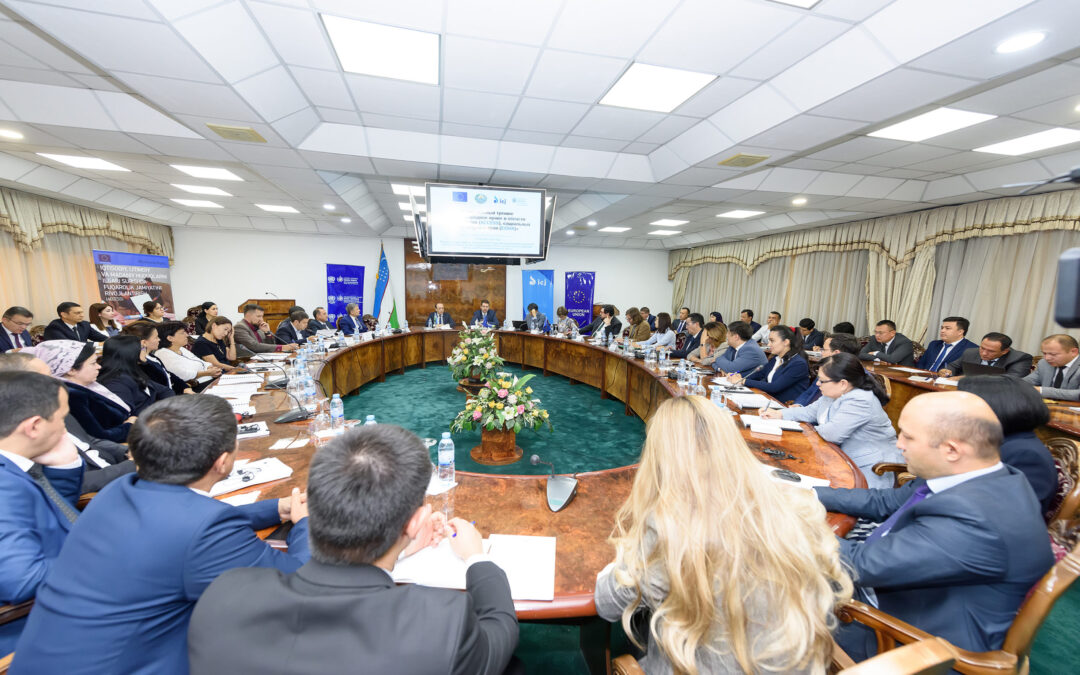
Today, the ICJ, the Regional office of the UN High Commissioner for Human Rights (OHCHR) for Central Asia and the Supreme School of Judges of the Republic of Uzbekistan (SSJ) are beginning a national training on “International law on economic, social and cultural (ESC) rights.”
This two-day online-training is the second of a series of trainings on ESC rights, including, the right to health, education, housing, child protection and rights in the workplace.
The online-training aims to build the capacity of judges, lawyers, prosecutors, legal academics and other representatives of civil society to apply international law and standards on ESC rights. Trainers will share best practices on implementation by States of their international obligations, including through judicial practice, and in ensuring access to justice for ESC rights. The online-training will also allow for exchanges between members of the judiciary, other legal practitioners, and members of civil society.
The training will be based on four modules: (1) introduction to international law on ESC rights; (2) international obligations concerning access to justice and effective remedies for ESC rights in national courts and comparative examples of good practices; (3) children`s ESC rights and (4) women`s ESC rights. The office of the UN Special Rapporteur on independence of judges and lawyers and representatives of the UN Committee on the Elimination of Discrimination against Women will participate in the training.
“Nobody could imagine the challenges the world will face only in few months after my visit to Uzbekistan. We are witnessing and living this unprecedently challenge for individuals, societies and states to response to crisis at global and national level to protect right to life and health, and to protect individuals from impact of lockdowns and restrictions. Economic, social and cultural rights are the heart of these challenges,” said Diego Garcia-Sayan, the UN Special Rapporteur on independence of judges and lawyers in his video-address to the participants of the training.
Francois Begeot, Head of Cooperation of the Delegation of the European Union to the Republic of Uzbekistan pointed out, “COVID-19 pandemic showed the urgency and importance of economic, social and cultural rights that have to be ensured by the states, even in the emergency situations. Taking international obligations, Uzbekistan has to respect, protect and fulfil human rights including during the state of emergency and ensure access to justice and legal remedies.”
Read full press release here.
Watch Diego García-Sayán speech for the event:
Contact:
Ms. Dilfuza Kurolova, Legal Consultant, ICJ Europe and Central Asia Programme, e: dilfuza.kurolova@icj.org
Ms. Guljakhon Amanova, National Program Officer, Uzbekistan, Regional Office of the UN High Commissioner for Human Rights (OHCHR), e:gamanova@ohchr.org
Mr. Utkir Khalikov, Head of the international department The Supreme School of Judges under the Supreme Judicial council of the Republic of Uzbekistan for Central Asia, e: inter.dep.ssj@mail.ru