Jan 29, 2019 | News
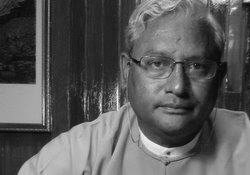
On the second anniversary of the killing of prominent lawyer U Ko Ni, in public view at Yangon International Airport, the ICJ repeats its calls for a thorough and impartial investigation with a view to establish the facts, to deliver justice and to deter the repetition of similar crimes.
“This brazen killing of a prominent democracy advocate demands a rigorous State response to show this type of crime will be fully punished,” said Frederick Rawski, the ICJ’s Director for Asia and the Pacific.
Despite an official investigation and reports of more than 100 court hearings, nobody has been held accountable for U Ko Ni’s death – criminally or otherwise – and the circumstances have not yet been satisfactorily explained.
“Myanmar simply cannot satisfy its international law obligations without conducting an impartial and independent investigation that is free of military influence. Such an investigation is a pre-requisite for conducting an effective prosecution in a fair trial setting,” added Rawski.
U Ko Ni was well known as a vocal advocate for human rights and democratic reform in Myanmar. As an adviser to the National Legal of Democracy party, he was involved in creating the position of State Counselor, which formalized a leadership role for Daw Aung San Suu Kyi, despite a constitutional provision barring her from the Presidency.
At the time of his death, it is understood that U Ko Ni was working on proposals to replace Myanmar’s 2008 Constitution, the source of law underpinning military power.
“A credible justice process is required not only for U Ko Ni and his family, but to demonstrate the State will protect the right to life of all people including democracy advocates,” said Sean Bain, legal adviser for the ICJ.
“A crime of this nature stifles participation in the democratic process and so an effective justice process is imperative to deter its repetition,” Bain added.
Myanmar has a particular obligation to ensure that lawyers and others acting as human rights defenders are protected in carrying out their work.
Any justice process must be timely, effective and shed light on the facts.
The investigation into U Ko Ni’s killing has been beset by obstacles, including the unknown whereabouts of a primary suspect, the incorrect identification of a deceased individual as a suspect and the arrest of a person with the same name, and reported military involvement in the police investigation. Lines of inquiry related to the political motivations for the killing, particularly considering the military links of many suspects, do not appear to have been pursued satisfactorily, nor impartially, given military involvement in the investigation.
Criminal proceedings in Yangon’s Northern District Court, and related proceedings in the Yangon High Court, have been sluggish. Observing lawyers and individuals including from the ICJ have noted multiple instances of admission into evidence of testimony that appears to be irrelevant, failures of key witnesses to appear, and the long drawn out process of court proceedings whereby weeklong delays are common while continuances over successive days are rare.
These issues are emblematic of challenges in Myanmar’s justice system previously identified by the ICJ in which police, prosecutors and courts generally lack the independence and or will to effectively administer justice, particularly in politically sensitive cases.
“Two years is an incredibly long time to get to the position we are in now, and in our experience this highlights broader problems with the administration of justice in Myanmar,” added Bain.
Contact
Frederick Rawski, ICJ Asia Pacific Region Director, e: frederick.rawski(a)icj.org
Sean Bain, ICJ Legal Adviser, e: sean.bain(a)icj.org
Download:
Myanmar-Ko Ni Statement-News-web stories-2019-ENG (full story with background information, PDF)
Myanmar-Ko Ni Statement-News-web stories-2019-BUR (full text in Burmese, PDF)
Read also:
Myanmar: reverse laws and practices that perpetuate military impunity – new ICJ report
Killing of lawyer U Ko Ni must be promptly and impartially investigated
Jan 25, 2019 | Advocacy, Legal submissions
Today, the ICJ and Lawyers Rights Watch Canada (LRWC) submitted a joint amicus curiae in criminal defamation proceedings against human rights defenders Nan Win and Sutharee Wannasiri for bringing to light alleged labor rights violations at Thammakaset Company Limited.
The defamation charges relate to a 107-second film, produced by the non-governmental organization Fortify Rights, which documents previous defamation complaints brought by Thammakaset against 14 of its former migrant workers from Myanmar.
Nan Win was one of the migrant workers featured in the film. Sutharee Wannasiri, former Human Rights Specialist with Fortify Rights, was charged in connection with making three Twitter posts relating to the film.
The brief aims to clarify the nature and scope of Thailand’s international legal obligations relating to the right to freedom of expression and points out that the imposition of harsh penalties such as imprisonment or large fines on a human rights defender risks having a ‘chilling effect’ on the exercise of freedom of expression, which Thailand is bound to protect pursuant to its international legal obligations.
The preliminary examinations of Nan Win and Sutharee Wannasiri will begin on 4 February and 11 March 2019, respectively.
During the preliminary examination hearing, is the Court will consider the case before it to determine if it is a prima facie case.
The preliminary examination hearing is a mandatory proceeding in matters involving prosecution claims brought by private individuals or entities, such as in the case of Nan Win and Sutharee Wannasiri.
If the preliminary examination finds that the cases are prima facie, the court will admit to trial only the charges relating to the counts deemed prima facie.
If the court finds no prima facie case, it can rule that the charges be dismissed.
Read also:
Thailand: Drop defamation complaints against human rights defenders Nan Win and Sutharee Wannasiri (3 December 2018)
Download:
Thailand-Nan Win Kratik_Amicus-Advocacy-legal submission-2019-ENG (full amicus in PDF, English)
Thailand-Nan Win Kratik_Amicus-Advocacy-legal submission-2019-THA (full amicus in PDF, Thai)
Jan 14, 2019 | News
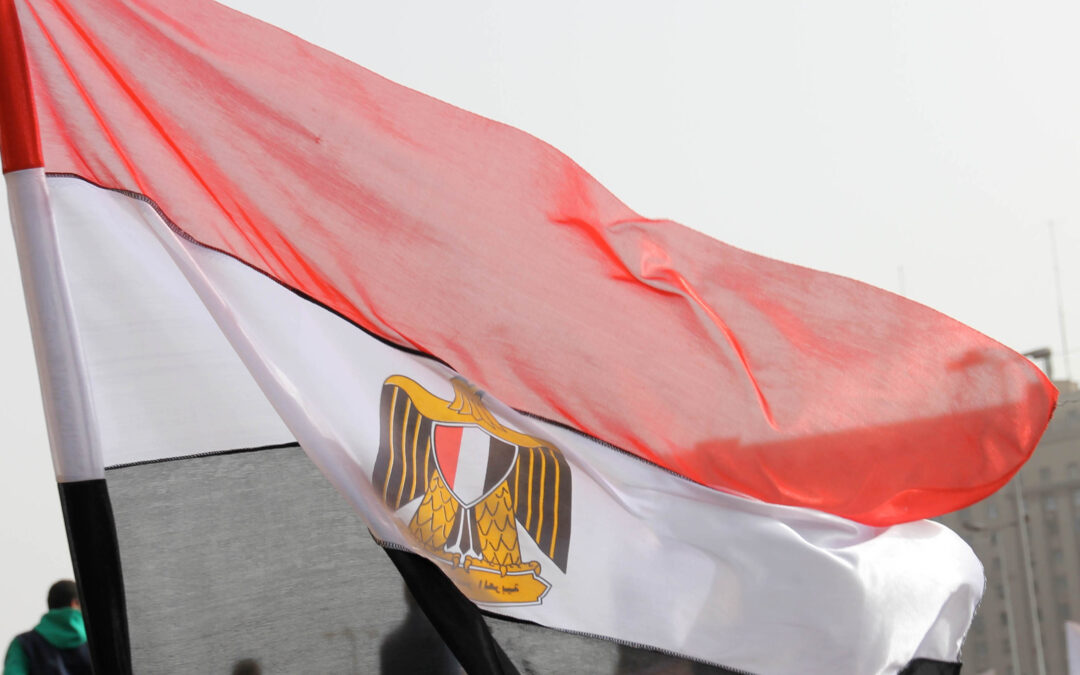
Today the ICJ condemned the conviction of prominent Egyptian political activist Ahmed Douma and called for his immediate removal from solitary confinement and release from prison.
Ahmed Douma, political activist and founding member of the now banned 6 April pro-democracy movement established in 2008, was convicted by the South Cairo Criminal Court on Wednesday 9 January 2019.
The conviction, resulting in a sentence of 15 years in a maximum security prison and a six million Egyptian pounds (US$335,000) fine, followed a re-trial on charges under the Penal Code and Law No. 10 of 1914 on Illegal Assembly including using force and violence against military and police officers, disrupting traffic, participating in an illegal assembly for such purposes, burning the Egyptian Scientific Institute, vandalizing public property, and possessing Molotov Cocktails and rocks to vandalize public property.
The charges relate to his involvement in a three-week sit-in protest outside the Cairo Cabinet Offices in November and December 2011 against the Supreme Council of the Armed Forces’ decision to appoint Kamal Al Ganzouri as Prime Minister, and calling for a civilian government during the post-revolution transition period. The protest erupted in clashes between military forces and protestors on 16 December 2011, which lead to the death of 18 protestors by live ammunition, injury of more than 1900 others and property damage. Douma and 268 others were charged with all offences without distinction.
Ahmed Douma has been held in solitary confinement since late 2013 in connection with his conviction in another case.
Before handing down the sentence, Judge Mohamed Shereen Fahmy stated the country was “plagued by the intellectually defeated and the socially […] lost in the maze of life, seeking a position through which they can establish themselves as national symbols, liars, deceivers, and accomplices, […] who one would expect to be the homeland’s protectors, but in reality, they are its worst foes.”
“The harsh sentence is a clear message to all political activists that any political activity or dissent will not be tolerated under Egypt’s military dictatorship,” said Said Benarbia, Director of ICJ’s MENA Programme. “Judge Fahmy’s statement demonstrates he was never independent and impartial, but was implementing the political will of the al-Sisi led government. The Egyptian regime’s politicization of the judiciary means those with opposing views are unlikely to have a fair trial.”
On 22 December 2013, a Cairo Misdemeanor Court convicted Ahmed Douma in another case, along with two other political activists and founding members of the 6 April movement, Ahmed Maher and Mohamed Adel, for “illegally organizing a protest” under Law No. 107 of 2013 on the Right to Public Meetings, Processions and Peaceful Demonstrations. They were sentenced to three years’ imprisonment and fined 50,000 Egyptian pounds (US$7,239) each.
Since that conviction, Douma has been detained in solitary confinement, with minimal time outside his cell each day. Prolonged solitary confinement is prohibited under international law.
“The Egyptian Authorities are subjecting a political activist to severe ill-treatment in reprisal for his participation and his role in the pro-democracy uprisings of January 2011 and as a warning to others to take heed of what will happen should you dare to express your views. Ahmed Douma’s solitary confinement for more than five years is a breach of Egypt’s obligations under international law,” said Said Benarbia.
Contact:
Said Benarbia, Director of the ICJ Middle East and North Africa Programme, t: +41-22-979-3817; e: said.benarbia(a)icj.org
Egypt-Release Ahmed Douma-News-Web Story-2019-ENG Full press release (English, PDF)
Egypt-Release Ahmed Douma-News-Web Story-2019-ARA Full press release (Arabic, PDF)
Jan 3, 2019 | Advocacy, News, Non-legal submissions
On 30 December 2018, the ICJ and the International Service for Human Rights (ISHR) jointly submitted a communication to the Committee on the Elimination of Discrimination against Women (CEDAW Committee) directed against Thailand.
They did this as a State Party to the Optional Protocol to the UN Convention on the Elimination of All Forms of Discrimination against Women (the CEDAW Convention) on behalf and with the consent of Angkhana Neelapaijit, regarding the alleged enforced disappearance of her husband, Somchai Neelapaijit.
Somchai Neelapaijit, a prominent lawyer and human rights defender, disappeared after being stopped on a road in Bangkok on 12 March 2004 and pulled from his car by a group of men. He has not been seen since. More than 14 years after his alleged enforced disappearance, Somchai’s fate and whereabouts remain unknown.
Prior to his disappearance, Somchai had been defending clients from Thailand’s southern border provinces and had been doing extensive work to advocate for the rights of persons accused of terrorism, and to highlight the treatment of Malay-Muslims in the region.
The joint communication by ICJ and ISHR to the CEDAW Committee submits that Thailand has breached Articles 2(b)(c)(f), 5(a)(b), 15(1) and 16(1)(c)(d) of the CEDAW Convention, which relate to the rights of women to substantive equality and protection from all forms of discrimination, including in all matters relating to marriage and family relations, as well as to their right to an effective remedy for violations of the abovementioned provisions.
The communication further highlights the impact of enforced disappearance on family members of a disappeared person, noting its disproportionate impact on wives and female relatives, as most cases of enforced disappearance in Thailand involve male victims.
In addition to the CEDAW Convention and its Optional Protocol, Thailand is a party to a number of other international human rights instruments, including the International Covenant on Civil and Political Rights and the Convention against Torture and Other Cruel, Inhuman or Degrading Treatment or Punishment. In January 2012, Thailand also signed the International Convention for the Protection of All Persons from Enforced Disappearance (ICPPED), thereby committing itself to refrain from acts that would defeat the object and purpose of that treaty, namely the prevention and prohibition of the crime of enforced disappearance.
The ICJ has consistently called upon the Thai authorities to comply with their obligations under international human rights law to independently, impartially and effectively investigate the case of Somchai Neelapaijit and all other reported cases of enforced disappearance, and provide the families of the victims in such cases with access to effective remedies and reparations, including regular updates on the status of the investigations.
The ICJ has also submitted recommendations to the Thai authorities on the current Draft Prevention and Suppression of Torture and Enforced Disappearances Act, highlighting the crucial need for a domestic law to define and criminalize enforced disappearance and torture in line with Thailand’s international obligations.
Thailand-Communication to CEDAW-Advocacy-2019-ENG (full submission, in PDF)
Contact
Livio Zilli, ICJ Senior Legal Adviser & UN Representative, email: livio.zilli(a)icj.org
Read also
Thailand: ICJ submits recommendations on draft law on torture and enforced disappearance amendments
Thailand: ICJ marks 14th year anniversary of the enforced disappearance of Somchai Neelapaijit’
Thailand: ICJ, Amnesty advise changes to proposed legislation on torture and enforced disappearances
Thailand: pass legislation criminalizing enforced disappearance, torture without further delay
On the 10th anniversary of Somchai Neelapaijit’s alleged disappearance, the ICJ released a report ‘Ten Years Without Truth: Somchai Neelapaijit and Enforced Disappearances in Thailand’ documenting the legal history of the case.
Dec 28, 2018 | Multimedia items, News, Video clips
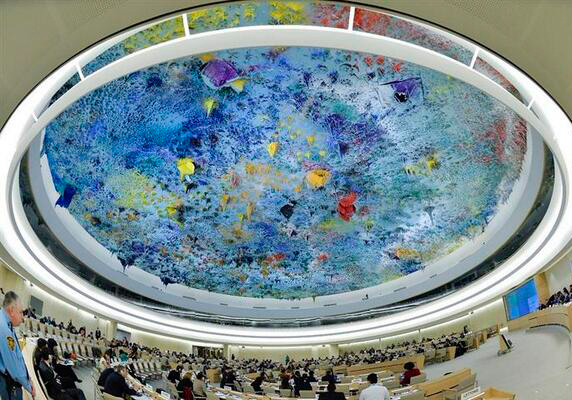
During a week of training and practical experience of UN human rights mechanisms in Geneva, women lawyers spoke of the ways in which civil society actors can use these mechanisms to strengthen advocacy efforts.
As part of a project supported by the German Mission to the United Nations in Geneva the ICJ invited two groups of women lawyers to Geneva to attend training workshops that took place during the course of the June and September ordinary sessions of the UN Human Rights Council.
Participants spoke about their experiences with the interplay between UN mechanisms and domestic changes.
Lebanese lawyer Nina Abdallah noted the limitations of these mechanisms when States do not accept mechanisms that allow for individual complaint. As Lebanon has not yet become party to the Optional Protocol of the CEDAW Convention this means that individuals cannot access the CEDAW Committee to seek a remedy for violations and against that State’s failure to meet obligations under the Convention.
However, she explained that although this limits the accessibility of certain mechanisms, civil society can still play an important role in raising rights issues, calling for removal of reservations and acceptance of complaint procedures for specific Conventions through other mechanisms, such as the Universal Periodic Review reporting process.
Maria Sol Taule, a lawyer from the Philippines working for human rights NGO Karapatan, noted that it is difficult for UN mechanisms to address individual cases when there are so many issues to deal with. However, she said that these mechanisms do still serve as an “effective tool to use as a platform to drumbeat our issues that haven’t been heard by our respective governments.”
Civil society participation in the Human Rights Council, State reporting processes for Committees and the UPR provide an occasion to highlight the human rights difficulties faced within specific countries. Ms Taule said this kind of engagement also offers the opportunity to enhance international solidarity with other organizations from other countries that are dealing with similar rights issues.