Nov 12, 2019 | Advocacy, News
The Government of Myanmar should adopt constitutional and legislative guarantees to enable the Myanmar National Human Rights Commission (MNHRC) to better protect and promote human rights for all persons in the country, according to a new ICJ briefing note.
Entitled Four Immediately Implementable Reforms to Enhance Myanmar’s National Human Rights Commission, the note analyzes the ability of the MNHRC to address various human rights violations, some of which have been found by experts to constitute the most serious crimes under international law. The briefing is available in Burmese and English.
“The NLD-led government should promptly reform the MNHRC Law, allowing for the selection of better qualified and representative Commissioners, and granting them the independence and resources necessary for their work. This reform is a low-hanging fruit for the NLD, and overdue” said Sean Bain, ICJ Legal Adviser.
“At the same time, Commissioners should robustly pursue their mandate, including by advocating for the rights of society’s most vulnerable people,” he added.
The MNHRC itself has recognized the need for law reform, in its self-assessment of 2018, and in its reform proposals to the Government. Any law reform process should be opened up to genuine public consultation, enabling inputs from experts and the general public.
“The MNHRC generally fails to act on reported human rights violations, from crimes by soldiers in border areas through to regular attacks on the press, rendering it ineffective in providing redress to victims,” said Sean Bain, ICJ Legal Adviser. “The MNHRC’s routine inaction in critical cases demonstrates its lack of the necessary independence to stand against state actors, particularly the military,” he added.
One illustrative case is the Commission’s reluctance to further pursue justice for the death in military custody of journalist Ko Par Gyi, whose killers were secretly tried and acquitted in a military court, despite the MNHRC’s finding that a public criminal prosecution was warranted. Commissioners have also been notably silent on gross human rights violations against Rohingyas, perpetrated by Tatmadaw soldiers in the context of “clearance operations”.
The note highlights that the Commission refrains from investigating alleged human rights violations by referencing Section 37 of the 2014 MNHRC Law. This provision is narrowly construed to effectively preclude the MNHRC from conducting inquiries on matters that are already the subject of a legal proceeding.
The composition of the Commission also does not reflect Myanmar’s ethnic, religious, regional and gender diversity, which further erodes its ability to address the conflict-related violations and abuses particularly prevalent in border areas such as Rakhine, Kachin and Shan states.
While amending problematic provisions in the 2014 MNHRC Law is warranted, a constitutional guarantee would also significantly improve the Commission’s institutional independence.
“A constitutional provision, in contrast to ordinary legislation, is subject to a stricter amendment process that would less likely render the MNHRC politically vulnerable,” said Jenny Domino, ICJ Associate Legal Adviser.
“Myanmar can look to the experience of the national human rights institutions of East Timor and the Philippines, which were established by constitutional provision at a time that both countries were transitioning to a democratic and rule of law based order”,” she added.
Four immediately implementable reforms for the Government of Myanmar are recommended:
- To the Union President and the Selection Board: appoint Commissioners through a transparent and fully consultative process that enables its composition to effectively protect human rights and appropriately reflect the full diversity of the population of Myanmar, including ethnic, religious, regional, gender and sexual identities;
- To the Commissioners: adopt a broad and active interpretation of their mandate, including by taking steps to address the most serious violations, including crimes under international law, and certain human rights cases that have gone before courts;
- To the Myanmar parliament: amend the 2014 MNHRC Law to include provisions that strengthen the MNHRC’s capacity and independence, and improve the appointment process for commissioners
- To the Constitutional Amendment Committee: propose provisions guaranteeing the structural and financial independence of the MNHRC in amending the 2008 Constitution.
To download the press release in Burmese, click here.
Download
Myanmar-MNHRC-Advocacy-Briefing-Note-2019-ENG (in English, PDF)
Myanmar-MNHRC-Advocacy-Briefing-Note-2019-BUR (in Burmese, PDF)
Contact
Jen Domino, ICJ Associate Legal Adviser, e: jenny.domino(a)icj.org, t: 09968134317
Daw Hnin Win Aung, ICJ Legal Adviser, e: hninwin.aung(a)icj.org, t: 09428122794
Related material:
Achieving Justice for Gross Human Rights Violations in Myanmar: Baseline Study
Myanmar: Five years without justice for journalist Ko Par Gyi
Nov 11, 2019 | Advocacy, Cases, Legal submissions
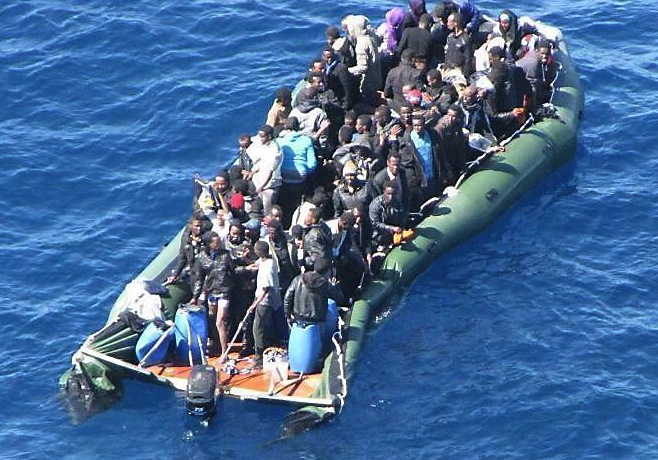
Today, the ICJ, the AIRE Centre, ECRE and DCR have submitted a third party intervention before the European Court of Human Rights in the case of a 2017 rescue operation of migrants, including refugees, in the Mediterranean Sea that involved the SeaWatch rescue vessel.
The case, S.S. and Others v. Italy, concerns the facts occurred during a rescue operation coordinated by the Maritime Research and Rescue Centre of Italy in Rome in the middle of the Mediterranean Sea.
It is currently litigated before the European Court of Human Rights where the victims of human rights violations at the hand of the Libya Coast Guard during the operation are suing Italy for breach of their rights under the European Convention on Human Rights.
During the operation, the involved the rescue boat SeaWatch, a French navy vessel and a Libyan Coast-Guard boat. It is reported certain migrants were taken and ill-treated by the Libyan Coast Guard and sent back to Libya.
It is also alleged that actions undertaken by the Lybian Coast Guard boat during the rescue operation caused the death of several persons to be rescued, including children.
The ones rescued by the SeaWatch vessel could join safety on Italian shores.
The interveners have submitted that, in accordance to the Court’s jurisprudence under the European Convention on Human Rights, other sources of international human rights law and international maritime law standards, Italy had jurisdiction for the purpose of the Convention and had, therefore, to ensure that persons involved in the rescue operation would not be exposed to serious violations of their human rights.
ECtHR-SS_v_Italy_final-JointTPI-ICJECREAIREDCR-English-2019 (download the joint third party intervention)
Video
Watch our interview with ICJ Senior Legal Adviser Massimo Frigo as he further defines S.S. and Others v. Italy and what ICJ intends to do.
Nov 8, 2019 | Advocacy
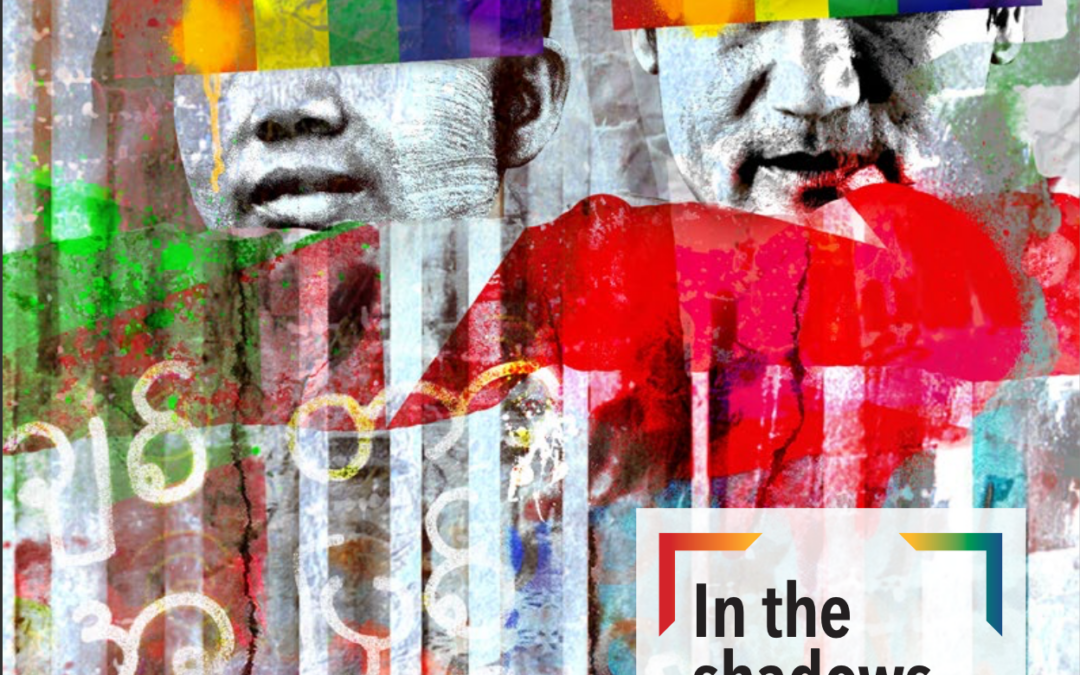
Myanmar’s criminal laws are outdated and fail to respect and protect human rights, especially the rights of LGBTQ people and rights enshrined in binding international human rights treaties. This is the key finding of the new report ‘In the Shadows: Systemic Injustice Based on Sexual Orientation and Identity/Expression in Myanmar’.
The Denmark-Myanmar Programme on Rule of Law and Human Rights, implemented by the ICJ in partnership with Danish Institute for Human Rights commissioned this report. The report team was made up of ICJ staff who are part of the Denmark Myanmar Programme. Legal review was also provided by advisers from the ICJ team. The report is endorsed by three leading local LGBTQ and human rights organizations and one network : LGBT Rights Network, Colors Rainbow, Kings N Queens, and Equality Myanmar.
The report highlights emblematic cases and recurring human rights violations against LGBTQ people in Myanmar. Research for the report included interviews with 70 respondents from across several states to ascertain their experiences and impressions of the criminal justice system. All testimonies are anonymous and all identities are pseudonyms.
The report highlights the outdated laws that continue to affect the lives of LGBTQ people, including Section 377 of the Penal Code which criminalizes consensual same-sex conduct. Even though not commonly enforced, the fact that this law remains in place since the colonial era legitimizes prejudice, discrimination and extortion against LGBTQ people. India’s Supreme Court decided only last year that criminalization of consensual same-sex relationships under Section 377 is a violation of the Indian Constitution and is in breach of India’s obligation under international law. That is the reason why Myanmar should follow this trend and repeal Section 377 as soon as possible or at least insofar it criminalizes same-sex relationships.
Other criminal provisions that play a large part in justifying abuse against LGBTQ people are the “Shadow Laws” or “Darkness Laws” – the colloquial name of colonial era legislation that can restrict citizens’ ability to be in public after dark without an accepted justification. These provisions – from which the report’s title is drawn – are primary examples of criminal laws that are misused against LGBTQ people and result in ongoing stigmatization, human rights violations and overall injustice. Some of their provisions are vague and overbroad and are therefore open to serious abuse. Law enforcement officials too easily invoke these provisions to harass, threaten, detain and even bring spurious charges against LGBTQ people. Research from the report documents how these criminal laws have been used to enter LGBTQ people’s homes, accuse them of ‘committing unnatural sex’, take them into police custody, and to subject them to abuse.
This report further details the discriminatory attitudes of law enforcement officers, which contribute to LGBTQ people being targeted and subjected to unjust and unfair treatment within the criminal justice system. The mistreatment takes many forms, from arbitrary accusations and ensuing detentions, physical, sexual and verbal assaults, and coerced concealment of sexual orientation and gender identity/expression. Given the biased, discriminatory and at times violent behavior towards them, LGBTQ people have come to mistrust law enforcement agencies and avoid the justice system wherever possible.
‘In the Shadows’ identifies the problematic attitudes of certain key players in Myanmar’s criminal justice system with respect to Sexual Orientation, Gender Identity/Expression issues. Core concerns include the discriminatory treatment and the barriers to justice LGBTQ people face, from their role in public life, or as a detainee, witness or suspect in court.
The report concludes with a set of recommendations that seek to make existing law and policy more protective of LGBTQ peoples’ rights. This includes the repeal of Section 377 of the Penal Code, at least insofar as it criminalizes consensual same-sex sexual conduct, the reform of the ‘Shadow Laws’, and cessation of all discriminatory arrests and detentions.
Human rights and LGBTQ rights activist and contributor to the report, U Aung Myo Min, sums up the importance of ‘In the Shadows’: “The stories in this report highlight the suffering, intimidation, and threats faced by LGBTIQ in Myanmar today. These injustices must be stopped, and we all have a moral imperative to be part of the solution.”
We are committed to working with main stakeholders in the country, such as the Parliament, the Police, GAD, actors of the legal system and the Myanmar National Human Rights Commission. We are willing and prepared to provide full support, expertise and advice to the Myanmar Parliament in pursuit of the repeal of Section 377 of the Penal Code, the provision for ‘unnatural at least insofar as it criminalizes consensual same-sex sexual conduct, to enact anti-discrimination legislation in Myanmar, to become a party to nine core international human rights treaties, to establish legal gender recognition for transgender persons, to reform vague and discriminatory laws.
This statement is endorsed by: LGBT Rights Network, Colors Rainbow, Kings N Queens and Equality Myanmar.
Report
Download In the Shadows: Systemic Injustice Based on Sexual Orientation and Identity/Expression in Myanmar in English.
Nov 6, 2019 | News
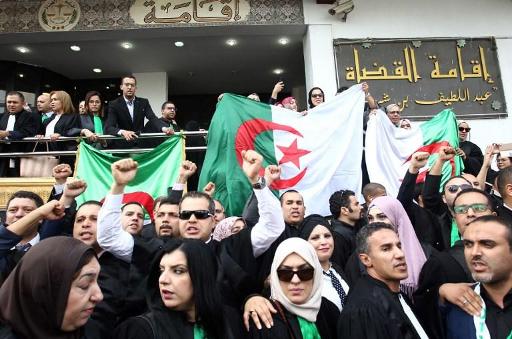
The ICJ today called on the Algerian authorities to reverse the decision of the Minister of Justice to transfer 2’998 judges, and instead ensure their right to security of tenure and protect the individual and institutional independence of the judiciary in the country.
The ICJ further called on the authorities to refrain from any unlawful or disproportionate use of force against the judges who are currently on strike in a protest against the Minister’s decision.
The call comes after security forces stormed the Oran’s Court of Appeal on 3 November 2019, using force against the judges to end the strike, and amidst the growing, legitimate demands for the establishment of the rule of law and the end the executive’s control over the judiciary.
“The Algerian authorities must end their interference in judicial affairs and ensure that all decisions pertaining to the management of the career of judges, including transfers, are taken by an independent High Judicial Council on the basis of objective criteria and transparent procedures,” said Said Benarbia, Director of ICJ’s Middle East and North Africa Programme.
Under Organic Law n° 04-12 on the High Judicial Council (HJC), the President and Vice-President of the HJC are respectively the Algerian President and the Minister of Justice. For this and other reasons the ICJ considers that the HJC as currently constituted is not independent of the executive, and consequently that the judiciary as a whole is both institutionally and in practice subordinated to the executive in contravention of international standards on judicial independence and impartiality.
“Instead of attacking judges who are seeking to defend the rule of law, the most urgent priority for Algerian authorities should be the reform of the HJC to ensure its full independence,” Benarbia added.
In 2018, the Human Rights Committee expressed, in its Concluding Observations on the fourth periodic report of Algeria, its concerns over the insufficient guarantees for judicial independence and the need to strengthen the independence and the powers of the HJC.
Contact:
Said Benarbia, Director of ICJ’s Middle East and North Africa Program, t: +41 22 979 38 17 ; e: said.benarbia(a)icj.org
Algeria-Judges strike-News-2019-ARA (Arabic version, in PDF)
Nov 5, 2019 | News
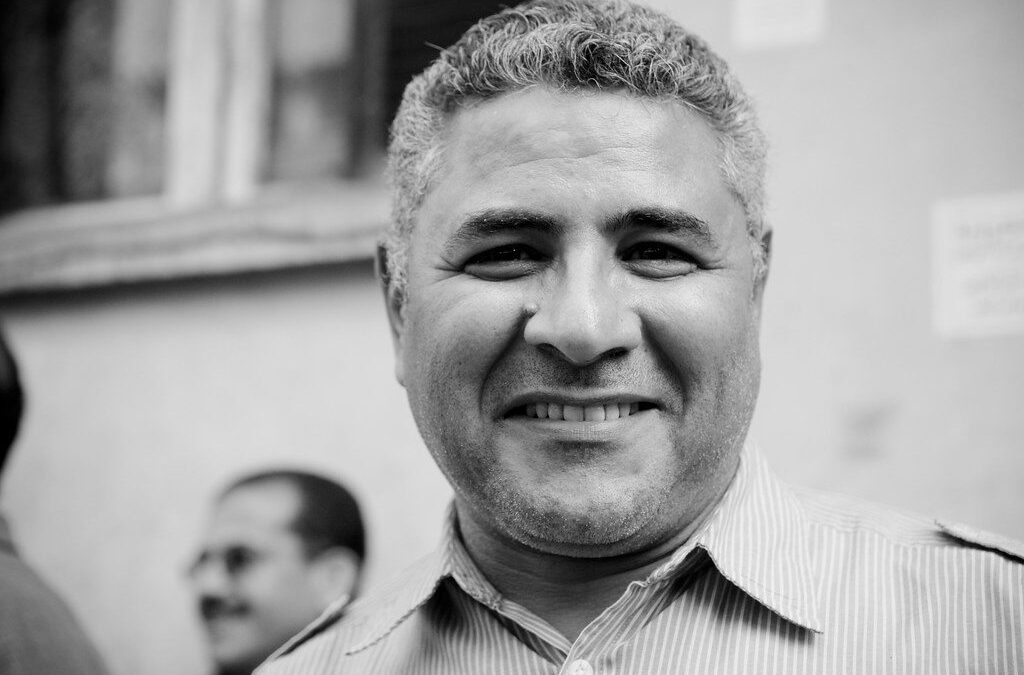
The ICJ today condemned the physical assault and acts of threats and intimidation taken against its Commissioner Gamal Eid, a prominent Egyptian lawyer and human rights defender.
The ICJ called on the Egyptian authorities to investigate the attacks and bring those responsible to justice. They should also take effective measures to ensure that Gamal Eid and other lawyers and human rights lawyers are protected.
Amidst the ongoing crackdown on human rights defenders and the arrest of more 4,000 individuals since recent anti-corruption protests began, Gamal Eid has been subjected to a sustained campaign of intimidation and harassment.
Two armed men in civilian clothes physically assaulted him on October 10, stole his cellphone and tried to seize his laptop. The assault resulted in injuries to his arm and leg and several cracks in his ribs.
Prior to this assault, Eid’s car was stolen on 30 September and he has repeatedly received anonymous phone calls and messages ordering him to “stop and behave.”
The ICJ believes these attacks to be related to Eid’s work as a lawyer and to his human rights activities, and are part of a pattern by the Egyptian military and government to silence people suspected of opposing them, including those documenting and reporting on the ongoing crackdown on human rights and fundamental freedoms.
“Instead of resorting to cynical, thuggish tactics to silence Gamal Eid, Egypt’s military and government must act to ensure his safety and physical integrity,” said Said Benarbia, Director of ICJ’s Middle East and North Africa Program.
“ They must also ensure that lawyers and human rights defenders are able to carry out their work free of fear, harassment or intimidation,” he added.
In the context of the recent protests against President El-Sisi, the Egyptian security forces have arbitrarily detained at least 16 lawyers in relation to the exercise of their professional functions, including Mahienour El-Massry and Mohamed El-Baqer.
Amr Imam, a lawyer and colleague of Gamal Eid at Arabic Network for Human Rights Information was also arrested on 16 October 2019.
The threats to, attacks against, and arbitrary detention of Egyptian lawyers and human rights defenders are in contravention with Egypt’s obligations under international law, and run counter to the UN Basic Principles on the Role of Lawyers and the UN Declaration on Human Rights Defenders, which respectively provide that lawyers and human rights defenders must be able to carry out their professional functions and work without hindrance, harassment, intimidation, or improper interference.
Contact:
Said Benarbia, Director of ICJ’s Middle East and North Africa Program, t: +41 22 979 38 17 ; e: said.benarbia(a)icj.org
Egypt-Gamal Eid-News-press releases.2019-ARA (Arabic version, in PDF)