
Nov 22, 2019 | Advocacy, Cases, Legal submissions
Today, the ICJ intervened before the European Court of Human Rights in the case challenging the blocking of the website Wikipedia by the Turkish Government throughout the country.
In its intervention the ICJ addressed issues related to the compliance of Turkey’s Internet law and its application in practice, with rights under Article 10 ECHR to freedom of expression and to receive information.
In particular it addresses:
- international standards relating to freedom of expression on the Internet;
- evaluation of the Turkish Internet Law by international authorities, including bodies of the Council of Europe and United Nations;
- blocking of websites and other internet under Article 8/A of Law no. 5651 on Regulation of Publications on the Internet and Suppression of Crimes Committed by Means of Such Publications, and the judicial safeguards applying to such measures; and
- whether remedies including the individual application to the Constitutional Court can redress the deficiencies of the law.
Europe-Wikimedia v Turkey_TPI-Advocacy-Legal submissions-2020-ENG (download the intervention)
Nov 19, 2019 | News
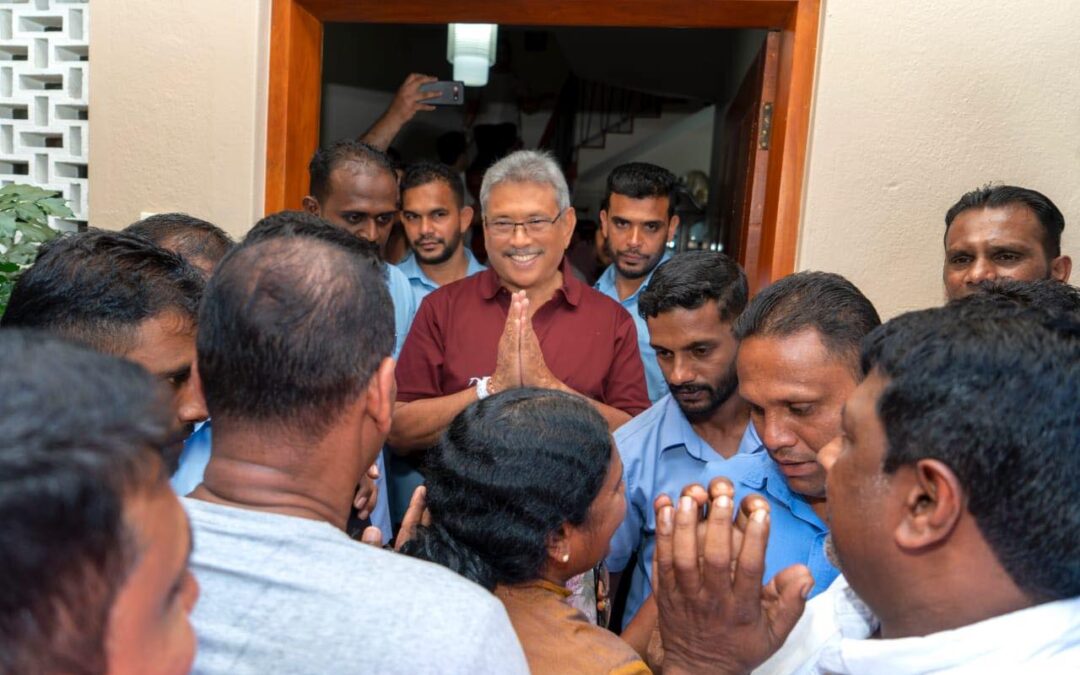
Sri Lanka’s newly elected president, Gotabaya Rajapaksa and his government must demonstrate that they will uphold human rights and rule of law, and ensure that Sri Lanka sustains its international obligations and commitments to justice and accountability, said the ICJ today.
Gotabaya Rajapaksa faces credible allegations of involvement in war crimes and crimes against humanity that took place during the country’s armed conflict.
“The election of Gotabaya Rajapaksa, after a highly polarizing campaign, has alarmed human rights defenders in Sri Lanka and abroad, who have little reason to believe that someone facing such serious allegations of perpetrating human rights violations can be relied upon to meet the country’s obligations under international law,” said Frederick Rawski, ICJ Asia Pacific Director.
Gotabaya Rajapaksa, who won the presidency with 52.25% of votes, served as Sri Lanka’s Secretary of the Ministry of Defence from 2005 to 2015 during the tenure of his brother Mahinda Rajapaksa, at the height of the armed conflict against the Liberation Tigers of Tamil Eelam (LTTE).
Both the military and LTTE perpetrated war crimes and gross human rights violations during the conflict, and particularly during its bloody final stages. As Defence Secretary, Gotabaya was accused of ordering the killing of surrendering LTTE fighters, ordering strikes on civilians and hospitals, and authorizing attacks on human rights defenders.
International condemnation of atrocities committed during the conflict led to the UN Human Rights Council demanding that the Sri Lankan government commit to a process of transitional justice, in view of the systematic failures of accountability mechanisms in Sri Lanka in the past, as documented by the ICJ in its submission to the Human Rights Council, and others. Despite commitments from the Sri Lankan government, the transitional justice process has effectively stalled and impunity has prevailed.
“The ICJ is deeply concerned that even the limited strides made over the past five years in Sri Lanka on transitional justice, positive constitutional amendments and institutional reform will be reversed,” said Rawski.
The ICJ urged the Government to deliver on its commitment to the transitional justice process, including by holding those responsible for human rights violations and abuses accountable, and complying with the obligations set out in United Nations Human Rights Council Resolutions 30/1, 34/1 and 40/1.
Contact:
Frederick Rawski, ICJ’s Asia Director, t +66 644781121; e: frederick.rawski(a)icj.org

Nov 18, 2019 | News
The ICJ today called on the Hungarian authorities to desist from instigating disciplinary proceedings threatened against Judge Csaba Vasvári, a judge of the Central District Court of Pest and a member of the Hungarian National Judicial Council.
The imminent threat of disciplinary action is a consequence of a preliminary reference Judge Vasvári made to the Court of Justice of the European Union.
“Judge Vasvári faces disciplinary action as a direct result of his request for a preliminary ruling of the Court of Justice of the EU on the very question of judicial independence in Hungary. This is an extremely concerning attempt to interfere with the independence of a judge in discharging his judicial function which, if it proceeds any further, will set a dangerous precedent.” said Róisín Pillay, Director of the ICJ’s Europe and Central Asia programme.
A motion to begin disciplinary proceedings against Judge Vasvári was brought by the Acting President of the Budapest Regional Court in October, following Judge Vasvári’s request in criminal proceedings before him last July, for a preliminary ruling the Court of Justice of the EU (CJEU) under Article 267 of the Treaty on the Functioning of the European Union (TFEU).
In the request to the CJEU, Judge Vasvári raised questions regarding compliance with the principle of judicial independence under Article 19.1 of the Treaty of the European Union (TEU), in particular the appointment procedures for court presidents, and remuneration for judges, as well as questions regarding the right to interpretation in court.
Following a decision of the Hungarian Supreme Court in September that the reference was contrary to Hungarian law since it was irrelevant to the case, disciplinary action against judge Vasvári was sought on the grounds that in making the reference, he violated the requirement to conduct himself with dignity and refrain from action which would undermine the dignity of the judiciary.
The motion for disciplinary proceedings is now expected to be considered by a panel of the Service Court, which will decide if disciplinary proceedings will commence.
“The actions of Judge Vasvári in making a preliminary reference to the CJEU were an entirely legitimate exercise of his judicial functions in accordance with EU law. It is essential that judges are able to use all appropriate judicial avenues to address and uphold the rule of law, including to protect the right to a fair trial and the independence of the judiciary” said Róisín Pillay. “It is also necessary for the proper application of EU law, that judges are able refer questions to the CJEU under Article 267 of the Treaty without undue hindrance.”
The ICJ recalls that under international standards on the independence of the judiciary, judges must decide matters before them impartially, without any restrictions, improper influences, inducements, pressures, threats or interferences, direct or indirect, from any quarter or for any reason (Principle 2, UN Basic Principles on the Independence of the Judiciary). Council of Europe Recommendation CM/Rec (2010) 12 of the Committee of Ministers specifies that “the interpretation of the law, assessment of facts or weighing of evidence carried out by judges to determine cases should not give rise to civil or disciplinary liability, except in cases of malice and gross negligence.”
The UN Basic Principles on the Independence of Judiciary (principle 8) also affirm that “members of the judiciary are like other citizens entitled to freedom of expression, belief, association and assembly; provided, however, that in exercising such rights, judges shall always conduct themselves in such a manner as to preserve the dignity of their office and the impartiality and independence of the judiciary.”

Nov 13, 2019 | Advocacy, Multimedia items, Video clips
In a video interview with the BBC’s Burmese broadcasting service, ICJ senior legal adviser Kingsley Abbott explains to the Myanmar public how the International Criminal Court prosecutor plans to investigate the crime against humanity of deportation from Myanmar to Bangladesh, which has affected around one million Rohingya.
Recorded on 24 August and published on 12 November 2019. The interview transcript is available in Burmese and English.
Contact
Kingsley Abbott, ICJ Senior Legal Adviser, e: kingsley.abbott(a)icj.org
Nov 12, 2019 | News
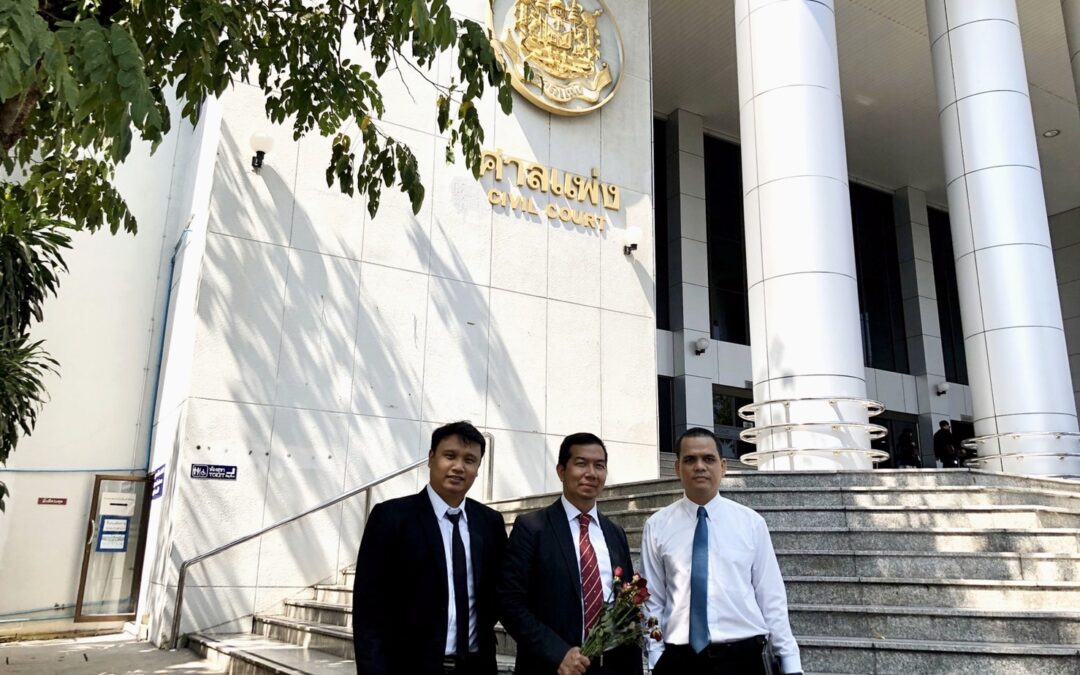
Today, the ICJ condemned the use of civil proceedings to harass Nakorn Chompuchart and Sira Osottham, lawyers representing labour rights researcher Andy Hall.
The ICJ called on Thailand to take measures to protect lawyers so that they can perform their duties without intimidation, harassment or improper interference.
On 12 November 2019, the Bangkok Civil Court conducted its first hearing in a tort case under the Civil and Commercial Code by a Thai fruit processing company, Natural Fruit Company Ltd. (‘the Company’), against the lawyers. The two lawyers represent Andy Hall in several criminal and civil proceedings brought against him seeking damages claimed to have resulted from his research into labour rights abuses allegedly committed by the Company. In the lawsuit against the lawyers, the Company is seeking 50 million Thai baht (approximately 1.65 million USD) as compensation for lost business.
“This legal action is part of a pattern of harassment by Natural Fruit against Andy Hall,” said Frederick Rawski, ICJ Asia Pacific Regional Director. “It is a bedrock principle of the rule of law that lawyers should not be identified with their clients or their clients causes as a result of discharging their function.”
In the complaint, Natural Fruit claims that Andy Hall and his lawyers “excessively exercise their rights”, “intentionally damage the Company’s reputation”, and “caused financial loss in their business” when they brought a case in 2017 against the Company, the Company’s lawyers, and public prosecutor for allegedly “giving false testimony” and “filing false complaint” in other criminal proceedings. The case was dismissed by the Supreme Court who was of the view that the Company exercised its right in good faith.
“This is not the first time in Thailand that lawyers have faced the unwarranted threat of criminal or civil prosecution when representing their clients,” said Rawski. “As with the criminal proceedings brought against Sirikan “June” Charoensiri for her professional activities as a lawyer, such vexatious actions set a precedent that endangers the ability of lawyers to effectively represent their clients. The government must take prompt and effective measures to ensure that the safety and independence of lawyers is guaranteed in law and in practice.”
Background
This case was also initially brought against Andy Hall, but was later withdrawn because the Court could not send court writs to Andy as he does not reside in Thailand.
Criminal and civil proceedings have brought against Andy Hall were in relation to the report of a Finnish NGO, Finnwatch, published in January 2013, called Cheap Has a High Price, which alleged that labour rights violations were taking place at Natural Fruit Company.
Thailand is a party to the International Covenant on Civil and Political Rights (ICCPR). Article 14 of the ICCPR guarantees the right of the clients of the concerned lawyers to an effective defense.
UN Basic Principles on the Role of Lawyers also provides that “governments shall ensure that lawyers are able to perform all of their professional functions without intimidation, hindrance, harassment or improper interference” and “shall not suffer, or be threatened with, prosecution or administrative, economic or other sanctions for any action taken in accordance with recognized professional duties, standards and ethics.” Moreover, lawyers should not be identified with their clients or their clients causes as a result of discharging their function.
To download the statement in Thai, click here. (PDF)
Contact
Frederick Rawski, ICJ Asia-Pacific Director, t: +66 64 478 1121; e: frederick.rawski(a)icj.org
Further reading
Thailand: verdict in Andy Hall case underscores need for defamation to be decriminalized
Thailand: amicus in criminal defamation proceedings against human rights defender Andy Hall