Apr 13, 2018 | Multimedia items, News, Video clips
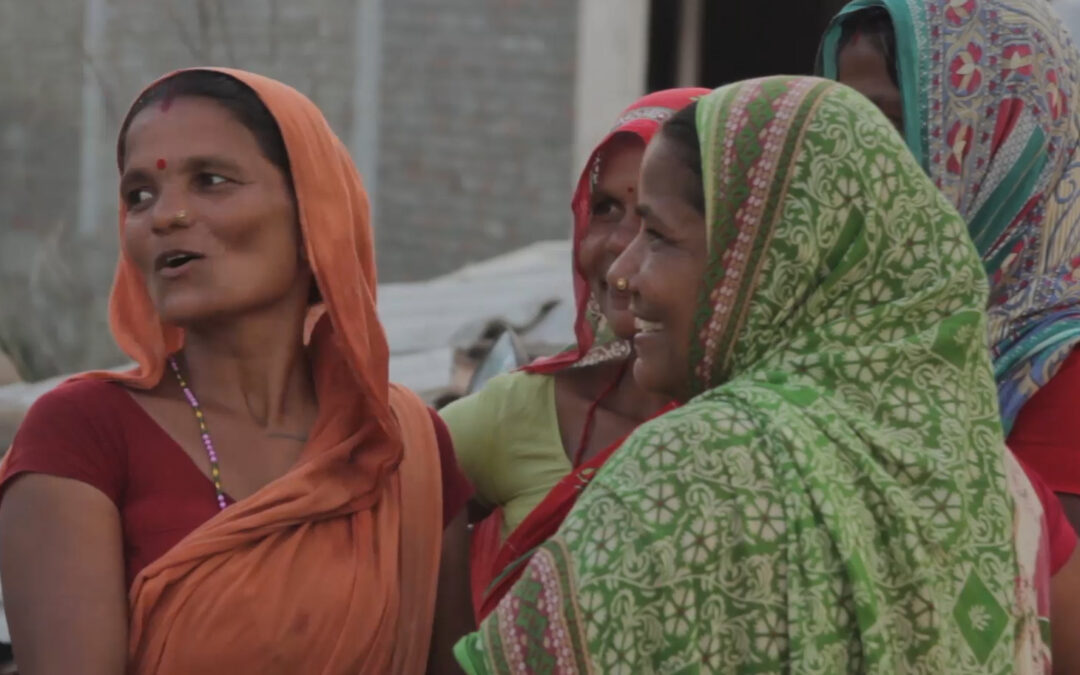
In 2017, Nepal held its first local-level elections for almost 20 years and the first ever conducted under the new federal state structure established under the 2015 Constitution. They were significant because of the unprecedented number of women who stood as candidates and won.
Women in Nepal have experienced systemic discrimination for decades, especially those in rural areas, among ethnic minorities and marginalized groups.
These elections presented the women of Nepal with the opportunity to break through barriers that have prevented them for decades from participating in political and public life.
The Local Level Governance Act lays out the mandate and functions of newly formed local bodies.
If the recently elected women are allowed to meaningfully participate in local governance, the new law could empower them further so that they can take the lead in addressing key human rights issues, especially the human rights of women.
This video documents the campaign of Rikam BK, a Nepalese politician, belonging to the Communist party of Nepal-Maoist (CPN-M).
In the Nepal Legislative Election held on 26 November 2017, she was elected as a Sub-Mayor (NCP Maoist) of Lahan Municipal Council winning 5000 votes.
She is the chairperson of the Dalit Preservation Abhiyan Forum, in Siraha. She has been advocating the issue of land certificates in the names of both husband and wife.
She continues to call for those deprived of land rights to have equal access to land. She is also the member of National Alliance for Women Human Rights Defenders (NAWHRD).
Many of the women featured in this video are women human rights defenders who have been working to promote and protect human rights in Nepal for decades.
Many of them participated in the Regional Conference on Women Human Rights Defenders as Political Actors, which was organized by the ICJ, with the cooperation of NAWHRD.
The conference was held from 28 to 29 August 2017 in Kathmandu.
The ICJ recently released a briefing paper laying out the key points of the conference and offering a set of future actions aimed at supporting WHRDs in their role as political actors pursuing a human rights agenda.
Watch the video
Apr 10, 2018 | News
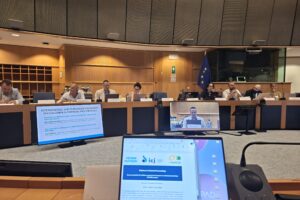
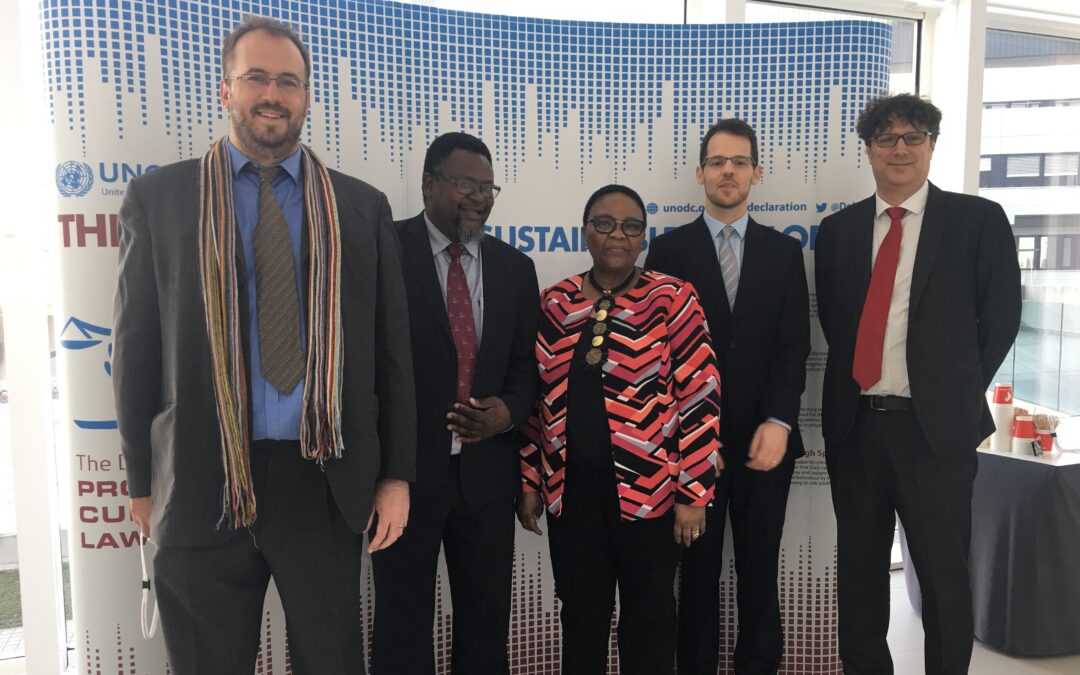
The ICJ and its partner the Democracy Governance and Rights Unit (DGRU) of the University of Cape Town are holding a panel discussion on selection and appointment of judges within the auspices of the Launch of the Global Judicial Integrity Network.
This new Network is being launched by the UN Office on Drugs and Crime (UNODC) in Vienna, Austria on today.
The panel is aimed at discussing the implementation and monitoring of guidelines on the best practice for the appointment of judges (“guidelines”).
The Southern Africa Chief Justices’ Forum (SACJF) mandated the development of these guidelines through its Concluding Communiqué during the 2015 Annual Conference of East and Southern Africa Chief Justices, held at Victoria Falls in Zimbabwe.
The ICJ and the DGRU have been working on developing the guidelines, together with a subcommittee of the SACJF, with the aim of seeing them adopted at the SACJF’s annual general meeting to be held this year between August and September in Malawi.
“The UNODC Judicial Integrity Network launch in Vienna, Austria 9-10 April 2018 gives us an excellent opportunity to start thinking a bit further down the line, and identify, anticipate and develop responses to problems that may be experienced in implementing the guidelines at a national level,” said Arnold Tsunga, Africa Director of the ICJ.
While many very good standards have been developed and adopted in Africa in the field of human rights, rule of law, and good governance, a major challenge has been to see the standards implemented in practice.
“In addition to highlighting relevant global standards, the ICJ will also present its experiences from around the world in monitoring and overcoming obstacles to implementation of such guidelines,” said Matt Pollard the Director of the Centre for Independence of Judges and Lawyers at the ICJ.
“This should contribute to planning for effective implementation of the Southern African guidelines, and be of interest to the broader audience at the launch of the UNODC global network on judicial integrity.”
The panel to be moderated by Arnold Tsunga includes Hon. Sanji Monageng, ICJ Commissioner and Justice, International Criminal Court; Mr. Jan van Zyl Smit, Associate Senior Research Fellow, Bingham Centre for the Rule of Law; Mr. Christopher Oxtoby, Senior Researcher, Democratic Governance and Rights Unit, University of Cape Town; Mr Matt Pollard, Senior Legal Adviser and Director, CIJL, ICJ.
Fore more information contact Arnold Tsunga on arnold.tsunga@icj.org (+27716405926) or Matt Pollard on <matt.pollard@icj.org> (+41 79 246 54 75)
Universal – Vienna Panel on Selection – News – Webstory – ENG – 2018 (Further information in PDF)
Apr 10, 2018 | News
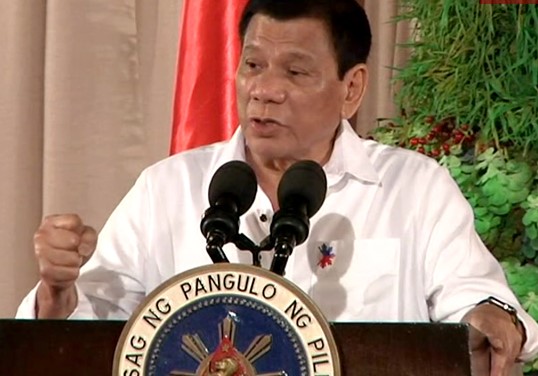
The ICJ today condemned a threatening statement made by Philippine President Rodrigo Duterte attacking Chief Justice Maria Lourdes Sereno of the Philippines Supreme Court.
The ICJ said that the President’s remarks constituted an assault not just on the Chief Justice, but on the independence of the judiciary in the country.
The ICJ urged President Duterte to respect judicial independence and not to exert political pressure on any government official or agency to undermine the independence of the judiciary.
In a press conference on 9 April 2018, President Duterte told reporters: “I’m putting you on notice that I’m your enemy and you have to be out of the Supreme Court.”
He also called on the House of Representatives to expedite impeachment proceedings presently underway against Chief Justice Sereno.
“It is absolutely unacceptable for President Duterte to make such a statement not only because it constitutes direct intimidation of the Chief Justice, but the chilling effect it may have on other independent judges who carry out their professional duties,” said Emerlynne Gil, Senior International Legal Adviser of ICJ.
“By expressing his personal feelings against the Chief Justice and by directing the House of Representatives to accelerate the impeachment proceedings, the President is actively influencing and interfering with the functions of other co-equal branches of government,” Gil added.
The ICJ reminds President Duterte that as enunciated in the UN Basic Principles on the Independence of the Judiciary, “[i]t is the duty of all governmental and other institutions to respect and observe the independence of the judiciary.”
The Principles affirm that the judiciary must be able to carry out its work “without any restrictions, improper influences, inducements, pressures, threats or interferences, direct or indirect, from any quarter or for any reason.”
The ICJ strongly urges President Duterte to retract his comments and to refrain in the future from making any statements attacking individual judges or in any way interfering with the independence of the judiciary.
Contact
Emerlynne Gil, Senior International Legal Adviser, t: +662 619 8477 (ext. 206) ; e: emerlynne.gil@icj.org.
Background
In September 2017, two impeachment complaints against the Chief Justice were filed before the Committee of Justice of the House of Representatives, the Lower House of Congress.
The Committee of Justice approved only one of the complaints, which is scheduled to be put before the plenary of the House of Representatives in May 2018 when Congress resumes its session.
If it obtains one-third vote of all members in the House of Representatives, the articles of impeachment will be transmitted to the Senate, which is the Upper House of Congress.
Any impeachable officer may be removed from office by a vote of two-thirds of all the members of the Senate sitting as the impeachment court.
Some of the points raised in the approved impeachment complaint are the Chief Justice’s failure to report certain income in her statements of assets, liabilities and net worth (SALN), allegations of use of public funds to finance her extravagant and lavish lifestyle, and manipulation of judicial appointments for personal and political reasons, among others.
The Chief Justice maintains she correctly filed her SALNs. She also further claims that the other allegations in the impeachment complaint are baseless or mere fabrications.
In March 2018, the Philippines’ Solicitor General Jose Calida filed a petition before the Supreme Court questioning the Chief Justice’s appointment due to her alleged failure to fully disclose her wealth. Oral arguments on this petition were made on 10 April 2018.
Apr 9, 2018 | News
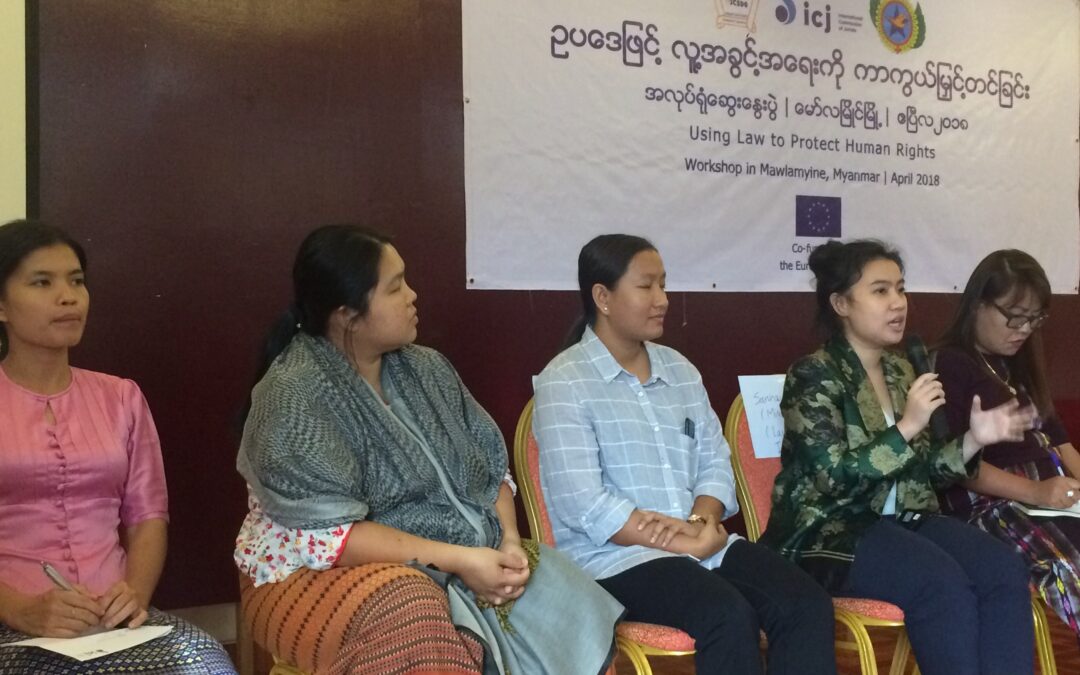
Prior to this workshop, on 6 April the ICJ met with the Mon State High Court, including its Chief Justice.
Legal advisers from the ICJ had a constructive discussion with the justices about judicial reform in Myanmar, including the role of lawyers and civil society, as well as jurists, in advancing accountability and access to justice.
The two-day workshop aimed to identify challenges and opportunities for human rights advocacy using law, and to encourage the building of relationships and networks between lawyers and civil society.
The workshop considered strategic litigation concepts and case studies in the region. It also discussed the landscape of rule of law and justice in Myanmar, particularly the experiences regarding access to justice of some sixty participants from Mon State.

Apr 3, 2018 | News
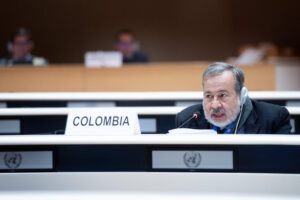
The secret military trials of civilians charged with terrorism-related offences are a continuing breach of Pakistan’s international human rights obligations, the ICJ said today.
Military courts were first empowered to try civilians for certain terrorism-related offences on 7 January 2015 by the 21st amendment to the Constitution and amendments to the Pakistan Army Act, 1952, which were in operation for a period of two years.
One year ago, on 31 March 2017, President Mamnoon Hussain signed into law the 23rd amendment to the Constitution to renew military courts’ jurisdiction over civilians until 6 January 2019.
“The renewal of military trials for civilians accused of terrorism last year has only weakened the rule of law, and undermined the right to fair trial and equality before the law in Pakistan,” said Matt Pollard, ICJ’s Senior Legal Adviser.
“Pakistan should end the role of military courts in such cases, and instead strengthen the ability of ordinary courts and law enforcement to ensure investigations and trials that are both fair and effective, in line with its domestic law and international human rights obligations,” he added.
According to the military’s media office and information collected by the ICJ, military courts have convicted 346 people since January 2015, out of which 196 people have been sentenced to death and 150 people have been given prison sentences.
At least 56 people have been hanged. Only one person has been acquitted.
The ICJ has documented serious fair trials violations in the operation of military courts, including: denial of the right to counsel of choice; failure to disclose the charges against the accused; denial of a public hearing; failure to give convicts copies of a judgment with evidence and reasons for the verdict; and a very high number of convictions based on “confessions” without adequate safeguards against torture and ill treatment.
Such use of military courts to try civilians is inconsistent with international fair trial standards, and the imposition of the death penalty after such trials violates the right to life.
Families of more than a hundred people convicted by military courts have alleged the convicts were denied a right to a fair trial in petitions to the Supreme Court and various high courts in the country.
Despite acknowledging possible denial of fair trial, the ordinary courts have thus far refused to provide relief to the petitioners due to their lack of jurisdiction over military courts.
The expansion of the jurisdiction of military tribunals through the amendments to the Constitution and the Pakistan Army Act were a part of the Pakistani government’s 20-point “National Action Plan”, adopted following the horrific attack on the Army Public School in Peshawar in December 2014.
The NAP contemplated military courts only as a short-term “solution” to try “terrorists”, on the basis that they would be operational only for a short period during which the Government would bring about necessary “reforms in criminal courts system to strengthen the anti-terrorism institutions.”
However, with less than a year left before the extension under the 23rd Constitutional Amendment is set to expire, no such reforms have taken place.
Contact
Matt Pollard, ICJ Senior Legal Adviser and UN Representative (Geneva); e: matt.pollard@icj.org
Reema Omer, ICJ International Legal Adviser for South Asia (London), t: +447889565691; e: reema.omer@icj.org
Background
The 23rd constitutional amendment allows military tribunals to try civilians who allegedly belong to “a terrorist group or organization misusing the name of religion or a sect” and are suspected of committing a number of offences, including: abducting any person for ransom; raising arms of waging war against Pakistan; causing any person injury or death; using or designing vehicles for terrorist attacks; creating terror or insecurity in Pakistan; and attempting, aiding or abetting any of these acts.
In July 2017, in its Concluding Observations after Pakistan’s first periodic review under the International Covenant on Civil and Political Rights (ICCPR), the UN Human Rights Committee stated that it was concerned by the extension of the jurisdiction of military courts over civilians and allegations of fair trial violations in military courts’ proceedings.
The Human Rights Committee recommended that Pakistan “review the legislation relating to the military courts with a view to abrogating their jurisdiction over civilians and their authority to impose the death penalty” and “reform the military courts to bring their proceedings into full conformity with articles 14 and 15 of the Covenant in order to ensure a fair trial.”