Apr 10, 2017 | News
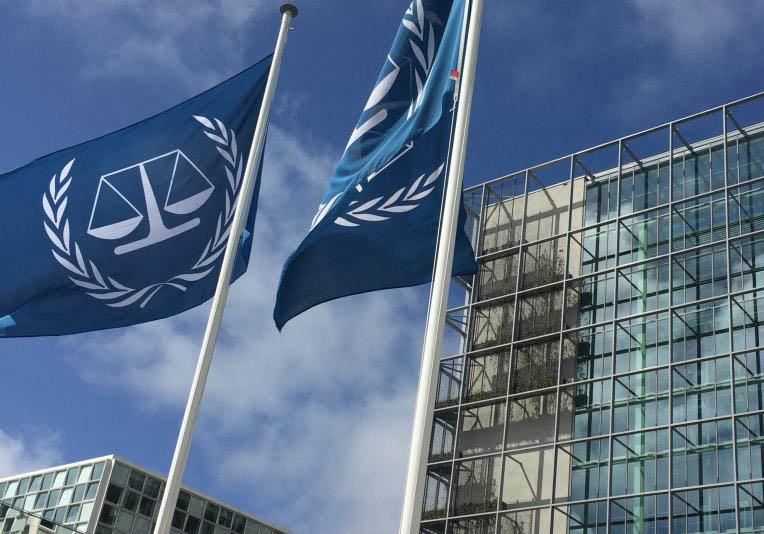
Zambia should reaffirm its membership in the International Criminal Court to best advance justice for victims of atrocities, a group of African organizations and international nongovernmental organizations – including the ICJ – with a presence in Africa said today.
Zambia’s government began public consultations on the country’s ICC membership the week of March 27, 2017.
This was in response to the African Union summit’s adoption in January of an “ICC withdrawal strategy.”
An unprecedented 16 countries, including Zambia, entered reservations to this decision.
Zambia has been a role model on the continent in matters of peace, democracy, and human rights. Leaving the ICC would erode the country’s leadership and threaten respect for the rights of victims of the most brutal crimes across Africa, the group of organizations said.
As a member of the Southern Africa Development Community (SADC), Zambia has a proud history in the establishment of the ICC, they added.
SADC was active in the diplomatic conference in Rome in 1998 where the ICC’s treaty was finalized after six weeks of negotiations.
SADC members developed 10 principles for an effective, independent, and impartial court at a meeting in Pretoria in 1997.
The ICC is a groundbreaking achievement in the fight against impunity, the organizations said.
It is the first and only global criminal court that can prosecute individuals responsible for atrocities.
It is a court of last resort in that it has the authority to try genocide, war crimes, and crimes against humanity committed since 2002, but only when national courts are unable or unwilling to investigate and prosecute.
Since the court’s treaty opened for signature in 1998, 124 countries have become members.
Zambia signed the ICC’s Rome treaty on July 17, 1998, the day it opened for signature, and ratified the treaty on November 13, 2000.
The ICC faces many challenges in meeting the expectations of victims of mass atrocities and member countries, the organizations said.
Its inability to reach crimes committed in some powerful countries and their allies is a cause for deep concern, even as claims that the ICC is targeting Africa are not supported by the facts.
The court’s reach is limited to crimes committed on the territories of countries that have joined the court or offered the court authority on its territory, absent a referral by the United Nations Security Council.
The majority of ICC investigations in Africa have arisen in response to requests or grants of authority by governments in the countries where the crimes were committed – as in Central African Republic, Côte d’Ivoire, Democratic Republic of Congo, Mali, and Uganda – or through referrals by the UN Security Council – as in Darfur, Sudan and Libya.
The ICC has faced backlash from some African leaders since it issued arrest warrants for Sudanese President Omar al-Bashir for alleged genocide, war crimes, and crimes against humanity in Darfur in 2009 and 2010.
In 2016, evidence of the backlash reached new heights when South Africa, Burundi, and Gambia announced they would withdraw from the court, the first countries to take such action.
Gambia has rescinded its withdrawal and South Africa is also re-examining withdrawal, making Burundi the only country to have maintained its withdrawal.
Under the ICC Statute, withdrawal goes into effect one year after the state party submits a notification to the UN Secretary-General.
In the wake of the announced withdrawals, many African countries – including Botswana, Burkina Faso, Côte d’Ivoire, Democratic Republic of Congo, Ghana, Lesotho, Mali, Malawi, Nigeria, Senegal, Sierra Leone, Tanzania, and Tunisia – have affirmed their commitment to remain in the ICC and to work for any reform as ICC members.
The organizations encourage Zambia to reaffirm its support for the court, particularly in the absence of any functioning regional criminal court that can hold perpetrators to account.
The groups expressing support for Zambia’s continued ICC membership are:
Africa Legal Aid
Africa Centre for International Law and Accountability–Ghana
Centre for Accountability and Rule of Law–Sierra Leone
Centre for Democratic Development–Ghana
Centre for Human Rights and Rehabilitation (Malawi)
Civil Resource Development and Documentation Centre (Nigeria)
Coalition for the International Criminal Court
Fédération Internationale des Droits de l’Homme
Human Rights Watch
Institute for Security Studies
International Commission of Jurists
JEYAX Development and Training (South Africa)
Kenya Section of the International Commission of Jurists
Kenya Human Rights Commission
Nigerian Coalition for the ICC
Parliamentarians for Global Action
Southern African Centre for the Constructive Resolution of Disputes (Zambia)
Southern Africa Litigation Centre (South Africa)
Apr 6, 2017 | News
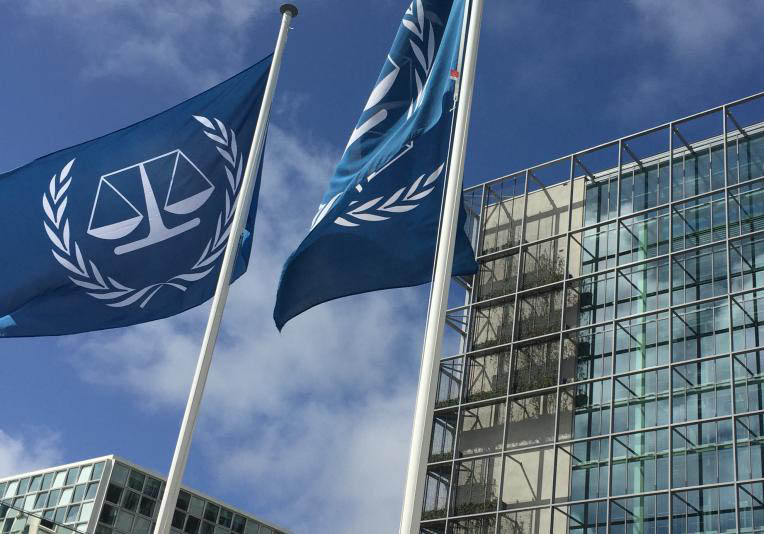
South Africa is to appear before a scheduled hearing at the International Criminal Court on 7 April 2017 (ICC) in The Hague for a hearing on its failure to arrest Sudanese President Omar Hassan Ahmad al Bashir when he visited South Africa in June 2015.
The hearing, before the pre-trial Chamber of the ICC will consider whether South Africa was in breach of its obligations under the ICC Rome statute when it failed to effect the ICC arrest warrant on President Bashir.
The ICJ, represented by South African Justice Johann Kriegler, will be attendance observing the proceedings.
President Bashir has been indicted by the ICC on charges of genocide, war crimes and crimes against humanity in relation to atrocities committed from 2003 to 2008 in Darfur.
“The case is critical for ensuring the effectiveness of the ICC as an institution. The only means the ICC has of enforcing its orders is through the cooperation of States,” said Sam Zarifi the Secretary General of the ICJ.
“The failure to arrest President Bashir and the subsequent efforts to withdraw from the ICC Rome statute raise important questions about South Africa’s commitment to the fight against impunity in Africa and globally,” Zarifi added.
South Africa gave notice last October that it intended to leave the ICC, but this notice has been withdrawn, at least pending debate in Parliament.
The ICJ had filed a brief with the South African Parliament calling on South Africa to remain with the ICC Rome statute.
The brief was signed by retired South African Constitutional Court Justices Laurie Ackermann, Richard Goldstone, Johann Kriegler, Yvonne Mokgoro, Kate O’Regan and Zak Yacoob.
It was co-signed by Navi Pillay, former United Nations High Commissioner for Human Rights, former judge of the ICC and former President of the International Criminal Tribunal for Rwanda (ICTR) and Wilder Tayler, then Secretary General of the ICJ.
Justice Zak Yacoob remarked that “pursuit of justice and pursuit of peace are complementary and mutually reinforcing objectives that South Africa will best achieve by remaining party to the Rome Statute of the ICC. Its not an either or situation. Protecting heads of States from justice whatever they do compromises peace too much.”
Contact
Arnold Tsunga, ICJ Director for Africa, t +27716405926 ; e: arnold.tsunga(a)icj.org
Background
South Africa was among the first States to ratify the Rome Statute of the ICC. It signed the Rome Statute on the day it was adopted, 17 July 1998, and ratified it on 27 November, 2000.
Both during the negotiations preceding the Rome Conference that established the Court in 1998, and at the Conference itself, South Africa played a leading role.
However, the events of June 2015 surrounding the arrival of President Omar al Bashir of Sudan in South Africa appears to have engendered a shift in South Africa’s posture, leading many observers to call into question the country’s commitment to international justice.
The failure by South African authorities to arrest and surrender President al Bashir to the ICC, although he had been indicted by the ICC for war crimes, crimes against humanity and genocide, led to the Southern Africa Litigation Centre (SALC) taking the government to court to compel it to fulfill its obligations both under the Rome Statute and the Implementation of the International Criminal Court Act 27 of 2002 (Implementation Act).
On 19 October 2016, the Minister of International Relations and Co-operation gave notice of South Africa’s intention to withdraw from the Rome Statute.
The Portfolio Committee on Justice and Correctional Services put out a call for submissions to be made to the Parliamentary Portfolio Committee on Justice and Correctional Services on the Implementation of the Rome Statute of the International Criminal Court Act Repeal Bill [B23-2016] to be made by 8th March 2017.
Mar 30, 2017 | News
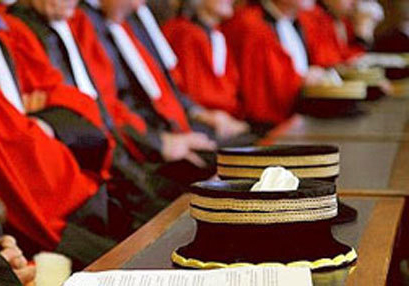
The ICJ today called on the Tunisian President, Beji Caid Essebsi, to refrain from signing into law amendments to the law that regulates the country’s High Judicial Council (HJC). The amendments were adopted on Tuesday 28 March 2017 by the People’s Representatives Assembly.
The ICJ also urged the Head of the Cabinet, Youssef Chahed, to act, as a matter of highest priority, on the nominations by the Instance Provisoire de la Justice Judiciaire (IPJJ) with a view to filling the positions of the First President of the Cassation Court and its General Prosecutor.
The ICJ expressed concern that the amendments revising the country’s 2016 HJC law would weaken the effective functioning of the judiciary and the administration of justice in several respects
- The amendments would strip the IPJJ President of the authority to convene the HJC’s first meeting and instead provide the President of the Parliament with such power. This would constitute an inappropriate interference of the legislative branch into the management of the judiciary in clear violation of the principle of separation of powers and judicial independence.
- The amendments would explicitly exclude any possibility of challenge or judicial review of such action of the President of the Parliament. The ICJ considers that the judiciary must be able to review such decisions to ensure that they are not exercised arbitrarily or outside the law.
- The amendments would also reduce the quorum required for the validity of HJC meetings from one-half to one-third of its members. This could lead to situations where non-judicial members of the HJC have the power to take decisions over the judiciary, in contravention of international standards.
“Instead of using legislative tactics and procedures to weaken the independence and the effective functioning of the HJC, the Tunisian Head of Cabinet should act on the IPJJ’s nominations to fill the positions of the President and the Prosecutor General of the Cassation Court as a matter of urgency, and ensure that until the HJC is properly established, the IPJJ continues to fully exercise its competencies in overseeing and managing the judiciary,” said Said Benarbia, Director of the ICJ Middle-East and North Africa (MENA) Programme.
Indeed, irrespective of the amendments, the ICJ recalls that article 148(8) of the Constitution clearly states that the IPJJ is to carry out its mandate until the seats on the HJC have been filled. This is further affirmed under article 74 of the 2016 HJC Law and article 19 of the 2013 IPJJ Law. Both of these laws make the end of the exercise of the IPJJ’s functions dependent on two conditions, namely that the HJC be fully composed and established.
The ICJ considers that the delay in acting on the IPJJ nominations of senior judges risks undermining the effective functioning of the judiciary, as well as adversely affecting the functioning of other institutions that are essential to upholding the rule of law and protecting human rights in Tunisia. The adopted amendments are no answer to this problem.
“The ongoing crisis is political and not judicial,” Benarbia said.
“Solving it does not require the introduction of legislative amendments that erode the rule of law and judicial independence, but rather the compliance with existing laws and the Constitution,” he added.
Contact
Theo Boutruche, Legal Adviser of the ICJ Middle-East and North Africa Programme, t: +33 6 42837354, e: theo.boutruche(a)icj.org
Background
The amendments were introduced and adopted amid a continuing crisis and functional paralysis of the judiciary that also impact on the effective functioning of other State institutions, including the body in charge of reviewing the conformity of laws with the Constitution.
In particular, two key positions have been left vacant as neither the First President of the Cassation Court, nor its General Prosecutor, have been appointed, and both of these positions also serve as ex officio members of the HJC.
In October 2016, elections were organized to choose the members of the HJC. A swearing-in ceremony before the President of the Republic followed in 14 December 2016, in which not all the HJC Members participated.
In November 2016, the IPJJ proposed candidates including to fill these two positions. Under the Tunisian Law, the Head of the Cabinet must confirm these nominations.
Alternatively, this official may request new nominations from the IPJJ until agreement is reached, as provided for in article 12 and 14 of the IPJJ Law No.13 of 2013. So far, the Head of the Cabinet has failed to act on the IPJJ’s nominations and uncertainty prevails as to whether the HJC has been properly established.
Under the Tunisian Constitution and laws, the President of the Cassation Court is also the President of the Instance Provisoire de Contrôle de la Constitutionnalité des Projets de Loi, the body in charge of assessing the conformity of laws with the Constitution during the transition period.
When established, the HJC will be charged with appointing four members of the Constitutional Court.
Tunisia-Statement new HJC Law-News-Web stories-2017-ARA (full story in Arabic, PDF)

Mar 30, 2017 | Advocacy, Non-legal submissions
Today, the ICJ made a submission to the Universal Periodic Review of Pakistan.
The submission brings to the attention of the members of the Human Rights Council’s Working Group on the UPR issues concerning:
- Trials of civilians by military tribunals;
- Enforced disappearances;
- Torture and other ill-treatment;
- Blasphemy laws; and
- International human rights instruments.
With respect to each of the above-mentioned concerns, the ICJ calls upon the Working Group on the UPR and the Human Rights Council to make a number of recommendations to the Pakistani authorities.
Pakistan-ICJ UPR-Advocacy-non-legal submissions-2017-ENG (full text in PDF)
Mar 30, 2017 | Advocacy
The ICJ submitted information to the UN Human Rights Council Working Group on the Universal Periodic Review (UPR) in advance of its review of Sri Lanka under the third cycle of the UPR mechanism during its 28th session in November 2017.
The ICJ submission focuses on concerns about Sri Lanka’s respect for its human rights obligations relating to ongoing issues of:
- Transitional justice;
- Enforced disappearance;
- Torture and other ill-treatment;
- Detention;
- Counter-terrorism; and
- Impunity.
SriLanka-UPR Submission March17-Advocacy-non legal submissions-2017-ENG (full text in PDF)