Mar 30, 2017 | News
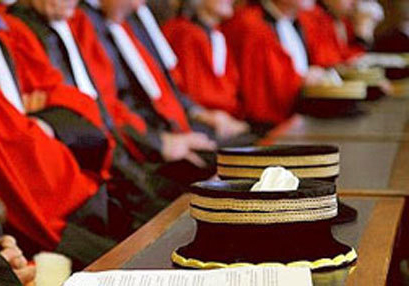
The ICJ today called on the Tunisian President, Beji Caid Essebsi, to refrain from signing into law amendments to the law that regulates the country’s High Judicial Council (HJC). The amendments were adopted on Tuesday 28 March 2017 by the People’s Representatives Assembly.
The ICJ also urged the Head of the Cabinet, Youssef Chahed, to act, as a matter of highest priority, on the nominations by the Instance Provisoire de la Justice Judiciaire (IPJJ) with a view to filling the positions of the First President of the Cassation Court and its General Prosecutor.
The ICJ expressed concern that the amendments revising the country’s 2016 HJC law would weaken the effective functioning of the judiciary and the administration of justice in several respects
- The amendments would strip the IPJJ President of the authority to convene the HJC’s first meeting and instead provide the President of the Parliament with such power. This would constitute an inappropriate interference of the legislative branch into the management of the judiciary in clear violation of the principle of separation of powers and judicial independence.
- The amendments would explicitly exclude any possibility of challenge or judicial review of such action of the President of the Parliament. The ICJ considers that the judiciary must be able to review such decisions to ensure that they are not exercised arbitrarily or outside the law.
- The amendments would also reduce the quorum required for the validity of HJC meetings from one-half to one-third of its members. This could lead to situations where non-judicial members of the HJC have the power to take decisions over the judiciary, in contravention of international standards.
“Instead of using legislative tactics and procedures to weaken the independence and the effective functioning of the HJC, the Tunisian Head of Cabinet should act on the IPJJ’s nominations to fill the positions of the President and the Prosecutor General of the Cassation Court as a matter of urgency, and ensure that until the HJC is properly established, the IPJJ continues to fully exercise its competencies in overseeing and managing the judiciary,” said Said Benarbia, Director of the ICJ Middle-East and North Africa (MENA) Programme.
Indeed, irrespective of the amendments, the ICJ recalls that article 148(8) of the Constitution clearly states that the IPJJ is to carry out its mandate until the seats on the HJC have been filled. This is further affirmed under article 74 of the 2016 HJC Law and article 19 of the 2013 IPJJ Law. Both of these laws make the end of the exercise of the IPJJ’s functions dependent on two conditions, namely that the HJC be fully composed and established.
The ICJ considers that the delay in acting on the IPJJ nominations of senior judges risks undermining the effective functioning of the judiciary, as well as adversely affecting the functioning of other institutions that are essential to upholding the rule of law and protecting human rights in Tunisia. The adopted amendments are no answer to this problem.
“The ongoing crisis is political and not judicial,” Benarbia said.
“Solving it does not require the introduction of legislative amendments that erode the rule of law and judicial independence, but rather the compliance with existing laws and the Constitution,” he added.
Contact
Theo Boutruche, Legal Adviser of the ICJ Middle-East and North Africa Programme, t: +33 6 42837354, e: theo.boutruche(a)icj.org
Background
The amendments were introduced and adopted amid a continuing crisis and functional paralysis of the judiciary that also impact on the effective functioning of other State institutions, including the body in charge of reviewing the conformity of laws with the Constitution.
In particular, two key positions have been left vacant as neither the First President of the Cassation Court, nor its General Prosecutor, have been appointed, and both of these positions also serve as ex officio members of the HJC.
In October 2016, elections were organized to choose the members of the HJC. A swearing-in ceremony before the President of the Republic followed in 14 December 2016, in which not all the HJC Members participated.
In November 2016, the IPJJ proposed candidates including to fill these two positions. Under the Tunisian Law, the Head of the Cabinet must confirm these nominations.
Alternatively, this official may request new nominations from the IPJJ until agreement is reached, as provided for in article 12 and 14 of the IPJJ Law No.13 of 2013. So far, the Head of the Cabinet has failed to act on the IPJJ’s nominations and uncertainty prevails as to whether the HJC has been properly established.
Under the Tunisian Constitution and laws, the President of the Cassation Court is also the President of the Instance Provisoire de Contrôle de la Constitutionnalité des Projets de Loi, the body in charge of assessing the conformity of laws with the Constitution during the transition period.
When established, the HJC will be charged with appointing four members of the Constitutional Court.
Tunisia-Statement new HJC Law-News-Web stories-2017-ARA (full story in Arabic, PDF)

Mar 30, 2017 | Advocacy, Non-legal submissions
Today, the ICJ made a submission to the Universal Periodic Review of Pakistan.
The submission brings to the attention of the members of the Human Rights Council’s Working Group on the UPR issues concerning:
- Trials of civilians by military tribunals;
- Enforced disappearances;
- Torture and other ill-treatment;
- Blasphemy laws; and
- International human rights instruments.
With respect to each of the above-mentioned concerns, the ICJ calls upon the Working Group on the UPR and the Human Rights Council to make a number of recommendations to the Pakistani authorities.
Pakistan-ICJ UPR-Advocacy-non-legal submissions-2017-ENG (full text in PDF)
Mar 30, 2017 | Advocacy
The ICJ submitted information to the UN Human Rights Council Working Group on the Universal Periodic Review (UPR) in advance of its review of Sri Lanka under the third cycle of the UPR mechanism during its 28th session in November 2017.
The ICJ submission focuses on concerns about Sri Lanka’s respect for its human rights obligations relating to ongoing issues of:
- Transitional justice;
- Enforced disappearance;
- Torture and other ill-treatment;
- Detention;
- Counter-terrorism; and
- Impunity.
SriLanka-UPR Submission March17-Advocacy-non legal submissions-2017-ENG (full text in PDF)

Mar 30, 2017 | News
The ICJ expressed its hope today that an arrangement reached between four judges of the High Court and Botswanan President Ian Khama along with Chief Justice Dibotelo would serve to restore the effective functioning of the High Court and its critical role in the administration of justice.
The settlement resulted in Justices Key Dingake, Modiri Letsididi, Ranier Busang and Mercy Garekwe withdrawing a petition and letter they had written complaining about what they considered to be a range of deficiencies in the justice system, as well as a failure of leadership in judicial administration.
The President and executive, for its part, discontinued pursing allegations of misconduct and bringing the name of the judiciary into disrepute against the judges and disestablished the impeachment tribunal that had been set up to try them.
The ICJ had previously expressed its concern about the process of the impeachment of the judges and the impact of the impeachment proceedings on judicial independence and impartiality in Botswana.
The ICJ was also concerned that impeachment proceedings would not accord with the principles of the right to fair trial.
“This settlement paves the way for the four judges to resume their normal duties,” said Arnold Tsunga Director of the ICJ.
“The Botswana executive and judicial officials charged with administration of the justice can now focus their attention on addressing the very real challenges facing the justice system in the country,” Tsunga added.
The ICJ reminds the Botswana authorities of their duty to guarantee the independence, impartiality and accountability of the judiciary under international law, including the International Covenant on Civil and Political Rights and the African Charter on Human and Peoples Rights, treaties to which Botswana is a party.
Contact
Arnold Tsunga, ICJ Regional Director for Africa, t: +27 716405926or +263 777 283 249; e: arnold.tsunga(a)icj.org
Background
The ICJ recalls that the four judges were suspended under section 97 of the Botswana Constitution on allegations of misconduct and bringing the name of the judiciary into disrepute.
The suspension was precipitated by a signed petition directed to the Chief Justice. In the petition the judges objected, among other things, to alleged poor conditions of service, as well as disparaging comments the Chief Justice was said have made about another judge’s ethnicity and defamatory statements related to corruption.
The petition also advocated for the Chief Justice’s impeachment and was copied to all judges of the High Court.
The Chief Justice and the President took issue with the contents and tone of the petition, alleging it to be disrespectful of the Chief Justice and causing disrepute of the judiciary in the eyes of members of the public.

Mar 28, 2017 | News
Legislation adopted today by the Pakistani Parliament allowing civilians to be tried by military tribunals in secret proceedings is a serious blow to human rights and rule of law in the country, the ICJ said.
“The nationwide concern at a number of recent attacks in the country seems to have once again been misdirected toward a seriously flawed counter terrorism strategy that weakens the rule of law and the struggle for justice,” said Sam Zarifi, ICJ’s Asia director.
“Pakistan must reject this counter productive strategy and instead strengthen its judicial process and law enforcement in line with its domestic law and international obligations,” he added.
The Pakistani Parliament voted to amend the 1973 Constitution and the Army Act, 1952, to again allow military tribunals to try civilians who allegedly belong to “a terrorist group or organization misusing the name of religion or a sect” and are suspected of committing a number of offences, including: abducting any person for ransom; raising arms of waging war against Pakistan; causing any person injury of death; using or designing vehicles for terrorist attacks; creating terror or insecurity in Pakistan; and attempting, aiding or abetting any of these acts.
The use of military courts to try civilians is inconsistent with international standards.
The ICJ has also documented serious fair trials violations in the operation of military courts from January 2015 to January 2017, including: denial of the right to counsel of choice; failure to disclose the charges against the accused; denial of a public hearing; failure to give convicts copies of a judgment with evidence and reasons for the verdict; and a very high number of convictions based on “confessions” without adequate safeguards against torture and ill treatment.
“Militarizing the judicial process will not lead to justice and it will not effectively counter terrorism; this is the lesson from around the world,” Zarifi said. “It has not proven to do so in Pakistan in the past, and there is nothing to indicate that it will do so now.”
“Instead, secret military trials of civilians that flout even basic fair trial guarantees will further erode the rule of law and weaken the government’s role in providing justice and protecting the rights of people in Pakistan,” he added.
Contact
Sam Zarifi, ICJ Asia Pacific Regional Director (Bangkok), t: +66 807819002; e: sam.zarifi(a)icj.org
Reema Omer, ICJ International Legal Adviser for Pakistan (London), t: +447889565691; e: reema.omer(a)icj.org
Background
Military courts constituted under the 21st Amendment convicted 274 people in the two years during which they were in operation, from 7 January 2015 to 6 January 2017.
Of those 274 convictions, 161 people were sentenced to death and 113 people were given prison sentences. At least 21 people given death sentences have been executed by hanging.
The enabling legislation for these courts lapsed on 6 January 2017 pursuant to a two-year sunset clause.
The ICJ opposes the use of the death penalty under any circumstances as a violation of the right to life and freedom from cruel, inhuman or degrading treatment.