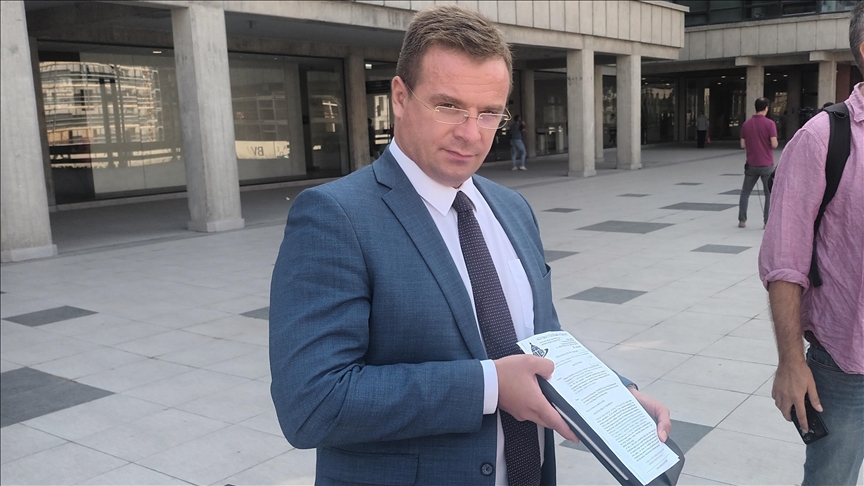
The ICJ condemns the continued deprivation of liberty of Serbian lawyer Cedomir Stojkovic and the criminal proceedings against him on charges of incitement to violent overthrow of the constitutional order and disclosure of official secrets, which appear to constitute reprisals for the exercise of his right to freedom of expression. On 4 April 2026, Serbia’s Bar Association (Advokatska komora Srbije) expressed concern that the political nature of the charges against him and the three-year period covered by the indictment “give rise to the suspicion that his detention, along with other measures imposed against attorney Stojkovic, are being used as a means of coercion, rather than as a means of ensuring the unobstructed conduct of criminal proceedings.” The Bar Association demanded that Stojkovic be released pending trial.
“The prosecution of a lawyer for social media posts expressing criticism of the authorities is incompatible with Serbia’s obligations under international human rights law and standards,” said Temur Shakirov, ICJ Europe and Central Asia Programme Director. “The Serbian authorities must release Stojkovic and ensure that lawyers can exercise their right to freedom of expression without fear of reprisal.”
The political nature of the charges, the breadth of the indictment covering social media posts over a three-year period, and the severity of the restrictive measures imposed on him, including pre-trial detention, house arrest and a prohibition on posting on social media and on participating in public life, give rise to serious concern that he is being prosecuted to punish him for his public criticism of the Serbian authorities.
The ICJ calls on the Serbian authorities to release Stojkovic immediately and to drop all charges and end their reprisal campaign against him. In addition, the human rights organization calls on the Serbian authorities to cease all spurious, politically motivated criminal proceedings against lawyers solely for their legitimate exercise of their professional functions and of their right to freedom of expression.
Stojkovic was arrested on 29 December 2025 and held in pre-trial detention for 30 days before being transferred to house arrest on 27 March 2026. He remains subject to restrictive measures, including a prohibition on posting on social media and on participating in public life. The charges relate to 17 social media posts published over approximately three years, which the Higher Public Prosecutor’s Office in Belgrade has characterized as incitement to violent overthrow of the constitutional order and disclosure of official secrets.
Background
Cedomir Stojkovic is a lawyer practising in Belgrade. He has been publicly critical of the Serbian authorities and, in particular, of Serbia’s President, Aleksandar Vučić. In November 2025, Stojkovic filed a criminal complaint against Vučić in connection with the “Sarajevo Safari” affair, which concerns allegations that wealthy foreign nationals paid to shoot at civilians from positions of the Army of Republika Srpska during the siege of Sarajevo in the 1990s, shortly before his arrest on 29 December 2025. While in detention Stojkovic stated publicly that he believed that his arrest was in retaliation for the criminal complaint he had lodged against Serbia’s President. On 28 February 2026, at the request of the Higher Public Prosecutor’s Office, Stojkovic’s house arrest was replaced with full detention and he was transferred to the District Prison in Belgrade. On 27 March 2026, upon the expiry of his 30-day detention order, he was transferred to house arrest. The courts consistently rejected Stojkovic’s appeals against his detention on remand pending trial.
On 24 March 2026, the UN Special Rapporteur on the independence of judges and lawyers addressed a communication to the Serbian Government expressing concern that several provisions of a series of amendments and newly adopted laws relating to the judiciary and the prosecution authorities “may not be in line with international human rights standards related to the independence of the judiciary and the right to a fair trial, including: the impartiality of the prosecution service, the separation of powers, and the ability of judges and prosecutors to perform their functions free from undue influence, pressure or interference.”
Applicable international human rights law and standards
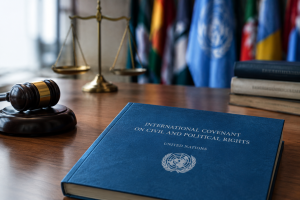
Article 19(2) of the International Covenant on Civil and Political Rights (ICCPR), by which Serbia is bound, provides: “Everyone shall have the right to freedom of expression; this right shall include freedom to seek, receive and impart information and ideas of all kinds, regardless of frontiers, either orally, in writing or in print, in the form of art, or through any other media of his choice.”
Article 10(1) of the European Convention on Human Rights (ECHR), by which Serbia is also bound, provides: “Everyone has the right to freedom of expression. This right shall include freedom to hold opinions and to receive and impart information and ideas without interference by public authority and regardless of frontiers.”
Article 9(1) of the ICCPR provides: “Everyone has the right to liberty and security of person. No one shall be subjected to arbitrary arrest or detention. No one shall be deprived of his liberty except on such grounds and in accordance with such procedure as are established by law.”
Article 5 of the ECHR, among other things, provides: “Everyone has the right to liberty and security of person. No one shall be deprived of his liberty save in the following cases and in accordance with a procedure prescribed by law: [….] the lawful arrest or detention of a person effected for the purpose of bringing him before the competent legal authority on reasonable suspicion of having committed an offence”.
Principle 16 of the UN Basic Principles on the Role of Lawyers (1990) provides: “Governments shall ensure that lawyers (a) are able to perform all of their professional functions without intimidation, hindrance, harassment or improper interference; [….] and (c) shall not suffer, or be threatened with, prosecution or administrative, economic or other sanctions for any action taken in accordance with recognised professional duties, standards and ethics.”
Principle 23 of the UN Basic Principles on the Role of Lawyers provides: “Lawyers, like other citizens, are entitled to freedom of expression, freedom of belief, freedom of association and freedom of assembly. In particular, they shall have the right to take part in public discussion of matters concerning the law, the administration of justice and the promotion and protection of human rights and to join or form local, national or international organisations and attend their meetings, without suffering professional restrictions by reason of their lawful action or their membership in a lawful organisation.”