


Kazakhstan: psychiatric detention of lawyer must be ended
The ICJ today expressed its serious concern at the continued detention of lawyer Zinaida Mukhtorova in a psychiatric facility.
In its statement, the ICJ expressed concern that this detention may amount to an act of harassment or reprisal for Zinaida Mukhtorova’s legitimate exercise of her professional functions. Furthermore, the ICJ is concerned at reports that her detention may have been extended today as a reprisal for her challenging the detention through the courts.
Kazakhstan-LawyerDetention-statement-2013-eng (Read the statement in English)
Kazakhstan-LawyerDetention-statement-2013-rus (Read the statement in Russian)

Selection criteria for Human Rights Council Special Procedures
With other nongovernmental organizations, the ICJ calls on the Human Rights Council to select candidates for Special Procedure mandates on the basis of technical, professional and other objective requirements.
Ahead of the 24th session of the Human Rights Council (9 to 27 September 2013), several NGOs, including the ICJ, today joined in submitting written statements to the UN concerning the selection of candidates for membership in the Working Group on Arbitrary Detention and the Working Group on Enforced and Involuntary Disappearances and for the mandate-holder of the Special Rapporteur on the situation of human rights defenders. The statements identify a checklist intended as an interpretive aid for the selection of candidates based on qualifications and skills; relevant expertise; established competence; and flexibility and availability of time.
HRC24-JointWrittenStatement-SelectionCriteriaWGAD-NonLegalSubmission-2013 (download full statement concerning selection criteria for the Working Group on Arbitrary Detention)
HRC24-JointWrittenStatement-SelectionCriteriaWGEID-NonLegalSubmission-2013 (download full statement concerning selection criteria for the Working Group on Enforced and Involuntary Disappearances)
HRC24-JointWrittenStatement-SelectionCriteriaSRHRDs-NonLegalSubmission-2013 (download full statement concerning selection criteria for the Special Rapporteur on the situation of human rights defenders)

Vietnam: ICJ calls for release of human rights lawyer Le Quoc Quan after trial postponed indefinitely
The ICJ today called for the immediate release of Le Quoc Quan, after the People’s Court of Hanoi announced on 8 July 2013 the postponement of his trial, without setting any new dates for the case. The reason given for the hastily informed adjournment was that the judge had suddenly taken ill.
The ICJ considers that Le Quoc Quan’s continued detention is in violation of Vietnam’s penal law and the State’s international legal obligations.
Le Quoc Quan, a lawyer and human rights defender, was arrested on 27 December 2012 and charged for tax evasion under article 161 of Vietnam’s 1999 Penal Code.
The postponement of the trial appears to signal that Le Quoc Quan will continue to remain in jail. Since his arrest last year, he has already been detained for more than six months.
“The continued detention of Le Quoc Quan is akin to him being punished even before the trial has commenced. This is a clear violation of his right to being presumed innocent,” said Andrew Khoo from the Malaysian Bar Council, an expert appointed by the ICJ, who had traveled to Hanoi to observe Le Quoc Quan’s trial.
On 29 December, two days after Le Quoc Quan’s arrest, his wife filed an application for bail to the police and procurator. She had also applied for release on his own recognizance. There are no specific detailed procedures spelled out in law governing bail procedures. Under article 92 of the Criminal Procedure Code, only family members are permitted to act as guarantors. To date, neither the police nor the procurator have replied to her applications.
Under article 9 of the International Covenant on Civil and Political Rights (ICCPR), to which Vietnam is a party, it should not be the general rule that persons are detained while awaiting trial, and release pending trial may only be subject to conditions to ensure appearance at the trial.
“There is no reason to believe that if released Le Quoc Quan would not appear for trial, and in any event his family has made representations to act as guarantors”, said Emerlynne Gil, the ICJ’s International Legal Adviser on Southeast Asia, who was also in Hanoi to observe the trial. “The People’s Court of Hanoi must order Le Quoc Quan’s release either on bail or his own recognizance.”
The ICJ notes that the postponement also violates Le Quoc Quan’s right to a speedy trial. Under international law, including ICCPR article 14, an accused has the right to be tried without undue delay and within a reasonable period of time. This prevents any unnecessary continuing deprivation of liberty and ensures that the interest of justice is properly served.
“We would expect that the People’s Court of Hanoi will notify promptly the public of the next date of Le Quac Quan’s trial and ensure that his right to a fair and public trial is upheld,” said Emerlynne Gil.
The ICJ looks forward to returning to Vietnam to continue monitoring this case and ensuring that the rights of Le Quoc Quan, including his right to liberty and to a fair trial, are fully respected and protected.
CONTACT:
Ms. Emerlynne Gil, International Legal Adviser for Southeast Asia, tel. no. +662 6198477; email: emerlynne.gil(a)icj.org
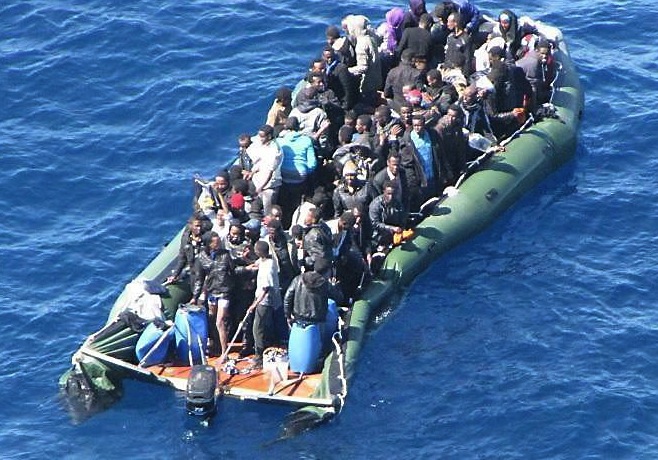
ICJ urges Maltese Government not to expel Somali nationals to Libya
The International Commission of Jurists (ICJ) today called on the Government of Malta to refrain from forcibly transferring a number of Somali nationals to Libya, where they are alleged to be at real risk of human rights violations and further transfer to Somalia.
According to media reports, the persons at risk of transfer are part of a group of some 102 persons, including 41 women and two babies, who arrived in Malta this morning.
The ICJ expresses its grave concern at the possibility that Somali nationals, who are alleged to be considered at risk of being subject to ill-treatment or persecution if sent back to Somalia, would first be sent back to Libya. According to the office of the United Nations High Commissioner for Refugees, in Libya, migrants face a “constant risk of exploitation, arrest and indefinite detention”.
The ICJ stresses that the European Court of Human Rights has ruled, in the judgment Hirsi Jamaa and others v. Italy, that sending back potential asylum seekers, including of Somali origin, to Libya, without individual assessment of their situation and access to asylum procedures, violates the European Convention on Human Rights, in particular the principle of non-refoulement, the prohibition of collective expulsion and the right to an effective remedy for violations of human rights.
The ICJ therefore calls on the Maltese Government to refrain from expelling or otherwise transferring to Libya any of the Somali citizens who arrived on Maltese shores today. The migrants must be fully informed of their right to apply for international or humanitarian protection under EU and Maltese law; and each of their cases must be examined on its individual merits.
Statement-ExpulsionSomalis-2013-Malta (download the statement)
Contact:
Massimo Frigo, ICJ Legal Adviser of the Europe Programme, tel: 41 22 979 38 05, e-mail: massimo.frigo(a)icj.org
Róisín Pillay, ICJ Director of the Europe Programme, e-mail : roisin.pillay(a)icj.org
Recent News
 El Salvador: Crimes against humanity within the framework of public security policy11 Mar 2026
 HRC61: Joint oral statement of The ICJ in the interactive dialogue with the Special Rapporteur on Counter-terrorism and Human Rights11 Mar 2026
 A Human Rights-Based Approach to Decriminalizing Conduct Associated with Poverty and Status10 Mar 2026
 HRC61: Oral statement of The ICJ in the interactive dialogue with the Special Rapporteur on the Rights of Persons with Disabilities06 Mar 2026