Jan 26, 2024 | News
The ICJ welcomes today’s near-unanimous Order of the International Court of Justice (the Court) in the case of South Africa v. Israel, indicating provisional measures under the 1948 Genocide Convention (the Convention).
“Through this Order, the world’s highest judicial authority has acknowledged that there is a risk of genocide being committed in Gaza,” said Said Benarbia, MENA Programme Director of the International Commission of Jurists. “It is now incumbent on Israel to implement the provisional measures – as well as its obligations under the United Nations Charter – as a matter of urgency.”
In its Order delivered orally in The Hague following oral submissions by South Africa and Israel on 11 and 12 January 2024 respectively, the Court found it had prima facie jurisdiction over the case and indicated six (6) provisional measures.
The Court ordered that Israel: (1) take all measures within its power to prevent the commission of all acts within the scope of Article II(a)-(d) of the Convention; (2) ensure with immediate effect that its military does not commit any acts described in the first order; (3) take effective measures to prevent the destruction and ensure the preservation of evidence related to allegations of acts within the scope of Article II and Article III of the Convention; and (4) report to the Court on all measures taken to give effect to the Order within one month of the Order.
The Court also ordered that Israel take all measures within its power to prevent and punish the direct and public incitement to commit genocide against people in Gaza, and enable the provision of urgently needed basic services and humanitarian assistance. The Court also reminded all parties of their obligations under international humanitarian law, and called for the release of hostages.
The ICJ notes that at the provisional measures stage, the Court does not determine the merits of the case. It therefore has yet to make a determination whether Israel has committed, sanctioned, or incited genocide in violation of the Genocide Convention. A hearing on the merits will be held at a later stage. Furthermore, the role of the Court is to establish the legal responsibility of States, not individuals, in accordance with international law. The determination of the responsibility of any individuals that might be responsible for genocide would fall to the International Criminal Court (ICC), which is presently investigating allegations of international crimes committed by both parties.
This unequivocal call by the Court – a principal organ of the United Nations – for Israel to take all effective measures to prevent the commission of genocide highlights the crucial importance of swift and decisive action by the international community to: i) as previously urged by the International Commission of Jurists, ensure an immediate ceasefire and ensure the release of hostages, and ii) cease aid or assistance to Israel that may facilitate the commission of acts that may amount to genocide or undermine all States’ obligations under the Convention to prevent genocide.
“As the number of Palestinians killed in Gaza since 7 October surpasses 25,000 and continues to mount, the need for international cooperation to enforce these legally binding provisional measures cannot be overstated”, added Banarbia. “Respect for international law, including the Genocide Convention and its preventive function, demands no less”.
Notwithstanding the Order, the ICJ reiterates that individuals from all parties to the conflict, including Israel and Hamas, must be held criminally accountable for any violations of international criminal law committed since 7 October and all States should refrain from providing assistance to any party to the conflict that may amount to complicity in such criminal acts, including by imposing an arms embargo. The ICJ also urges States to support the work of the ICC and the Independent Commission of Inquiry, and, where possible, exercise universal jurisdiction over crimes under international law.
Contact:
Said Benarbia, Director, ICJ Middle East and North Africa Programme, email: said.benarbia@icj.org
Katherine Iliopoulos, Legal Adviser, ICJ Middle East and North Africa Programme, email: katherine.iliopoulos@icj.org

Jan 25, 2024 | Advocacy, Joint Statement
The ICJ has joined more than a hundred organizations and experts in a call on the state delegations that will participate in the concluding session of the United Nations Ad Hoc Committee elaborating a proposed Cybercrime Convention (the Convention) to ensure the Convention is narrowly focused on tackling cybercrime, and not used as a tool to undermine human rights.
It is the ICJ’s view that the fight against cybercrime should not come at the expense of human rights, gender equality, and the dignity of the people whose lives will be affected by this Convention. It should not result in impeding security research and making us all less secure.
Robust and meaningful safeguards and limitations are essential to avoid the possibility of abuse of relevant provisions of the Convention that could arise under the guise of combating cybercrime. Absent meaningful changes to address these shortcomings, the Convention should be rejected.
Read the full Statement:
Joint Advocacy Statement on UN Cybercrime Convention
Jan 19, 2024 | News
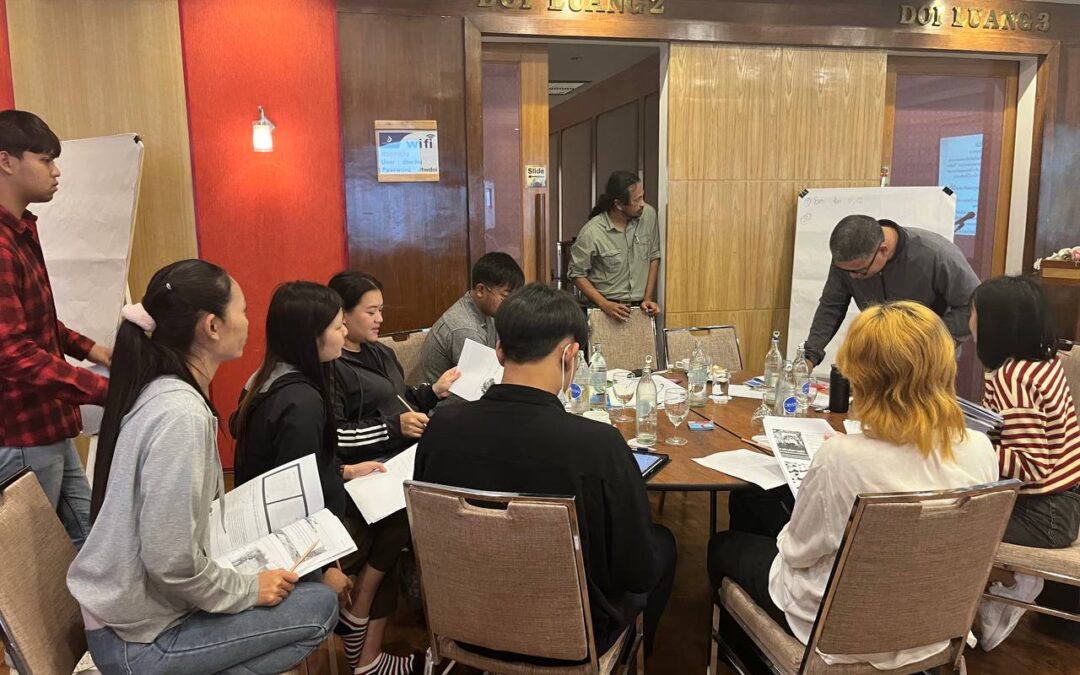
On 15-16 January 2024, the International Commission of Jurists (ICJ), in cooperation with ARTICLE 19, organized a workshop in the province of Chiang Mai where over two dozen civil society actors and human rights defenders considered how to invoke and apply international law and standards related to land. The goal was to advocate for better protection of the human rights of affected individuals and communities across Thailand.
“Access to, use of, and control over land can have direct and indirect implications for the enjoyment of a range of human rights, particularly those under the International Covenant on the Economic, Social and Cultural Rights (ICESCR) to which Thailand is a party,” said Seree Nonthasoot, Member of the United Nations Committee on Economic, Social, and Cultural Rights (CESCR).
Thailand has a long-standing track record of failing to meet its human rights obligations related to land, especially concerning Indigenous Peoples, peasants, and other traditional communities, many of which have a material and spiritual relationship with their ancestral lands. Violations include the failure to ensure the security of tenure and meaningful and effective participation of communities in land-related decision-making processes.
Large-scale forced evictions conducted in violation of international law, inadequate and inconsistent compensation provided to affected communities and individuals due to land-related policies, and displacement of entire communities that are consequently struggling to access livelihoods without adequate support from the State have also been reported.
“When the social, cultural, spiritual, economic, environmental, and political value of land for communities is systematically disregarded by domestic law, international law and standards become important tools for victims and civil society to use in their advocacy for the protection of human rights. International mechanisms also offer crucial avenues for exposing serious human rights violations and seeking accountability,” added Sanhawan Srisod, ICJ’s Legal Adviser.
The workshop aimed to build participants’ documentation skills, strengthen their advocacy and promote networking. Further, the training explored different approaches and the benefits of engaging with UN human rights mechanisms for the protection of human rights in relation to land. The workshop provided a space for participants to discuss how civil society actors can utilize the outputs of these mechanisms in their activities, as well as how to effectively communicate with such mechanisms to ensure that their engagement is strategic and productive.
Background
Speakers included:
- Pairoj Ponpesh, Adviser, National Human Rights Commission of Thailand
- Pratubjit Neelapaijit, National Human Rights Officer, OHCHR’s Regional Office for Southeast Asia
- Sanhawan Srisod, Legal Adviser, ICJ
- Seree Nonthasoot, Member of the United Nations Committee on Economic, Social, and Cultural Rights
Unofficial translations of key CESCR’s jurisprudences into Thai were also provided and shared with the participants. These included:
For more information regarding the legal framework, policies, and practices related to land in the context of the establishment and development of special economic zones (SEZs) against international law and standards, available in English and Thai.
Contact:
Sanhawan Srisod, Associate International Legal Adviser, ICJ Asia Pacific Programme; e: sanhawan.srisod@icj.org
Jan 18, 2024 | News
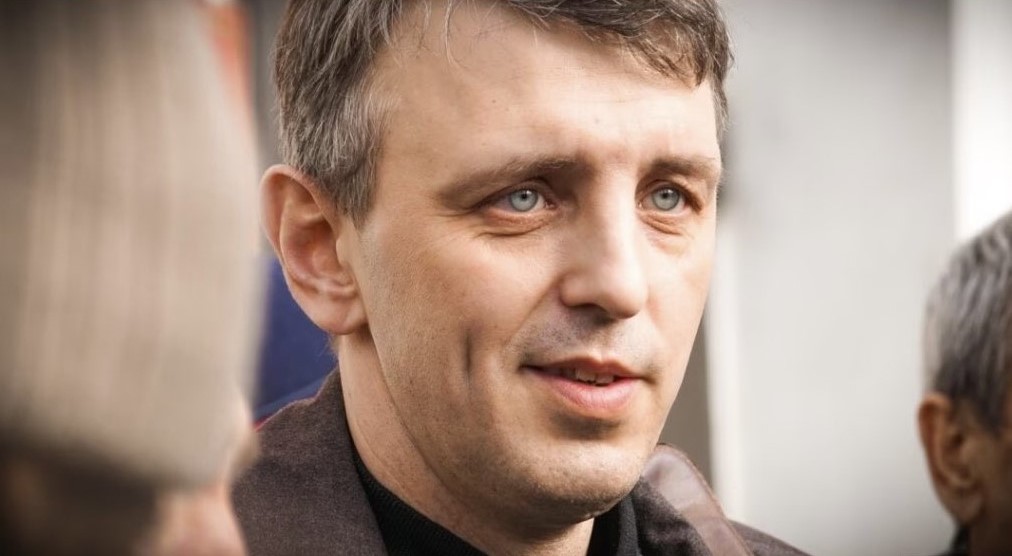
Lawyers for Lawyers, the International Observatory for Lawyers (OIAD), The Law Society of England and Wales (LSEW), the European Association of Lawyers for Democracy & Human Rights (ELDH), the Union of International Lawyers’ Institute for The Rule of Law (UIA-IROL), the International Bar Association’s Human Rights Institute (IBAHRI), and the International Commission of Jurists (ICJ) condemn the continued harassment against human rights lawyer Aleksey Ladin.
On 24 January 2024, the International Day of the Endangered Lawyer, human rights defender and lawyer Aleksey Ladin will face a disciplinary hearing by the Council of the Tyumen Regional Bar Association. The action was initiated by a motion issued by the Ministry of Justice of the Russian Federation. Mr. Ladin has been working since 2015 to provide legal aid to Ukrainians who are alleged to have been subject to criminal prosecution by Russia on politically motivated charges. Since 2017, he has been based in Russian-occupied Crimea, mostly representing Ukrainian and Crimean Tatar political prisoners.
This is the latest in series of instances of harassment and prosecution from the authorities against Mr. Ladin. On 13 October 2023, the Kyivskyi District Court of Simferopol sentenced him to 14 days of administrative detention for allegedly displaying prohibited symbols on his social media pages. The Facebook post in question, a photo of a drawing made by one of his clients, displayed elements of Ukrainian and Crimean Tatar national emblems with the slogan “We are not the terrorists and we are not the extremists.” The court found the “taraq tamga” (the emblem on the Crimean Tatars’ flag) in the picture to be a symbol of a known Crimean volunteer paramilitary unit, Noman Çelebicihan Crimean Tatar Volunteer Battalion. The drawing had no relation to the battalion. Mr. Ladin was prosecuted for the exercise of his right to freedom expression, protected under international and Russian law.
The upcoming disciplinary hearing is based on the sentence of administrative detention handed down on 13 October 2023, as the Ministry of Justice alleges that Mr. Ladin violated the Code of Ethics of the Russian Bar Association, which is based on the Federal Law “On the Bar Association and its activities in the Russian Federation.” The Ministry of Justice affirms that they received this information from the Centre to Counteract Extremism in Crimea on 3 November 2023.
Lawyers play a vital role in upholding the rule of law and the protection of human rights guaranteed under international law, including the rights to an effective remedy and fair trial guarantees, and the right of freedom from torture and other cruel, inhuman, or degrading treatment or punishment. Their work is indispensable for public confidence in the administration of justice by safeguarding due process rights and ensuring access to justice for all. To fulfil their professional duties effectively, lawyers should be able to practice their profession safely and should be free from improper interference, fear of reprisals, and illegitimate restrictions, in compliance with international standards.
The UN Basic Principles on the Role of Lawyers states that ‘Governments shall ensure that lawyers (a) are able to perform all of their professional functions without intimidation, hindrance, harassment or improper interference; (…) and (c) shall not suffer, or be threatened with, prosecution or administrative, economic or other sanctions for any action taken in accordance with recognized professional duties, standards and ethics’ [16]. They also hold that ‘lawyers shall not be identified with their clients or their clients’ causes as a result of discharging their functions’ [18] and that ‘lawyers, like any other citizens, are entitled to freedom of expression, belief, association and assembly’ [23].
In view of the above, the undersigned organisations call on the Tyumen Regional Bar Association, the Russian Federal Bar Association and the Ministry of Justice of the Russian Federation to:
- Immediately drop the disciplinary proceedings against human rights lawyer Aleksey Lapin, as he is being targeted as a result of his peaceful and legitimate activities;
- Ensure that any legitimate disciplinary proceedings against lawyers shall be conducted fairly and independently, in accordance with international standards;
- Refrain from any actions that may constitute harassment, persecution, or undue interference in the work of lawyers, including disciplinary or criminal proceedings on improper grounds, such as the nature of the cases in which the lawyer is involved;
- Guarantee that all lawyers in Russia and Russian-occupied Crimea are able to carry out their legitimate professional activities without fear of reprisals and free of all restrictions including judicial harassment, arbitrary arrest, deprivation of liberty, or other arbitrary sanctions.

Jan 17, 2024 | Advocacy, News
Today, the short documentary film titled “Beyond Siracusa: Human Rights in Times of Public Health Emergencies,” will be launched. The film looks at the 2023 Principles and Guidelines on Human Rights Public Health (PHE Principles), developed by experts through a process led by the International Commission of Jurists and the Global Health Consortium (GHLC). The film looks at the underlying motivation for the PHE Principles, including the imperatives for action compelled by the onslaught of the COVID 19 Pandemic, as well as the drafting process itself.
VIDEO: Beyond Siracusa: Human Rights in Times of Public Health Emergencies
“One of the important lessons learned from the COVID-19 experience is that a unified, cohesive elaboration of international law and standards prescribing how States should and should not respond to pandemics was lacking and sorely needed,” said Tim Fish Hodgson, ICJ’s Senior Legal Adviser. “The 1984 Siracusa Principles, also developed by the ICJ, elaborated a framework for a human rights-compliant response to emergency measures. The PHE Principles build on Siracusa and affirm the proactive measures that are required to secure human rights in times of public health emergency.”
The Principles, which address such questions as access to vaccines, lockdowns, and fortification of public health systems to prepare for future pandemics, expressly identify a number of responsibilities of States in the context of public health emergencies, including that they act in furtherance of:
- Universal enjoyment of human rights;
- International solidarity;
- The Rule of law;
- Equality and non-discrimination;
- Human rights protection from the conduct of non-State actors;
- Transparency and access to information;
- Meaningful and effective participation; and
- Accountability and access to justice for those harmed by human rights violations and abuses.
Elaborated by international experts through a three-year consultative process, and to date endorsed by over 50 leading experts, the Principles also provide a foundation upon which further human rights standards in public health emergency prevention, preparedness, response, and recovery may emerge and evolve. In the spirit of such evolution, the ICJ co-convened a blog symposium between October and December 2023 on the Petrie-Flom Center for Health Law Policy, Biotechnology, and Bioethics at Harvard Law School’s Bill of Health, which will culminate with a webinar on 18 January 2024.
“The Principles aim to be more than static guidelines. Their essence thrives through interpretation, application, and discourse among communities of scholars, advocates, practitioners and human rights defenders,” said Roojin Habibi, a law professor at the University of Ottawa and a member of GHLC. “We extend an open invitation to all interested parties to collaborate on the implementation of these Principles, from local to global settings.”
In 2024, the World Health Organization is set to continue its work in drafting a “Pandemic Treaty,” expected to culminate with the International Negotiating Body (INB) appointed by the WHO submitting its “final outcome” to the World Health Assembly in May 2024. At the same time, a process is under way to amend the 2005 International Health Regulations stemming from experiences of their (non)application during COVID-19.
“It is our hope that the content of the Principles inform all processes currently under way within the WHO to develop and consolidate international law and standards,” Fish Hodgson said. “We reiterate the consistent calls of civil society to ensure that the WHO’s processes are fully and meaningfully participatory, resulting in the development of a Pandemic Treaty and International Health Regulations that are grounded in human rights, providing States with clear guidance on their obligations,” he concluded.
Event
Register to join the webinar discussing the Principles on 18 January at 16.00 (CET) featuring Justice Zione Ntaba (Judge of the Malawian High Court), Alicia Ely Yamin (Harvard University), Paul Hunt (New Zealand Human Rights Commission), Kayum Ahmed (Human Rights Watch) and Luisa Cabal (UNAIDS) at this link.
Links
VIDEO: Beyond Siracusa: Human Rights in Times of Public Health Emergencies
PHE PRINCIPLES: ICJ & GHLC – Human Rights & Public Health Emergencies (2023). A one page overview of the Principles is available here: One Pager – Principles and Guidelines on HR & PHE.
SIRACUSA PRINCIPLES: The Siracusa Principles on the Limitation and Derogation Provisions in the International Covenant on Civil and Political Rights (September 1984) are available here.
SYMPOSIUM: Posts from the Blog Symposium From Principles to Practice: Human Rights and Public Health Emergencies are available here.
ICJ, Amnesty International, GI-ESCR and Human Rights Watch Draft “Pandemic Treaty” fails to comply with human rights (July 2023), available here.
ICJ, Amnesty International, GI-ESCR and Human Rights Watch Joint Public Statement: The Pandemic Treaty Zero Draft Misses The Mark On Human Rights, February 2023, available here.
For more information:
Timothy Fish Hodgson timothy.hodgson@icj.org
Roojin Habibi rhabibi@uottawa.ca