Jan 15, 2024 | News
With 2023 being the deadliest year on record for Palestinians in the West Bank, the International Commission of Jurists (ICJ) condemns the rampant violent attacks by Israeli settlers, almost all of which are backed or tolerated by the Israeli authorities.
“The Israeli authorities must take immediate action to bring a halt to these violent attacks, some of which have led to the forced displacement of Palestinians,” said Said Benarbia, ICJ MENA director. “Those who are responsible for the attacks must be brought to justice with criminal sanctions commensurate to the gravity of the offences.”
Such incidents have dramatically escalated since the renewal of hostilities on 7 October, when Hamas launched unlawful attacks against Israeli civilians, which led to an indiscriminate and disproportionate response by Israeli forces in Gaza. Between 7 October and 27 December 2023, settler attacks against Palestinians in the West Bank led to the killing of at least seven adults and one child. The perpetrators have thus far enjoyed near complete impunity for the apparently unlawful killing and injury of Palestinians, with only two settlers arrested in relation to the attacks and no indictments filed.
Under international humanitarian law and human rights law, Israel, as the occupying power, has an obligation to ensure the safety and protection of the population of the West Bank and the rest of the Occupied Palestinian Territory. Moreover, under human rights law, including under the International Covenant on Civil and Political Rights, Israel has an obligation to protect the population against human rights violations, including their rights to life and security of person, and to prevent such violations, in particular by addressing incitement to hostility or violence.
OHCHR reported that between 7 October and 27 December 2023, Israeli settlers perpetrated at least 367 violent attacks against Palestinians, which caused the displacement of 1208 members of West Bank herding communities, including 586 children. Overall, 2023 was the deadliest year for Palestinians in the West Bank with the number of settler attacks against Palestinian civilians rising to an average of seven per day. In Zanuta village alone, armed Israeli settlers, some in Israeli Army reservist uniforms, forced 150 Palestinians from their homes. The Israeli Defence Forces have generally failed to intervene to prevent and stop violent acts against Palestinians, allowing Israeli settlers to seemingly exploit international preoccupation with events in Gaza to escalate efforts to forcibly remove Palestinians from their homes in the West Bank.
International law prohibits the forced displacement of persons lawfully present in an area by coercion or expulsion, without grounds permitted under international law. In addition, under international law, State-backed or tolerated Israeli settlers’ violence against civilian residents of the Occupied West Bank may amount to “an intentional and severe deprivation of fundamental rights contrary to international law by reason of the identity of the targeted group or collectivity.” This conduct may amount to the crimes against humanity of “deportation or forcible transfer of population” and “persecution”, respectively, if committed knowingly as part of a widespread or systematic attack against the Palestinian population.
The ICJ urges the Israeli government to take immediate and effective measures to prevent and stop settlers from perpetrating further crimes against the residents of the West Bank, to protect the civilian population from unlawful attacks, investigate all instances of settler violence and, when evidence so warrants, to bring those purportedly responsible to justice.
The ICJ also calls for the Israeli government to cease actions liable to further enable settlers to commit additional acts of unlawful violence against Palestinians, including by halting the implementation of its policy to expand settlements, the enforcement of laws facilitating the expropriation of Palestinian property by settler organizations, the unregulated supply of arms to settler communities, and official statements that risk being interpreted as calls for the eradication of Palestinian communities.
Finally, the ICJ calls on the International Criminal Court to investigate these criminal acts as potential war crimes and crimes against humanity that fall under the Rome Statute, and, where warranted, initiate prosecutions of those responsible.
Background
Israel’s establishment of settlements in Palestinian territory occupied since 1967 constitutes a flagrant violation of international humanitarian law. UN experts have also denounced the ongoing forced eviction of Palestinian families in East Jerusalem through the promulgation of discriminatory law that “helps settler organizations expropriate Palestinian properties.” International humanitarian and human rights law prohibit the unlawful seizure of private property and pillaging on occupied territory.
In February 2023, the newly formed Israeli government signed a coalition agreement that seeks to formally extend and annex settlements in the occupied West Bank, and establishes civilian administration for Israeli settlers in illegal West Bank settlements. The ICJ considers the settlement policy outlined in the coalition agreement to be manifestly unlawful under international law, paving the way for the further unlawful entrenchment of discriminatory and acquisitive Israeli practices towards Palestinian communities, while also being liable to incite further settler violence. In this regard, the UN Special Committee to Investigate Israeli Practices noted “a direct correlation between the policies of the Israeli government, as articulated in its coalition agreement, and Israeli practices on the ground,” noting that “settler attacks have increased on average from two a day in 2022 to three a day in 2023.”
Contact
Said Benarbia, Director, ICJ Middle East and North Africa Programme, t: +41-22-979-3800; e: said.benarbia(a)icj.org
Jan 12, 2024 | News
The ICJ is concerned about attempts by powerful actors in Guatemala, including the Office of the Attorney General, to subvert the transfer of executive presidential authority to President-elect Bernardo Arévalo de León, who is due take office on 14 January 2024.
The ICJ calls on all State authorities and private parties to respect the Rule of Law and desist from interference in the process of transition and to cease efforts to revoke or make ineffective the results of the 2023 presidential elections.
“The democratic system in Guatemala is at stake. It is shocking that the attempts against the electoral process come from representatives of State institutions that have a legal duty to uphold democracy and human rights,” said Santiago Canton, ICJ Secretary General. “Members of the Office of the Attorney General, Congress, and the judiciary have acted in total disregard of Guatemala’s international obligations. In particular, Article 1 of the Inter-American Democratic Charter establishes the right of the peoples of the Americas to democracy and the duty of governments to promote and defend democracy,” added Canton.
On 20 August 2023, Bernardo Arévalo de León and Karin Herrera Aguilar of the “Movimiento Semilla” party were elected President and Vice-President respectively for the 2024-2028 presidential term. Their victory was certified by the Guatemalan Supreme Electoral Tribunal. Prior to and after the election, there were multiple attempts by the Office of the Attorney General and other authorities to disrupt the presidential election process. The European Parliament and the Organization of American States (OAS) have condemned and characterized certain of these efforts as an “attempted coup d’état”.
The Office of the Attorney General, led by María Consuelo Porras Argueta, has played a leading role in these attempts through the arbitrary use of its prosecutorial powers. Among other actions, the Office of the Attorney General has opened unwarranted and spurious criminal investigations and issued of arrest warrants and search warrants against justices and staff members of the Supreme Electoral Tribunal, President-elect Arévalo, Vice-President-elect Herrera, members of the “Movimiento Semilla” party, members of civil society organizations, academicians, and students.
The Office of the Attorney General has also expressly cast doubt on the legitimacy of the 2023 presidential election process. At a press conference on 8 December 2023 a chief prosecutor, José Rafael Curruchiche Cucul, claimed that the Supreme Electoral Tribunal “made a mockery of Guatemalans” and was involved in “violating the country’s democracy”. He also affirmed that the Attorney General’s Office’s view was that the 2023 elections should be annulled.
A number of judges have contributed to the arbitrary use of the criminal law to the detriment of the rule of law in Guatemala. On 8 January 2024, the Seventh Criminal Court Judge, Fredy Raul Orellana Letona, filed a petition before the Supreme Electoral Tribunal to execute an order for the provisional suspension of the legal personality of the “Movimiento Semilla” party. Orellana has also demanded a criminal investigation against staff members of the Supreme Electoral Tribunal.
In November and December 2023, the Guatemalan Congress and the Supreme Court of Justice engaged in legal proceedings aimed at waiving immunity from criminal prosecution of some justices of the Supreme Electoral Tribunal.
The lawful transfer of power is intrinsically linked to the respect for the rule of law and the exercise of human rights and fundamental freedoms, including the right to participate in political and public life, including through voting and standing for elections. These rights are guaranteed by international instruments to which Guatemala is a State party, such as the International Covenant on Civil and Political Rights, the American Convention on Human Rights, and the Inter-American Democratic Charter. Consequently, the ICJ recalls that the Guatemalan authorities are bound by international obligations under these instruments.
The ICJ also calls on engaged States and the international community to act to ensure that the Guatemalan authorities uphold of the rule of law, human rights, and the democratic system. If necessary, Member States of the OAS should trigger the application of Article 20 of the Inter-American Democratic Charter in the event that President-elect Arévalo is obstructed from assuming office.
Background information
The 2023 presidential election took place in a context of widespread impunity for serious human rights violations over the course of decades, reliable allegations of co-option of judicial bodies, widespread institutional corruption, and attacks against members of civil society organizations and political parties, as documented by multiple instances, including the Inter-American Commission on Human Rights (IACHR). In the case of justice officials (judges and prosecutors), the UN High Commissioner for Human Rights has expressed his concern about “the growing number of criminal cases brought against justice officials” and the “intimidation, harassment, prosecution and persecution of those fighting for accountability for human rights violations, including work on corruption cases”.
There have been numerous actions apparently aimed at undermining the integrity of the presidential election process by the Attorney General and prosecutorial authorities. In addition to the incidents mentioned above, on 16 November 2023, the Office of the Attorney General issued 31 search warrants and 27 arrest warrants against activists, students, academics, a member of the Semilla Movement, and human rights defenders. Among those targeted was the human rights lawyer Ramón Cadena, who had previously denounced irregularities committed by the Office of the Attorney General. The charges were related to their participation in the 2022 protests against the election of the rector of the San Carlos University. On the same day, the Attorney General’s Office also alleged that President-elect Arévalo and Vice-president elect Herrera were involved in the “violent” protests seeking political advantage. For the purported participation in the protests, the Attorney General’s Office announced that it would request that President-elect Arévalo, Vice-President elect Herrera, and other members of their party be stripped of their immunity from prosecution.
On 14 December 2023, the Constitutional Court handed down an amparo action in which it exhorted Congress to preserve the democratic regime and to take all measures to ensure the peaceful transfer of power on 14 January 2024. In addition, the Court enjoined all Guatemalan authorities to “act in accordance with their functions for the effectiveness and proper completion of the final stage of the electoral process”. On 11 January 2024, the Constitutional Court also granted a “protection order” in favour of the Vice-President-elect Herrera. The Court ordered all judicial authorities not to issue or grant any arrest warrant against Herrera without waiving immunity from prosecution.
The 2023 electoral situation has been the subject of grave concern of international instances, including the European Union and the Organization of American States. In this connection, the IACHR granted precautionary measures in favour of Arévalo and Herrera on 24 August 2023. The precautionary measures considered Arévalo’s allegations of death threats, harassment, a smear campaign, and illegal surveillance.
On 11 December 2023, the IACHR adopted “Resolution 03/2023, Instrumentalization of the Justice System and Serious Risks for the Rule of Law in Guatemala”. The IACHR stated that Guatemala was experiencing a “serious political and institutional crisis” due to “the unwarranted and arbitrary actions and interference of the Attorney General’s Office, which are endangering the results of this year’s General Election”.
Jan 12, 2024 | News
The ICJ firmly condemns the criminal conviction and sentencing of journalist and columnist Zied Elheni to a six-month suspended sentence of imprisonment on 10 January 2024 on spurious charges — an act of clear retaliation for Zied Elheni’s legitimate exercise of his right to freedom of expression, including to criticize government members.
البيان باللغة العربية
“This guilty verdict is part and parcel of an escalation in attacks on journalists and another concrete illustration of the Tunisian authorities’ authoritarian drift and of their drive to restrict the legitimate exercise of the right to freedom of expression and to silence independent voices in the country,” said Said Benarbia, ICJ Middle East and North Africa programme director. “These attacks violate media freedom and the right of the public to freely access information and have a chilling effect on free speech,” he added.
On 28 December 2023, Zied Elheni was summoned to appear before the Fifth Central Cybercrime Brigade of the Aouina National Guard, a few hours after he had made a statement critical of the Minister of Commerce on Radio IFM. On the same day, the public prosecutor at the Tunis First Instance Tribunal decided to remand Elheni in custody on suspicion of offences under article 24 of Decree-Law 54; his detention was extended by 48 hours on 30 December.
On 1 January, the public prosecutor at the Tunis First Instance Tribunal charged Elheni with “harming or disturbing third parties through public telecommunications networks,” under article 86 of the Telecommunications Code, and remanded him in custody pending trial. On 10 January, Elheni was tried before the Criminal Chamber of the Tunis First Instance Tribunal and convicted of the charges.
In June 2023, Elheni was arrested and questioned by the Fifth Central Cybercrime Brigade of the Aouina National Guard in a distinct case, following a statement he had made on the radio in which he had criticized the authorities’ arbitrary reliance on the crime of offending the President of the Republic under article 67 of the Criminal Code. He was later released and there have been no further developments in this case.
The ICJ calls on the Tunisian authorities to quash Elheni’s conviction and sentence under article 86 of the Telecommunications Code and to drop all charges against all journalists currently being prosecuted solely for the legitimate exercise of their journalistic duties and the peaceful exercise of their right to freedom of expression, and to immediately cease all practices that impede the independent work of journalists.
Background
There has been a growing pattern of prosecutions against journalists since July 2021 in Tunisia. Monia Arfaoui and Mohamed Boughalleb were prosecuted in March and April 2023 based on Decree-Law 54, in relation to their work as investigative journalists. Noureddine Boutar, journalist and director of Mosaique FM, was also arrested and placed in pre-trial detention in February 2023 in relation to criminal proceedings based on “State security-related” charges aimed to crack down on government critics, before being released on bail in May 2023. The charges against him, however, are still pending.
Contact
Said Benarbia, Director, ICJ Middle East and North Africa Programme, t: +41-22-979-3800; e: said.benarbia(a)icj.org
Jan 12, 2024 | Advocacy, News
The ICJ considers the government’s proposed bill to establish a Commission for Truth, Unity and Reconciliation unlikely to advance accountability for perpetrators and justice for victims and survivors of the 26-year-long armed conflict that ended in 2009 and involved widespread atrocities.
The ICJ is concerned that the lack of consultation with victim communities and the continued neglect of their demands deprive the Bill of legitimacy.
A draft Bill on Commission for Truth, Unity and Reconciliation was gazetted on 1 January 2024, to establish the Commission, amidst a climate of impunity for past human rights violations and abuses and intimidation of victim communities in the North and East of the country.
“Considering the repressive political climate in Sri Lanka, and the absence of the conditions that are necessary to ensure the success of the proposed Commission for Truth, Unity and Reconciliation, the Bill appears to be more of a legislative manoeuvre aimed at deflecting the attention of the Human Rights Council and removing Sri Lanka from further scrutiny rather than a genuine accountability measure.” said Melissa Upreti, ICJ’s Asia Director.
The Bill suffers from a lack of transparency regarding the consultation process and non-acceptance by victim communities.
If adopted, it would empower the Attorney-General to prosecute cases where the Commission makes a finding of responsibility for an offence. The ICJ is concerned that in the past the Attorney-General’s office has assumed potentially conflicting dual roles of legal advisor for the State and prosecutor of offences allegedly committed by State officials. The ICJ has previously noted how the Department had mishandled cases relating to serious human rights violations and abuses which has contributed to a climate of mistrust. The ICJ recalls that the years since the end of the conflict have been marked by near total impunity for conflict era crimes, owing to the failure of the Attorney-General’s Department to act to hold to account those responsible for serious crimes under international law.
The Bill provides that appointments to the Commission will be made by the President upon the recommendation of the Constitutional Council. The ICJ has previously noted that the governing party holds a majority in the Constitutional Council and that a majority of members are parliamentarians with only three members appointed from outside. Further, a representative of the smaller political parties (including parliamentarians representing the North and East) is yet to be appointed to the Council. The ICJ is concerned that these arrangements are conducive to creating a Commission that lacks independence and may be subjected to political pressures and considerations in carrying out its work. The situation is exacerbated by the Constitutional Council approving the appointment of the current Acting Inspector General of Police who had in December 2023 been held directly responsible for torture by the Supreme Court of Sri Lanka.
The Bill would further authorize the proposed Commission to seek the assistance of the police to conduct investigations and liaise with the National Authority for the Protection of Victims of Crime and Witnesses, which in turn depends on the police to provide support for the protection of victims and witnesses. However, a number of police officials have allegedly been responsible for recent cases of torture and ill-treatment and extra judicial killings. The government’s failure to initiate thorough and impartial investigations into these cases and to bring perpetrators to justice has deepened the public’s mistrust of the police and prosecuting agencies.
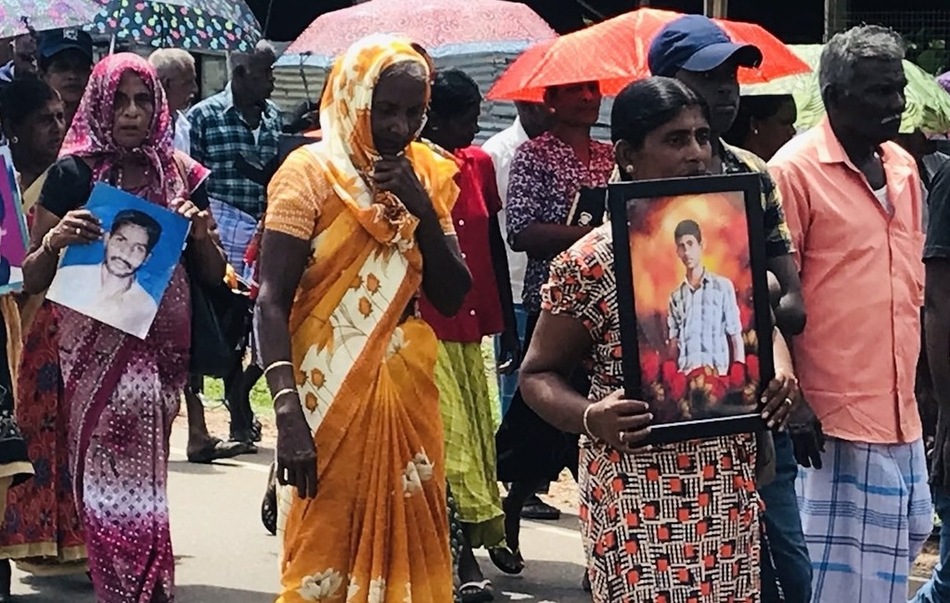
Successive UN Human Rights Council Resolutions on Sri Lanka have called for the establishment of transitional justice mechanisms with the active participation of all stakeholders, including women who have been at the forefront in leading victim demands for accountability, particularly for cases of enforced disappearance. Yet, protesting mothers and female family members of the disappeared are routinely detained, intimidated or put under surveillance and their voices suppressed.
The Bill lacks also provisions that are gender responsive and makes the establishment of mechanisms and procedures to address women’s concerns discretionary.
Existing transitional justice institutions such as the Office of Missing Persons (OMP) and the Office for Reparations have been ineffective. As underscored by the UN Office of the High Commissioner for Human Rights, the OMP has failed to earn the trust of victims and their representatives. As recently observed by the High Commissioner, there has been little to no development regarding cases of past human rights violations and abuses.
“The victims of Sri Lanka’s 26-year armed conflict, replete with atrocities, have been forced to wait too long to learn the truth about their loved ones and to be granted justice. When the UN Human Rights Council considers a new resolution on Sri Lanka later this year, it must avoid blind acceptance of Sri Lanka’s flawed transitional justice process and institutions and adopt an approach that genuinely puts the interests of victims and survivors first,” added Upreti.
Background
The draft Bill provides for the establishment of the Commission with a Head Office based in Colombo and Regional Offices as necessary (clause 2). The Commission will have between seven to twenty-one members, who are to be appointed by the President upon recommendation by the Constitutional Council (clause 3). The term of the Commissioners is five years (unless removed earlier) and the President can extend their term on an yearly basis for an additional two years (clause 9). The Commission may conduct public or closed sittings as necessary (clause 7).
The stated objectives of the Commission are to investigate, inquire and make recommendations in respect of complaints or allegations or reports relating to damage or harm caused to persons or property, loss of life or alleged violation of human rights which occurred during the conflict in the Northern and Eastern Provinces between 1983 to 2009 or connected to such period or its aftermath and has a mandate to promote truth telling and make recommendations for reparations, and non – recurrence (clause 12). If it appears to the Commission that an offence under any Sri Lankan law has been committed it may refer the matter to the relevant law enforcement or prosecuting authorities for further investigation and necessary action (clause 13 (zd)). The Commission does not have the mandate to determine civil or criminal liability of any person (Clause 16 (1)) and instead the onus is on the Attorney-General to institute criminal proceedings regarding an offence in Court based on material collected by the Commission (clause 16 (2)).
The Bill also provides for the establishment of a Victim and Witness Protection Division (clause 28) and a Data Management Division (clause 29). The Commission may also appoint any mechanisms and procedure to address requirements related to women, children, persons with disabilities and disadvantaged groups and advisors relating to specific issues (clause 30).
The Bill also provides for the appointment of an advisory panel to advise the Commission on matters referred to the Panel (clause 32). This panel is to consist of a minimum of ten members appointed by the President on the Commission’s recommendation. Clause 39 of the Bill states that within one month of the interim report of the Commission being published the President shall appoint a monitoring committee to implement the findings of the report. Clause 40 states that such Committee be comprised of 11 members, of which six members are to be recommended by the Constitutional Council while the others are members ex-officio. Ex-officio members include the Secretaries of the Ministries of Defence, Justice, Law & Order, Finance, Public Administration & Women, Child Affairs and Social Empowerment or their nominees. The Committee is expected so submit bi-annual plans evaluating the implementation of recommendations of the TUR Commission and other previous Commissions of Inquiry.
Clause 49 of the Bill states that the Commission can defer its investigation regarding any disappearance of a person/s if requested to do so by the OMP until such time it can be resumed without compromising inquiries conducted by the OMP.
In September 2023, the ICJ joined eight other international human rights organizations in expressing their grave reservations about the proposed Truth, Unity and Reconciliation Commission and setting out prerequisites to be addressed before appointing any new Commission. The concerns relate to Sri Lanka’s legacy of failed commissions, lack of a conducive environment and confidence building efforts, lack of meaningful consultations with victim communities, the failure of domestic transitional justice institutions, and the blocking of prosecutions. None of these concerns have been addressed to date, which bring into question the newly proposed Commission’s likelihood of serving as an effective mechanism for accountability.
Jan 12, 2024 | Advocacy, Joint Statement
The International Commission of Jurists (ICJ) has joined 29 other organizations urge Sri Lanka to halt the anti-drug operations that has intensely escalated to human rights violations.
[JOINT STATEMENT] Sri Lanka: Stop Abusive Anti-Drug Operation and Release Those Arbitrarily Detained
We, the undersigned organisations, are deeply concerned about the drastic intensification of anti-drug operations in Sri Lanka leading to significant human rights violations.
On 17 December 2023 the Acting Inspector General of Police Deshabandu Tennekoon, with the endorsement of Minister of Public Security Tiran Alles, spearheaded an operation titled “Yukthiya”, with the stated aim of controlling “the drug menace”. The operation is ongoing as of 10 January 2024, with at least one thousand persons arrested daily.
This operation is unfolding in a context of already severe repression against persons who use or are suspected of using drugs, who suffer discrimination and stigma within the Sri Lankan criminal justice system and society.
Alongside the Sri Lankan police, members of the armed forces have been supporting this operation, during which several human rights violations have been reported. These violations include alleged arbitrary arrests, primarily against individuals from marginalised socio-economic communities; searches conducted without warrants or reasonable suspicion; and degrading treatment including strip searches in public as well as cavity searches. The searches and arrests have been televised, in violation not only of the right to privacy (and of basic human dignity) but also of a person’s right to be presumed innocent. According to lawyers, persons are being arrested even when no drugs are found in their possession, simply for having been arrested for drug offences or having been sent to compulsory rehabilitation in the past. The arrests of main livelihood earners and mothers have adversely impacted the ability of families to meet their basic needs during a time of economic crisis in Sri Lanka, and the wellbeing of children.
Persons are being arrested primarily under Section 54A of the Poisons, Opium and Dangerous Drugs Ordinance, an offence which is non-bailable. As a result, those arrested are bound to spend time (sometimes months) in pretrial detention, thereby exacerbating already poor conditions of imprisonment in an overburdened prison system. The Human Rights Commission of Sri Lanka has previously stated that the existing prison conditions and treatment of incarcerated persons are “inhumane and degrading.” At present, as per statistics issued by the Department of Prisons, the level of overcrowding of the prison system is at nearly 200% – with punitive drug policies playing a significant role: as of 2022, 63% of convicted persons were sentenced for drug-related offences.
The total reported number of arrests pursuant to operation Yukthiya has exceeded 29,000 as of 9 January 2024, while nearly 1,500 people are in administrative detention in police custody for further investigation. At least 1,600 more persons have been sent for compulsory drug rehabilitation, in violation of several fundamental rights; including the right to the highest attainable standard of health, which includes the right to consent to and withdraw from medical treatment. “Drug treatment” in these centres is abstinence-based, essential harm reduction services are not available, and persons undergo severe withdrawal symptoms without any medical assistance while in detention. The use of violence to discipline and punish has been reported in at least two compulsory drug rehabilitation centres which are within the purview of the Bureau of the Commissioner General for Rehabilitation and are operated by the military, which is in itself a violation of international standards.
The UN Working Group on Arbitrary Detention in its statement at the conclusion of its visit to Sri Lanka in 2017 expressed concern regarding the involvement of military personnel in drug treatment and rehabilitation, the fact that strenuous physical exercise was the core component of compulsory drug treatment, and at the lack of trained professionals to monitor the health of people in detention. Furthermore, the statement highlighted the irregularities in the judicial process by which persons were sent to drug rehabilitation centres without a medical assessment.
More broadly, the UN Special Rapporteur on Torture has highlighted that by denying persons access to substitution therapies, states are subjecting “a large group of people to severe physical pain, suffering and humiliation, effectively punishing them for using drugs and trying to coerce them into abstinence.” The Special Rapporteur has further stated “forcible testing of people who use drugs without respecting their autonomy and their right to informed consent may constitute degrading treatment, especially in detention settings. States are obliged to respect the enjoyment of the right to health, including by refraining from using coercive medical treatment. The requirement of informed consent, including the right to refuse treatment, should be observed in administering any treatment for drug dependence.”
Since the 2016 UN General Assembly Special Session on drugs, there is international consensus on pursuing a holistic and health and human rights-based approach to drugs, which encompasses supply and demand reduction as well as harm reduction. The 2019 Ministerial Declaration on drugs – the current global drug policy document – as well as multiple resolutions of the UN General Assembly, the UN Commission on Narcotic Drugs, and the UN Human Rights Council reiterate and recommend a similar approach.
A punitive and militarised approach to drug control contravenes recognised international human rights standards and guidelines, is ineffective to protect individual and public health, and ultimately fails to make communities safer.
We thus call upon the government to:
- Immediately cease operation “Yukthiya” and release persons who have been arrested without evidence or reasonable suspicion. The government should ensure that those arrested who do not have access to legal representation are provided legal aid.
- Immediately release persons arrested or sent to compulsory drug rehabilitation for using drugs/having a drug dependence.
- Cease involving the armed forces in drug control and treatment activities as consistent with human rights law.
- Repeal laws that allow compulsory drug rehabilitation, close compulsory treatment centres and release persons presently held at the centres within the purview of the Bureau of Commissioner General for Rehabilitation.
- Allocate adequate financial resources to provide voluntary, comm unity and evidence-based drug treatment and care, under the leadership of the Ministry of Health.
- Meaningfully engage civil society, communities, human rights experts and UN agencies, such as the World Health Organisation and the Office of the High Commissioner for Human Rights in reforming national drug laws and policy.
- Ensure that any law enforcement operation to address the supply side is conducted respecting due process standards and constitutionally protected fundamental rights.
Download
The joint statement and full list of signatories is available here