Sep 29, 2020 | Advocacy, Non-legal submissions
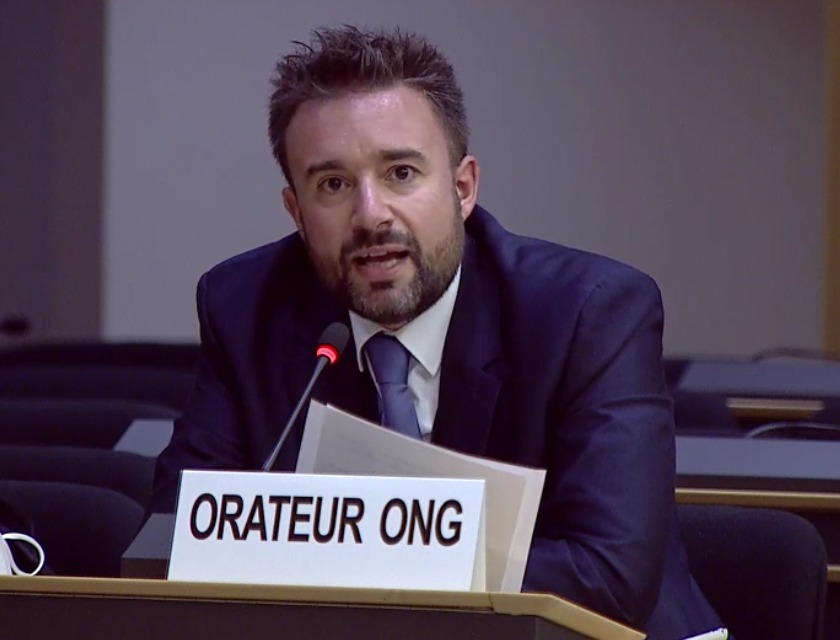
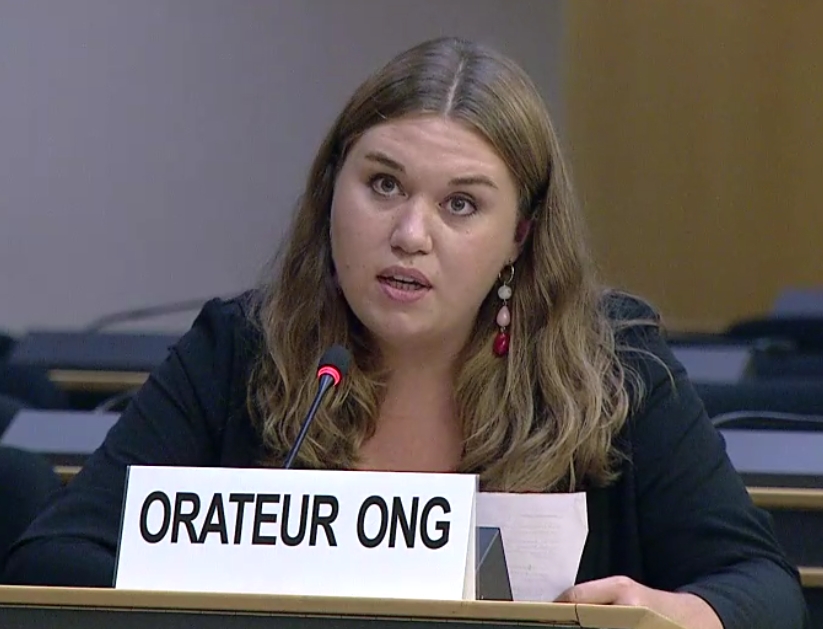
The ICJ and IHOP today put the spotlight the lack of independence of the judiciary and the abuse of criminal and anti-terrorism laws in Turkey, speaking at the UN Human Rights Council in Geneva.
The statement, made during the consideration of the Universal Periodic Review (UPR) of Turkey, reads as follows:
The International Commission of Jurists (ICJ) and the Human Rights Joint Platform (IHOP) welcome the acceptance by Turkey of recommendations to ensure the independence of the judiciary (recommendations 45.112, 45.113, 45.114, 45.115, 45.118, 45.120, 45.121, 45.124, 45.125, 45.126, 45.127, 45.128, 45.129, 45.132, 45.133).
The ICJ and IHOP however regret to report that, based on their research and experience, the statements by the Turkish Government that the recommendations on the independence of the judiciary have already been implemented is simply not correct.
On the contrary, during the state of emergency more than 4000 judges and prosecutors were dismissed, more than 2000 judges and prosecutors were detained, through arbitrary processes that did not meet international standards.
The judiciary in Turkey does not enjoy basic guarantees of institutional independence because its Council of Judges and Prosecutors is fully appointed by the Legislative and Executive powers contrary to international standards on judicial independence.
The ICJ and IHOP further regret that Turkey only noted and did not explicitly support the recommendations to reform its penal and counter-terrorism legislation in line with international standards on freedom of expression (recommendations 45.90, 45.91, 45.92, 45.93, 45.94, 45.95, 45.96, 45.97, 45.98, 45.99, 45.100, 45.101, 45.102, 45.103, 45.104, 45.148, 45.158).
The statement by the Government that “legal amendments have already been adopted” and that these laws are in line with international standards is also fundamentally incorrect.
Anti-terrorism laws and other criminal offences continue to be abused to unjustifiably prosecute political opposition members, judges, lawyers, prosecutors and human rights defenders.
To actually implement the recommendations accepted by Turkey, ICJ calls on Turkish authorities to
- radically reform the governance of the judiciary to restore its independence in line with international standards;
- promptly finalize all criminal and administrative cases concerning former judges and prosecutors, respecting international standards of judicial independence;
- truly reform the country’s anti-terrorism law, and
- stop all arbitrary prosecution of human rights defenders, lawyers, judges, prosecutors and academics.
Contact:
Massimo Frigo, ICJ Senior Legal Adviser, e: massimo.frigo(a)icj.org, t: +41797499949
Sep 25, 2020 | Advocacy, Non-legal submissions
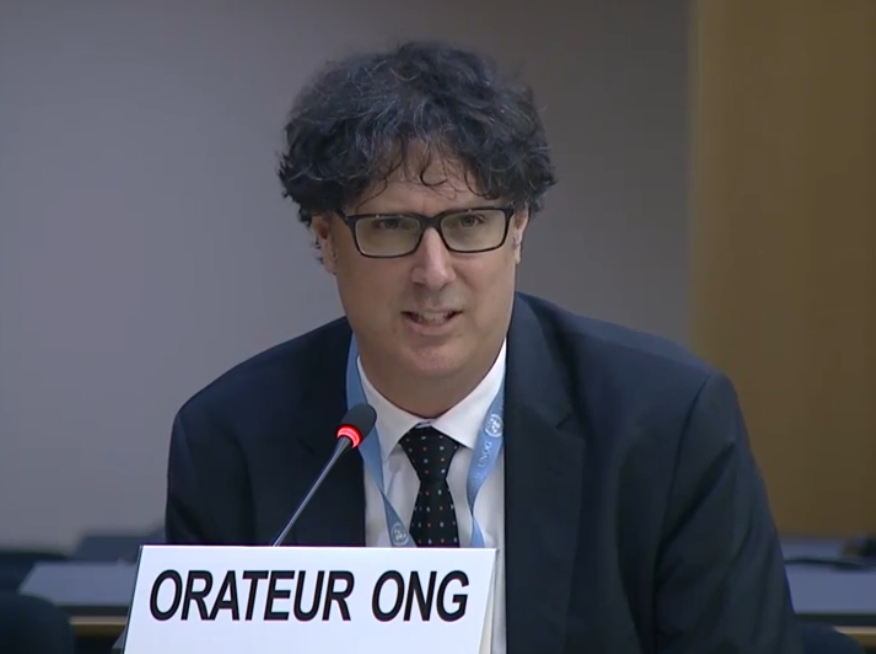
Today at the UN Human Rights Council, the ICJ together with the Tahrir Institute for Middle East Policy, drew attention to ongoing attacks on the independence and role of lawyers in Egypt.
The ICJ made the oral statement during the general debate on country situations of concern, speaking on behalf also of the Tahrir Institute for Middle East Policy. The statement read as follows:
“The International Commission of Jurists (ICJ) and the Tahrir Institute for Middle East Policy draw the Council’s attention to the continuing deterioration of the situation for human rights and the rule of law in Egypt.
Today our organizations published a new report, Targeting the Last Line of Defense: Egypt’s Attacks against Lawyers, to be followed by a virtual side event on 30 September.
As the last line of defense against the government’s sustained and broad crackdown on human rights and fundamental freedoms, Egypt’s lawyers have been increasingly and systematically targeted by authorities. Since 2018, at least 35 lawyers have been arrested and arbitrarily detained for their legal defense work and exercise of fundamental freedoms.
Lawyers have been subject to arbitrary arrest and detention, physical assault, torture and other ill-treatment, and enforced disappearances, as well as unfounded and politicized criminal proceedings based on charges under grossly overbroad criminal laws on “terrorism,” “spreading false news,” and “misusing social media.” Arrests of lawyers spiked in the wake of the September 2019 protests. Arrests continue despite the risk of a COVID-19 outbreak in detention facilities.
The ICJ and Tahrir Institute call on Egyptian authorities to end these violations of the rights and role of lawyers, to take measures to protect the independence of the Bar Association, and to amend all relevant legal frameworks in line with Egypt’s constitution and international human rights law and standards.
Thank you.”
The full statement can be downloaded (PDF) here: UN-Advocacy-Egypt-HRC45-2020
For more information, contact: un@icj.org
Sep 25, 2020 | Advocacy, Non-legal submissions
At the UN Human Rights Council, the ICJ and other NGOs have highlighted the joint civil society call for an international human rights monitoring mechanism on China.
The oral statement was delivered on behalf of the group of NGOs by Human Rights Watch, during the general debate on country situations. The statement builds on a joint open letter by more than 300 civil society organizations, including the ICJ, issued earlier this month.
The statement to the Human Rights Council read as follows:
“We join together to call for an international mechanism to address the Chinese government’s human rights violations, and urge the Human Rights Council to take decisive action to achieve this goal.
On 26 June 2020, an unprecedented 50 United Nations experts called for ‘decisive measures to protect fundamental freedoms in China.’ They highlighted China’s mass human rights violations in Hong Kong, Tibet, and Xinjiang, suppression of information in the context of the Covid-19 pandemic, and attacks on rights defenders, journalists, lawyers and critics of the government across the country.
Our organizations are also concerned about the impact of China’s rights violations world-wide. China has targeted human rights defenders abroad, suppressed academic freedom in countries around the world, and engaged in internet censorship and digital surveillance. We deplore China’s promotion of rights-free development and the ensuing environmental degradation at the hands of government-backed extractive industries, as well as the racist treatment of people in China, or by Chinese state actors in other parts of the world.
We are dismayed at China’s efforts to distort the mandate of the UN Human Rights Council by promoting ‘cooperation’ over accountability, and opposing initiatives to bring scrutiny of serious rights violations and international crimes in countries around the world. It has used its seat on the UN’s NGO Committee to baselessly deny accreditation to nongovernmental organizations (NGOs), while accrediting government-organized NGOs (GoNGOs). It has sought to deny access to human rights defenders to UN premises, denounced speakers on NGO side events as ‘terrorists,’ and threatened delegates to deter them from attending UN side events on rights violations, including abuses in Xinjiang.
When the UN High Commissioner for Human Rights, Special Procedures, and dozens of states urged China to comply with international human rights standards, China contended that they were ‘improper remarks’ that ‘grossly interfered’ with China’s sovereignty.
A state that tries to hold itself above any kind of scrutiny presents a fundamental threat to human rights. That China—a state with extraordinary global power—expects such treatment affects us all.
We therefore endorse the call by UN experts for a Special Session or Urgent Debate at the Human Rights Council to evaluate the range of violations by China’s government, and to establish an impartial and independent UN mechanism to closely monitor, analyze, and report annually on that topic. We urge the UN Secretary-General to appoint a Special Envoy, consistent with his Call to Action on Human Rights, and we call on the High Commissioner for Human Rights to fulfil her independent mandate to monitor and publicly report on China’s sweeping rights violations. We support the call that UN member states and UN agencies use all interactions with Chinese authorities to insist that the government comply with its international human rights obligations.
In the spirit of global solidarity and partnership, we urge the Council swiftly to counter and remediate grave human rights violations committed by Chinese authorities. No state should be above the law.”
Sep 25, 2020 | Advocacy, Non-legal submissions
The ICJ has joined other NGOs in urging the UN Human Rights Council to respond effectively to the crisis for human rights in the Philippines.
The joint oral statement was delivered by the World Organization against Torture (OMCT) on behalf of the group of international and Philippino NGOs, during a general debate on country situations. It read as follows:
“Madam President,
I speak on behalf of 35 organisations, deeply concerned by the situation in the Philippines. We urge this Council to respond credibly to the grave findings and recommendations of the recent OHCHR report.
Developments since that report indicate further deterioration, with ongoing incitement to kill by the President, the promotion of an architect of the anti-drug strategy to police chief, the passing of an overbroad anti-terror law ripe for abuse, the conviction of journalist Maria Ressa and shutdown of media network ABS-CBN, the murder of activists and a journalist and a new spike in police killings.
In terms of cooperation, the Philippines refused access to OHCHR in the preparation of the report and continues to bar entry to Special Procedures. The Secretary-General and High Commissioner have raised significant concerns over reprisals. The Government does not acknowledge widespread and systematic killings as a problem, in fact it encourages them and rejects the OHCHR’s findings. Serious violations continue.
The Government’s announced Inter-Agency Panel lacks any transparency and directly involves branches of Government implicated in these abuses. As such, it clearly cannot satisfy international standards of independence,[1] nor can it be seen as credible or safe for victims to engage with.
Madam President,
Our organisations have urged and continue to urge this Council to launch an independent international investigation.
The High Commissioner has clearly asked the Council to renew her mandate to monitor and report on the wider situation, as well as to provide technical cooperation to “implement the report’s recommendations,” and “continue to pursue accountability”. We urge this Council – at absolute minimum – to ensure continued monitoring and reporting on all aspects of the situation as clearly recommended by the High Commissioner. Anything less would not only be an insult to victims and their families, but send a green light to perpetrators that they can continue with impunity, with disastrous consequences on the ground.
Thank you.”
Co-signatories:
- Action Network Human Rights Philippines (AMP)
- Amnesty International
- Article 19
- Child Alert Mindanao
- Children’s Legal Rights and Development Center (CLRDC)
- CIVICUS Alliance
- Coalition Against Summary Executions
- Families of Victims of Involuntary Disappearance (FIND)
- Franciscans International
- Franciscan Sisters of the Immaculate Conception
- Free Legal Assistance Group (FLAG)
- Freedom House
- Harm Reduction International
- Human Rights Watch
- In Defense of Human Rights and Dignity Movement (iDEFEND)
- International Coalition for Human Rights in the Philippines (ICHRP)
- International Commission of Jurists
- International Drug Policy Consortium
- International Federation for Human Rights (FIDH)
- International Service for Human Rights
- Karapatan Alliance Philippines
- Medical Action Group
- National Union of Journalists of the Philippines
- Network Against Killings in the Philippines (NakPhil)
- Partnership Mission for People’s Initiatives (PMPI)
- Philippine Alliance of Human Rights Advocates (PAHRA)
- Philippine Misereor Partnership Inc. (PMPI)
- Philippine Human Rights Information Center
- Salinlahi Alliance for Children’s Concerns
- Swiss Catholic Lenten Fund (SCLF)
- Tambayan
- The Asian Forum for Human Rights and Development (FORUM-ASIA)
- Task Force Detainees of the Philippines
- World Council of Churches
- World Organisation Against Torture (OMCT)
[1] See for instance the UN Principles on the Effective Prevention and Investigation of Extra-legal, Arbitrary and Summary Executions, adopted by the Economic and Social Council in its resolution 1989/65 of 24 May 1989; and Human Rights Committee, General Comment no. 36 on the right to life (article 6).
Sep 24, 2020 | Advocacy, Non-legal submissions
The ICJ today highlighted the continuing impunity in Venezuela, reinforced by lack of judicial independence, at the UN Human Rights Council in Geneva.
Sep 22, 2020 | Advocacy, News
States should help pave the way towards credible accountability and redress for the people of Yemen by renewing and strengthening international investigations into war crimes, other serious violations of international humanitarian law, and grave human rights abuses during this 45th Session of the HRC, the ICJ and 23 other organizations said today.
Yemen is suffering from an “acute accountability gap,” according to the UN Group of Eminent Experts (GEE) on Yemen, which released its third report on September 9, 2020.
With COVID-19 threatening the lives and livelihoods of millions across Yemen, peace talks floundering, and airstrikes, shelling and attacks impacting civilians once again increasing, the reality for millions of Yemeni civilians is growing ever more bleak.
This session, the Human Rights Council has the opportunity to pave the way towards credible accountability and redress for victims and survivors in Yemen.
People in Yemen have experienced grave abuses since the conflict began in 2014, when Ansar Allah (the Houthi armed group) and military units loyal to former president Ali Abdullah Saleh took control of the capital, Sana’a, and escalated in 2015 when the Saudi/UAE-led coalition militarily intervened on the side of the Yemeni government.
With the conflict in its sixth year, millions of Yemenis are without adequate food, water, shelter or healthcare. The parties to the conflict impede the flow of life-saving goods into and around the country, attack critical infrastructure, and misdirect goods and their revenues to their own coffers and loyalists.
Thousands of civilians have been killed, wounded and otherwise harmed by airstrikes that violate international humanitarian law, indiscriminate shelling and the use of banned anti-personnel landmines.
The societal fabric has torn, with expression, speech, peaceful protest and movement increasingly restricted, and political and other identity-based divisions weaponized by those in power.
The human rights and humanitarian catastrophe in Yemen is man-made, and was avoidable. The parties to the conflict continue to hold the vast majority of power in and over Yemen.
For Yemen’s trajectory to change, the behavior of the parties to the conflict and their backers needs to change. As of September 2020, perpetrators have gone unpunished, states responsible for violations have faced no real consequences, parties have rarely acknowledged fault or taken measures to protect civilians, suppliers keep the arms used for international humanitarian law violations, and victims have been denied justice and redress.
In 2017, the Council established the GEE to report on violations of international law in Yemen and, where possible, to identify those responsible. The Council renewed the GEE’s mandate in 2018 and 2019, despite opposition from the Saudi/UAE-led coalition.
In its third report, the UN experts found the international community “can and should” do more to “help bridge the acute accountability gap” in Yemen.
The experts provided a list of specific recommendations, including for the Security Council to refer the situation in Yemen to the International Criminal Court and to expand the list of persons subject to Security Council sanctions.
The GEE supported the establishment of an investigative body, similar to the International, Impartial and Independent Mechanism for Syria, and specifically called on the Council to ensure the situation of human rights in Yemen remains on its agenda, including by ensuring adequate resources are provided to the GEE for the collection, preservation and analysis of information related to violations and crimes.
In the longer term, the Group encouraged “further dialogue about the creation of a special tribunal such as a ‘hybrid tribunal’ to prosecute cases of those most responsible,” reiterated the importance of victims’ right to a remedy, including reparations, and called for human rights to be “at the heart of any future peace negotiations,” including that “no steps are taken that would undermine respect for human rights and accountability, such as granting blanket amnesties.” 2
The GEE also reiterated concerns that states supplying arms to parties to the conflict, including to Saudi Arabia and the UAE, may be violating their obligations under the Arms Trade Treaty, and that this support may amount to aiding and assisting internationally wrongful acts.
Today, 24 Yemeni, regional, and international civil society organizations, including the ICJ, came together to call on the Council to endorse the GEE’s report, including its findings on accountability, and to take concrete steps this Council session to pave the way towards credible justice for Yemen.
The 24 organizations are calling on the Council to renew and strengthen the GEE’s mandate this September, including to collect, consolidate, preserve and analyze evidence related to, and clarify responsibility for, the most serious crimes under international law and violations of international law committed in Yemen since 2014.
The organizations are also calling on the Council to task the GEE with issuing a special report advising states on practical steps they can take to help ensure justice and redress for the tens of thousands of Yemeni civilians unlawfully harmed by the warring parties throughout this conflict.