Sep 23, 2019 | Advocacy, Non-legal submissions
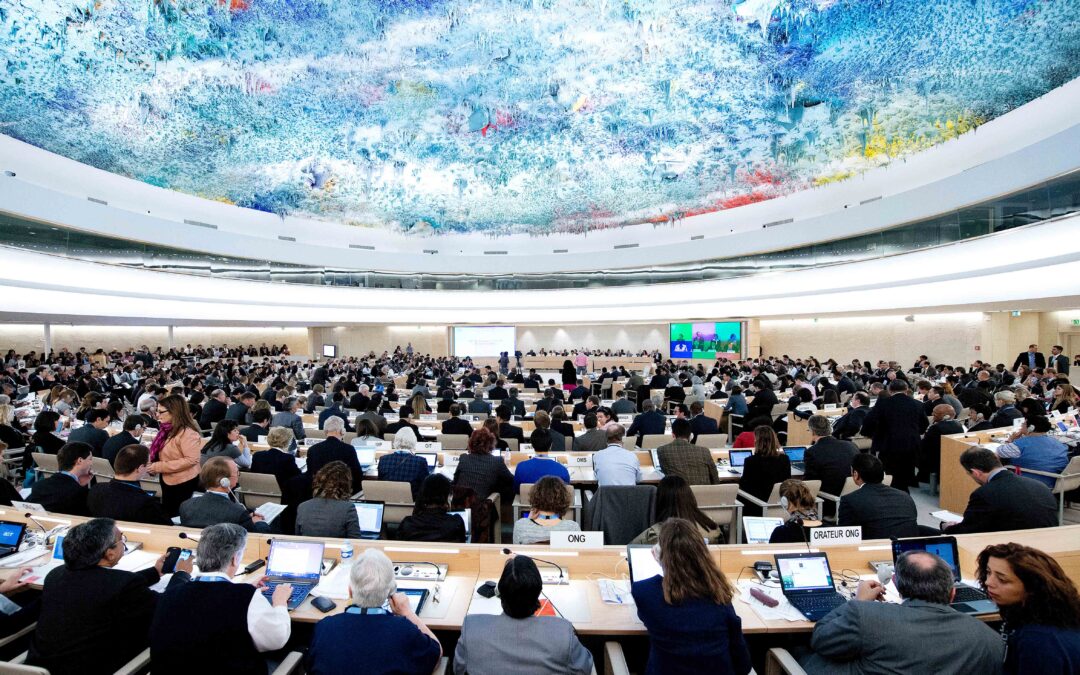
The ICJ today drew the attention of the UN Human Rights Council in Geneva, to the Bangkok General Guidance for Judges on Applying a Gender Perspective, in the context of a discussion of “Gender-responsive initiatives to accelerate gender equality”.
The oral statement read as follows:
“International Commission of Jurists (ICJ) welcomes this opportunity to share information on our ongoing work with women judges in many parts of the world, supporting them and their male colleagues to better ensure women’s access to justice and gender equality.
As part of these efforts, facilitated by the ICJ and UN Women, in 2016 judges from the Philippines, Indonesia, Thailand, and Timor Leste developed and adopted The Bangkok General Guidance for Judges on Applying a Gender Perspective.
Among many other provisions, the Guidance urges States to achieve gender parity in appointments to the bench.
The Guidance provides that: “Gender equality should be a principle that guides judicial appointments. Women and men must be equally represented on the bench as they bring a diversity of perspectives, approaches and life experiences to adjudication, which influence the interpretation and application of laws.”
It further recommends that “[i]f necessary, temporary affirmative measures – like quotas which should be consistent with requirements of integrity and high competency – should be implemented in order to assure that women are adequately represented in the judiciary” and that “[e]valuation panels for the appointment and promotion of judges should be composed of men and women.”
The Guidance builds on global standards such as the Universal Declaration of Human Rights’ provisions on equality, non-discrimination, and equal access to public service; article 10 of the UN Basic Principles on the Independence of the Judiciary, on non-discrimination in judicial selection processes; and related articles of the International Covenant on Civil and Political Rights (ICCPR) and Convention on the Elimination of Discrimination against Women (CEDAW).
We hope the Bangkok Guidance will be a useful reference both in considering how to improve gender parity within the Council’s mechanisms, and as a resource for the Council and its mechanisms to cite in their analysis and recommendations to governments and other stakeholders, on improving access to justice for women in Southeast Asia and around the world.”
Sep 21, 2019 | Advocacy
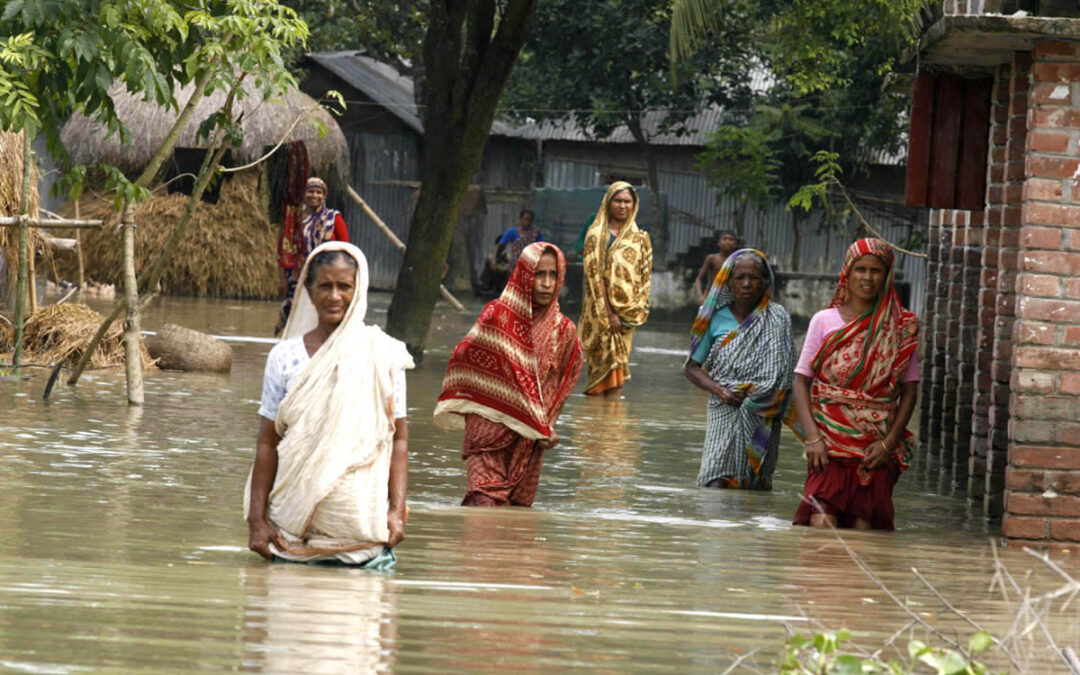
The ICJ has joined several hundred organizations working to defend human rights, the environment, and climate justice in a bold declaration setting out a vision and objectives for addressing the climate crisis and the devastating human rights and environmental impact of catastrophic climate change.
The Declaration was adopted at a gathering of the the Peoples’ Summit on Climate, Rights and Human Survival in New York on 18-19 September, which brought together some 200 representatives of Indigenous Peoples, workers, academia, environmental and human rights groups, including the ICJ.
The Declaration warns that “the climate emergency threatens human survival, the environment and the enjoyment of all human rights, for present and future generations.”
It emphasizes that governments and corporations bear the primary responsibility for acting to address and reverse the drivers of climate change.
The signatories to the Declaration agreed to 10 types of actions, including, among others, placing human rights at the core of climate activism, demanding effective access to justice for individuals and communities whose rights are impacted by the climate crisis, and support for environmental human rights defenders.
Download
Universal-Peoples Summit Declaration CC-Advocacy-2019-ENG (full declaration in PDF)
Sep 19, 2019 | Advocacy, Non-legal submissions
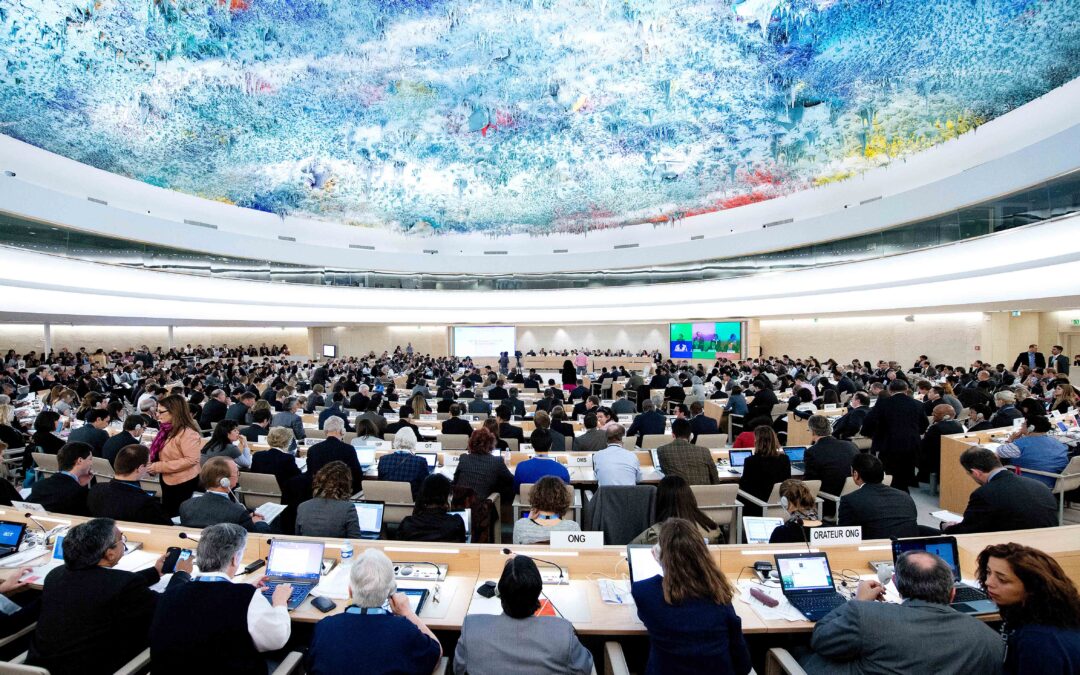
The ICJ today joined other NGOs in an oral statement to the UN Human Rights Council in Geneva, highlighting ongoing challenges faced by independent UN human rights experts, supporting the process the experts have established to make their own work effective, and calling for related issues of funding and non-cooperation of States to be addressed.
The statement was delivered on behalf of the group of NGOs by Amnesty International and read as follows:
“We note the concerns in the Declaration of the Special Procedures’ mandate holders at the Annual Meeting 2019 and share their concern about the global retrenchment against the values and obligations embedded in international human rights law and the challenges they spell out with regard to non-cooperation.
We also express appreciation[1] for the process set in place by the Special Procedures Coordination Committee to discuss ways in which the work can be strengthened including by seeking input from a wide range of stakeholders. This process presents the most appropriate way to ensure the effectiveness of the Special Procedures in protecting and promoting human rights, and to discuss ways to strengthen cooperation and address situations where there may be concerns regarding the actions of individual mandate holders.
We hope that this process will also provide an opportunity to discuss issues of chronic underfunding, non-cooperation of States with the Special Procedures, acts of reprisal and intimidation against human rights defenders and ad hominem attacks against mandate holders and how to make non-cooperation including selective cooperation by states more costly.”
(Partial) list of signatories:
- Amnesty International
- Cairo Institute for Human Rights Studies
- Center for Reproductive Rights
- Child Rights Connect
- CIVICUS: World Alliance for Citizen Participation
- Colombian Commission of Jurists
- Defence for Children International
- Forum for Human Rights and Development (FORUM-ASIA)
- Geneva for Human Rights
- ILGA World
- International Bar Association’s Human Rights Institute
- International Commission of Jurists
- International Movement against All Forms of Discrimination and Racism (IMADR)
- International Service of Human Rights
- Peace Brigades International
- Women’s International League for Peace and Freedom (WILPF)
- World Organisation Against Torture (OMCT)
[1] Civil society statement on efforts to strengthen and increase effectiveness of the United Nations Special Procedures , https://www.amnesty.org/download/Documents/IOR4009672019ENGLISH.pdf
Sep 17, 2019 | Advocacy
In a statement issued today, the ICJ and other human rights groups, as well as lawyers and members of the legal profession, expressed deep concern over the increasing attacks against lawyers under President Duterte’s administration.
Find the full statement available as PDF here: Philippines-attacks against lawyers escalating-advocacy-2019-ENG
Sep 17, 2019 | Advocacy
The ICJ welcomes the final report of the FFM (Independent International Fact Finding Mission).
Having monitored justice and human rights in Myanmar for over 50 years, the ICJ has an established presence in the country, and supports justice sector actors to implement reforms necessary to protect human rights through the rule of law.
With this experience, the ICJ concurs with conclusions of the FFM and the Special Rapporteur: particularly those highlighting the pervasive damage of unchecked military power and impunity on human rights, the rule of law, and development of an inclusive democratic society.
Myanmar’s Government has failed to fulfill international law obligations to investigate, prosecute and punish perpetrators of rights violations. In this context, the launch of an IIMM (Independent Investigative Mechanism for Myanmar) is necessary, and welcome. Myanmar should cooperate with the Mechanism, whose files may enable future prosecutions of individual criminals.
But this Mechanism is not a court: all States, particularly Myanmar, must work toward holding criminal trials, in competent jurisdictions, inline with international standards – noting that prosecutions target criminals, not the country.
Other immediate opportunities for Myanmar to protect human rights include: amending the National Human Rights Commission Law to expand its mandate and independence; amending laws that facilitate impunity such as the 1959 Defence Services Act; enacting an anti-discrimination law; and reviewing the 1982 Citizenship Law. These legislative reforms are urgent and possible steps that are necessary to demonstrate if the Government is genuine about its international law obligations. Any constitutional reform must also expand rights protections.
As the FFM’s mandate is ending, the ICJ would like to ask the experts: how can States best monitor and implement your recommendations, particularly related to international criminal accountability?
See also:
ICJ, Achieving Justice for Gross Human Rights Violations in Myanmar, January 2018
Terms of Reference for the UN Independent International Mechanism for Myanmar (unofficial Burmese translation), 16 January 2019, available here.
Statement to the Human Rights Council by Mr. Nicholas Koumjian, Head of the Independent Investigative Mechanism for Myanmar (unofficial Burmese translation with accompanying English text), 9 September, available here.
Sep 16, 2019 | Advocacy, News
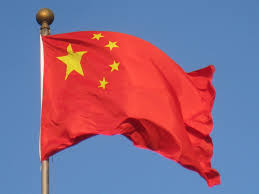
Antonio Guterres should publicly condemn China’s widespread violations of the rights of its Muslim minority citizens, especially in Xinjiang Province, the ICJ demanded in a joint letter submitted along with Amnesty International, the International Federation for Human Rights (FIDH), Human Rights Watch, and the World Uyghur Congress.
The joint letter urged the UN Secretary-General to call for an end to widespread arbitrary detention of Muslim and minority communities through the immediate closure of Xinjiang’s ‘political education’ camps. Reports by the United Nations and human rights organizations have estimated that more than one million Muslims have been interned in extra-legal ‘political education’ detention camps.
“In the past few years, China’s violations in Xinjiang, including arbitrary detention, ill-treatment, pervasive surveillance and political indoctrination of Turkic Muslims, have intensified, and continue to worsen,” said Sam Zarifi, ICJ’s Secretary General.
“Quiet diplomacy has not worked. Mr. Guterres must exercise the full extent and power of his mandate as leader of the United Nations to demand and ensure protection of the rights of everyone in China, including all individuals in Xinjiang.”
The joint letter urged the UN Secretary-General to publicly support the creation of a UN fact-finding mission to assess the scale and nature of crimes under international law and human rights violations in Xinjiang. It further called on the UN Secretary-General to refrain from unqualified praise of China’s ‘Belt and Road’ Initiative – an investment initiative in which Xinjiang is a centerpiece – and to meet with representatives from the Uyghur community to hear first-hand of their plight.
“China has exerted immense and often inappropriate political pressure on individuals, governments and organizations criticizing its human rights violations,” said Zarifi. “The United Nations must push back against China’s political pressure and provide principled and steadfast leadership to end China’s political and cultural repression, and ongoing human rights violations in Xinjiang.”
Public criticism of China’s actions in Xinjiang has been growing. In August 2018, a member of the UN Committee on the Elimination of Racial Discrimination noted that China’s treatment of its Muslim minority citizens in Xinjiang had turned the region into a “‘no rights’ zone” with individuals being treated as “enemies of the State based on nothing more than their ethno-religious identity”. In March 2019, the UN High Commissioner for Human Rights, Michelle Bachelet, highlighted the need for her office to gain full access to facilitate independent and impartial investigation into ‘wide patterns of enforced disappearances and arbitrary detentions’ in the region. On 10 July 2019, 25 countries issued a joint statement calling on China to refrain from subjecting Uyghurs and other Muslim and minority communities in Xinjiang to arbitrary detention, surveillance and restrictions on freedom of movement.