Mar 8, 2016 | Advocacy, Non-legal submissions
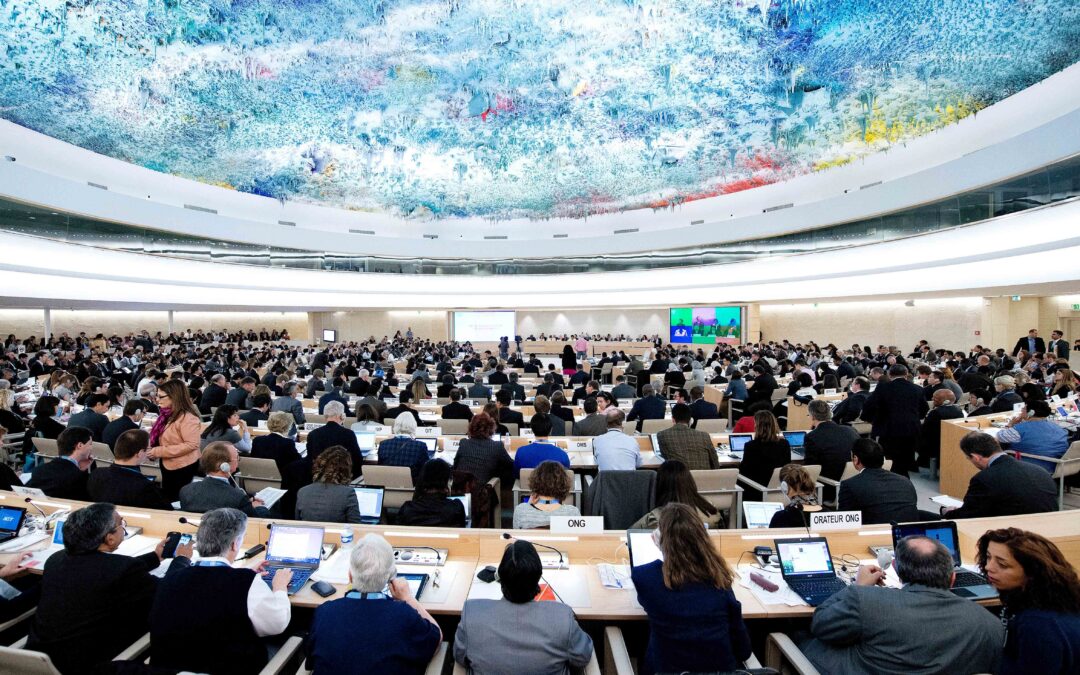
The ICJ spoke today at the UN Human Rights Council, addressing the human rights impacts of tax evasion and avoidance, and on women’s access to food and the right to food.
The statement was made in an interactive dialogue with the Independent Expert on the effects of foreign debt, and the Special Rapporteur on the right to food.
The statement addressed the following points, among others:
Welcoming the report of the Independent Expert, the ICJ highlighted that tax evasion and tax avoidance are forms of business’ misbehaviour that are facilitated by inadequate legislation and lack of international frameworks and cooperation in tax matters, and as such need to be tackled by the international community. This is all the more important now that the private sector has been assigned a greater role in the achievement of the 2030 development goals. In this regard, the recommendations by these Special Procedures should receive careful consideration.
The ICJ also welcomed the report on Women’s access to food by the Special Rapporteur on the Right to Food. The report highlights the legal barriers in domestic law that prevent women from fully realizing their right to food, including property rights, land rights and intellectual property rights. The report also highlights the negative impact of certain economic and market models as well as agribusiness corporations in enhancing women’s difficulties in accessing food and achieving food security.
The full statement may be downloaded in PDF format here: HRC31-OralStatement-IEforeigndebt-2016
Mar 4, 2016 | Advocacy, Non-legal submissions
The ICJ prepared an oral statement on the situation of human rights defenders in Malaysia, for today’s interactive dialogue at the Human Rights Council with the UN Special Rapporteur on the situation of human rights defenders.
The statement could not be delivered in the limited time available for civil society statements; its text is set out below:
ICJ Oral Statement in the Interactive Dialogue with the Special Rapporteur on the situation of human rights defenders, Mr. Michel Forst
SITUATION OF HUMAN RIGHTS DEFENDERS IN MALAYSIA
3 March 2016
“The International Commission of Jurists (ICJ) welcomes the report of the Special Rapporteur on the situation of human rights defenders.
The work of human rights defenders is particularly under challenge in States where governments have conferred on themselves sweeping powers to restrict human rights on grounds of national security. One example, as reflected in the Special Rapporteur’s “Observations on communications” (UN Doc A/HRC/31/55/Add.1), is the situation of human rights defenders in Malaysia.
The ICJ welcomes the Attorney General’s decision to drop sedition charges against law lecturer Dr. Azmi Sharom; however, the Sedition Act and the Peaceful Assembly Act are still being abused to harass human rights defenders and others. Most recently, the High Court of Malaysia sentenced activist Hishamuddin Rais to nine months in jail for sedition, for calling for peaceful protest against the results of the 2013 general election on the basis that it was not transparent. Maria Chin Abdullah and Jannie Lasimbang, organizers of the Bersih 4.0 peaceful assembly calling for good governance, were charged under the Peaceful Assembly Act for allegedly omitting to inform the police about the assembly. There have reportedly been at least 91 cases of arrests, charges or investigations for sedition during 2015, and more than 30 cases of arrests under the Peaceful Assembly Act since 2013. Most, if not all, of these people are human rights defenders, including Eric Paulsen, the Director of Lawyers for Liberty, Adam Adli, a human rights activist, and Mandeep Singh, the Secretariat Manager of Bersih.
Unless repealed or drastically revised, these laws will continue to facilitate sweeping and arbitrary repression of freedoms of expression, assembly and association of human rights defenders, under the flag of national security. This contravenes the UN Declaration on Human Rights Defenders and numerous other resolutions of the Human Rights Council and General Assembly, including General Assembly resolution 70/161, adopted by the General Assembly in December with Malaysia voting in favor. Among other things, resolution 70/161 urged States ensure that human rights defenders are able to exercise the rights to freedom of opinion, expression, peaceful assembly and association, which are essential for the promotion and protection of human rights; and it emphasized that national security measures must not hinder the work and safety of individuals engaged in promoting and defending human rights.
In this context, the ICJ would like to ask the Special Rapporteur to comment on the obligations of governments to repeal or amend legislation that allows for abusive arrest or prosecution of human rights defenders on grounds such as “national security”, “sedition” or for not giving prior notice of assemblies.”

Mar 1, 2016 | Advocacy, News, Non-legal submissions
The ICJ joined today other prominent human rights organizations in urging the European Union and its Member States to respect and protect human rights and the rule of law in countering terrorism.
In their joint statement, the thirteen human rights organizations stressed the implications of Eu counter-terrorism laws and policies for human rights and the rule of law with regard to the right to be free from torture and cruel, inhuman or degrading treatment or punishment, the principle of non-refoulement, the right to liberty and security of the person, the right to a fair trial, the principle of legality, the principle of non-discrimination, the rights to freedom of expression and peaceful assembly, the right to privacy, the rights of asylum-seekers and migrants, the freedoms of movement, of religion or belief and other dimensions.
The human rights organizations that signed up to this statement are, apart from the International Commission of Jurists, the European Network Against Racism (ENAR), Amnesty International, the International Federation of Human Rights (FIDH), the Open Society European Policy Institute, the World Organisation Against Torture (OMCT), Fair Trials, European Digital Rights (EDRi), the Forum of European Muslim Youth and Student Organisations (FEMYSO), the International Federation of Action by Christians for the Abolition of Torture (FIACAT), the International Rehabilitation Council for Torture Victims (IRCT), the Association for the Prevention of Torture (APT), and the European Association for the Defense of Human Rights (AEDH).
EU-counter-terrorism&humanrights-jointstatement-2016-ENG (download the joint statement)
Feb 26, 2016 | Advocacy, Open letters
The open letter, which includes additional recommendations for a resolution on South Sudan to be adopted at the 31st ordinary session of the Human Rights Council (29 Feb – 24 Mar) is available here: Open Letter South Sudan
Feb 12, 2016 | Advocacy, Non-legal submissions
The ICJ submitted a written statement to the Human Rights Council as a response to the latest report of the Special Rapporteur on freedom of religion or belief.
The written submission recognized the Special Rapporteur’s active participation in the Regional Conference on Freedom of Religion or Belief in Southeast Asia, organized by the ICJ in collaboration with the Asian Forum for Human Rights and Development (FORUM-ASIA) and Boat People-SOS (BPSOS) in Bangkok, Thailand from 30 September to 1 October 2015.
It also highlighted the adoption of the Conference Declaration on Freedom of Religion or Belief in Southeast Asia, a document through which participants expressed their commitment to working to enhance the right to freedom of religion or belief in the region.
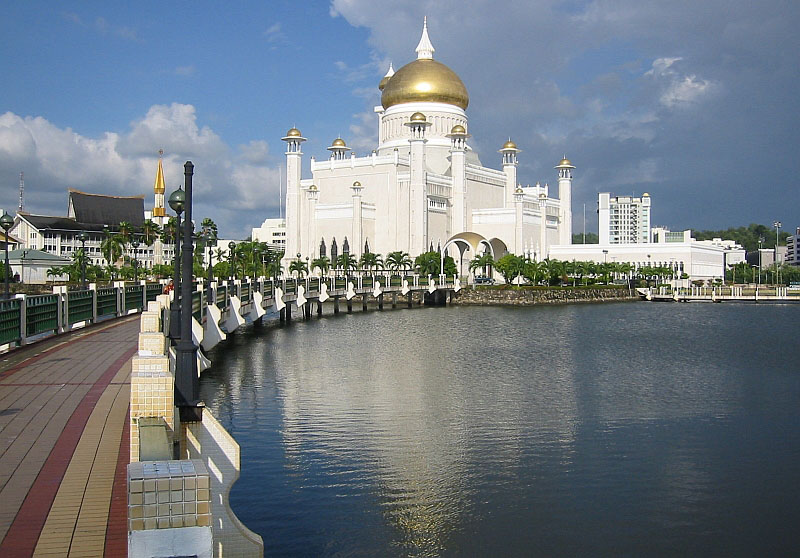
The ICJ expressed its concern regarding the banning of Christmas celebrations in Brunei Darussalam, as the restrictions imposed are inconsistent with international law standards, specifically with the principle of non-discrimination.
Finally, the statement called on Brunei to eliminate the restrictions imposed for celebrating non-Muslim festivities and encouraged the Government of Brunei to implement the measures recommended by the Special Rapporteur in his report.
SouthEast Asia-HRC statement on freedom or belief-Advocacy-Non legal submissions-2016-ENG (full text, in PDF)
Dec 16, 2015 | Advocacy, Events
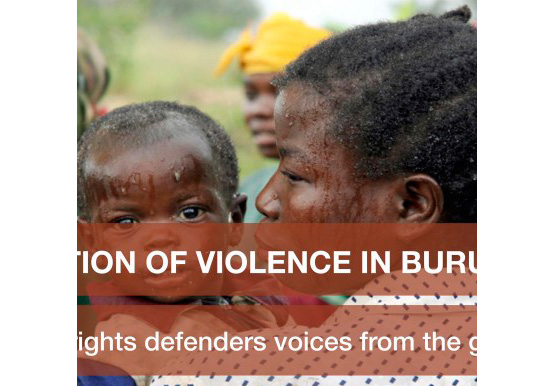
The ICJ joins other non-governmental organisations in co-sponsoring “Escalation of Violence in Burundi: Human rights defenders voices from the ground”, a side event to the Human Rights Council’s special session on Burundi, 17 December 2015.
The event will take place Thursday 17 December – 9.00-10.00 am in Room XII, Palais des Nations, Geneva
Panelists:
Mr Pierre Claver Mbonimpa, Association for the Protection of Human Rights and Incarcerated Persons (APRODH)
Ms Margaret Barankitse, Maison Shalom
Mr Anschaire Nikoyagize, Ligue ITEKA
Ms Carina Tertsakian, Human Rights Watch
The event will be moderated by Nicolas Agostini of FIDH.
The event will be webcast live by the International Service for Human Rights (ISHR).
Follow on twitter using the hash-tag #BurundiHRDs
A flyer for the event is available here: Burundi-UNHRC-Advocacy-SideEvent-2015