Jun 20, 2016 | Advocacy, Non-legal submissions
The ICJ prepared an oral statement on sexual and gender based violence, for the interactive dialogue with the UN Special Rapporteur on violence against women and the Working Group on the issue of discrimination against women in law and in practice.Although the statement could not ultimately be read out due to the limited time for civil society statements at the Human Rights Council, the text can be downloaded here (in PDF): HRC32-OralStatement-SRVAW-WGDAW-2016

Jun 17, 2016 | Advocacy, Non-legal submissions
The ICJ today delivered an oral statement on human rights and state-owned enterprises, as well as the right to a remedy and reparation for human rights abuses caused by businesses.
The statement was made to the UN Human Rights Council and can be downloaded here in PDF: HRC32-OralStatement-WGBHR-2016
Jun 16, 2016 | Advocacy, Non-legal submissions
The ICJ today joined a statement delivered by the International Bar Association on indicators of independence of justice systems.The statement came during the interactive dialogue with the UN Special Rapporteur on the Independence of Judges and Lawyers.
It read as follows:
As international organisations of legal professionals, we endorse the recommendation made by the Special Rapporteur to develop a set of international indicators to assess the independence of justice systems.
The Special Rapporteur has previously stated: ‘No ideal justice system exists; rather, there are universal principles that must be respected in the structure and functioning of any judicial system, so that it can duly fulfil its purpose’. (Report of the Special Rapporteur on the independence of judges and lawyers, (2014) UN Doc A/69/294, para 92.)
Achieving Sustainable Development Goal 16 – that is, providing access to justice for all and building effective, accountable and inclusive institutions – will require respect for the universal principles of independence and impartiality of justice systems and the independence of the legal profession.
In 2015, the International Bar Association (IBA) and the International Commission of Jurists (ICJ) proposed two indicators under SDG16, regarding the independence of the judiciary and an independent and self-governing legal profession. The IBA is currently developing ‘indicia of independence’ that can be used to assess the state of independence of the legal profession in a given jurisdiction. The Commonwealth Lawyers Association (CLA) and the Commonwealth Magistrates’ and Judges’ Association (CMJA) continue to monitor judicial and legal independence through the Commonwealth Latimer House Working Group.
We therefore, Madam Special Rapporteur, fully support your endeavour to develop universal indicators that complete the UN Rule of Law Indicators, and build on the UN Basic Principles on the Independence of the Judiciary, the Basic Principles on the Role of Lawyers, and the Guidelines on the Role of Prosecutors.
We further call upon States to ensure that national targets and indicators duly align with international indicators and international principles.
Thank you, Mr President
The following organisations endorsed the statement:
- Avocats Sans Frontières -Suisse
- Commonwealth Magistrates’ and Judges’ Association
- Commonwealth Lawyers Association
- International Bar Association’s Human Rights Institute
- International Commission of Jurists
- Judges for Judges
- Lawyers for Lawyers
- Southern Africa Litigation Centre
The statement can be downloaded in PDF format here: HRC 32- Joint Oral Statement Item 3 SR IJL_FINAL
Jun 16, 2016 | Advocacy, Non-legal submissions
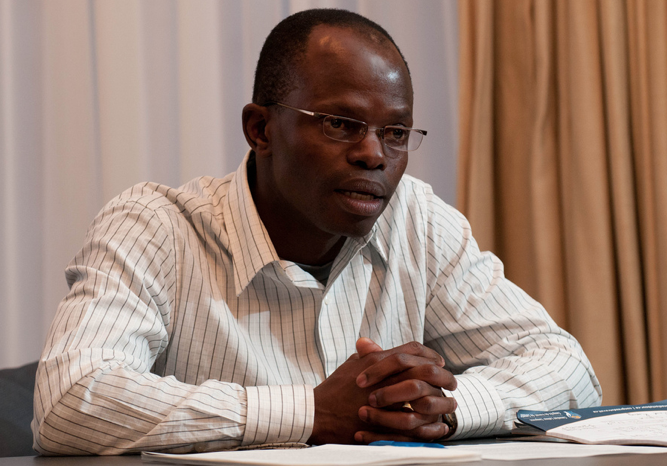
The ICJ today delivered a statement at the UN Human Rights Council, on judicial accountability, and attacks on lawyers. The ICJ made the statement on behalf of a group of eight NGOs, including professional organisations of judges and lawyers.
The statement, read out by Swaziland lawyer Thulani Maseko during the Interactive Dialogue with the UN Special Rapporteur on the Independence of Judges and Lawyers, read as follows:
Madame Special Rapporteur on the Independence of Judges and Lawyers,
Our organizations strongly support your mandate. An independent judiciary and legal profession are essential to the rule of law and to the effective protection of human rights.
Independence and impartiality of the judiciary require integrity of individual judges and judicial institutions. Accordingly, there must be accountability for judicial corruption and judicial involvement in human rights violations.
Accountability mechanisms must themselves be independent, fair and transparent, in order to ensure they do not undermine the independence of the judiciary and that victims and the broader population see them as credible and accessible.
We note in this regard the International Commission of Jurists’ newly published Practitioners’ Guide on Judicial Accountability, and the International Bar Association’s recent report on Judicial systems and Corruption.
We also must highlight the growing problem of repression of lawyers who act in cases perceived to have human rights or political aspects, including through: harassment, suspension or disbarment; arrest, detention, unfair trial, and arbitrary imprisonment; torture or other cruel, inhuman or degrading treatment, enforced disappearance, or even unlawful killings.
This is inconsistent with the UN Basic Principles on the Role of Lawyers and incompatible with the rule of law. It violates the rights of individual lawyers and undermines the independence of the legal profession. It denies the rights of the people the lawyers are trying to protect.
Among current examples, the scale and depth of repressive measures against lawyers and HRDs in China is particularly stark, but similar concerns arise in, for instance, Egypt, Turkey, Thailand, Azerbaijan, Malaysia, Tajikistan, and Vietnam. (I myself was arbitrarily imprisoned in my own country Swaziland, for publicly expressing my opinions about judicial misconduct.)
We accordingly will urge lawyers, legal professional associations and others around the world to respond to the questionnaire you have prepared for your upcoming General Assembly report on the legal profession.
I thank you.
The following organizations joined or otherwise supported the statement:
The statement may be downloaded in PDF format here: HRC32-OralStatement-JudicialAccountabilityLawyers-2016

May 25, 2016 | Advocacy, Open letters
More than 230 non-governmental organizations (NGO) world wide have called on members of the UN’s Economic and Social Council to reform the practice of the UN Committee on NGOs, and to ensure apolitical, fair and transparent consideration of NGO applications for access to UN processes.
The response has been sparked by the long-term practice of some States to delay or effectively block certain NGOs from participation at the UN, through perpetual questioning and multiple deferrals of applications for accreditation.
In doing so, the Economic and Social Council (ECOSOC) Committee on NGOs has turned what should be largely an administrative role into the obstruction of NGOs working on issues on which States disagree. Human rights organisations are amongst those facing the most obstacles.
The joint open letter may be downloaded in PDF format here: UN-NGOCommittee-OpenLetter-2016
Apr 29, 2016 | Advocacy, Position papers
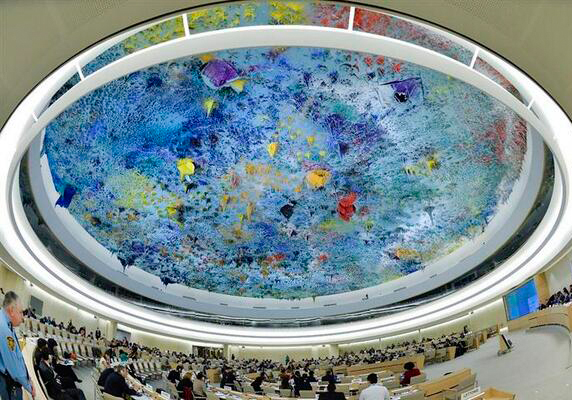
In a joint briefing paper published on the occasion of the anniversary of the Human Rights Council, 20 leading national, regional and international human rights NGOs have outlined a series of concrete steps and proposals that would strengthen the impact of the Council’s work.
The civil society paper outlines a broad vision of a Council that directly guides the actions of State and non-state actors, addresses serious rights violations head on, provides space for civil society, and demands better adherence to basic membership standards.The paper was coordinated by the International Service for Human Rights (ISHR) with the input of global NGOs including the ICJ, as well as organisations from all regions.
The paper can be downloaded here (in PDF): http://www.ishr.ch/HRCat10