Mar 14, 2016 | Advocacy, Non-legal submissions
The ICJ today joined the International Bar Association’s Human Rights Institute in an oral statement during the interactive dialogue with the UN Special Rapporteur on the situation for human rights in Myanmar.The statement focussed on the situation of the legal profession and judiciary.
It is available to download in PDF format here: HRC31-Advocacy-OralStatement-SRMyanmar-2016
Mar 4, 2016 | Advocacy, Non-legal submissions
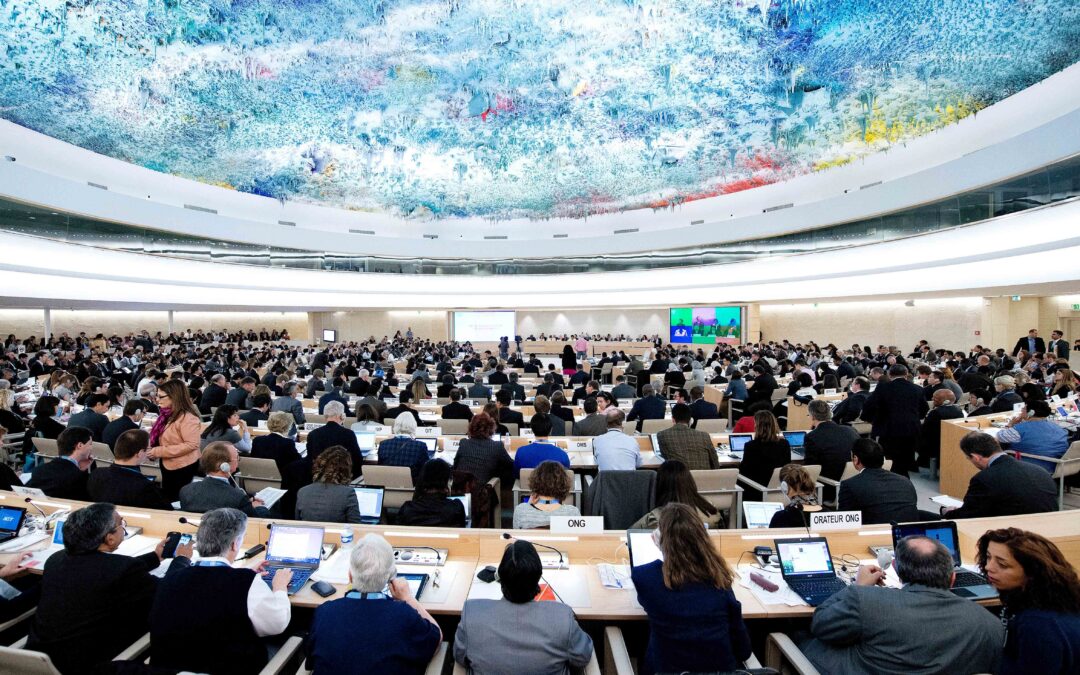
The ICJ prepared an oral statement on the situation of human rights defenders in Malaysia, for today’s interactive dialogue at the Human Rights Council with the UN Special Rapporteur on the situation of human rights defenders.
The statement could not be delivered in the limited time available for civil society statements; its text is set out below:
ICJ Oral Statement in the Interactive Dialogue with the Special Rapporteur on the situation of human rights defenders, Mr. Michel Forst
SITUATION OF HUMAN RIGHTS DEFENDERS IN MALAYSIA
3 March 2016
“The International Commission of Jurists (ICJ) welcomes the report of the Special Rapporteur on the situation of human rights defenders.
The work of human rights defenders is particularly under challenge in States where governments have conferred on themselves sweeping powers to restrict human rights on grounds of national security. One example, as reflected in the Special Rapporteur’s “Observations on communications” (UN Doc A/HRC/31/55/Add.1), is the situation of human rights defenders in Malaysia.
The ICJ welcomes the Attorney General’s decision to drop sedition charges against law lecturer Dr. Azmi Sharom; however, the Sedition Act and the Peaceful Assembly Act are still being abused to harass human rights defenders and others. Most recently, the High Court of Malaysia sentenced activist Hishamuddin Rais to nine months in jail for sedition, for calling for peaceful protest against the results of the 2013 general election on the basis that it was not transparent. Maria Chin Abdullah and Jannie Lasimbang, organizers of the Bersih 4.0 peaceful assembly calling for good governance, were charged under the Peaceful Assembly Act for allegedly omitting to inform the police about the assembly. There have reportedly been at least 91 cases of arrests, charges or investigations for sedition during 2015, and more than 30 cases of arrests under the Peaceful Assembly Act since 2013. Most, if not all, of these people are human rights defenders, including Eric Paulsen, the Director of Lawyers for Liberty, Adam Adli, a human rights activist, and Mandeep Singh, the Secretariat Manager of Bersih.
Unless repealed or drastically revised, these laws will continue to facilitate sweeping and arbitrary repression of freedoms of expression, assembly and association of human rights defenders, under the flag of national security. This contravenes the UN Declaration on Human Rights Defenders and numerous other resolutions of the Human Rights Council and General Assembly, including General Assembly resolution 70/161, adopted by the General Assembly in December with Malaysia voting in favor. Among other things, resolution 70/161 urged States ensure that human rights defenders are able to exercise the rights to freedom of opinion, expression, peaceful assembly and association, which are essential for the promotion and protection of human rights; and it emphasized that national security measures must not hinder the work and safety of individuals engaged in promoting and defending human rights.
In this context, the ICJ would like to ask the Special Rapporteur to comment on the obligations of governments to repeal or amend legislation that allows for abusive arrest or prosecution of human rights defenders on grounds such as “national security”, “sedition” or for not giving prior notice of assemblies.”
Feb 12, 2016 | Advocacy, Non-legal submissions
The ICJ submitted a written statement to the Human Rights Council as a response to the latest report of the Special Rapporteur on freedom of religion or belief.
The written submission recognized the Special Rapporteur’s active participation in the Regional Conference on Freedom of Religion or Belief in Southeast Asia, organized by the ICJ in collaboration with the Asian Forum for Human Rights and Development (FORUM-ASIA) and Boat People-SOS (BPSOS) in Bangkok, Thailand from 30 September to 1 October 2015.
It also highlighted the adoption of the Conference Declaration on Freedom of Religion or Belief in Southeast Asia, a document through which participants expressed their commitment to working to enhance the right to freedom of religion or belief in the region.
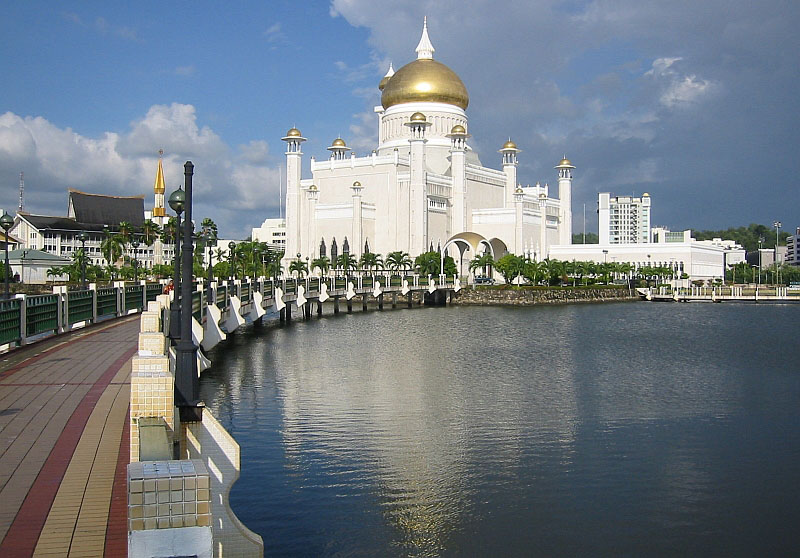
The ICJ expressed its concern regarding the banning of Christmas celebrations in Brunei Darussalam, as the restrictions imposed are inconsistent with international law standards, specifically with the principle of non-discrimination.
Finally, the statement called on Brunei to eliminate the restrictions imposed for celebrating non-Muslim festivities and encouraged the Government of Brunei to implement the measures recommended by the Special Rapporteur in his report.
SouthEast Asia-HRC statement on freedom or belief-Advocacy-Non legal submissions-2016-ENG (full text, in PDF)

Sep 21, 2015 | Advocacy, Non-legal submissions
Today, the ICJ and Thai Lawyers for Human Rights (TLHR) made a joint submission to the Human Rights Council’s Working Group on the Universal Periodic Review in advance of the Human Rights Council’s review of Thailand in April/May 2016.
In their submission, the ICJ and TLHR expressed concern about the following issues:
(1) the impact of the new legal and institutional framework, imposed since the May 2014 coup d’état, on human rights in Thailand;
(2) instances of suspected enforced disappearance and torture; and
(3) issues concerning international human rights instruments and mechanisms.
A copy of the submission can be found here:
THAILAND-UPR SUBMISSION FINAL AS LODGED-Advocacy-Non legal submission-2015-ENG (full text in PDF)
Jun 19, 2015 | Advocacy, Non-legal submissions
Today, the ICJ made a submission to the Human Rights Council’s Working Group on the Universal Periodic Review in advance of the Human Rights Council’s review of Singapore.
In its submission, the ICJ expressed concern about the following:
(1) corporal punishment;
(2) the death penalty;
(3) the continued criminalization of consensual same-sex relations;
(4) corporate accountability for companies registered in Singapore; and
(5) international human rights instruments and mechanisms.
A copy of the submission can be found here:
Singapore-ICJ UPR-Advocacy-non legal submission-2015-ENG