Sri Lanka: Stop unnecessary “psychiatric evaluations” based on sexual orientation
An opinion piece by Mathuri Thamilmaran, ICJ National Legal Advisor in Sri Lanka.
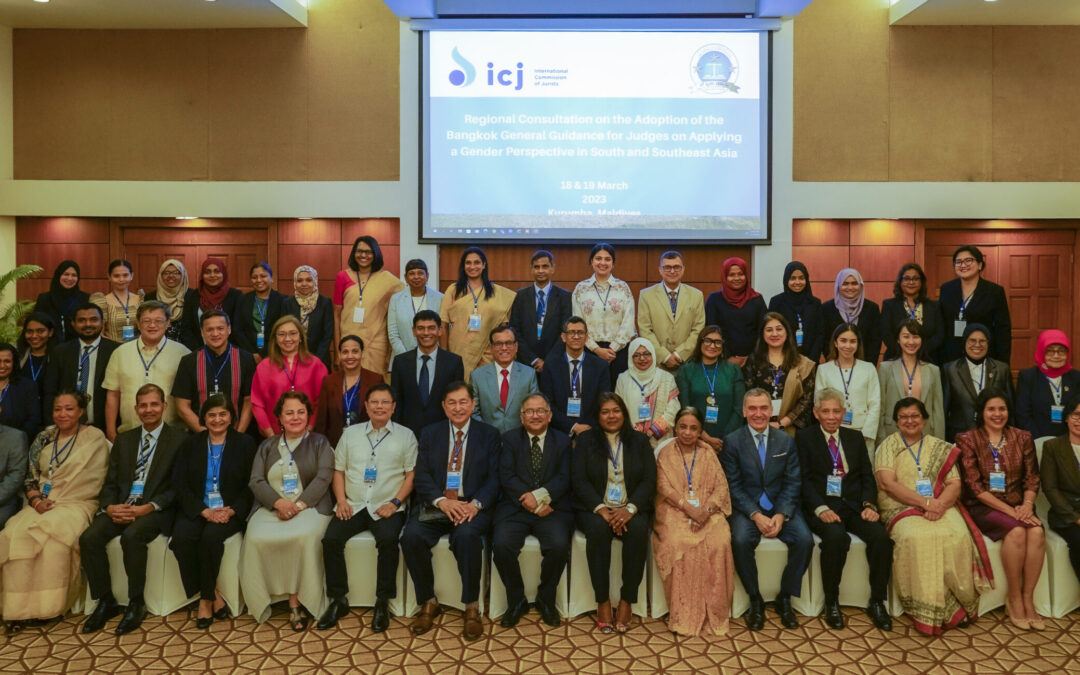
At a Judicial Dialogue on Access to Justice for Women conducted by the International Commission of Jurists in partnership with the Sri Lanka Judges’ Institute, participants agreed on the need to confront implicit biases and stereotypes that hamper substantive gender equality enhance women’s access to justice.
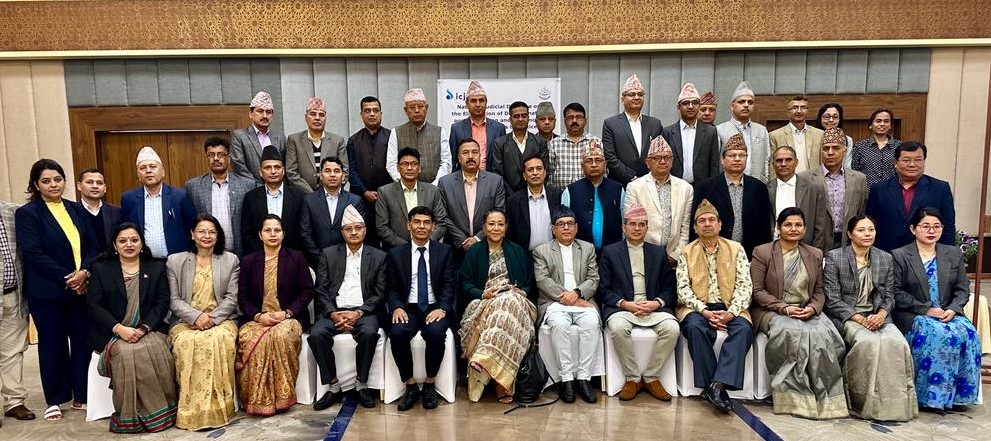
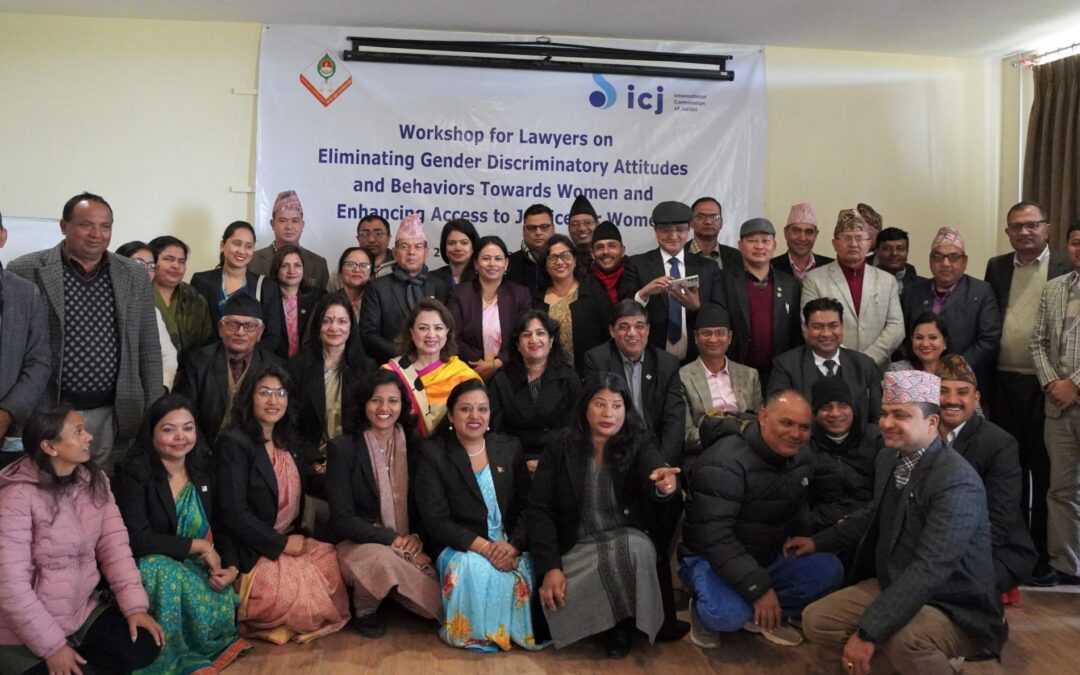
Legal practitioners from Nepal have agreed that gender stereotyping discourages women from accessing judicial processes so lawyers must be mindful of such stereotypes and biases while providing legal services. The lawyers also formulated action points that they are committed to implementing to eliminate gender stereotyping and discriminatory attitudes towards women.
ILGA Asia and the International Commission of Jurists (ICJ) organized a webinar on the use of strategic litigation to protect and promote the human rights of lesbian, gay, bisexual, transgender, intersex and queer (LGBTIQ) persons in Asia in Bangkok on 28 October 2022.
The ICJ today denounced attacks on lawyers across the world, in particular in the Russian Federation, Myanmar, Nepal, Venezuela and Turkey, in its statement during the dialogue with the UN Special Rapporteur on the independence of judges and lawyers.
The statement before the UN Human Rights Council reads as follows:
“Mr President,
The ICJ welcomes this timely report of the UN Special Rapporteur on the independence of judges and lawyers, which demonstrates that lawyers are targets of attacks, harassment, and arbitrary prosecutions and disbarment worldwide.
In the Russian Federation, contrary to international law and standards on the role of lawyers, law enforcement officials routinely impede the work of lawyers attempting to represent people detained or charged in connection with anti-war protests, including by using violence.
In Myanmar, where the judiciary is subservient to the executive, lawyers and their families face daily threats of arrest, detention and harassment solely for their professional activities.
In Nepal, the police have injured the Bar Association’s executive members, including its General Secretary, when they used excessive force against lawyers protesting against the corruption in the Supreme Court, and calling for an investigation of the Chief Justice. Similar violations occur in Venezuela.
In Turkey, legislative reforms have been introduced undermining the independence of the legal profession. Moreover, prominent human rights lawyers are subject to arbitrary prosecutions, including Cihan Aydin and Öztürk Türkdoğan.
The ICJ calls on this Council and all its Special Procedure to pay particular attention to attacks on lawyers whose work is essential for access justice and effective remedies to protect everyone’s human rights.
I thank you.”
Contact:
Massimo Frigo, ICJ UN Representative, e: massimo.frigo(a)icj.org, t: +41797499949