Dec 11, 2015 | Events, News
On 10-11 December, the ICJ gathered leading jurists and human rights defenders in Harare, Zimbabwe to discuss measures needed to implement legal reform and change attitudes to eliminate sexual and gender based violence.
For International Human Rights Day (10 December), the ICJ organized high level panel discussions, chaired by ICJ Commissioner Justice Qinisile Mabuza.
Justice Mabuza, who is also a judge for the High Court of Swaziland and for the Common Market for Eastern and Southern Africa (COMESA) Court of Justice, set the tone for the discussions that followed in setting out the extent of the problem of sexual and gender based violence not only within Africa but also on a global scale.
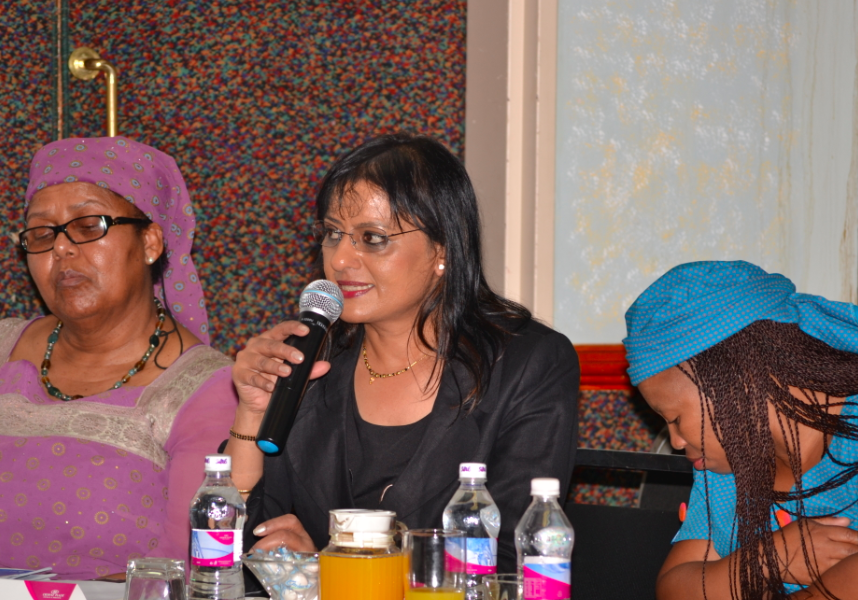
One panel consisted of Judge Lillian Tiabtemwa-Ekrikubinza, Supreme Court Judge of Uganda; Magistrate Asha Ramlal of South Africa; Judge Lavender Makoni, High Court Judge of Zimbabwe; and Magistrate Polo Banyane from Lesotho.
This panel provided a judicial perspective from magistrates and judges from across the region, sharing their experiences and common problems encountered in tackling sexual and gender based violence in their jurisdictions.
The judges spoke about the need to adopt a gender analysis in judicial decision-making and to be conscious of the way in which pervasive gender stereotypes can influence even seemingly gender neutral decisions.
They also spoke of the practicalities in implementing domestic violence and sexual offences legislation as well as the challenges involved when this legislation does not exist.
Welekazi Stifole from Tshwaranang Legal Advocacy Centre; Kelvin Hazangwi from Padare (Men’s Forum on Gender) and Lisa Gormley, ICJ Consultant on women’s rights participated in a second panel.
The participants shared their perspectives and insights concerning reviewing legislation, identifying problems with evidence gathering, analyzing the international and regional frameworks covering gender based violence and in working with perpetrators and within communities to change cultural attitudes.
The second day of the gathering featured a consultative meeting on the ICJ’s forthcoming Practitioner’s Guide on Women’s Access to Justice for Gender-Based Violence.
ICJ expert consultant Lisa Gormley presented the Guide and participants shared their experiences in relation to its content, as well as developing strategies for its future implementation.
Representatives of civil society, judges, lawyers and law students participated in both events, contributing to a broader understanding of sexual and gender based violence issues and strengthening national and international networks of defenders of women’s rights.
Nov 18, 2015 | Events, News
The ICJ, OSCE and Group 484 are holding a training on migration and international human rights law starting on Tuesday 17 November in Vrnjačka Banja (Serbia).
The training has been organised by the Organisation for Security and Cooperation in Europe (OSCE) and the Serbian NGO “Group 484” and will be given by the International Commission of Jurists.
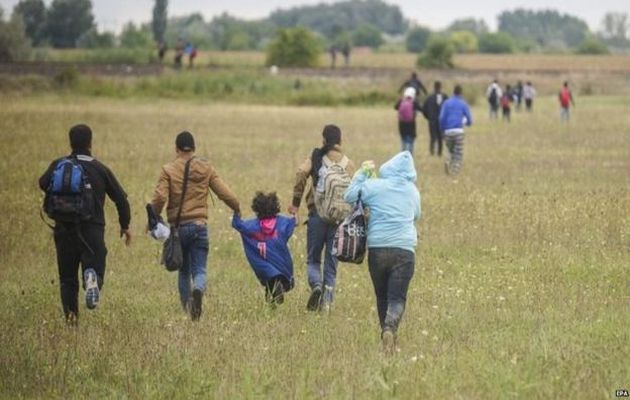
It will focus on international protection of migrants and asylum seekers, access to territory and asylum and the principle of non-refoulement, in light of the current migrants and refugee crisis and drawing from the jurisprudence of the European Court of Human Rights, of the UN human rights systems and from EU law.
The training will be centred on the ICJ Practitioners Guide no. 6: Migration and International Human Rights Law.
Serbia-JointTrainingMigrationHR-Events-2015-ENG (download the agenda in English)
Sep 29, 2015 | Events, News
From 30 September to 1 October 2015, the Asian Forum for Human Rights and Development (FORUM-ASIA), International Commission of Jurists (ICJ), and Boat People SOS (BPSOS) will jointly organize a conference in Bangkok.
The regional conference will discuss pressing concerns on the promotion and protection of freedom of religion or belief.
The UN Special Rapporteur on Freedom on Religion or Belief, Mr. Heiner Bielefeldt, will be joined by approximately 60-70 human rights defenders, members of religious groups, rights groups, UN agencies and representatives from the ASEAN Intergovernmental Commission on Human Rights, ASEAN Commission on the Promotion and Protection of Rights of Women and Children, National Human Rights Institutions and other government agencies.
The event will provide a multi-stakeholder platform to discuss key emerging issues, distinct and shared challenges faced by various Southeast Asian religious groups and advocates of religious freedom, identify advocacy strategies and best practices to overcome these obstacles, and to strengthen cooperation between the different stakeholders important in promoting freedom of religion or belief in Southeast Asia.
The event will also be an opportunity for participants to have a better understanding of the mandate of the UN Special Rapporteur on freedom of religion or belief.
Some of the key topics expected to be discussed include state control and regulation of religion, extreme interpretations of religion, and how freedom of religion together with other human rights are complementary or mutually reinforcing.
Upon the completion of the conference, the Special Rapporteur will hold a press briefing at the Foreign Correspondents’ Club of Thailand (FCCT) at 7.30pm on 1 October 2015 to provide an overview of the status of freedom of religion or belief in Southeast Asia and how this right could be better protected and promoted.
Sep 15, 2015 | Events, News
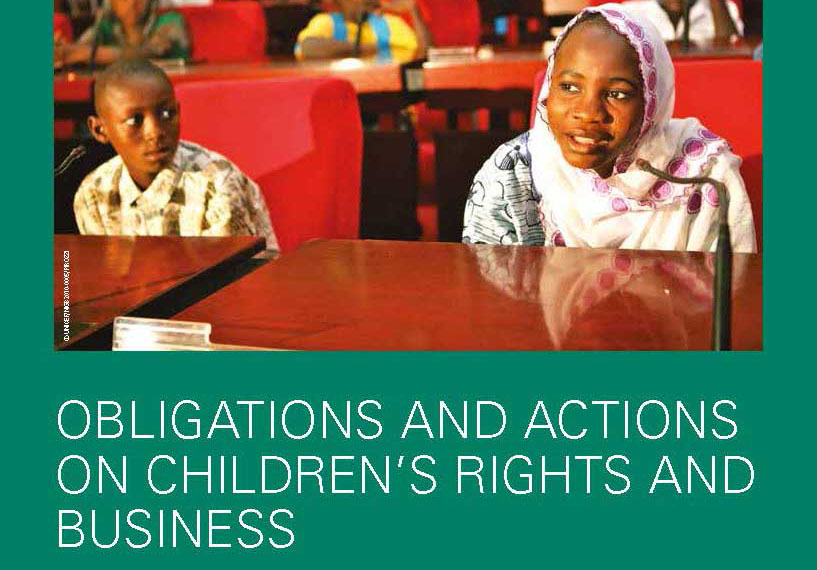
Organized by UNICEF and the ICJ, this side event takes place on Thursday 17 September 2015, from 12:00-14:00, Room XXVII, Palais des Nations, Geneva.
More than ever before, business enterprises have an impact on children’s lives.
Children are consumers of businesses’ products and services, workers in their factories and fields, family members of their employees, and residents of the communities that host their operations.
Some of these interactions can benefit children. Companies have, for instance, created new technologies that enrich children’s education, enhance medical care, and connect families around the world.
Yet at the same time, businesses can also have detrimental impacts.
Companies can make and sell unhealthy and unsafe goods to children, pollute the environments in which children live and play, and expose them to serious dangers including in the workplace.
As children are still growing and developing, they are especially vulnerable to negative business impacts and can be severely and permanently affected by infringements of their rights.
Child consumers can be more easily convinced to buy and use inappropriate or unsuitable products, and children are much more susceptible than adults to the harmful physical effects of toxic chemicals, manual labour and poor diets.
Young workers can never fully make up for time spent out of education, and missed opportunities are rarely restored.
Many of these impacts remain unnoticed, and businesses rarely involve or seek the input of children on decisions that will profoundly affect them.
Children may not understand that their rights are in jeopardy, and, even when they do, often face tremendous challenges in making their voices heard.
All too frequently, child victims lack the confidence, resources and legal authority to demand accountability from those who violate their rights.
For these reasons, it is imperative that governments take action to protect and promote children’s rights in the context of business operations.
In February 2013, the UN Committee on the Rights of the Child adopted General Comment 16 on State obligations regarding the impact of the business sector on children’s rights to assist States to ensure that businesses respect children’s rights as envisioned in the Convention on the Rights of the Child.
The ICJ and UNICEF, at the request of the Committee, have elaborated a Guide to offer to States practical examples and best practices on how to protect and ensure the realization of the rights of the child in the context of business operations.

Sep 14, 2015 | Events
Judges, lawyers, prosecutors and human rights: 30 years of UN action
Side event, Tuesday 15 September 2015, 1600 – 1800
Room XXII, Palais des Nations, Geneva
Followed by a drinks reception hosted by the IBA’s Human Rights Institute
in Bar Serpent, Palais des Nations
The International Bar Association’s Human Rights Institute (IBAHRI) and the International Commission of Jurists (ICJ) are organising a side event at the Palais des Nations to mark the 30th Anniversary of the Basic Principles on the Independence of the Judiciary and the 25th Anniversary of the Basic Principles on the Role of Lawyers and Guidelines on the Role of Prosecutors. This side-event, taking place during the 30th session of the Human Rights Council, will look back on the progress that has been made in the protection of judges, lawyers and prosecutors over the past 30 years and the continuing challenges for implementation of the UN standards.
Side Event, 1600-1800
Opening remarks:
- Her Excellency Zsuzsanna Horváth Ambassador of Hungary
Speakers:
- Monica Pinto Special Rapporteur on the independence of judges and lawyers
- Anne Ramberg Secretary General, Swedish Bar Association
- Irene Petras Executive Director, Zimbabwe Lawyers for Human Rights
- Nazir Afzal Former Chief Crown Prosecutor, North West England
Drinks Reception, 1800
The IBA’s Human Rights Institute will host a drinks reception in Bar Serpent, Palais des Nations, with a number of high-level speakers to follow the side event to the 30th session of the Human Rights Council.
Speakers:
- Her Excellency Patricia O’Brien Ambassador of Ireland
- His Excellency Mothusi Bruce Rabasha Palai Ambassador of Botswana
- Monica Pinto Special Rapporteur on the independence of judges and lawyers
Side event co-sponsors include, in addition to the IBAHRI and ICJ:
Australian Permanent Mission to the UN, Permanent Mission of Hungary to the UN, Permanent Mission of Ireland to the UN, Permanent Mission of Mexico to the UN, Permanent Mission of Thailand to the UN, Permanent Mission of the Republic of Botswana to the UN, Council of Europe
Association pour la Prévention de la Torture, Avocats Sans Frontières, Colombian Commission of Jurists, Commonwealth Lawyers’ Association, Commonwealth Magistrates’ and Judges’ Association, International Legal Assistance Consortium, Judges for Judges, Lawyers for Lawyers
Attendance at this side event is open to individuals who have access to the UN grounds at Palais des Nations in Geneva.
Sep 14, 2015 | Events, News
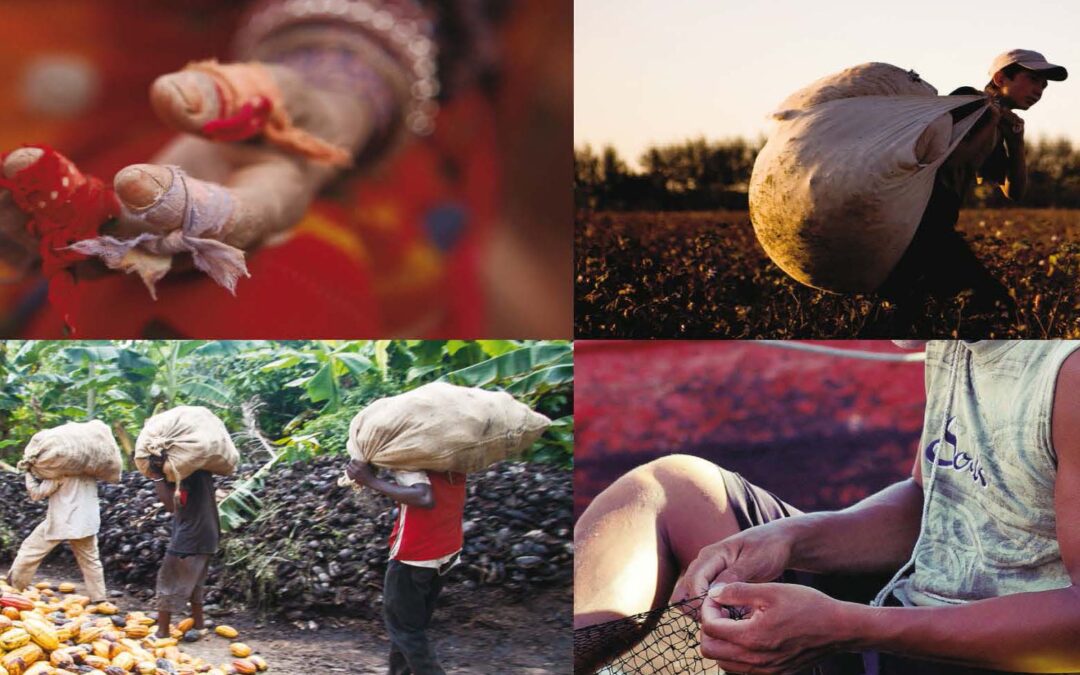
This side event will be held on Wednesday 16 September 2015, 12h00 – 14h00, at the Palais des Nations, Conference Room XXI, in Geneva.
It will assess the most effective strategies and recommend concrete measures for States, businesses and other stakeholders to prevent and eradicate contemporary forms of slavery from supply chains and to provide assistance and redress to victims.
It will also identify key challenges and opportunities in addressing slavery and slavery-like practices in supply chains, including in terms of the legal standards, policy measures, institutional framework, and implementation.
The speakers will also discuss opportunities for contemporary forms of slavery eradication within the 2030 Agenda for Sustainable Development framework.
Universal-HRCEnding contemporary forms of slavery in supply chains-Event-Agenda-2015-ENG (full agenda, in PDF)