Nov 14, 2013 | Events, News
The International Bar Association Human Rights Institute (IBAHRI) and the ICJ urge Commonwealth Heads of States meeting in Colombo this week to make Sri Lanka accountable to Commonwealth values.
The IBAHRI and the ICJ are holding a press conference in Bangkok, Thailand, this morning after a high-level IBAHRI delegation was blocked from entering Sri Lanka late last week.
You can watch the event here: http://www.ustream.tv/recorded/40754120
Further reading:
Sri Lanka-Muttur killings-ICJ-ACF Q&A-briefing paper-2013 (full text in pdf)
ICJ open letter signed by 56 eminent jurists and senior judges from around the world
ICJ report Authority without Accountability: The crisis of impunity in Sri Lanka

Nov 7, 2013 | Events, News
The ICJ addressed the 15th Meeting of the European Network of Contact Points for investigation and prosecution of genocide, crimes against humanity and war crimes.
The meeting, which took place in the Hague, had a focus on criminal responsibility of corporations and business persons for serious international crimes and congregated a number of European public prosecutors and investigators.
In its presentation, Carlos Lopez, Senior Legal Adviser at ICJ, addressed ways to overcome difficulties in prosecuting business corporations.
He focused on three cases that are among the ones most advanced in the investigation and prosecution stage of business corporations for crimes under international law: the Riwal/Lima Holding, the Amesys and the Lundin Petroleum cases.
They illustrate the acute dilemmas that public prosecutors are likely to face in these kind of cases and how difficult to solve them it may be.
The full ICJ presentation and the agenda of the meeting can be downloaded in pdf format below.
The Hague Meeting-Prosecuting corporations-Presentation-analysis brief-2013
The Hague Meeting-Prosecuting corporations-Agenda-2013
Oct 17, 2013 | Events
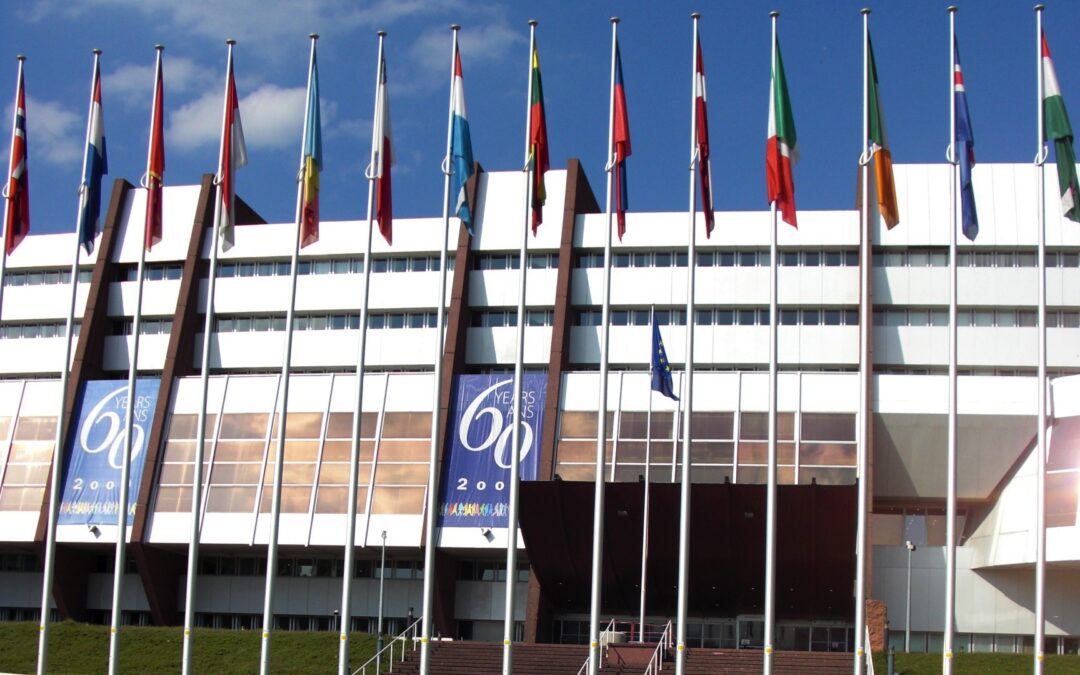
The ICJ participated in a meeting of experts within the Council of Europe’s Steering Committee on Human Rights (CDDH) in Strasbourg on 14-16 October 2013.
The Drafting Group on Human Rights and Business of the Steering Committee on Human Rights (CDDH-CORP) has drafted a Declaration of support to the Guiding Principles on Human Rights and Business for consideration by the Committee of Ministers. The ICJ expresses satisfaction at the progress made during the meeting and hopes that the draft declaration will be finally approved by Ministers and that this expert group will be able to move on to drafting a non-binding instrument on access to justice in the context of business activities.
Steering Committee meeting page (for agenda and report, including the draft Declaration)
Photo credit: © notfrancois (the author has no involvement in nor does support this submission)

Oct 4, 2013 | Events
On 2 and 3 October 2013, the Office of the High Commissioner for Human Rights held a workshop on business and gender with the Human Rights Council’s Working Group on Discrimination against Women.
The ICJ participated in the workshop, addressing some of the ways in which business actors may be involved in women’s rights abuses and how States may fail to discharge due diligence obligations in this context. The ICJ’s presentation had a particular focus on accountability and the right to redress, and also explained the relevance to those issues of States’ extraterritorial obligations in respect of economic, social and cultural rights.
ProgrammeAgenda-BusinessAndGenderWorkshop (download the programme agenda for the workshop)

Oct 2, 2013 | Events
The ICJ today welcomed the launch of the OSCE/FBA Handbook for Monitoring Administrative Justice as a tool able to contribute to the open administration of justice.
Noting that trends throughout the world see administrative cases dealt with in a manner that lacks transparency and fails to comport with the open administration of justice, the ICJ expressed the hope that the tool will be used by practitioners and officials to make an impact on the ground. The ICJ pointed to several reasons why the open administration of justice, in all forms of proceedings, is important to human rights and the rule of law:
- As a starting point, it is widely recognised, including by the UN Human Rights Committee in its General Comment on the right to a fair trial, that the open and transparent administration of justice is an important safeguard for the interests of both the individual and society at large.
- The conduct of administrative and other proceeds in an open and transparent manner helps to ensure the integrity of such proceedings and protect against potential abuse.
- Publicly accessible documentation, including timely and reasoned decisions, protects individuals from being subject to arbitrary decisions.
- Transparency and openness contributes to accountability by enabling parties to determine the viability of any appeal or review, including the possibility of taking a case to regional or international mechanisms.
- In all these ways, the open administration of justice also helps guarantee the right of individuals and society to access justice, including remedies and reparation.
The Handbook is a publication arising from a joint initiative of the Folke Bernadotte Academy (FBA) Rule of Law Unit and the OSCE Office for Democratic Institutions and Human Rights. Work began on the Handbook in May 2011. The ICJ participated in expert meetings on the development of the Handbook in 2011 and 2012.
OSCE/FBA Handbook for Monitoring Administrative Justice
Jun 12, 2013 | Agendas, Events
On Tuesday 11 June 2013, the ICJ convened a parallel event, organised with the Geneva Academy of International Humanitarian Law and Human Rights, during the Human Rights Council’s 23rd regular session held in Geneva.
The event, held in Room XXV of the Palais des Nations, discussed how human rights will be promoted by the Arms Trade Treaty (ATT), including ways to ensure compliance with the ATT and the relevance of the treaty for activities of the Human Rights Council and international human rights experts. The event was chaired by Alex Conte, Director of the ICJ’s International Law and Protection Programmes. Panelists were Simon Bagshaw, Senior Policy Adviser for the UN Office for the Coordination of Humanitarian Affairs; Professor Andrew Clapham, Director of the Geneva Academy of International Humanitarian Law and Human Rights; and Dr Stuart Casey-Maslen, Head of Research at the Geneva Academy of International Humanitarian Law and Human Rights.
Simon Bagshaw provided a background to the treaty from a humanitarian perspective, recognising that the ATT provides an opportunity to address some of the humanitarian impacts and costs of the arms trade. He also stressed the importance of specific elements within the treaty, such as the obligation to refrain from authorising the transfer of weapons where a substantial risk exists that this may result in serious violations of international human rights law or international humanitarian law.
Andrew Clapham and Stuart Casey-Maslen focussed on the human rights perspective. Professor Clapham promoted the use of mechanisms such as the Human Rights Council and its Universal Periodic Review to assist in implementation of the treaty. Dr Casey-Maslen discussed areas that may help ratification, implementation and monitoring of the ATT, including the role of civil society in that regard.
Several questions were raised during discussions concerning how the treaty would work in practice and its broader implications for non-State actors. Panellists confirmed that the ATT includes the facilitation of crimes as enumerated in the treaty and may also cover domestic crimes of terrorism. Since the ATT does not provide for the establishment of fact-finding missions, it was emphasised that civil society will need to act to monitor compliance with the ATT. Panellists also pointed out the important role of the treaty regarding the conduct of non-State actors. Although the treaty sets out obligations for States only, States parties will be responsible for providing licensing to arms manufacturers and private companies working within the weapons industry.
UN HRC-Arms Treaty side event flyer-event-2013 (event flyer in pdf)