Nov 14, 2013 | Events, News
The International Bar Association Human Rights Institute (IBAHRI) and the ICJ urge Commonwealth Heads of States meeting in Colombo this week to make Sri Lanka accountable to Commonwealth values.
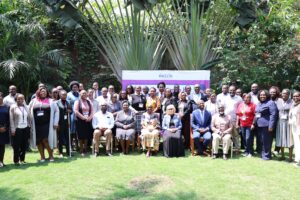
The IBAHRI and the ICJ are holding a press conference in Bangkok, Thailand, this morning after a high-level IBAHRI delegation was blocked from entering Sri Lanka late last week.
You can watch the event here: http://www.ustream.tv/recorded/40754120
Further reading:
Sri Lanka-Muttur killings-ICJ-ACF Q&A-briefing paper-2013 (full text in pdf)
ICJ open letter signed by 56 eminent jurists and senior judges from around the world
ICJ report Authority without Accountability: The crisis of impunity in Sri Lanka
Nov 6, 2013 | News
The ICJ is calling on the Bangladeshi authorities to immediately and unconditionally release Nasiruddin Elan, Director of the human rights group Odhikar.
Odhikar is an affiliate organization of the ICJ.
On 6 November 2013, a Dhaka cyber crimes tribunal rejected Nasiruddin Elan’s bail application and ordered his detention in Dhaka Central Jail.
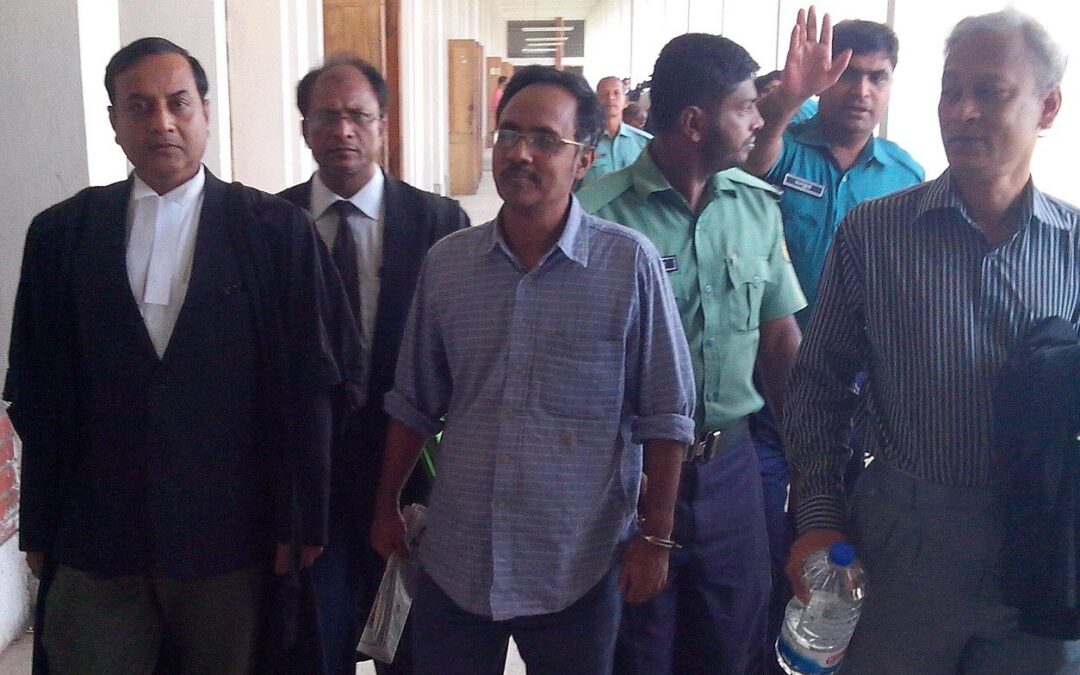
Nasiruddin Elan (in the middle on the picture) has been accused of distorting information, presenting false evidence and manipulating photographs of a Government crackdown on a rally by Hefazat-e-Islam, an Islamist political organization, in May this year.
The action reportedly resulted in multiple deaths and injuries. Odhikar had reported that 61 protestors were killed by the Rapid Action Battalion (RAB) and the police. The Government contests the number of casualties.
“What we are seeing is a continuing unlawful attack on Odhikar and voices critical of the Government,” said Ben Schonveld, ICJ’s South Asia Director. “Nasiruddin Elan is being arbitrarily detained for the lawful exercise of the right to freedom of expression and his legitimate work as a human rights defender.”
“The Government should immediately drop its opposition to Nasiruddin Elan’s bail application,” he added. “We are concerned that he will be one of the many detainees who faces torture and ill-treatment during detention, as documented by Odhikar and other human rights organizations.”
Bangladesh-Elan arrest statement-news-web story-2013 (full text in pdf)

Nov 5, 2013 | News
The ICJ condemns Bangladesh’s imposition of the death penalty in contravention of the global trend towards abolition of capital punishment.
It signifies a weakening of the rule of law and respect for human rights standards in the country.
On 5 November 2013, a special court sentenced 152 persons to death, most of them former officers of the Bangladesh Rifles (BDR), for participating in the 2009 mutiny in which 74 people were killed.
Two days earlier, the International Crimes Tribunal (ICT) had convicted Chowdhury Mueen Uddin and Ashrafuzzaman Khan in absentia for abduction and murder during Bangladesh’s liberation war in 1971 and sentenced them to death.
The ICT, set up by the Government of Bangladesh in 2010 to prosecute persons accused of committing genocide, crimes against humanity, war crimes and other serious crimes during the 1971 war, has so far convicted nine accused. Seven have been given death sentences.
“The numbers of death sentences issued by special courts in Bangladesh is alarming,” said Ben Schonveld, ICJ’s South Asia Director. “There seems little interest in seeking justice; this looks more like revenge.”
“Those responsible for committing atrocities during the Bangladeshi war of liberation and the 2009 mutiny must be prosecuted and brought to justice,” he added. “But the death penalty is a perversion of justice, even more so when imposed after trials that violate due process.”
The ICJ considers the death penalty to constitute a violation of the right to life and the right not to be subjected to cruel, inhuman or degrading punishment. The United Nations General Assembly has repeatedly called on all States to establish a moratorium on the death penalty with a view to abolition.
Under international law and standards, including the International Covenant on Civil and Political Rights, Bangladesh is required to scrupulously and strictly to observe all relevant fair trial guarantees.
This includes the right to effective legal assistance at all stages of the proceedings including the appeal.
The International Crimes Tribunal as well the Special Court set up by Bangladesh to try those accused of committing atrocities in the 2009 mutiny do not meet international standards and Bangladesh’s legal obligations concerning the right to a fair trial.
The 846 suspects tried by the special court in Dhaka for the 2009 mutiny had limited access to lawyers; did not have sufficient knowledge of the charges and evidence against them; and at least 47 suspects died while in custody, allegedly after being subjected to torture.
There are also serious procedural flaws at all stages in the ICT.
Pre-trial release has been routinely and arbitrarily denied; witnesses have been abducted and intimidated; and there have been credible allegations of collusion between the Government, prosecutors and judges.
The ICJ calls on Bangladesh to join the great majority of States around the world in rejecting the death penalty.
To that end, Bangladesh should impose a moratorium on the practice and take steps towards its abolition, as prescribed by repeated United Nations General Assembly Resolutions.
In addition, Bangladeshi authorities must order a retrial of all persons accused of participating in the 2009 mutiny and ensure that their fresh trials meet international law standards on fair trial.
Bangladesh-Death penalty statement-news-web story-2013 (full text in pdf)

Oct 10, 2013 | News
The ICJ calls on the Dhaka Central Jail authority to immediately process an order for bail issued for the release of Adilur Rahman Khan.
The six-month bail was ordered by the High Court of Bangladesh on 8 October 2013.
The Attorney General filed an application seeking a stay on the bail order, which was denied by the Appellate Division of the Supreme Court of Bangladesh on 9 October 2013.
The bail order was signed by the required Sessions Judge and delivered to the Dhaka Central Jail in the late afternoon on 9 October 2013.
Over 24 hours later, Adilur Rahman Khan still remains in custody in the Kashimpur Jail.
“The bail order must be carried out expeditiously without undue delay or other obstruction, including by the Executive. To do so would undermine the independence of the judiciary and constitute arbitrary detention,” said Ben Schonveld, ICJ South Asia Director.
It has been two months to the day that Adilur Rahman Khan was arbitrarily detained for the lawful exercise of the right to freedom of expression, the ICJ recalls.
Under international law, notably Article 9 of the International Covenant on Civil and Political Rights, to which Bangladesh is a party, everyone has a right to liberty and security of person.
Any detention or deprivation of liberty must be in accordance with procedures established by law.
The ICJ calls on the jail authorities to uphold the order of the Appellate Division of the Supreme Court of Bangladesh and immediately release Adilur Rahman Khan on bail.
CONTACT:
Sheila Varadan, ICJ Legal Advisor, South Asia Programme (Bangkok), t: +66 857200723; email: sheila.varadan(a)icj.org

Oct 10, 2013 | News
On the 11th World Day against the Death Penalty, the ICJ calls on South Asian States to stop the resurgence of executions in the region.
The ICJ considers the death penalty in all cases to constitute a violation of the right to life and the right not to be subjected to cruel, inhuman or degrading punishment.
“In the past year, we’ve seen an alarming increase in the number of executions in South Asia,” said Sheila Varadan, International Legal Advisor for the South Asia Programme.
“Capital punishment is State-sanctioned vengeance. The deliberate and premeditated act of taking a human life in State custody can never constitute a form of justice. It is is an irreversible form of punishment that, as we have seen time and again, cannot be administered without some degree of subjectivity and arbitrariness,” she added.
India ended its eight-year moratorium on the death penalty with the executions of Ajmal Amir Kasab in November 2012 and Afzal Guru in February 2013.
Although the current policy on a moratorium is unclear, Pakistan appears to be leaning towards resuming executions. In November 2012, Pakistan carried out its first execution in five years when it hanged solider Muhammad Hussain.
In July 2013, the newly-elected Government signaled its intention to recommence civilian executions after it failed to renew the five-year moratorium. Over 8000 people have been sentenced to death in Pakistan.
Bangladesh also continues to exercise the death penalty. It has over 1000 individuals on death row.
Bangladesh’s International Crimes Tribunal has handed down the death penalty in six of the seven cases completed, despite growing international criticism over the independence and impartiality of the proceedings.
South Asia’s increasing resort to the use of the death penalty goes against a 15-year worldwide trend towards abolition. More than 150 of 192 United Nations member States have now either abolished the death penalty or do not practice it, including 30 States from the Asia-Pacific region.
The United Nations General Assembly has adopted a number of resolutions calling for a worldwide abolition of the death penalty. In its most recent resolution in 2012, an overwhelming majority of UN member States voted in favor of a worldwide moratorium on executions as a step towards the abolition of the death penalty.
“India, Pakistan and Bangladesh are part of a dwindling number of States who still retain this cruel and inhumane form of punishment,” Varadan said.
The ICJ urges India, Pakistan, and Bangladesh to immediately impose a moratorium on the death penalty, with a view to abolishing it and accede to the Second Optional Protocol to the International Covenant on Civil and Political Rights on the abolition of the death penalty.
CONTACT:
Sheila Varadan, ICJ Legal Advisor, South Asia Programme, t: +66 857200723; email: sheila.varadan(a)icj.org
NOTE:
- The United Nations has adopted various instruments in support of the call for the worldwide abolition of the death penalty. In 2007, the UN General Assembly adopted a resolution emphasizing that ‘that the use of the death penalty undermines human dignity’ and calling for the establishment of a moratorium on the use of the death penalty ‘with a view to abolishing the death penalty.’ The resolution was reaffirmed in 2008, 2010, and most recently in December 2012, when a large majority of UN Member States voted in favor of a worldwide moratorium on executions as a step towards the death penalty’s abolition.
Oct 4, 2013 | News
The ICJ is calling on the Indonesian authorities to ensure that the proceedings against Justice Akil Mochtar fully comply with international law and standards on fair trial and the independence and impartiality of the judiciary.
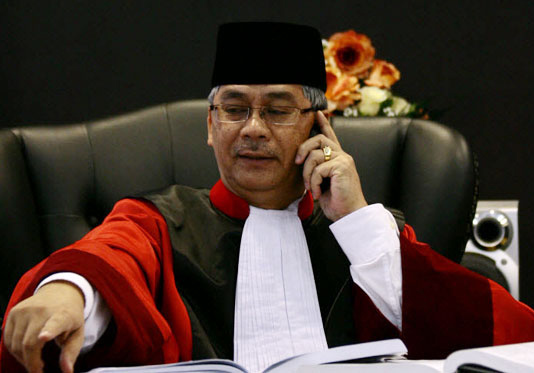
Justice Mochtar, Chief Justice of Indonesia’s Constitutional Court (photo), is accused of taking a bribe to issue a favourable verdict in an election dispute.
Justice Mochtar was arrested on 2 October 2013 and remains in custody. According to a spokesperson for the Corruption Eradication Commission, he is alleged to have received a bribe, through several intermediaries, from Hambit Binti, a district chief whose re-election was contested.
The Constitutional Court has sole jurisdiction over disputes contesting the conduct or results of elections.
The ICJ calls for a prompt, thorough and impartial investigation of these serious allegations.
The impartiality of the judiciary is an essential condition for respect for the rule of law, and is undermined when judicial decisions are made on the basis of financial inducements rather than solely according to evidence and the law.
Integrity is vital to the proper discharge of judicial office, and any judge must ensure that his or her conduct is above reproach, maintaining and enhancing the confidence of the public in the impartiality of both the individual judge and the judiciary as a whole.
According to the Beijing Statement of Principles on Independence of the Judiciary in the LAWASIA Region, signed by 32 judicial heads of Asia Pacific States, including the Chief Justice of Indonesia, “Judges shall uphold the integrity and independence of the judiciary by avoiding impropriety and the appearance of impropriety in all their activities.”
At the same time, the ICJ stresses that any eventual criminal or disciplinary proceedings, should those be warranted, must respect the independence of the judiciary and Justice Mochtar’s right to a fair trial.
Judges charged with a criminal offence, like all other persons, have the right to a fair trial by a competent, independent and impartial tribunal established by law.
The right to a fair trial in criminal cases as recognized in Indonesia and under international law and standards, including Article 14(3) of the International Covenant on Civil and Political Rights, comprises a series of procedural and substantive safeguards that must be respected during the pre-trial and trial phases.
Contact
Sam Zarifi, ICJ Asia-Pacific Regional Director, Bangkok, tel. no. +66 8078 19002 or sam.zarifi(a)icj.org
Laurens Hueting, ICJ Associate Legal Adviser (International Law and Protection Programme), Geneva, tel. no. +41 22 979 3848 or laurens.hueting(a)icj.org