Mar 1, 2021 | News
The Nepal government should immediately withdraw an ordinance that undermines the independence of constitutional human rights bodies and rescind recent appointments that were made without consultation or parliamentary approval, the ICJ, Human Rights Watch, and Amnesty International said today.
These government actions undermine public trust and confidence in the integrity of the judiciary and other constitutional bodies such as the National Human Rights Commission and the Election Commission. The illegitimate appointments process is not simply an abstract irregularity but will lead to ineffective and weak implementation of critical mandates to protect human rights and other rule of law objectives, the groups said.
“The government’s actions are a severe dent in Nepal’s long struggle for a rule of law-based constitution, which was finally adopted in 2015 to guarantee human rights,” said Meenakshi Ganguly, South Asia director at Human Rights Watch. “It is sad to see some of the same politicians who drafted the Constitution playing fast and loose with the charter just a few years later.”
On December 15, 2020, President Bidya Bhandari endorsed an executive ordinance to amend the law governing the Constitutional Council, which makes appointments to the judiciary, the National Human Rights Commission (NHRC), and other constitutional bodies including the Election Commission. Under the Constitutional Council Act, five out of six members must be present, but under the ordinance a simple majority is sufficient. Because one seat on the council is vacant the quorum has been reduced to three.
The Constitutional Council met the same day with a newly reduced quorum. Three council members made 38 nominations to vacant positions on constitutional bodies at that meeting. They included all five seats on the National Human Rights Commission (NHRC), as well as nominations to bodies established to protect the rights of Dalits, women, and marginalized minorities, and to investigate corruption allegations.
Under the Constitution, appointments to these key institutions are supposed to be vetted by parliament. However, parliament was abruptly dissolved on December 20, five days after the appointments were announced. The nominees were sworn in on February 3, 2021, despite legal challenges in the Supreme Court to the constitutionality of the nominations and the dissolution of parliament. On February 23, the Supreme Court ruled that the dissolution of parliament was unconstitutional.
“In a context where repeated calls for institutional reforms have gone unheeded for decades, this move by the government further weakens the effectiveness of constitutional bodies that are supposed to be beacons of hope for victims of human rights violations and abuses,” said Mandira Sharma, senior international legal adviser at ICJ. “Independence, impartiality and legitimacy are preconditions for these bodies to effectively and efficiently deliver their mandates.”
Nepal’s Human Rights Commission, until recently, had played an important role in calling for accountability, including by releasing the names of people allegedly responsible for serious human rights violations such as torture and extra-judicial killing and recommending that they should be prosecuted. It is currently graded ‘A’ by the Global Alliance of National Human Rights Institutions (GANHRI) for its compliance with the Paris Principles, which were adopted by the UN General Assembly as the basic standards governing the mandate and operation of effective national human rights organizations. Core among the Paris Principles is that a national human rights institution must be independent and that its independence must be guaranteed by law. The organizations are concerned that following the new appointments the commission no longer meets those standards.
Among the other constitutional bodies to which new commissioners have been appointed in the same manner are the Election Commission and the Commission for the Investigation of Abuse of Authority (CIAA), Nepal’s anti-corruption agency. The Election Commission is seen by many people as playing an important role in efforts to achieve a society based on the rule of law and respect for human rights , while the CIAA has the authority to bring corruption cases against politicians.
Numerous appointments have also been made to commissions with mandates to protect the rights of people from vulnerable groups, including the National Women’s Commission, National Dalit Commission, and National Inclusion Commission. Many of these positions had lain vacant for years.
At least two Supreme Court petitions have been filed challenging the ordinance amending the Constitutional Council Act, and the new appointments to constitutional bodies. The chief justice, Cholendra Shumsher Rana, who sits on the constitutional bench of the Supreme Court, participated in the three-member Constitutional Council meeting that made the disputed nominations, and he administered the oath of office to the new commissioners on February 3.
“The doubts over the independence and integrity of the NHRC and other commissions will endanger the protection of human rights in Nepal,” said Dinushika Dissanayake, Deputy South Asia Director of Amnesty International. “The government must immediately reverse these appointments and start a new process in consultation with the civil society and rights holders in Nepal.”
The Accountability Watch Committee, a group of prominent human rights defenders in Nepal, issued a statement on February 12 announcing that they would not “cooperate and engage with the NHRC and other constitutional bodies until the Supreme Court’s decision.” Accountability Watch also called upon “the United Nations, diplomatic missions in Nepal and international organizations not to give legitimacy and cooperate with this appointment process which is currently sub-judice at the Supreme Court of Nepal.”
Foreign donor agencies that have previously engaged with the NHRC, and with the other commissions affected by this process, should stand clearly for a proper, open, and transparent appointments process that is based on international standards, Human Rights Watch, ICJ, and Amnesty International said.
Download the statement in English and Nepali.
Contact
In London, Meenakshi Ganguly (English, Bengali, Hindi): gangulm(a)hrw.org
In Colombo, Dinushika Dissanayake (English): dinushika.d(a)amnesty.org
In Kathmandu, Mandira Sharma (English, Nepali): mandira.sharma(a)icj.org
Feb 22, 2021 | News
The ICJ has joined 21 other organizations to urge the Member States of the Human Rights Council to pass a strong resolution at the 46th Session, affirming an international commitment to protect human rights and justice in Sri Lanka.The letter reads:
To the Member States of the Human Rights Council
We, the undersigned organizations, urge the Member States of the Human Rights Council to pass a strong resolution at the 46th Session, affirming an international commitment to protect human rights and justice in Sri Lanka, with a particular focus on victims. The deteriorating human rights and accountability context in Sri Lanka is documented in detail in the High Commissioner for Human Rights’ damning January 2021 report as well as a joint assessment released by ten UN Special Procedures mandates earlier this month. The High Commissioner highlighted that “nearly 12 years on from the end of the war, domestic initiatives for accountability and reconciliation have repeatedly failed to produce results.” Just as concerning, the High Commissioner stressed the emergence of “early warning signs of a deteriorating human rights situation and a significant heightened risk of future violations.” Given the Government of Sri Lanka’s failure to comply with the State’s human rights obligations and implement agreed-upon accountability efforts and the need for urgent preventative action, it is essential that a new resolution detail immediate, concrete, and independent international efforts, including enhancing monitoring by the Office of the UN High Commissioner for Human Rights (OHCHR), creating an independent international mechanism to collect and preserve evidence of past and ongoing violations and abuses, and prioritizing support to civil society initiatives.
Multiple UN bodies and dozens of civil society organizations have documented grave human rights violations and abuses in Sri Lanka. The 26-year war between the Government and the Liberation Tigers of Tamil Eelam (LTTE) witnessed serious violations – including allegations of war crimes and crimes against humanity – by both parties. The toll on civilians was particularly high in the final stage of the conflict, when tens of thousands of Tamil civilians were killed, primarily by Government forces’ shelling of “No Fire Zones.” Following the end of the war, the country remained over-militarized and human rights abuses continued, including extrajudicial killings, enforced disappearances, arbitrary detention, torture, sexual violence, and harassment and persecution of journalists, activists, and government critics. Sri Lanka’s Tamil and Muslim populations have disproportionately suffered from these continuing violations and abuses, as they face institutionalized discrimination and higher levels of targeted state-sponsored violence.
Sri Lanka’s domestic accountability efforts have failed. As noted by the High Commissioner, numerous commissions of inquiry established by successive governments have “failed to credibly establish the truth and ensure accountability” and domestic investigations have failed to bring “a single emblematic case . . . to a successful conclusion or conviction.” Furthermore, despite co-sponsoring HRC Resolution 30/1 in 2015, which provided a comprehensive roadmap of measures to ensure justice and accountability, the Government of Sri Lanka “remains in a state of denial about the past, with truth-seeking efforts aborted and the highest State officials refusing to make any acknowledgment of past crimes.” The High Commissioner highlighted how “the failure to deal with the past continues to have devastating effects on tens of thousands of survivors.”
In the past year, prospects for domestic justice and accountability efforts in Sri Lanka have dimmed entirely. Gotabaya Rajapaksa – the former Secretary to the Ministry of Defense who oversaw the brutal end to Sri Lanka’s war – was elected President in November 2019. As one of its first acts on the international stage, the new Rajapaksa administration announced its withdrawal from HRC Resolution 30/1, part of a series of steps that led the High Commissioner to conclude that “[t]he Government has now demonstrated its inability and unwillingness to pursue a meaningful path towards accountability for international crimes and serious human rights violations.” The Government has also “proactively obstructed or sought to stop ongoing investigations and criminal trials to prevent accountability for past crimes,” promoted credibly accused war criminals, increased militarization of civilian institutions, reversed Constitutional safeguards, increasingly employed and promoted majoritarian and exclusionary rhetoric, increased surveillance and obstruction of civil society, and exacerbated human rights concerns.
In a joint assessment released earlier this month, ten UN Special Procedures mandates echoed the High Commissioner’s concern that the human rights and accountability context had further regressed in Sri Lanka, concluding, “[t]here is little hope that any domestic accountability measures will progress or achieve any degree of credibility.” They emphasized the “extremely disheartening” fact that their conclusions echo those of UN experts in 2009, who found “impunity has been allowed to go unabated throughout Sri Lanka. The fear of reprisals against victims and witnesses, together with a lack of effective investigations and prosecutions, has led to a circle of impunity that must be broken.” We share the High Commissioner’s and Special Procedures’ concerns that continued reliance on the Government of Sri Lanka to improve human rights and accountability will prove futile and dangerous. As both history and recent events in Sri Lanka have shown, if left unchecked, the Government will be emboldened to continue its abuses and further entrench impunity.
Given Sri Lanka’s long history of violations and failed domestic efforts to advance justice, and the warning signs of increased future abuses, it is critical that the Human Rights Council pass a strong resolution affirming its commitment to meaningful justice and accountability for serious human rights violations and abuses and crimes under international law in Sri Lanka. We join the High Commissioner and Special Procedures mandates in calling on Member States to pass a new resolution that strengthens the High Commissioner’s monitoring and reporting on Sri Lanka, prioritizes support to civil society initiatives assisting victims and their families, and establishes and supports a dedicated capacity to collect and preserve evidence. The dedicated capacity should come in the form of an independent international investigative mechanism. We also join the High Commissioner’s call for Member States to pursue alternative avenues for accountability and justice, including “taking steps towards the referral of the situation in Sri Lanka to the International Criminal Court,” the pursuit of “investigation and prosecution of international crimes” in national courts using extraterritorial and universal jurisdiction, and the imposition of targeted sanctions, including asset freezes and travel bans against State officials accused of grave human rights violations.
A strong resolution with concrete action by the Human Rights Council and UN human rights bodies will not only signal to the Government of Sri Lanka that continuing impunity and abuses are not acceptable, but will also affirm for survivors that the United Nations is committed to securing justice for the harms they experienced.
The text of the letter and the list of signatories is available here.
Feb 11, 2021 | News
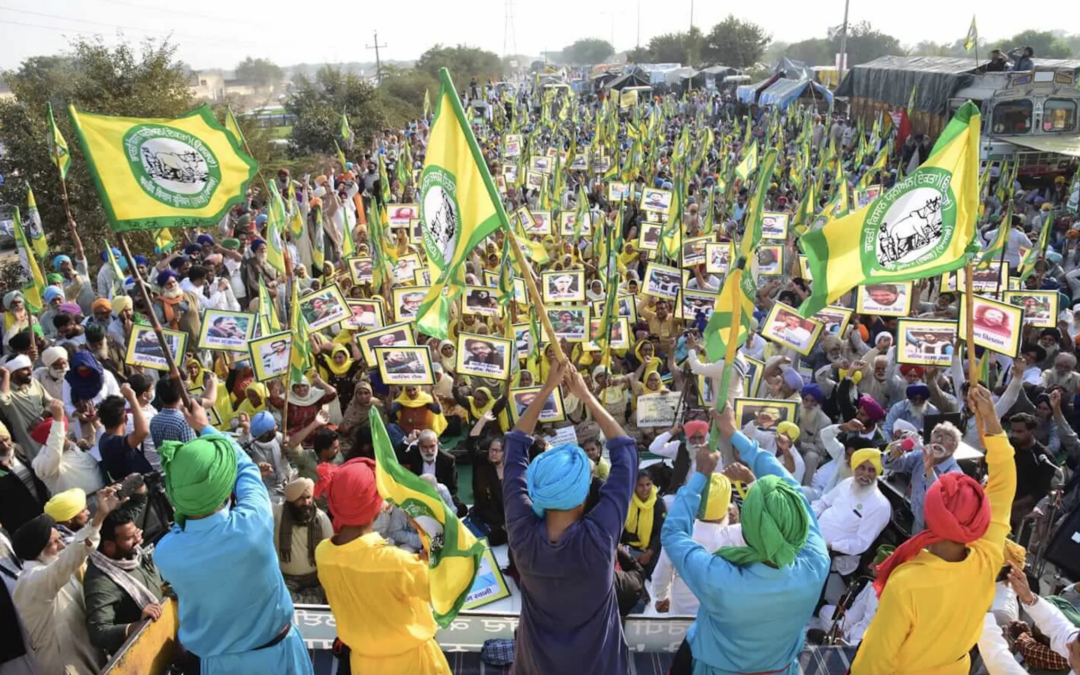
The ICJ today condemned the unlawful repression of peaceful protests and urged the Indian authorities to respect the right to freedom of assembly of Indian farmers who have been demonstrating in Delhi since November 26, 2020 against newly promulgated agricultural laws.
Since early February 2021, police have used metal barricades, cement walls and iron nails to block the roads leading to Tikri, Singhu, Ghazipur, the three main borders where the farmers have assembled. They have done so to prevent any vehicles from these areas entering Delhi. The barricades have also served to deny male and female farmers and their families, including children, consistent access to water and sanitation facilities. The protests at these sites over the past two months are reported to have been peaceful.
Thousands of farmers from all over India, and most heavily from Punjab, Haryana and Uttar Pradesh, have demanded the repeal of a new set of agricultural laws, fearing that these will serve to eliminate government protections for crop prices and thereby impact their livelihoods.
Two journalists were detained and assaulted for reporting from the ground, while nine senior journalists have been threatened with criminal charges including sedition charges by the Indian Government. More than 125 persons, including farmers and also bystanders have reportedly been arrested largely in response to a violent clash that occurred on 26 January 2021. At least 21 farmers are reported to be currently missing.
“Rather than protecting the right to peaceful protest as required by law, the Indian authorities have cracked down on farmers in an arbitrary and aggressive manner, using unlawful force and preventing free movement as well as access to essential facilities”, said Ian Seiderman, ICJ’s Legal and Policy Director.
The Indian Supreme Court on 17 December 2020, upheld the right to protest of farmers calling it “part of a fundamental right” which can be exercised “subject to public order”. The Court has further said that “[t]here can certainly be no impediment in the exercise of such rights as long as it is non-violent and does not result in damage to the life and properties of other citizens and is in accordance with law.”
“The suppression of the right to peaceful assembly has become a pattern in India, as we saw in December 2019 and January 2020 with the mass arrests of students and human rights defenders who were protesting against the Citizenship Amendment Act,” said Seiderman.
The ICJ called on the responsible authorities to remove barricades around protest sites, enable access to water and sanitation facilities and to desist from further arbitrary arrests.
Background
The three contentious farm laws being the Farmers’ Produce Trade and Commerce (Promotion and Facilitation) Act, 2020, Farmers (Empowerment and Protection) Agreement on Price Assurance and Farm Services Act, 2020 and Essential Commodities (Amendment) Act, 2020 were brought in through executive ordinance without legislative consultation and adequate scrutiny and received presidential assent on 27 September 2020.
Farmer unions from Punjab, Haryana and Uttar Pradesh began to set up protest sites on the borders of Delhi on 26 November 2020. There have been a series of unsuccessful negotiations between the Ministry of Agriculture and Farmers Welfare and the farmer representatives. In response to the protests, the Indian Supreme Court on 12 January ordered the suspension of the “implementation of the three farm laws until further orders”. The Court set up a four-person expert committee to negotiate between farmers and the Government. However the committee’s efforts have become stalled.
On 26 January, India’s Republic Day, some tens of thousands of farmers drove into Delhi in tractors, with some protestors deviating from the sanctioned routes permitted by the Delhi Police. There were clashes with the police where one protestor was killed in the violence, and nearly 400 policemen were injured. Some protestors also entered the Red Fort, an historical monument, and hoisted the Sikh religious flag on a flagpole.
On 29 January, police and at least some private forces tried to forcibly disperse the protests on Ghazipur, Singhu and Tikri borders through stone pelting and baton charging. Farmer protestors allege that the some of those working with the police were associated with Rashtriya Swayamsevak Sangathan (RSS), the ideological outfit associated with the ruling party Bhartiya Janata Party.
On 6 February there was a three-hour blockade on state and national highways placed by farmers throughout large parts of India in protest against the agricultural laws, the government’s measures against the protestors and the reduction of budgetary allocation for farmers.
Freedom of assembly is protected under the International Covenant on Civil and Political Rights, to which India is a party.
Contact
Maitreyi Gupta, ICJ India Legal Adviser, t: +91 77 560 28369 e: maitreyi.gupta(a)icj.org
Feb 3, 2021 | News
The Pakistani authorities must end their ongoing persecution of the Ahmadiyya religious minority, which is now extending across borders, said Amnesty International, Human Rights Watch and the ICJ, following an attempt by the Pakistan Telecommunications Authority (PTA) to shut down the website of the Ahmadis’ US-based community.
On 24 December 2020, the PTA sent a legal notice to the administrators of trueislam.com, stating that the site was in violation of Pakistan’s Constitution, and warning they could be charged with blasphemy – a charge potentially carrying the death penalty – for referring to themselves as Muslims. The site’s administrators have also been threatened with a fine of 500 million PKR (US$3.1 million) if they fail to take the website down.
The trueislam.com website provides general information about Ahmadi history and beliefs, details the work carried out by the Ahmadi community in the US, including blood drives and veterans’ support, and features interviews with prominent community members such as the actor Mahershala Ali.
“Ahmadis in Pakistan have long been the target of systematic attacks, and successive Pakistani governments have failed to respect, protect and promote their human rights, forcing many to flee to other countries. The PTA’s efforts to close down their US website shows that even then, a life free from discrimination can be out of reach,” said Samira Hamidi, Deputy Regional Director at Amnesty International.
“Digitally policing Ahmadis on what they can or can’t preach, no matter where they are, is a flagrant violation of Pakistan’s legal obligations under the International Covenant on Civil and Political Rights to which the country is a state party. We urge the PTA to desist from its targeted campaign against Ahmadis and to ensure that everyone in Pakistan is able to express themselves and profess their religion freely, without fear of reprisals or discrimination.”
According to a PTA press release on 22 January 2021, access to trueislam.com has now been blocked in Pakistan. Amnesty International has been shown an email sent by the head of the PTA on 27 December 2020 to various servers in the country, instructing them to remove access to the website, along with three others related to the Ahmadi community.
“Pakistan has an obligation to protect the rights to freedom of expression and religion online every bit as much as in places of worship or in public spaces. Far from facilitating such protection, the PTA is extending its long arm to violate the rights of persons well beyond Pakistan’s own borders,” said Ian Seiderman, ICJ Legal and Policy Director.
The administrators of the website told Amnesty International that prior to receiving the notice, they received emails from various sources filled with hate speech.
“I was suddenly inundated with hate-filled messages from extremists on my email. And then a few days later, on December 24, the PTA emailed me a notice threatening criminal prosecution and fines for blasphemy and giving 24 hours to remove the trueislam.com website,” said Amjad Mahmood Khan, a US-based Ahmadi lawyer who was targeted.
“It’s obvious the PTA seeks to prosecute US citizens operating a US-based website. This is an unprecedented act to extend the reach of Pakistan’s abominable blasphemy laws to US citizens, and it’s a new frontier in persecution for Ahmadis worldwide,” Khan said.
The legal notice to trueislam.com is part of a broader pattern of state overreach by the PTA in recent months, which has included issuing notices to Google and Wikipedia to remove “sacrilegious content”.
“The attempt to extend Pakistan’s persecution of Ahmadis to other jurisdictions is a dangerous escalation. The Pakistani government should end its policing of Ahmadi speech outside the country and focus on providing an enabling environment for free speech, expression, and freedom of religion inside Pakistan,” said Brad Adams, Asia director at Human Rights Watch.
Background
The Pakistani penal code explicitly discriminates against religious minorities and targets Ahmadis by prohibiting them from “indirectly or directly posing as a Muslim.” Ahmadis are banned from declaring or propagating their faith publicly, building mosques, or making the Muslim call for prayer. For more information on the persecution of the Ahmadiyya community in Pakistan, see here.
On 25 December 2020, the Pakistan Telecommunications Authority issued a press release saying that Google and Wikipedia had been issued notices. On 28 December 2020, the Lahore High Court Chief Justice Qasim Khan ordered the Federal Investigative Agency to issue notices to Google, stating that shutting down websites was not enough.
For more information about the law on blasphemy in Pakistan, see here.
Contact
Reema Omer, ICJ’s Senior International Legal Advisor (South Asia), reema.omer(a)icj.org
Feb 2, 2021 | News
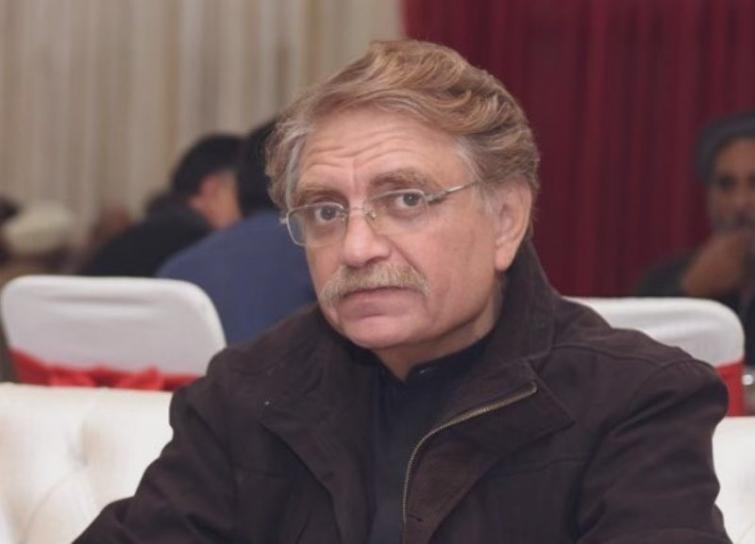
The ICJ today denounced the decision by Pakistani authorities to conduct the trial of Idrees Khattak, a leading human rights defender, in a military court.
Idrees Khattak is charged with “spying” among other offenses, related to his monitoring of violations by military forces in 2009. He was forcibly disappeared by the Pakistani Military Intelligence in November 2019. His whereabouts remained unknown until June 2020, when military authorities informed the Commission of Inquiry on Enforced Disappearances that he was being tried under the Official Secrets Act, 1923.
The Peshawar High Court yesterday dismissed a petition challenging the jurisdiction of the military courts in this case. Under international standards, including the International Covenant on Civil and Political Rights to which Pakistan is a party, civilians such as Idrees Khattak must not be subject to the jurisdiction of military tribunals.
“Idrees Khattak was subjected to the serious crime of enforced disappearance and instead of bringing the perpetrators of this violation to account, the Pakistani military has kept him arbitrarily detained and is now violating his rights further by subjecting him to a military court,” said Sam Zarifi, ICJ’s Secretary General.
“The Pakistan government must immediately release Idrees Khattak. If there is real and credible evidence implicating him in a cognizable crime, he should be tried by a civilian court and his right to a fair trial should be fully respected,” said Zarifi
The ICJ has found proceedings before Pakistani military courts fall well short of national and international laws requiring fair trials before independent and impartial courts:
- Judges are part of the executive branch of the State and continue to be subjected to military command;
- The right to appeal to civilian courts is not available;
- The right to a public hearing is not guaranteed;
- A duly reasoned, written judgment, including the essential findings, evidence and legal reasoning, is denied; and
- The death penalty may be implemented after unfair trials.
Idrees Khattak has been charged on multiple counts related to spying and other conduct “prejudicial to the safety or the interests of the State” under Section 3 of the Official Secrets Act as well as section 59 of the Pakistan Army Act, 1952. The Pakistan Army Act gives military courts jurisdiction to try civilians for certain offences under the Official Secrets Act.
The alleged conduct for which Idrees Khattak has been charged dates back to July 2009 – ten years before his enforced disappearance.
A group of 10 independent experts appointed by the UN Human Rights Council have characterized Idreek Khattak’s case as “emblematic of a series of documented enforced disappearances in Pakistan, where many human rights defenders are similarly silenced for their legitimate work of monitoring, documenting and advocating against a range of human rights violations and attacks against minorities.”
The ICJ calls on Pakistani authorities to immediately release Idrees Khattak.
The ICJ also calls on Pakistani authorities to ensure military courts only have jurisdiction to try military personnel for military offences and to bring procedures of military courts in conformity with international standards.
Contact
Sam Zarifi, ICJ’s Secretary General, sam.zarifi(a)icj.org
Reema Omer, ICJ’s Senior International Legal Advisor (South Asia), reema.omer(a)icj.org
Additional information
In July 2017, in its Concluding Observations after Pakistan’s first periodic review under the International Covenant on Civil and Political Rights (ICCPR), the UN Human Rights Committee stated that it was concerned by the jurisdiction of military courts over civilians and allegations of fair trial violations in military courts’ proceedings.
The Human Rights Committee recommended that Pakistan “review the legislation relating to the military courts with a view to abrogating their jurisdiction over civilians and their authority to impose the death penalty” and “reform the military courts to bring their proceedings into full conformity with articles 14 and 15 of the Covenant in order to ensure a fair trial.”
Jan 23, 2021 | News
The ICJ stated today that a newly appointed Commission of Inquiry tasked to review reports on past human rights and humanitarian law violations was unlikely to bring justice to victims of conflict era atrocities.
On 21 January 2021, Sri Lankan President Gotabaya Rajapaksa appointed a three-member Commission of Inquiry (CoI), headed by sitting Supreme Court Judge A.H.M. Nawaz to assess the findings and recommendations of preceding CoIs and Committees on human rights violations, serious violations of international humanitarian law and other such serious offences.
“Sri Lanka has an appalling track record on accountability in relation to toothless inquiry mechanisms.” said Ian Seiderman, ICJ’s Legal and Policy Director. “the tendency to set up these kinds of processes just ahead of sessions the UN Human Rights Council raises the suspicion that the announcement is targeted to deflect robust action by the Council beginning next month”
Sri Lanka is due to be taken up at the 46th session of the UN Human Rights Council on 24 February 2021, where the UN High Commissioner for Human Rights will present her report on Sri Lanka’s implementation of Council Resolution 30/1.
The decision to set up this COI was first announced in February 2020, by the Minister of Foreign Affairs at the 43rd Session of the UN Human Rights Council when he declared the Government’s withdrawal of support for the process under Resolutions 30/1, 34/1 and 40/1.
The Commission is tasked with the responsibility of identifying the “manner in which the recommendations have been implemented so far in terms of the existing law and what steps need to be taken to implement those recommendations further in line with the present Government policy.” It has been given a six-month mandate.
COIs and similar bodies established by successive Sri Lankan governments have been ineffective and deeply deficient in terms of their mandate, functions and independence. As the ICJ has previously documented, such mechanisms have largely been partisan mechanisms for punishing political opponents or for shielding perpetrators and institutions from responsibility.
The ICJ called upon the UN High Commissioner for Human Rights and the Member States to acknowledge the Sri Lankan Government’s categorical inability and unwillingness to ensure accountability domestically and urges the Council to explore viable international alternatives to ensure justice for victims of gross human rights violations.
Contact
For questions and clarifications, please contact Osama Motiwala, Communications Officer – osama.motiwala(a)icj.org