Jan 14, 2021 | News
The ICJ today deplored the comprehensive failure of the Sri Lankan authorities to ensure accountability for conflict-era crimes, marked by the dropping of charges and release of all five accused in the Joseph Pararajasingham murder trial.
Parliamentarian Joseph Pararajasingham was killed by unidentified gunmen on 25 December 2005 while he attended Christmas mass at the Batticaloa St. Mary’s Cathedral, in the Eastern Province of Sri Lanka. Eight other people, including his wife, were injured during the firing.
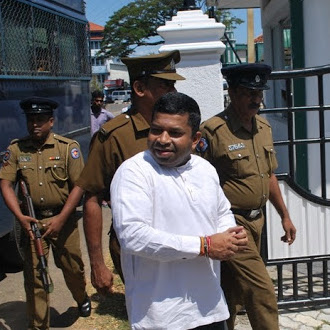
Yesterday, the Batticaloa High Court acquitted and ordered the released of all five accused, including former-LTTE cadre and now-Member of Parliament, Sivanesathurai Chandrakanthan alias ‘Pillaiyaan’, in the trial of Pararajasingham, a former Tamil National Alliance Parliamentarian. The judgment was delivered after the Attorney General’s Department (AG) informed the Court that it would not proceed with the prosecution. The AG provided no reason publicly for this decision.
“The shelving of this case five years after it began, is a blow to the victims of this serious human rights atrocity.” said Ian Seiderman, ICJ’s Legal and Policy Director.
“This constitutes yet another marker of Sri Lanka’s consistent failure to hold accountable perpetrators of serious conflict-era crimes,” he added.
In November 2020, the AG had informed the Batticaloa High Court that he intended to proceed with the case, notwithstanding the Court of Appeal deemed inadmissible important evidence of the prosecution’s case.
The UN Office of the High Commissioner on Human Rights Investigation on Sri Lanka (2015) had already concluded that “there are reasonable grounds to believe that the Karuna Group (of which Chandrakanthan was a member) killed Joseph Pararajasingham, and that it was aided and abetted by security and army personnel.”
The acquittal in Pararajasingham’s murder case follows that of another Tamil Parliamentarian Nadarajah Raviraj, where an all-Sinhalese jury acquitted five persons including three Navy intelligence officers in December 2016, a decade after his murder.
The UN High Commissioner for Human Rights identified both these cases, in which no progress had been made, emblematic of Sri Lanka’s dismal record on accountability.
The ICJ called on the Attorney General’s Department to reopen fresh investigations into the murder of the deceased legislator so as to ensure justice and justice for the victims of this atrocity.
The ICJ notes that the Attorney General maintains the dual role of public prosecutor and as attorney for the State, positions which are prone to come into tension. The former UN Special Rapporteur on the Independence of Judges and Lawyers, Monica Pinto, following her mission to Sri Lanka in 2016 observed that “there is a general perception that, first and foremost, the [Attorney General’s] department defends the interests of the government and not the public’s interest.”
Background
Sivanesathurai Chandrakanthan who broke away from the Liberation Tigers of Tamil Eelam (LTTE) in 2004, functioned as a paramilitary, in support of the then-Rajapaksa Government. He is presently the leader of Tamil Makkal Viduthalai Pulikal (TMVP), a political party aligned to the Government and was voted into Parliament at the 2020 General Elections.
Investigation into the killing only began in 2015, after a new government was formed following elections which saw the defeat of Rajapaksa. Chandrakanthan was taken into remand custody on 11 October 2015 when he arrived at the Criminal Investigation Department to record a statement in relation to the assassination of the late Tamil politician. The Attorney General indicted that Chandrakanthan (who was 3rd accused) in the High Court of Batticaloa for offences committed under the Penal Code and the Prevention of Terrorism Act. He was granted bail for the first time in November 2020 after the primary evidence against the accused was deemed inadmissible by the Court of Appeal. The case was fixed for January 11 only after the AG informed courts he intended proceeding with the case notwithstanding the Appeal Court ruling.
Contact
Osama Motiwala, ICJ Communications Officer, Asia & Pacific programme, e: osama.motiwala(a)icj.org
Dec 2, 2020 | News
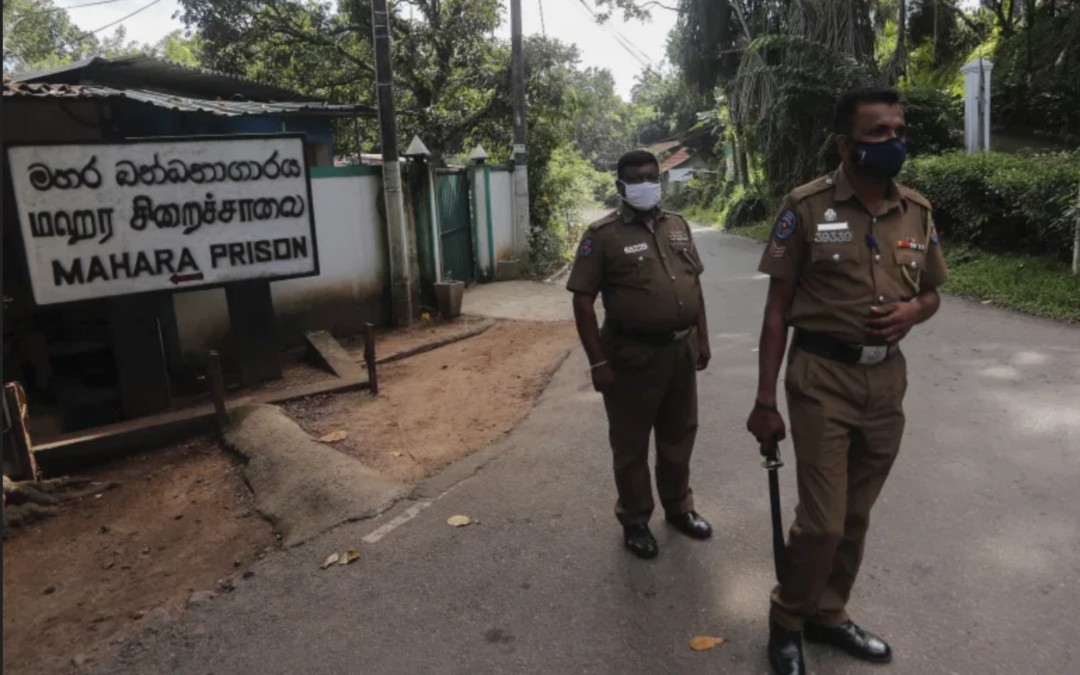
The ICJ today called upon the Sri Lankan authorities to conduct a prompt, thorough and impartial investigation into the events involving the use of lethal force by prison guards at Mahara prison on 29 and 30 November, which left at least nine inmates killed and over hundred others injured.
The action by the guards was taken in response to unrest resulting from protests by inmates over unsafe and overcrowded conditions in the context of the COVID-19 pandemic.
The ICJ also called for urgent measure to address the unsafe conditions in Sri Lankan prisons to protect the right to health and life, including where necessary by releasing detainees.
“The tragic events of Mahara prison are a consequence of the failure of the Sri Lankan authorities to effectively address the situation of prison conditions, which has turned into a full blown human rights and public health crisis in the wake of the COVID-19 pandemic”, said Ian Seiderman, ICJ Legal and Policy Director
The unrest was the culmination of a series of protests staged by the prisoners demanding an increase in coronavirus testing and new isolation facilities for infected prisoners. According to Senaka Perera, President of the Committee for Protecting the Rights of the Prisoners, around 200 inmates of the Mahara prison have been infected with COVID-19.
While the Minister of Rehabilitation and Prison Reforms and the Inspector General of Police have instructed the Criminal Investigation Department to probe the unrest caused at the Mahara Prison, the Minister of Justice has formed a separate five-member committee, chaired by former High Court Judge Kusala Saorini Weerawardena, to conduct its own investigation.
The ICJ recalls that under international law, the use of lethal force by State authorities is only permissible where strictly necessary to protect life. This standard should govern any investigation, and those responsible for unlawful conduct resulting in death or injuries to prisoners must be held to account.
“In addition to ensuring accountability and redress for any violations at the Mahara Prison, the authorities must act swiftly to meet the legitimate grievances of detainees throughout the country”, added Ian Seiderman.
“An effective response is not optional, but is necessary to fulfill the State’s legal obligation to provide for equal access to healthcare and health services to prisoners, who are among the most vulnerable to the ravages of COVID-19 in highly unsafe, enclosed and overcrowded environments.” Seiderman added.
The incident follows a wave of similar protests in several other prisons in the country. On 18 November, five inmates who were under quarantine at the Old Bogambara Prison attempted to break out and an inmate was shot dead when the prisoner officers opened fire at the fleeing inmates.
The ICJ called for the release of detainees who are particularly at risk of losing their life or suffering severe health effects from COVID-19. This would also apply to other convicts who could be released without compromising public safety, such as those sentenced for minor, non-violent offences.
Background
Speaking in Parliament on Monday, Minister of Rehabilitation and Prison Reforms Dr. Sudharshini Fernandopulle stated that the Government has taken steps to reduce overcrowding by directing COVID-19 positive prisoners out of the prisons to the Welikanda Hospital and moving all women inmates to the Kandakadu Rehabilitation Centre. She also stated that a mechanism has been put in place to obtain bail for those arrested for minor drug offences. Moreover, a presidential pardon has been granted to over 600 convicts of minor offences who were in remand due to their inability to pay the required fine.
Several UN bodies, including the WHO and OHCHR, came together in recommending that States consider limiting the deprivation of liberty including pretrial detention, to a measure of last resort and enhance efforts to resort to non-custodial measures.
Contact
Osama Motiwala, Communications Officer – osama.motiwala(a)icj.org
Nov 26, 2020 | Advocacy, News
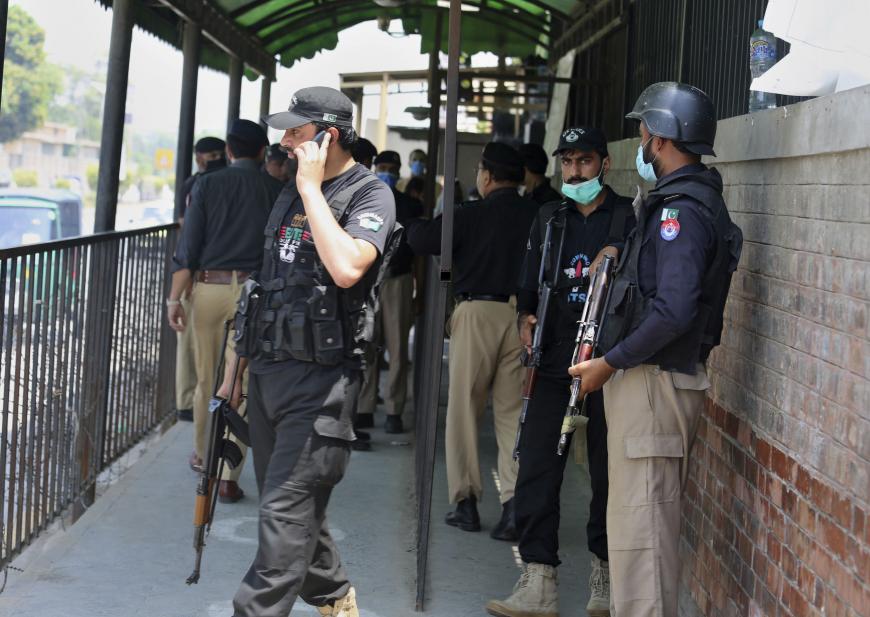
Pakistani authorities should urgently and impartially investigate a surge in violent attacks on members of the Ahmadiyya religious community, Human Rights Watch, Amnesty International, and the ICJ said today.
The authorities should take appropriate legal action against those responsible for threats and violence against Ahmadis.
Since July 2020, there have been at least five apparently targeted killings of members of the Ahmadiyya community. In only two of the cases have the police taken a suspect into custody. Pakistani authorities have long downplayed, and at times even encouraged, violence against Ahmadis, whose rights to freedom of religion and belief are not respected under Pakistani law.
“There are few communities in Pakistan who have suffered as much as the Ahmadis,” said Omar Waraich, head of South Asia at Amnesty International. “The recent wave of killings tragically underscores not just the seriousness of the threats they face, but also the callous indifference of the authorities, who have failed to protect the community or punish the perpetrators.”
On November 20, a teenage assailant is alleged to have fatally shot Dr. Tahir Mahmood, 31, as he answered the door of his house in Nankana Sahib district, Punjab. Mahmood’s father and two uncles were injured in the attack. The police reported that the suspect “confessed to having attacked the family over religious differences.”
Several recent attacks have occurred in the city of Peshawar, in Khyber Pakhtunkhwa province. On November 9, Mahmoob Khan, 82, was fatally shot while waiting at a bus station. On October 6, two men on a motorcycle stopped the car of Dr. Naeemuddin Khattak, 57, a professor at the Government Superior Science College, and fired five shots, killing him. His family said he had a “heated argument over a religious issue” with a colleague a day before. Jamaat-i-Ahmadiyya, a community organization, issued a statement saying Khattak had previously received threats and was targeted because of his faith.
On August 12, Meraj Ahmed, 61, was fatally shot as he was closing his shop in Peshawar. On July 29, an alleged 19-year-old assailant killed Tahir Ahmad Naseem, 57, inside a high-security courtroom. Naseem was facing trial for blasphemy accusations. In a video that circulated on social media, the suspect states that Naseem was a “blasphemer.”
Successive Pakistani governments have failed to protect the human rights and security of the Ahmadiyya community. The penal code explicitly discriminates against religious minorities and targets Ahmadis by prohibiting them from “indirectly or directly posing as a Muslim.” Ahmadis are banned from declaring or propagating their faith publicly, building mosques, or making the Muslim call for prayer.
The authorities arbitrarily arrest, detain, and charge Ahmadis for blasphemy and other offenses because of their religious beliefs. The police have often been complicit in harassment and bringing fabricated charges against Ahmadis or have not intervened to stop anti-Ahmadi violence. The government’s failure to address religious persecution of Ahmadis has facilitated violence against them in the name of religion.
“Pakistan was part of the consensus at the UN General Assembly that required that states take active measures to ensure that persons belonging to religious minorities may exercise fully and effectively all their human rights and fundamental freedoms without any discrimination and in full equality before the law,” said Ian Seiderman, legal and policy director at the International Commission of Jurists. “The Pakistani government has completely failed to do so in the case of the Ahmadis.”
The Pakistani government also promotes discriminatory practices against Ahmadis. For example, all Pakistani Muslim citizens applying for passports are obliged to sign a statement explicitly stating that they consider the founder of the Ahmadi community an “imposter,” and consider Ahmadis to be non-Muslims.
Pakistani laws against the Ahmadiyya community violate Pakistan’s international legal obligations under the International Covenant on Civil and Political Rights (ICCPR), which Pakistan ratified in 2010, including the rights to freedom of conscience, religion, expression, and association, and to profess and practice one’s own religion.
Independent experts of the United Nations Human Rights Council, including the special rapporteurs on the freedom of religion or belief and the UN special rapporteur on minority issues, and the special rapporteur on extrajudicial, summary or arbitrary executions, have previously expressed concern at the persecution of the Ahmadiyya community in Pakistan.
“Pakistan’s federal and provincial governments should take immediate legal and policy measures to eliminate widespread and rampant discrimination and social exclusion faced by the Ahmadiyya community in Pakistan,” said Patricia Gossman, associate Asia director at Human Rights Watch. “The government should repeal the blasphemy law and all anti-Ahmadiyya provisions.”
Contact
In Brussels, for Human Rights Watch, Patricia Gossman: +32-472-982-925; or +1-347-322-8638 (WhatsApp); or gossmap@hrw.org. Twitter: @pagossman:
In Geneva, for the International Commission of Jurists, Ian Seiderman: e: ian.seiderman(a)icj.org
In Colombo, for Amnesty International, Omar Waraich: +44 7378 980870 (mobile); or omar.waraich@amnesty.org.
Nov 19, 2020 | News
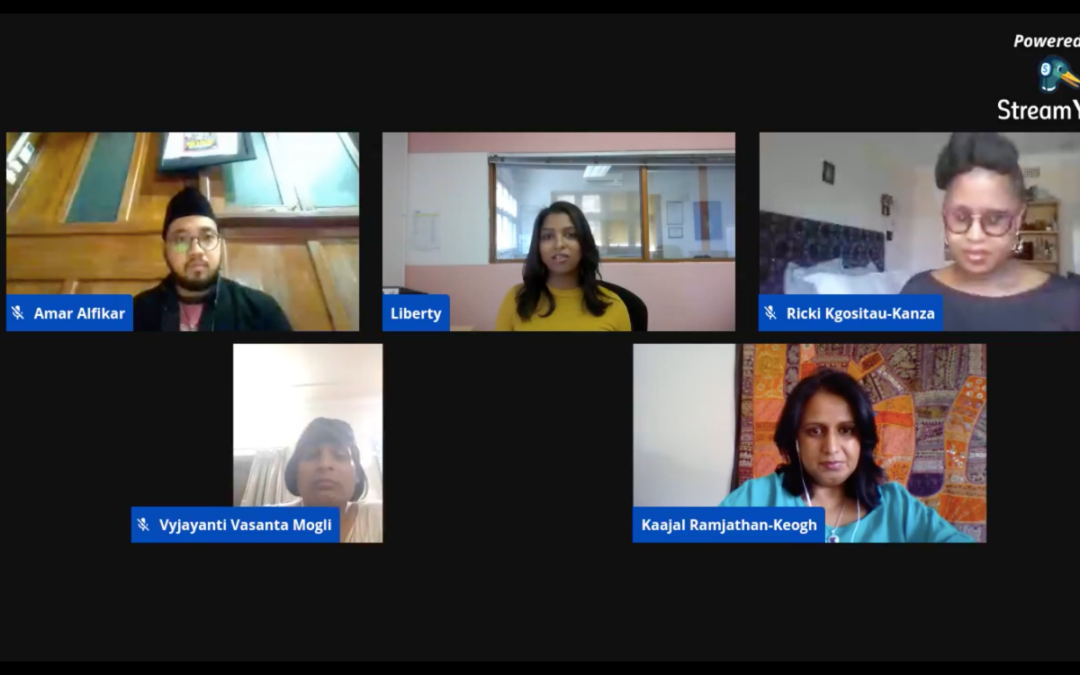
On 18 November 2020, the ICJ hosted a Facebook Live with four transgender human rights activists from Asia and Africa. It highlighted the stark reality between progressive laws and violent lived realities of transgender people.
The 20th November 2020 marks the Transgender Day of Remembrance (TDOR), the day when transgender and gender diverse people who have lost their lives to hate crime, transphobia and targeted violence are remembered, commemorated and memorialized.
The discussions focused on their individual experiences of Transgender Day of Remembrance in their local contexts, the impact of COVID-19 on transgender communities and whether laws are enough to protect and enforce the human rights of transgender and gender diverse people.
The renowned panelists were from four different countries, Amar Alfikar from Indonesia, Liberty Matthyse from South Africa, Tshepo Ricki Kgositau-Kanza from Botswana and Vyjayanti Vasanta Mogli from India. The panel was moderated by the ICJ Africa Regional Director, Kaajal Ramjathan-Keogh.
The panel aimed to provide quick glimpses into different regional contexts and a platform for transgender human rights activists’ voices on the meaning of Transgender Day of Remembrance and the varied and devastating impacts of COVID-19 on transgender people.
The speakers discussed the meaning that they individually ascribe to Transgender Day of Remembrance. A common theme running across the conversations was that it is not enough to highlight issues and concerns of the transgender community only on this day. Instead, these discussions should be part of daily conversations about the human rights of transgender people at the local and international level.
Liberty Matthyse discussed the importance of remembering the transgender persons who have lost their lives over the past years, and added:
“South Africa generally is known as a country which has become quite friendly to LGBTI people more broadly and this, of course, stands in stark contradiction to the lived realities of people on the ground as we navigate a society that is excessively violent towards transgender persons and gay people more broadly.”
Amar Alfikar describes his work as “Queering Faiths in Indonesia”. This informs his understanding of what Transgender Day of Remembrance means in his country and he believes that:
“Religion should be a source of humanity and justice. It should be a space where people are safe, not the opposite. When the community and society do not accept queer people, religion should start giving the message, shifting the way of thinking and the way of narrating, to be more accepting, to be more embracing.”
It was clear from the discussions that a lot of the issues that have become prominent during the COVID-19 pandemic, have not arisen due to the pandemic. In fact, the COVID-19 pandemic has had the effect of a magnifying glass, amplifying existing challenges in the way that transgender communities are treated and driven to margins of society. Speaking about the intersectionality of transgender human rights, Vyjayanti Vasanta Mogli said:
“I don’t think LGBT rights or transgender rights exist in isolation, they are part of a larger gamut of climate change, racial equality, gender equality, the elimination of plastics, and all of that.”
The panelists had different opinions on whether it is enough to rely on the law for the recognition and protection of the human rights of transgender individuals.
The common denominator, however, was that the laws as they stand have a long way to go before fully giving effect to the right of equality before the law and equal protection of the law without discrimination of transgender people.
Tshepo Ricki Kgositau-Kanza, who was a litigant in a landmark case in Botswana in which the judiciary upheld the right of transgender persons to have their gender marker changed on national identity documents, explained the challenges with policies which, on their face, seem uniform:
“Uniform policies… are very violent experiences for transgender persons in a Botswana context where the uniform application of laws and policies is binary and arbitrarily assigned based on one’s sex marker on one’s identity document which reflects them either as male or female. Anybody in between or outside of that kind of dichotomy is often rendered invisible and vulnerable to a system that can easily abuse them.”
This conversation can be viewed here.
Contact
Tanveer Jeewa, Communications Officer, African Regional Programme, e: tanveer.jeewa(a)icj.org

Nov 3, 2020 | News
The government of Nepal should act without delay to carry out the National Human Rights Commission’s recommendations, particularly those concerning Nepal’s obligation to investigate and, where justified by the evidence, prosecute those accused of serious abuses, Human Rights Watch and the ICJ said today.
On October 15, 2020, the National Human Rights Commission (NHRC) published 20 years of data, naming 286 people, mostly police officials, military personnel, and former Maoist insurgents, as suspects in serious crimes. In particular, the information relates to cases where its investigators concluded there is evidence warranting investigation and prosecution for abuses including torture, enforced disappearance, and extrajudicial killing.
In addition to domestic use, the data should provide important guidance to the United Nations in vetting Nepali security forces for peacekeeping missions, and to other countries for efforts to ensure international justice, including in their obligations to prosecute or extradite individuals suspected of responsibility for crimes under international law. They will also be of use to the United States in carrying out vetting requirements under the “Leahy laws” that prohibit military assistance to military and security forces implicated in serious human rights abuses.
“The National Human Rights Commission has taken an important step in publishing this information, which will be an essential tool for the UN and foreign governments in their engagement with Nepali security forces,” said Meenakshi Ganguly, South Asia director at Human Rights Watch. “The report highlights just how little progress there has been to establish meaningful human rights protections to address conflict era violations and ongoing abuses.”
The culture of impunity in Nepal is contributing to ongoing serious human rights abuses, the groups said. There have been numerous credible allegations of extrajudicial executions, torture, and ill-treatment, sometimes resulting in custodial deaths, and deaths resulting from the unlawful and excessive use of force in policing demonstrations in recent years. In many such cases, the authorities have refused even to register complaints, much less carry out effective investigations or prosecutions.
International and foreign authorities, including prosecutors and judicial authorities, should be aware of the commission’s data when considering targeted sanctions for people accused of serious violations, or preparing criminal cases under the principal of universal jurisdiction against those allegedly responsible for crimes such as torture and enforced disappearances, Human Rights Watch and the International Commission of Jurists said.
Particularly serious violations and abuses were committed between 1996 and 2006 during an armed conflict between government security forces and Maoist rebel forces. The former Maoist party in now part of the government. Since the conflict ended, the former enemies have effectively joined ranks to successfully shield their supporters from accountability, fostering a culture of impunity that continues to protect those responsible for ongoing extrajudicial killings and deaths in custody allegedly resulting from torture.
The NHRC said in its report that the government had mostly failed to act against suspects, despite being informed of the commission’s findings. Human Rights Watch and the International Commission of Jurists have not independently investigated all the cases documented, but the Nepal government is under an obligation to thoroughly and impartially investigate the allegations in the report with a view to bringing those responsible for these crimes to justice. Altogether the NHRC has recommended action against 98 police officers, 85 soldiers, and 65 members of the former Communist Party of Nepal (Maoist).
The NHRC presented and analyzed its findings and recommendations spanning two decades, since its establishment in 2000. It has registered 12,825 complaints and reached conclusions in 6,617 cases, making 1,195 recommendations to the government. The recommendations have been carried out fully in only 13 percent of cases, partially carried out in 37 percent, and not carried out at all in the remaining 50 percent. The government has often carried out recommendations to make payments to victims or their families but has very rarely investigated or prosecuted abuses.
In a March 6, 2013 ruling, the Supreme Court decided that the NHRC has the authority to refer these cases to the attorney general and prosecutors for investigation and prosecution, yet the NHRC has been unwilling to use that authority. The NHRC has also chosen not to use its prerogative to name those allegedly responsible for the abuses until now, waiting until the last days of the outgoing commissioners’ terms to publish the report.
“While releasing this report is an important step toward addressing entrenched impunity in Nepal, it has exposed the fact that the commission has struggled with a lack of investigative capacity, failing in many cases to summon alleged perpetrators or demand documentation,” said Mandira Sharma, senior international legal advisor at the International Commission of Jurists. “Had the NHRC used its authority to request prosecution from the attorney general where it has gathered sufficient evidence, it would have made a real contribution in tackling impunity and in addressing police failures in investigating ongoing cases of rights violations.”
The NHRC has long been dogged by political interference in the appointment of commissioners, and a widely perceived reluctance to confront the government or other powerful institutions, such as the army and political parties, that oppose accountability for rights abuses. In 2019 the government proposed amendments to the 2012 National Human Rights Commission Act that would further undermine its independence.
To download the full statement with additional information, click here. (PDF)
Contact
For International Commission of Jurists, in Nepal, Mandira Sharma (Nepali, English): +977-9851048475 (mobile); or mandira.sharma@icj.org.
Oct 27, 2020 | News
The ICJ today condemned the adoption of amendments to the Sri Lankan Constitution, which serve to expand the powers of the President, while encroaching on the powers of the parliament and courts.
The 20th Amendment to the Constitution was passed into law on 22 October, with 156 of the 225 parliamentarians voting in favour of the amendment, after a mere two-day debate, overruling the Opposition’s request for at least four days of deliberation.
The ICJ noted that the Amendment undoes most of the reforms brought about by the 19th Amendment adopted only in 2015. Critically, it introduces judicial appointment procedures which are incompatible with principles of the justice by reintroducing the Parliamentary Council, consisting only of political actors.
That body serves to merely advise the President, regarding appointments to the judiciary and other key public institutions.
The 20th amendment gives the President sole and unfettered discretion to appoint all judges of the superior courts. Under international standards, appointments to the judiciary should not be vested solely with the executive.
Given the gravity of the constitutional changes, the ICJ expressed regret that the Government had suspended Standing Order 50 (2), which requires every bill to be referred to the relevant Sectoral Oversight Committee for consideration prior to being debated in parliament.
“It is appalling that Constitutional amendments with such far reaching consequences on the constitutional governance of the country were rushed through in such haste, especially at a time Sri Lanka battles with its largest COVID-19 outbreak to date,” said Ian Seiderman, ICJ’s Legal and Policy Director.
The ICJ welcomes the alteration made to some of the problematic provisions of the 20th Amendment Bill during Committee Stage, particularly in relation to presidential immunity and the time period within which the president can dissolve Parliament.
The ICJ nonetheless is particularly concerned with the decision of the Minister of Justice to introduce entirely new provisions at Committee Stage, particularly in relation to the increase of the number superior court judges. The Supreme Court Bench will be increased from 11 to 17 and Court of Appeal from 12 to 20. These substantive amendments were not part of the gazetted 20th Amendment bill, the provisions of which were challenged before the Supreme Court by as many as 39 petitioners.
“While an increased number of judges may reduce court delays and expedite the judicial process, introducing substantive amendments such as this at Committee Stage is problematic at multiple levels,” Seiderman added.
“Sneaking in substantial changes at the last stage of the legislative process where there is no opportunity for public comment or judicial review is not consistent with democratic processes under the rule of law.”