Jan 18, 2020 | Advocacy, News
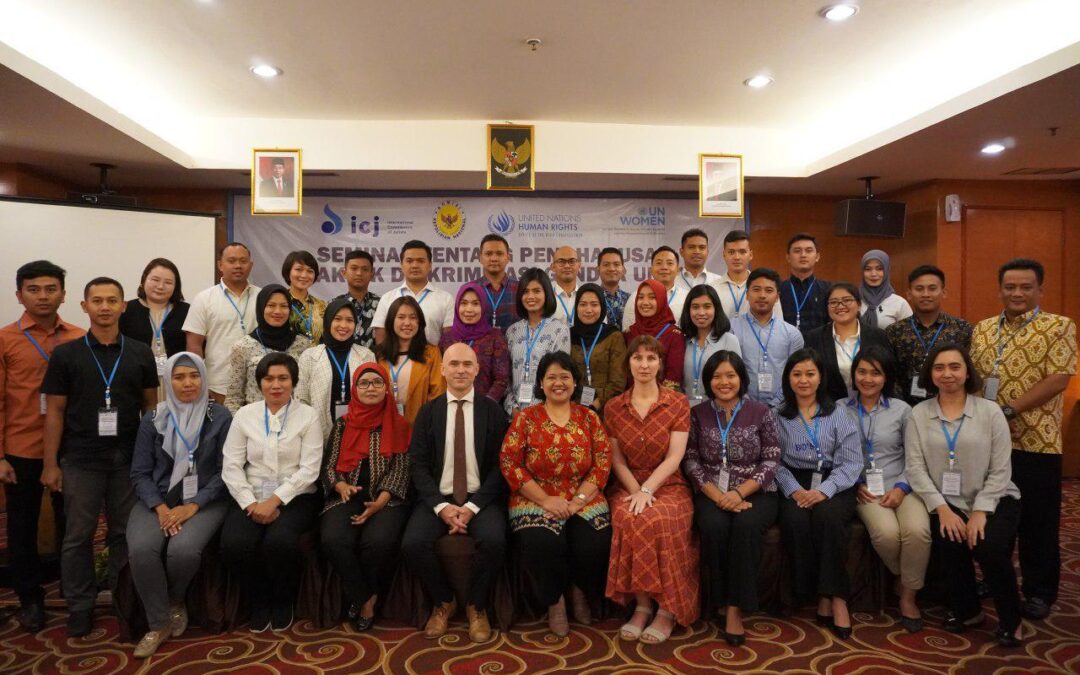
From 16 to 17 January 2020, the ICJ, in collaboration with the National Police Commission (KOMPOLNAS), UN Women, and the Office of the United Nations High Commissioner for Human Rights (OHCHR) organized a Seminar on Eliminating Gender Discriminatory Practices for the Police.
It was held in Bogor, Indonesia and gathered 30 law enforcement officers from Indonesian provinces that are reported to have the highest rate of incidents of violence against women.
Frederick Rawski, ICJ’s Asia and the Pacific Regional Director, stressed to participants that, “Police officers are the first point of contact for women who try to access justice for violations committed against them. It is important therefore for these officers to be well-trained on gender sensitivity and women’s human rights.”
“Only 40 percent of women speak out on violence, and only 10 percent of these report to the police because they are often blamed for the violence they experience or humiliated by those who should protect them,” added Ms. Doreen Buettner, Programme Specialist on Access to Justice of UN Women.
Indonesia is a State Party to the Convention on Elimination of All Forms of Discrimination Against Women (CEDAW), having ratified it on 13 September 1984. It has established a gender mainstreaming mechanism under Presidential Instruction No. 9 of 2000 on Gender Mainstreaming in National Development, which obliges all government representatives and agencies, including the police, to mainstream gender in their work in order to eliminate gender-based discrimination.
Ms. Poengky Indarti, Commissioner from the National Police Commission (KOMPOLNAS), stressed that “Gender-responsive police training should not a one-time thing, we need to institutionalize the training for it to be sustainable.”
At the seminar, the discussions were aimed at strengthening the understanding of the members of police officers on women’s human rights, and the importance of eliminating gender stereotyping in their work to enhance access to justice for women.
Ms. Siti Aminah, Commissioner of the National Commission of Violence Against Women in Indonesia (Komnas Perempuan) and Professor Meg Garvin, Executive Director of the National Crime Victim Law Institute (NCVLI) and Clinical Professor of Law at the Lewis & Clark Law School facilitated discussions on common gender stereotypes in Indonesia and strategies, protocols and good practice relating to all aspects of responses to incidents of violence against women.
Contact
Ruth Panjaitan, National Legal Advisor for Indonesia, International Commission of Jurists, e: ruthstephani.panjaitan(a)icj.org
Resources
To access pictures from the event, click here.
Jan 15, 2020 | News
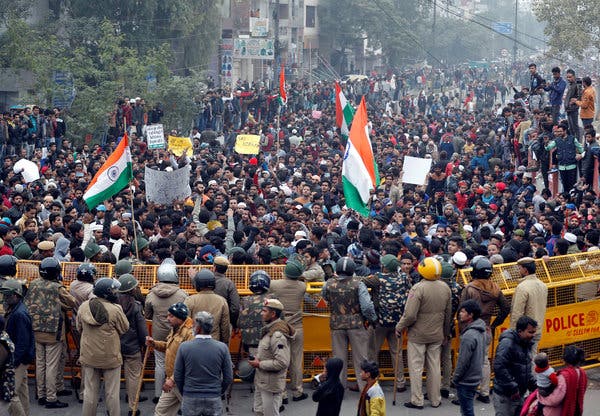
The Indian government must investigate the use of excessive and unlawful force by Uttar Pradesh police against demonstrators protesting the imposition of a discriminatory new law, the International Commission of Jurists said today in a briefing paper.
The briefing paper, based in part on firsthand interviews with witnesses and victims, documents the unnecessary, excessive and indiscriminate use of force in the state of Uttar Pradesh that have led to more than 19 deaths and several more critical injuries since 11 December 2019 as a result of use of firearms as well as teargas, water cannons, and baton charging by the police in response the ongoing protests against the Citizenship (Amendment) Act, 2020.
Section 144 of the Code of Criminal Procedure, which restricts right to assembly of more than 4 persons, has been imposed in Uttar Pradesh since December 19, 2019, thereby effectively preventing people from protesting. However, protests broke out in several cities in Uttar Pradesh despite the ban. While police authorities claim that the protestors initiated the violence, firsthand interviews with victims and witnesses and numerous other credible reports indicate that the police used force on peaceful protestors including lathis, teargas, bullets.
“The high death toll of peaceful protestors in Uttar Pradesh highlights the use of excessive force by the police, in contravention of international standards of policing and human rights. The state and federal governments must investigate any death or injury that occurs during protests by law enforcement officials and to ensure access to justice to victims and their families,” Sam Zarifi, ICJ Secretary General said.
Individuals reported that they had not been able to get their medico-legal certificates and victims’ families reported inability to access postmortem reports.
The right to life and freedom from ill treatment is protected under international law including the International Covenant on Civil and Political Rights to which India is a party and requires that when arbitrary deprivation of life occurs, there is accountability and reparation for victims.
The Allahabad High Court is hearing Shree Ajay Kumar v. State of Uttar Pradesh starting 16 January 2020, wherein it has taken suo moto cognizance of a letter sent by Ajay Kumar a lawyer in Bombay and has treated it as a basis for the commencement of a public interest litigation. The letter alleges that “the situation in the State of Uttar Pradesh is antithetical to core constitutional values and warrants interference of this Court.”
“A ruling that the Uttar Pradesh police violated protestors right to life by use of firearms and indiscriminate use of batons, teargas will serve as an important reminder to the police and the Indian State to respect the rights to life, freedom from ill-treatment and freedom of assembly and expression of protestors and that the use of such force against peaceful protestors will not be condoned by the State” said Sam Zarifi.
To download the full statement with additional background information, click here.
Contact
Sam Zarifi, ICJ Secretary General , e: sam.zarifi(a)icj.org
Maitreyi Gupta, International Legal Adviser for India, t: +91 7756028369 ; e: maitreyi.gupta(a)icj.org
Read also
ICJ Press Release: India: Discriminatory citizenship law passed by Parliament violates international and constitutional law, December 11, 2019
ICJ Press Release: India: Authorities must cease the excessive use of force and ill-treatment of Citizenship (Amendment) Act 2019 protestors, December 16, 2019
Jan 15, 2020 | News
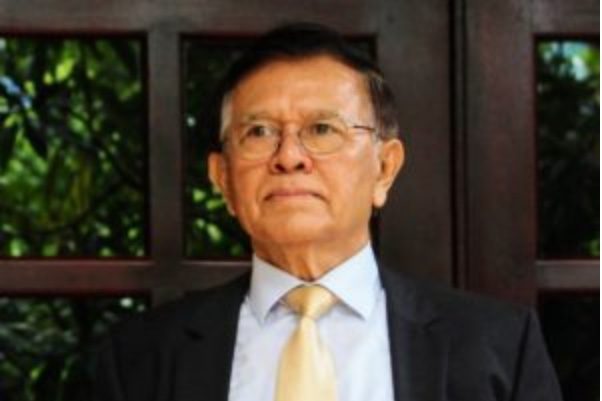
Today, following the commencement of the trial of political opposition leader Kem Sokha, the ICJ condemned his continuing legal harassment and called on the Government of Cambodia to drop the ill-founded and apparently politically-motivated charges of treason against him.
“The trial hearing today marks and extends more than two years of legal harassment of one of Cambodia’s most prominent leaders of the political opposition,” said Frederick Rawski, ICJ’s Asia Pacific Director.
“The charges against Kem Sokha are wholly unsubstantiated – They should be dropped, and the trial discontinued in the accordance with his right to fair trial.”
In September 2017, Kem Sokha, leader of the now-defunct main opposition Cambodia National Rescue Party (CNRP), was arrested without warrant by more than 100 police officers in a midnight raid on his home. His arrest, in violation of his parliamentary immunity, was reportedly made on the basis that he had allegedly committed a crime in flagrante delicto – the Prosecution Office of Phnom Penh Municipal Court argued that he had been caught “red-handed” in an act of treason despite the fact that the alleged act was a speech he had made four years earlier in Australia in 2013. In the speech, Sokha had alluded to receiving foreign assistance in advocating for democratic change in Cambodia.
Kem Sokha was thereafter charged with alleged “conspiracy with a foreign power” under article 443 of the Criminal Code, and detained in the remote Trapaing Thlong prison in Tboung Khmum Province near the Vietnamese border. His applications for bail were rejected multiple times before he was released from prison after one year in pre-trial detention. During this period, Sokha was also denied access to independent doctors and medical treatment, despite his suffering from serious medical conditions. In 2017, the courts in Phnom Penh ruled that his pre-trial detention was legal under Cambodian law and refused him bail, even though Sokha had been barred from attending the proceedings, which his lawyers also boycotted in protest.
Kem Sokha’s arrest occurred in the midst of an intense crackdown on political opposition, civil society and independent media in the lead-up to the 2018 general elections. Two months after his arrest, Cambodia’s Supreme Court dissolved the CNRP and banned 118 CNRP officials from political activities for five years. In July 2018, the ruling Cambodian People’s Party won the elections by a landslide.
Following the elections, the Cambodian government has continued to systematically repress and persecute perceived critics of the regime through abuse of legal and judicial processes. In 2019, Cambodian authorities brought apparently politically-motivated charges against more than 100 members of the political opposition, more than half of whom were detained.
“There is an ongoing human rights and rule of law crisis in Cambodia, which needs to be urgently addressed,” said Rawski.
“The dissolution of the CNRP and imprisonment of its leader were crucial indicators that the Cambodian government had crossed a red-line a long time ago.”
The ICJ has called on the Cambodian authorities to fulfill the State’s obligations to protect people’s rights guaranteed under international law, including the rights to free expression, political participation and freedom of association, as well as the right to a fair trial and freedom from arbitrary detention.
To download the full statement with additional background information, click here.
Contact
Frederick Rawski, ICJ Asia and Pacific Regional Director, e: frederick.rawski(a)icj.org
See also
ICJ, ‘Cambodia: Charges against Kem Sokha must be dropped and respect for fundamental freedoms restored’, 14 November 2019
ICJ, ‘Misuse of law will do long-term damage to Cambodia’, 26 July 2018
ICJ, ‘Cambodia: the ICJ condemns dissolution of main opposition party’, 16 November 2017
Jan 9, 2020 | Agendas, Events, News
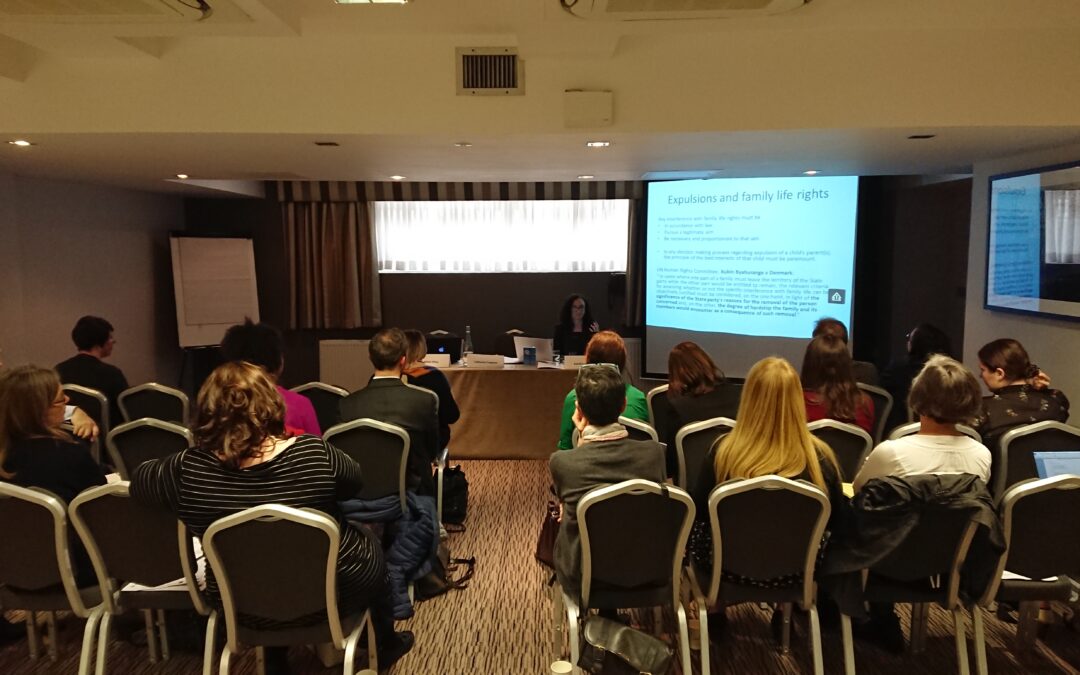
Today, the ICJ and Immigrant Council of Ireland (ICI) are holding a 2-day training seminar for judges and lawyers in Dublin, Ireland, on the rights of migrants, in particular the right to family life and due process in asylum proceedings.
The participants consist of about 30 judges and judicial assistants from the International Protection Appeals Tribunal (IPAT) administrative decision makers (IPO/INIS), and legal professionals.
During the two days of training, experts from the European Court of Human Rights, the UK Immigration Tribunal, Trinity College Dublin, the Immigrant Council of Ireland and the ICJ will deliver the training, bringing international human rights and EU law perspectives to the discussion on the Irish context.
Among the issues discussed will be – on day 1 – the right to private and family life in migration, including, and recent developments at the ECtHR, and right to private and family life in the national context as well as best interests of the child determination and family life rights in return decisions. On day 2 discussion will focus on procedural rights and remedies in the context of international protection,. Issues discussed will include due process rights in asylum procedures, safe third country concept, and credibitity assesments and vulnerability in international protection applications.
In parallel, a training for 20 social care professionals working with migrant children is being delivered.
This is the second national training under the FAIR PLUS project, following the first training held last December in Pisa.
See the full agenda here.
This training is a part of FAIR PLUS project. It was carried out with the financial support of the European Union. Its contents are the sole responsibility of ICJ and do not necessarily reflect the views of the European Union.
Dec 20, 2019 | News
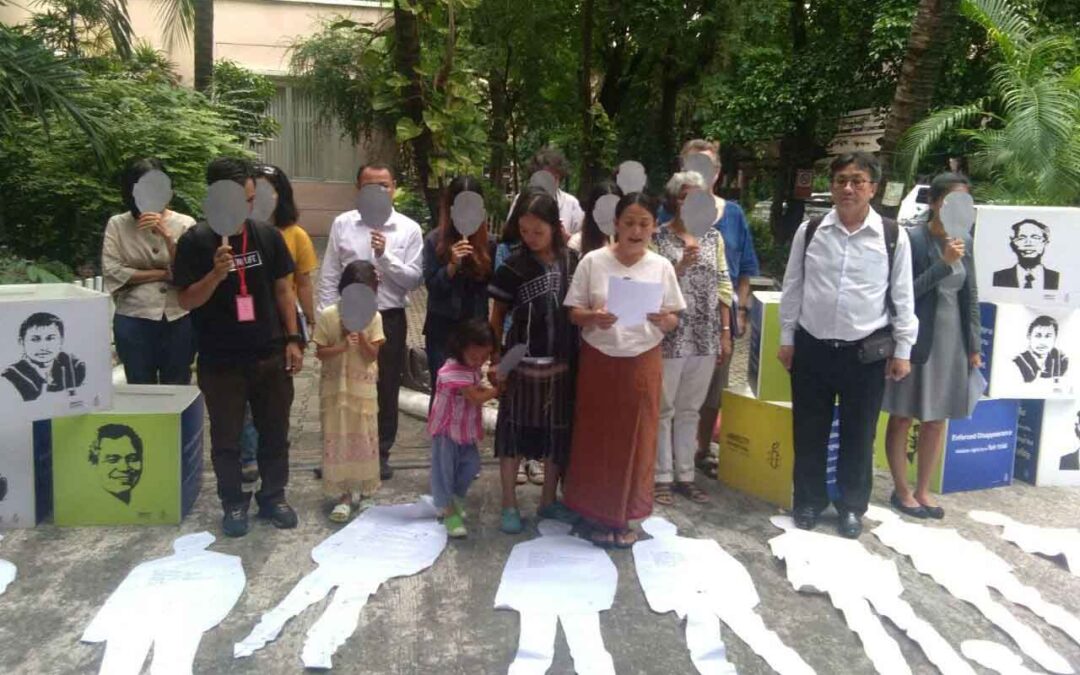
On 20 December 2019, the ICJ submitted recommendations to the Ministry of Justice on the Draft Prevention and Suppression of Torture and Enforced Disappearances Act (“Draft Act”), scheduled for public consultation between 4 and 31 December 2019.
The ICJ also expressed concern at the recurrent delays in the amendment and enactment of this important legislation which will be critical for ensuring accountability and justice for future victims of torture and enforced disappearance.
In October, the Ministry of Justice withdrew the draft Act from the Cabinet “for further revision”, an act which has served to further delaye the passage of essential legislation criminalizing torture and enforced disappearances.
The ICJ also regretted that the latest Draft Act, after several rounds of revisions and public hearings, still has not addressed many of the principal shortcomings which the ICJ and other stakeholders and experts have indicated need necessarily be amended in order to bring the law into line with Thailand’s international human rights obligations, particularly under the Convention against Torture and Other Cruel, Inhuman or Degrading Treatment or Punishment (“UNCAT”) and the International Covenant on Civil and Political Rights (“ICCPR”).
As it stands, it is also inconsistent with the International Convention for the Protection of All Persons from Enforced Disappearance (“ICPPED”), which Thailand has signed and committed itself to ratify.
The key concerns include:
- Incomplete definitions of the crimes of torture and enforced disappearance, as well as other key terms discordant with international law;
- The absence of provisions concerning cruel, inhuman and degrading treatment (CIDT/P);
- The inadequacy of provisions on the inadmissibility of statements and other information obtained by torture, CIDT/P and enforced disappearances as evidence in legal proceedings;
- The inadequacy of provisions relating to modes of liability for crimes described in the Draft Act;
- The inadequacy of provisions concerning safeguards against torture, CIDT/P and enforced disappearances; and
- The absence of provisions concerning the continuous nature of the crime of enforced disappearance and statute of limitations for torture and enforced disappearance crimes.
Download the recommendations in English and Thai. (PDF)
Further reading
Thailand: ICJ, Amnesty advise changes to proposed legislation on torture and enforced disappearances
Thailand: ICJ submits recommendations on draft law on torture and enforced disappearance amendments
Dec 19, 2019 | News
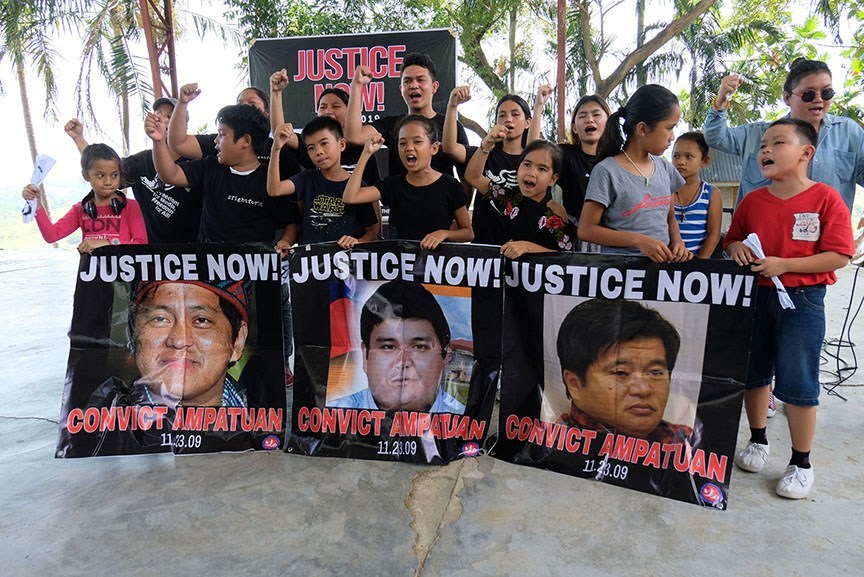
The ICJ said that today’s verdict by the Quezon City Regional Trial Court on the “Ampatuan Massacre” is a first step in achieving justice for the victims and their families.
The court found guilty several of the principal accused, including Zaldy Ampatuan, who is a former governor of the Autonomous Region in Muslim Mindanao. The Ampatuan Massacre involved the killing of 58 people, including 32 journalists. It became known as the single deadliest attack against journalists globally.
“The Ampatuan massacre was a human rights tragedy that demonstrated how ingrained impunity has become in Philippine society,” said Emerlynne Gil, ICJ’s Senior International Legal Adviser.
She added, “It clearly illustrated how respect for human rights has become a mockery in the Philippines, that it can be casually thwarted by a group of individuals who thought they can get away with the killing of 58 people, including journalists, in broad daylight.”
There are 197 accused named in this case, many of them members of the politically-powerful Ampatuan family. The principal accused, including Zaldy Ampatuan and several of his family members, were sentenced to imprisonment of reclusion perpetua (30 to 40 years) without parole. They were also ordered by the court to compensate the victims of the massacre.
The ICJ urged the Philippine government to use this case to now effectively address the culture of impunity in the country.
“The Philippine government should look to this case and use it more generally as a force for a comprehensive drive against impunity, which has been pervasive in unlawful killings, whether by State or private actors,” said Emerlynne Gil.
Background
On 23 November 2009, Bai Genalyn Mangudadatu, wife of Esmael Mangudadatu, was accompanied by members of her family, lawyers, political supporters, and journalists to file the certificate of candidacy of her husband, Esmael Mangudadatu, for the upcoming elections. They were killed by men who later on were revealed to have been ordered by Andal Ampatuan Sr., Andal Ampatuan Jr., and several other members of the Ampatuan family. The Ampatuan family is the political rival of the Mangudadatus.
The convoy of vehicles accompanying the Mangudadatus was ambushed. Passers-by were also killed by the armed men. Their bodies and vehicles were buried in shallow graves nearby.
There were 58 people killed that day, including 32 journalists who were accompanying the Mangudadatus. This became known as the single deadliest attack against journalists globally.
There were 192 persons named as accused in this case, including members of the Ampatuan family and law enforcement officers who conspired with them.
The trial went on for ten years. On 19 November 2019, Branch 221 of the Regional Trial Court of Quezon City rendered its decision finding guilty beyond reasonable doubt 28 people, including Zaldy Ampatuan, his brother Datu Andal Ampatuan Jr, and several other Ampatuan family members. They were sentenced to reclusion perpetua (30 to 40 years) without parole.
Contact
Emerlynne Gil, Senior International Legal Advisor, International Commission of Jurists, t: +66 8409 235 75, e: emerlynne.gil(a)icj.org