Nov 4, 2019 | Advocacy, News
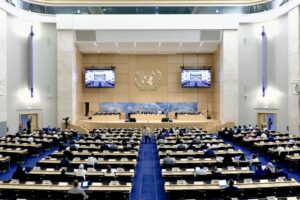
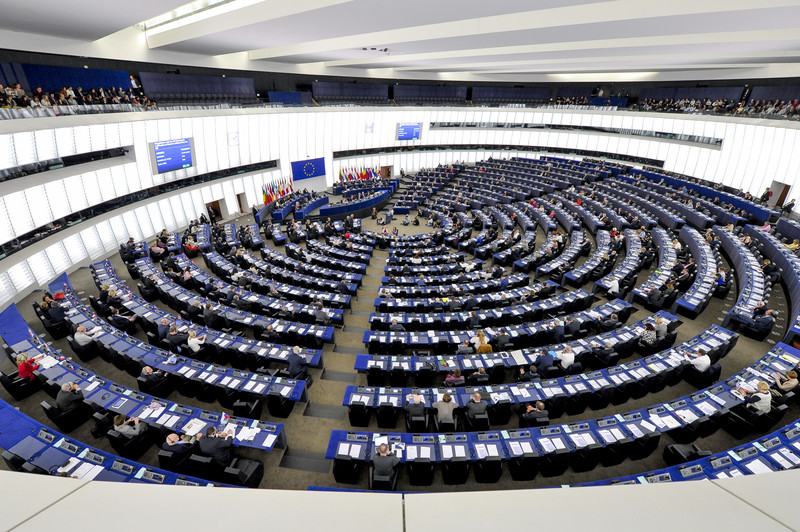
On 4 November, the ICJ and 16 other organizations called on Members of the European Parliament (MEPs) to postpone consent to the EU-Vietnam Free Trade Agreement (EVFTA) and the Investment Protection Agreement (IPA) until the Vietnamese government seriously tackles the deteriorating human rights situation in the country.
The letter was addressed to the President of the European Parliament, Chair of the International Trade Committee, Chair of the Foreign Affairs Committee, Chair of the Human Rights Subcommittee, Chair of the Development Committee and all Members of the European Parliament.
Noting that the Vietnamese government had, in recent years, intensified its crackdown on human rights defenders, members of civil society, religious groups and individuals who express opinions deemed critical of the government, continued to strictly curtail the rights to free expression, opinion, association and assembly, and tightly control the press, civil society and religious groups, the organizations expressed regret that negotiations for the EVFTA and the IPA had not led to more explicit and tangible human rights commitments from the Vietnamese government.
Vietnam currently benefits of unilateral trade preferences through the Generalised Scheme of Preferences (GSP), and the country’s failure to uphold its numerous human rights obligations under the scheme has yet to incur substantial pushback by the EU.
The organizations urged MEPs to ask the European Commission to set up an independent monitoring and complaint mechanism to address the human rights impacts that the EVFTA and IPA may have.
Joint Letter
Frederick Rawski, Director, ICJ Asia and the Pacific, email: Frederick.Rawski(a)icj.org
Nov 3, 2019 | News
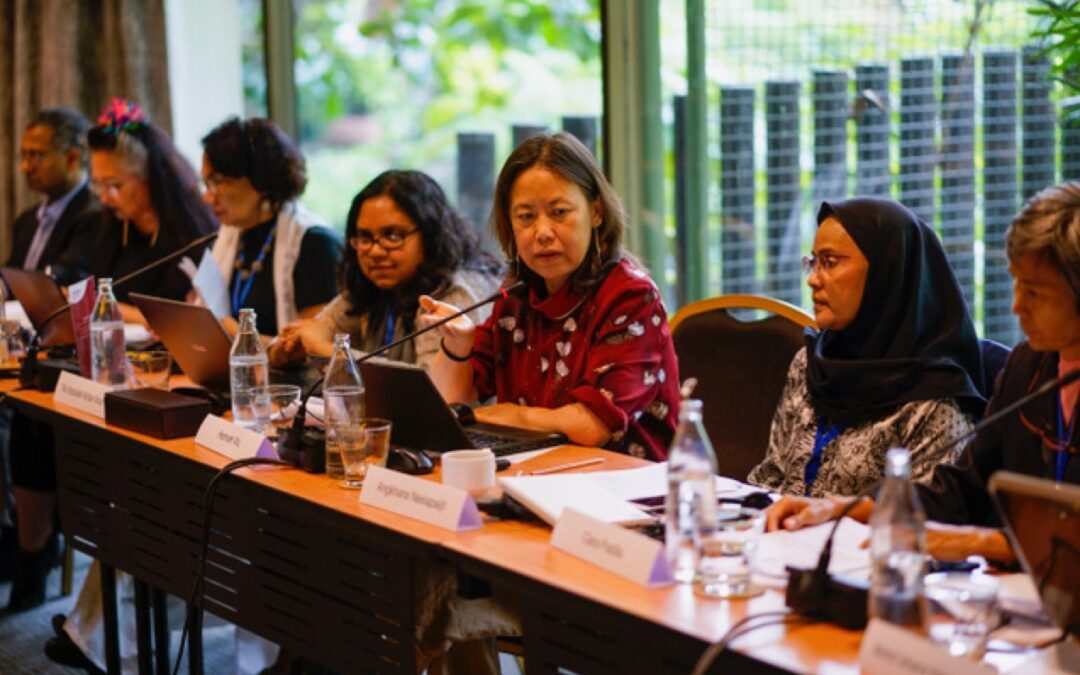
Bangkok, Thailand – From 1 to 2 November 2019, ICJ in collaboration with the UN Office of the High Commissioner for Human Rights (OHCHR) and the Ralph Bunche Institute for International Studies, hosted a consultation on gender and the right to freedom of religion or belief with the UN Special Rapporteur on Freedom of Religion or Belief, Dr. Ahmed Shaheed.
The primary objective of the consultation was to provide a forum for human rights defenders, particularly women and human rights defenders belonging to sexual orientation, gender identity, gender expression and sex characteristics (SOGIESC) minorities to share their perspectives on laws, practices and anti-rights strategies based on religion or belief that discriminate against women and SOGI groups and individuals in Asia. The consultation was attended by at least fifty-two (52) human rights defenders from all over Asia.
Emerlynne Gil, ICJ’s Senior International Legal Adviser, in her opening address, emphasized that gender equality and the right to freedom of religion or belief should not be viewed as inimical to each other. She said, “Women and individuals belonging to sexual orientation and gender identity minorities should also be able to being to a faith or religion of their choice, or religion into which they are born and they should continue to belong to the religion or belief without being discriminated against by the faith or religious community.”
The consultation included discussions on the domestic contexts and legal frameworks in relation to freedom of religion and the rights of women and SOGIESC minorities, including in relation to the right to health. The participants considered challenges faced by women and SOGIESEC minorities when religious leaders act as justice actors were also discussed. The consultation, while highlighting the good practices in advancing the rights of women and SOGIESC minorities, also explored existing challenges and tensions in respect of achieving gender equality.
At the conclusion of the consultation, Dr. Shaheed noted the diversity of the participants in the room, who came from all over Asia. He emphasized that “in order to engage more effectively and strategically, it is imperative that we improve our literacy in relation to the human rights framework and of religion in order to better understand its intersectionality.”
Contact
Sushmitha Thayanandan, National Legal Advisor, Sri Lanka (ICJ) e: sushmitha.thayanandan(a)icj.org
Nov 1, 2019 | News, Op-eds
An opinion editorial by Shaazia Ebrahim, Communications Consultant for ICJ’s Africa Programme.
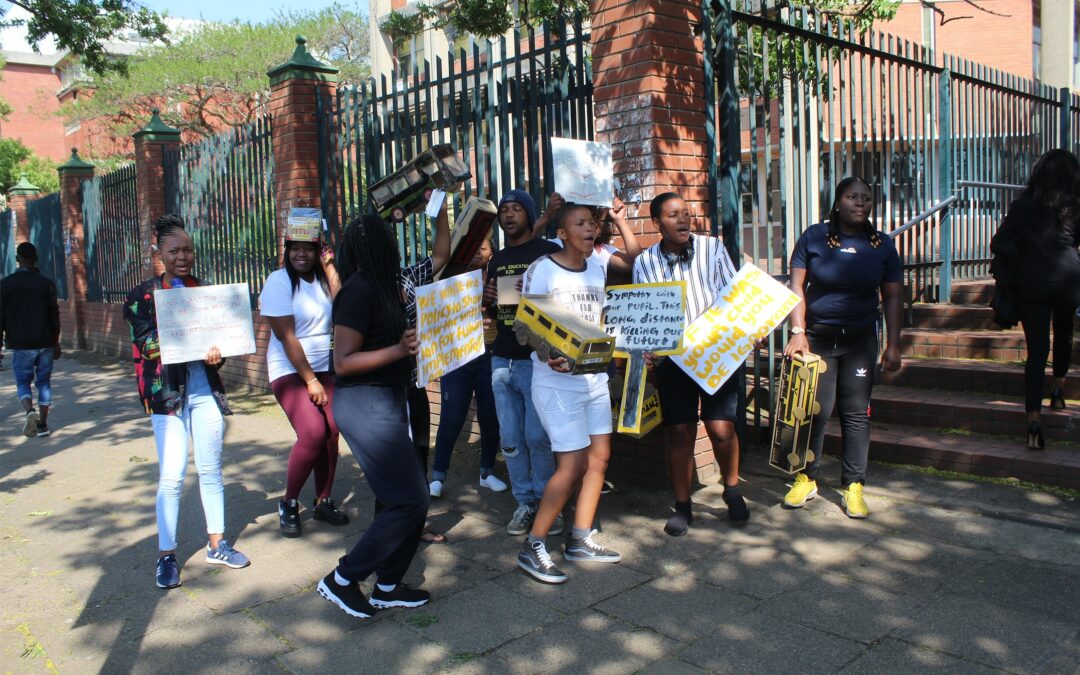
Nomfundo Ngobese (25) was used to waking up at 4am to walk the 35km from her home in Nquthu, northern KwaZulu Natal (KZN) to school. In the blistering heat and the freezing cold, crossing rivers and sometimes dodging rain and lightning, Ngobese, was like many South African school learners who walked for hours to get to and from school each day.
“We had to wake up past 4 so that at past 5 we can go to school. In winters when we had to go to school, it was dark. We didn’t feel safe… We didn’t even realise the difficulties our smaller siblings were facing. It’s a thing that we just got used to,” Ngobese said.
While learners all over South Africa walk for hours every day to get to school and back home, KZN has the greatest need for scholar transport. According to the 2016 General Household Survey done by Statistics South Africa, some 483 633 learners in KZN walk more than half an hour in one direction to school each day.
But the end of the battle for learners with similar experiences to Ngobese could be in sight.
On October 23, Ngobese joined other Equal Education (EE) post-school youth organisers in picketing outside the Pietermaritzburg High Court. EE, represented by the Equal Education Law Centre (EELC), had sued the KZN Department of Education (DoE) to court to force the government into releasing the provincial scholar transport policy, which should have been available in December 2018.
They emerged victorious when government committed to releasing its Scholar Transport Policy for public comment by 31 January next year. Should the KZN DoE fail to comply, it will have to answer to the courts. The release of this policy is a critical step in ensuring that more learners will be able to have access to school transportation.
EE has been working to achieve free and safe scholar transport in Nquthu since 2014, after Equalisers told EE about the difficulties they faced with scholar transport. Learners highlighted the challenges they faced walking very far distances in extreme heat and in thunderstorms, and crossing rivers and mountains, at great risk of violent crime including sexual assault. Many learners said they felt tired and hungry after the long walk, and could not concentrate properly in class or perform well at school.
“I was once an Equaliser myself and I once walked to school every morning and afternoon,” Palisa Motloung (21) said. “We were never sure what’s going to happen on those routes. I remember this one time when I was walking with my friend, and then we passed a bush and there were men there talking. We couldn’t tell if they were talking on this side or that side of the fence because it was dark. It was very scary, we literally had to run. It was quite an experience and I don’t wish any child should go through that,” Motloung said.
After local visits to schools in Nquthu in 2014 and 2015, EE wrote to the KZN Department of Transport (DoT) and KZN DoE about these hardships learners were facing, and requested information about how they were providing scholar transport in the province. Governments’ replies were unsatisfactory, with the DoE responding that it found that only one of the 12 schools EE discussed qualified for scholar transport.
After long back and forth with government, who provided scholar transport in dribs and drabs, EE found that there was still a desperate need for scholar transport. Government officials claimed that five of the 12 schools did not qualify for scholar transport because learners were not attending the schools closest to their homes. They conceded that seven of the 12 schools did qualify for scholar transport, but said there was no money to provide it. EE took the matter to court.
This is not the first time that a provincial department of education has sued in South Africa for a failure to provide transport for learners. In 2015 the Judge Plasket of the Eastern Cape High Court held in a similar case that “The right to education is meaningless without … transport to and from school at state expense”.
The initial case was set to be heard at the Pietermaritzburg High Court. But before the hearing began, the lawyers representing EE and the lawyers representing the KZN government entered into negotiations with the KZN DoE and KZN DoT made certain promises. The order granted by the Pietermaritzburg High Court stated that the KZN DoE promised to provide scholar transport to learners in the 12 Nquthu schools by 1 April 2018.
While this was a momentous victory for EE, as part of ongoing court processes, the organisation filed a response to the KZN DoE report to the court, recognising the important steps that it had taken, but also noting significant gaps that remain.
The EE urged the KZN DoE in June last year to provide clear timelines for the finalisation of its scholar transport policy. This is a crucial step to clarify which learners qualify for government-subsidised scholar transport, how the KZN DoE and the KZN DoT will work together to provide scholar transport, and how learners’ safety will be ensured.
This report has been delayed for over a year now, but if the decision of the Court is to be implemented, it will be released in January next year.
After coaxing from South African civil society, including EE, The National Learner Transport Policy was finally published in October 2015. The policy contains important scholar transport guidelines and principles that provinces should adhere to. However, while this policy has been finalised, it has yet to be adopted.
The government’s failure to provide learners with transport is a violation of the right to basic education which is protected under the South African Constitution and international law. The International Covenant on Economic Social and Cultural Rights, which South Africa ratified makes clear that education must be free for all learners at a primary school level and should progressively be made free for all learners at all levels.
Free education includes not only the absence of fees but also all other costs include free, reliable and safe transport. This means learners have a right to access their schools safely, and on time, so that they can use their energy to concentrate in class. For many learners in South Africa this is impossible without government funded transport.
“Most of the time, [schoolchildren] wake up very early and they get to school very hungry and tired. This affects their school percentage, the pass rate of the school also gets affected because of the long kilometers that children have to walk to school,” Sanele Zulu (22) said.
“I walked to school but I didn’t even know it was a wrong thing to do until Equal Education came and opened our minds. Even our parents didn’t know it was wrong, they thought that because in the olden days they walked long distances, so we must get used to it. But when EE came to our rural village, something went off in our eyes and we saw things in a different way,” Ngobese said.
Reflecting on their own experiences during school Ngobese, Motloung, and Zulu, continue to use their voices for learners who walk long distances to go to school. Equal Education, with the legal assistance of EELC, continues to advocate for the rights of learners in KwaZulu-Natal and all over South Africa.
Even though the persistent delays in the development and implementation of government policies to facilitate free, safe transport to and from schools is a cause for concern, learner’s faith in the judicial system and rights-based advocacy should be a source of optimism about the future of constitutional democracy in South Africa.
This op-ed was originally published in the Mail & Guardian.
Oct 31, 2019 | News
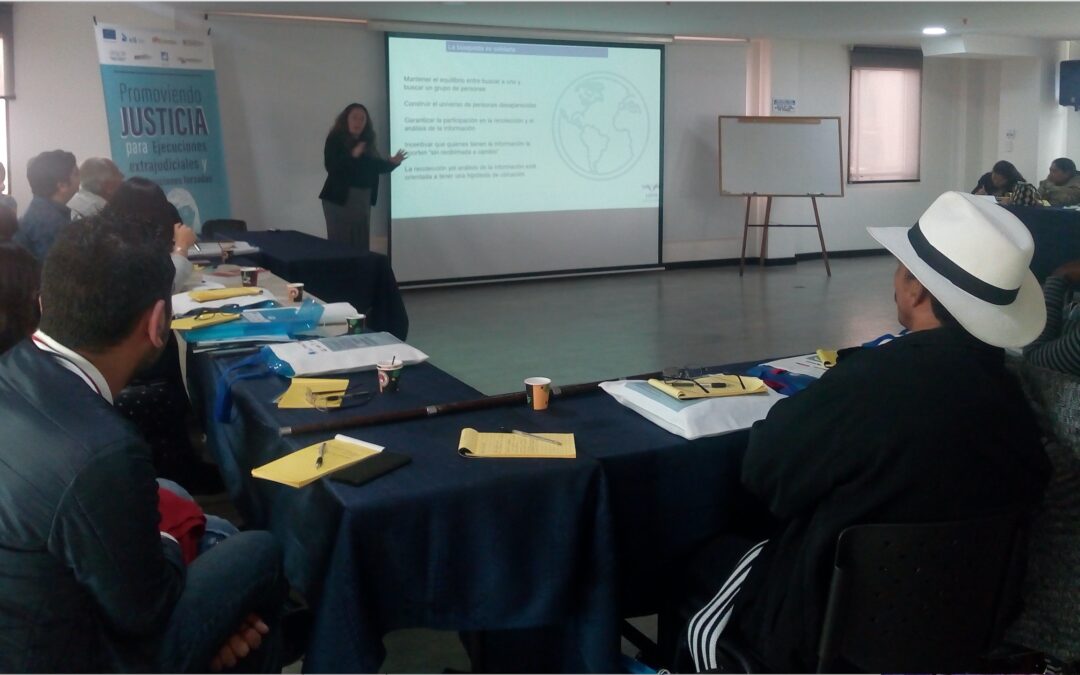
On 29-30 October the ICJ, in partnership with dhColombia and the Argentine Forensic Anthropology Team (EAAF), hosted a two-day training workshop in Bogotá on the legal framework around enforced disappearance and extrajudicial killings.
The training aimed to improve the understanding of victims and human rights lawyers of the domestic law on extrajudicial killings and enforced disappearances in Colombia. It included an analysis of both the ordinary justice system, as well as transitional justice mechanisms. It also explored the role of the forensic sciences in tackling impunity for those crimes.
The ICJ in furtherance of its objective to promote accountability, justice and the rule of law in Colombia, has been continuously monitoring the investigation and prosecution of serious human rights violations and abuses, particularly extrajudicial killings and enforced disappearances. Perpetrators of such violations, which constitute crimes under international law, have enjoyed a high level of impunity. While there are numerous unresolved cases dating back to the 1970s, violations have continued even after a comprehensive peace agreement was signed in 2016 following decades of armed conflict.
In Colombia, achieving accountability for those crimes has proven difficult for several reasons, including the ineffective functioning of the justice system. Victims and their lawyers have faced serious obstacles in gaining access to effective remedies. In addition, the creation of new institutions by the Peace Agreement has changed some basic rules and procedures for the investigation and prosecution of those crimes. Consequently, the Colombian justice system is more complicated to understand not only for victims but for lawyers.
The training workshop was part of a broader regional project addressing justice for extrajudicial killings and enforced disappearances in Colombia, Guatemala and Peru. Participants were victims and human rights lawyers from different regions of the country, especially those where that is less opportunity to access legal and forensic training. Considering that capacity building activities are essential to the effective achievement of accountability, it is expected that participants of the training will obtain valuable tools to demand justice and remedy and reparations for serious human rights violations.
Contacts:
Rocío Quintero M, Legal Adviser, Latin America. Email: rocio.quintero(a)icj.org
Carolina Villadiego, ICJ Legal and Policy Adviser, Latin America, and Regional Coordinator of the Project. Email: carolina.villadiego(a)icj.org
Oct 30, 2019 | News
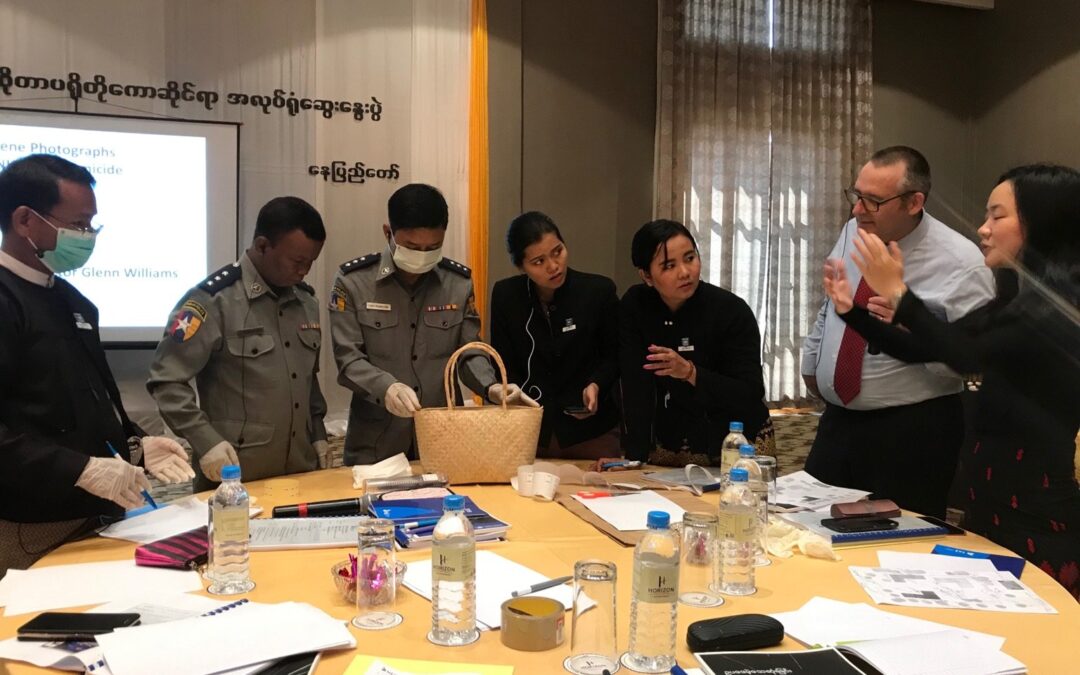
The ICJ hosted a two-day workshop on 28-29 October 2019 in Myanmar’s capital, Nay Pyi Taw. Organized jointly with the Union Attorney General’s Office (UAGO), 15 prosecutors and ten members of the Myanmar Police Force attended this event, entitled “Workshop on the Minnesota Protocol.”
Participants included persons involved in the conduct of criminal investigations, as well as senior members with oversight of their work. The workshop was opened with remarks by His Excellency U Win Myint, Deputy Attorney General of the UAGO, and Sean Bain, Legal Adviser for the ICJ in Myanmar. Both speakers underscored the importance of conducting effective investigations according to international standards.
The Minnesota Protocol provides guidance on the State’s implementation of its duty under international law to effectively, thoroughly and impartially investigate potentially unlawful killings, including when State actors may have been involved. It applies to deaths under custody, suspicious deaths, and suspected cases of enforced disappearance. The workshop takes place in a context in which Myanmar has experienced well documented and widespread incidences of such unlawful killings amounting to serious crimes under international law.
An overview of the international human rights law framework was provided by ICJ Associate Legal Adviser Jenny Domino, highlighting how the conduct of prompt, effective and impartial investigations into unlawful killings is a core component of the State’s obligation to uphold the right to life, binding on all States under international law. ICJ Legal Researcher Ja Seng Ing provided an overview of the contents of the Minnesota Protocol, including a discussion of its 2016 revision to align it with contemporary norms and practices.
Glenn Williams, an experienced international criminal investigator and Detective Inspector (Retired) of the New Zealand Police Force explained how to properly secure a crime scene and chain of custody in order to preserve the integrity of the evidence. Participants applied these skills in a group exercise based on a real-life case from the Solomon Islands. He also presented on the proper conduct of witness interviews, emphasizing the need to frame questions in a manner that would avoid the re-traumatization of victims. Glenn Williams further shared the investigative challenges of dealing with telecommunications evidence from his time at the Special Tribunal for Lebanon.
Dr. Porntip Rojanasunan, a forensic pathologist in Thailand and Member of the Expert Advisory Panel during the Minnesota Protocol revision process, shared her forensic expertise through illustrative cases that she had worked on in Southeast Asia in the past two decades. Dr Porntip stressed the importance of forensic pathology in determining the true cause of death. She also emphasized the importance of conducting an autopsy in potential cases of human rights violations.
The workshop is part of the ICJ’s ongoing promotion of international human rights law and standards globally. In Asia, this has included engagement with Myanmar authorities as well as authorities in neighboring countries.
See also:
Myanmar: ICJ discusses the Minnesota Protocol with prosecutors
ICJ Oral statement in the interactive dialogue with the fact finding mission on Myanmar
Report: Achieving Justice for Gross Human Rights Violations in Myanmar
Related material:
Minnesota Protocol (English)
Minnesota Protocol (unofficial Burmese translation)
Oct 25, 2019 | News
Today the ICJ condemned the response of Lebanese security forces to predominantly peaceful protests that erupted across Lebanon on 17 October following the government’s attempt to introduce a daily tariff on voice calls made through applications such as WhatsApp.
The ICJ called on the Lebanese authorities to respect and protect the right of protestors to peaceful assembly and freedom of expression; to refrain from using unlawful force to disperse protests and ill-treatment of protestors and; to effectively investigate and ensure accountability for any abuses committed in connection with the protests.
Security forces in Lebanon have employed excessive and unlawful force against protestors, amid nationwide dissent over Lebanon’s worsening economic crisis.
NGOs and video footage circulating on news and social media platforms document a number of disproportionate measures used to disperse crowds and quell the unprecedented protests, including by firing tear gas, beating protestors and forcefully removing them from their peaceful sit-ins.
“The Lebanese authorities must ensure the effective investigation and prosecution of all abuses committed in the context of these protests by State or Non-state actors, including the arbitrary use of force, arrests and ill-treatment,” said Said Benarbia.
With respect to the use of force, the Lebanese authorities are bound by international law and standards, which stipulate that the use of force by law enforcement officials is only permissible when it is a last resort, is strictly necessary and is used to the extent required for the performance of their duty.
Attacks by armed groups affiliated with the Amal Movement and Hezbollah have also been reported by local organizations and media.
At least 15 protesters were injured in Nabatieh and six persons in Riad al-Solh and admitted to hospital. Additional violent attacks on protesters, allegedly attributed to the Amal Movement, also took place in the city of Soor.
Background
The protests purportedly broke out in response to years of rampant corruption, unemployment and poverty.
By 18 October, protests were characterized by calls to oust governmental authorities perceived as Lebanon’s ruling elite, including the president, government and legislative authority, and fundamental change to the sectarian political system.
In an attempt to diffuse the increasingly tense situation and appease protestors, Prime Minister Saad Hariri announced the adoption of a raft of economic reforms on 21 October.
Anti-government protests however, which have now entered their ninth consecutive day, have gained considerable momentum.
Lebanon is a party to the International Covenant on Civil and Political Rights and the Arab Charter on Human Rights. Both of these treaties require the State to guarantee and protect the rights to freedom expression and freedom of assembly and freedom from torture and other cruel, inhuman or degrading treatment or punishment, including through the unlawful use of force.
Lebanon-Protests-News-web story (story in Arabic, PDF)