Jun 20, 2021 | News
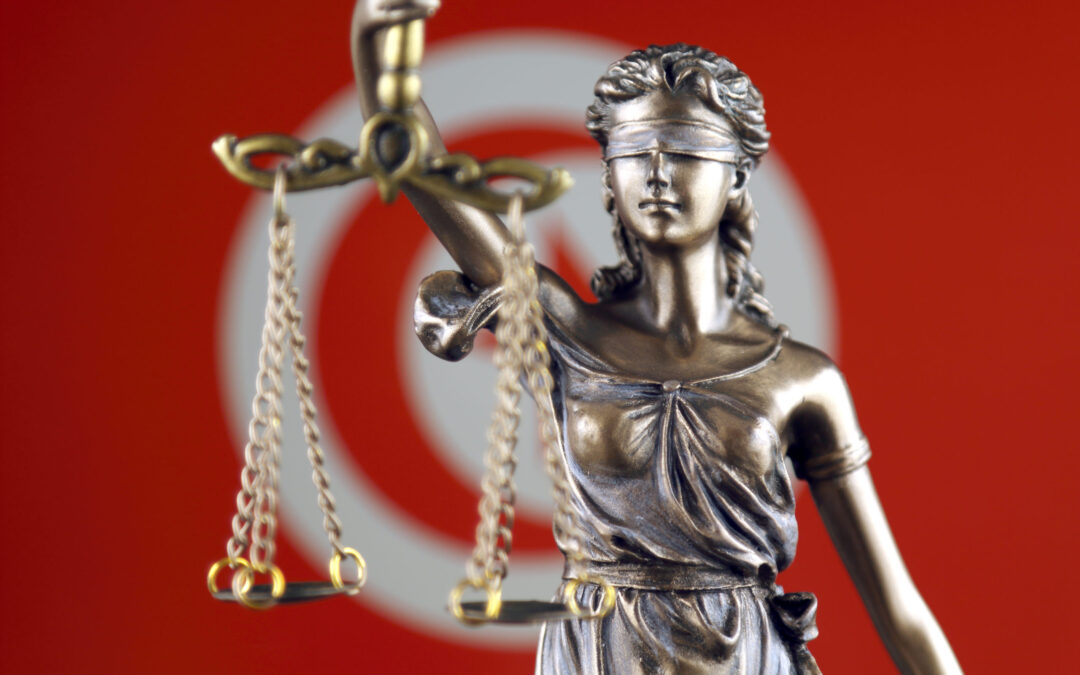
On 19-20 June, the ICJ, in partnership with the Tunisian Association of Judges (AMT), organised a workshop on ‘Legal reasoning and judgment drafting in the cases before the Specialized Criminal Chambers (SCC)’ in Tunis, Tunisia.
Twenty-five SCC judges and prosecutors from across the country participated in the two-day workshop.
Said Benarbia, ICJ’s Middle East and North Africa Programme Director; Anas Hmedi, AMT’s President; and Martine Comte and Philippe Texier, ICJ Commissioners, were the main speakers.
On the first day, speakers and participants focused on legal reasoning and interpretation challenges before the SCC.
ICJ Commissioner Philippe Texier spoke about the principles of legality and non-retroactivity, res judicata and the non-applicability of statutes of limitations, which are all recognised under Tunisian law.
Texier underlined that, when properly understood and applied, both the principle of non-retroactivity of the criminal law and the non-applicability of statutes of limitations would not necessarily be a bar to the prosecution of crimes and gross human rights violations within the jurisdiction of the SCC, since international law, including customary international law, already proscribed them at the time of their commission.
Said Benarbia stressed the importance of applying international law and standards, especially with regard to international crimes that Tunisian domestic penal law does not proscribe yet, such as the crime under international law of enforced disappearance. With respect to the hierarchy of norms, he underscored that the Tunisian Constitution clearly recognises that international law and treaties are superior to national law.
As a result, SCC judges are required to have regard to and apply relevant international law and treaties ratified by Tunisia in adjudicating the cases before them. Judges have the power and the responsibility to interpret Tunisian law in light of international law, including, whenever necessary, by filling certain gaps in domestic legislation.
ICJ Commissioner Martine Comte then spoke about the attribution of individual criminal responsibility and modes of liability, procedural guarantees and the rights of victims and the accused, as well as reparations and guarantees of non-repetition. She emphasised that, under the 2013 Tunisian law on Transitional Justice, guarantees of non-repetition are a constitutive and fundamental element of the transitional justice process.
Comte also explained that the doctrine of command responsibility is a well-recognised general principle of international law, established and applied in many jurisdictions, and therefore to be applied, as relevant, in cases before the SCC.
Comte underlined the importance of enforcing and monitoring the respect of procedural guarantees and the rights of both the victims and the accused, including the right to the presumption of innocence, the principle of equality of arms and the right to adversarial proceedings.
She added that the first reparation of all is the establishment of the truth and of the facts of each case, which, in turn, aims to restore the dignity of victims and their families by recognizing the harm they suffered.
Finally, Comte and the other speakers talked about conviction and sentencing and the challenges faced by SCC judges when the sentence is not defined in nor international law nor Tunisian law.
On the second day, expert speakers and participants discussed judgment drafting in cases before the SCC. They discussed how SCC judges, while addressing the challenges related to the complexity of the cases at hand, can ensure organized, clear, and effective judgment drafting, including through the establishment of a coherent judgment outline; and by providing a clear analysis of factual issues and how they should be resolved.
Texier stressed that the SCC are not exceptional in their nature: they are composed of ordinary judges and have to adhere to the standards of fair trial. SCC judgments differ from ordinary judgments in that they carry a historic significance, by establishing a negated truth and contributing to the duty of remembrance, both of which are crucial elements of the transitional justice process.
Said Benarbia spoke of one of the main challenges facing the work of the SCC, namely, the voluntary absence of the accused who do not appear before court despite being summoned. Drawing on examples from other transitional justice contexts, he concluded that in this respect Tunisia is an exception, as the transitional justice process is typically accompanied by a political will that ensures the presence of the accused.
Benarbia also stressed the importance of the presence of the accused before the Court as one of the fundamental guarantees of the right to a fair trial.
Comte underscored the need to comply with the law regarding the admissibility of evidence (e.g., ensuring that a confession has not been obtained by torture or other cruel, inhuman or degrading treatment or by any other coercive means).
She then addressed the need for the judgment to provide a thorough analysis of the admissible evidence presented at trial on which the ultimate decision is rendered in light of the applicable law and stated that, under Tunisian law, the judges’ decision must be based on firm conviction, beyond any reasonable doubt.
Finally, Benarbia presented an outline for judges to rely upon when drafting the first SCC judgments, based on several judgments rendered by international tribunals. He underscored that such a structured and comprehensive outline would help judges in drafting coherent and exhaustive judgements.
Contact:
Said Benarbia, Director of the ICJ’s Middle East and North Africa programme, email: said.benarbia@icj.org phone number: +41 79 878 35 46
Asser Khattab, Research and Communications Officer at the ICJ’s Middle East and North Africa programme, email: Asser.khattab(a)icj.org
Jun 15, 2021 | Human Rights Council, News, Work with the UN
To the Permanent Representatives of Member and Observer States of the United Nations Human Rights Council,
Excellencies,
We, the undersigned Lebanese and international organizations, individuals, survivors, and families of the victims are writing to request your support in the establishment of an international, independent, and impartial investigative mission, such as a one-year fact-finding mission, into the Beirut port explosion of August 4, 2020. We urge you to support this initiative by adopting a resolution establishing such a mission at the Human Rights Council.
هذه الرسالة متاحة باللغة العربية أيضاً
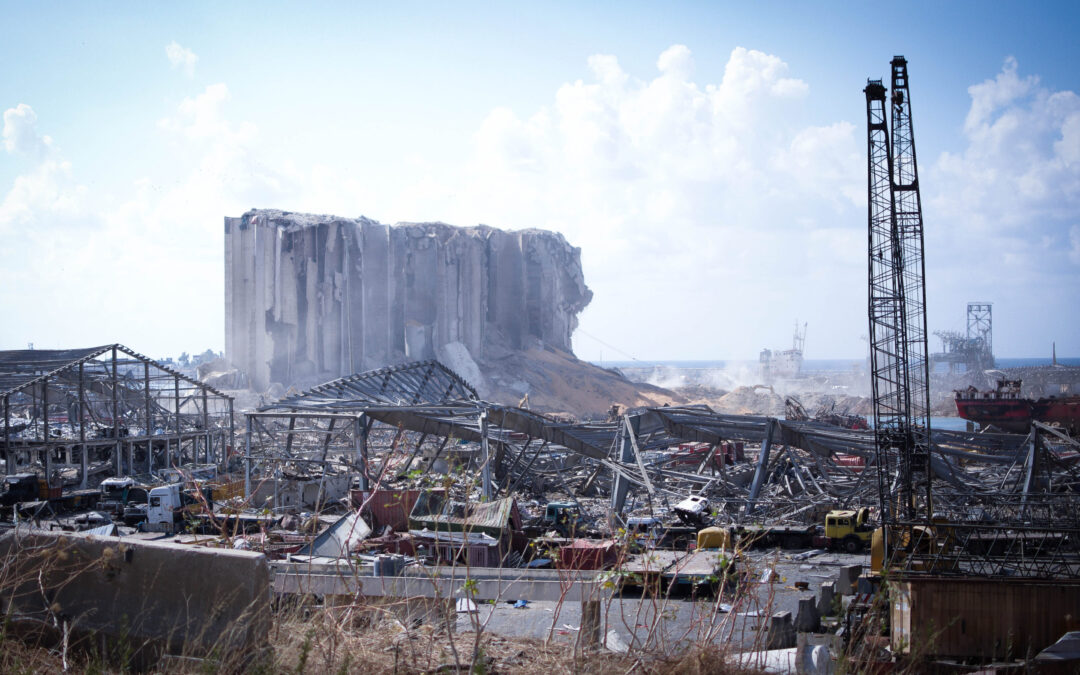
On August 4, 2020, one of the largest non-nuclear explosions in history decimated the port and damaged over half the city. The Beirut port explosion killed 217 people, including nationals of Lebanon, Syria, Egypt, Bangladesh, Philippines, Pakistan, the Netherlands, Canada, Germany, France, Australia, and the United States. It wounded 7,000 people, of whom 150 acquired a physical disability, caused untold psychological harm, and damaged 77,000 apartments, forcibly displacing over 300,000 people. At least three children between the ages of two and 15 lost their lives. Thirty-one children required hospitalization, 1,000 children were injured, and 80,000 children were left without a home. The explosion affected 163 public and private schools and rendered half of Beirut’s healthcare centers nonfunctional, and it impacted 56% of the private businesses in Beirut. According to the World Bank, the explosion caused an estimated US$3.8-4.6 billion in material damage.
The right to life is an inalienable and autonomous right, enshrined in the International Covenant on Civil and Political Rights (ICCPR) (article 6), which Lebanon ratified in 1972. The Human Rights Committee, which interprets the ICCPR, has stated that states must respect and ensure the right to life against deprivations caused by persons or entities, even if their conduct is not attributable to the state. The Committee further states that the deprivation of life involves an “intentional or otherwise foreseeable and preventable life-terminating harm or injury, caused by an act or omission.” States are required to enact a “protective legal framework which includes criminal prohibitions on all manifestations of violence…that are likely to result in a deprivation of life, such as intentional and negligent homicide.”
The facts as currently known suggest that the storage of more than 2,700 tons of ammonium nitrate alongside other flammable or explosive materials, such as fireworks, in a poorly secured hangar in the middle of a busy commercial and residential area of a densely populated capital city likely created an unreasonable risk to life.
Since the explosion, a number of official documents were leaked to the press, including official correspondence and court documents that indicate customs, port, judicial, and government officials as well as military and security authorities had been warned about the dangerous stockpile of potentially explosive chemicals at the port on multiple occasions since 2013.
Further, the Human Rights Committee General Comment No. 36 on article 6 states: “The duty to protect by law the right to life also requires States parties to organize all State organs and governance structures through which public authority is exercised in a manner consistent with the need to respect and ensure the right to life, including by establishing by law adequate institutions and procedures for preventing deprivation of life, investigating and prosecuting potential cases of unlawful deprivation of life, meting out punishment and providing full reparation.” The investigations into violations of the right to life must be “independent, impartial, prompt, thorough, effective, credible, and transparent,” and they should explore “the legal responsibility of superior officials with regard to violations of the right to life committed by their subordinates.”
The impact and aftermath of the explosion also likely violated Lebanon’s international human rights obligations to guarantee the rights to education and to an adequate standard of living, including the rights to food, housing, health, and property. More notably, Lebanon can only uphold its obligation to provide effective remedy to the victims on the basis of a credible, effective, and impartial investigation whose findings would then be the basis for any effective remedy plan.
In August, 30 UN experts publicly laid out benchmarks, based on international human rights standards, for a credible inquiry into the August 4, 2020, blast at Beirut’s port, noting that it should be “protected from undue influence,” “integrate a gender lens,” “grant victims and their relatives effective access to the investigative process,” and “be given a strong and broad mandate to effectively probe any systemic failures of the Lebanese authorities.”
The domestic investigation into the Beirut blast has failed to meet those international standards. The ten months since the blast have been marked by the authorities’ obstruction, evasion, and delay. Human Rights Watch, Amnesty International, Legal Action Worldwide, Legal Agenda, and the International Commission of Jurists have documented a range of procedural and systemic flaws in the domestic investigation that render it incapable of credibly delivering justice, including flagrant political interference, immunity for high-level political officials, lack of respect for fair trial standards, and due process violations.
Victims of the blast and their relatives have been vocal in calling for an international investigation, expressing their lack of faith in domestic mechanisms. They claim that the steps taken by the Lebanese authorities so far are wholly inadequate as they rely on flawed processes that are neither independent nor impartial. This raises serious concerns regarding the Lebanese authorities’ ability and willingness to guarantee victims’ rights to truth, justice, and remedy, considering the decades-long culture of impunity in the country and the scale of the tragedy.
As we approach the one-year anniversary of the explosion, the case for such an international investigation has only strengthened. The Human Rights Council has the opportunity to assist Lebanon to meet its human rights obligations by conducting an investigative or fact-finding mission into the blast to identify whether conduct by the state caused or contributed to the unlawful deaths, and what steps need to be taken to ensure an effective remedy to victims.
The independent investigative mission should identify human rights violations arising from the Lebanese state’s failure to protect the right to life, in particular whether there were:
- Failures in the obligation to protect the right to life that led to the explosion at Beirut’s port on August 4, 2020, including failures to ensure the safe storage or removal of a large quantity of highly combustible and potentially explosive material;
- Failures in the investigation of the blast that would constitute a violation of the right to remedy pursuant to the rights to life.
The independent investigative mission should report on the human rights violated by the explosion, failures by the Lebanese authorities, and make recommendations to Lebanon and the international community on steps that are needed both to remedy the violations and to ensure that these do not occur in the future.
The Beirut blast was not an isolated or idiosyncratic incident. In the weeks following the explosion, two fires broke out at the port in scenes reminiscent of the fire that resulted in the Beirut blast, terrorizing the public. In February 2021, a German firm tasked with removing tons of hazardous chemicals left in Beirut’s port for decades warned that what they found amounted to “a second Beirut bomb.” If these substances caught fire, Beirut would have been “wiped out”, the interim port chief said.
It is time for the Human Rights Council to step in, heeding the calls of the families of the victims and the Lebanese people for accountability, the rule of law, and protection of human rights. The Beirut blast was a tragedy of historic proportions, arising from failure to protect the most basic of rights – the right to life – and its impact will be felt for far longer than it takes to physically rebuild the city. The truth of what happened on August 4, 2020, is a cornerstone in redressing and rebuilding after the devastation of that day.
The thousands of individuals who have had their lives upended and the hundreds of thousands of individuals who have seen their capital city disfigured in a most irrevocable way deserve nothing less.
List of signatories:
Organizations:
Access Center for Human Rights (Wousoul)
Accountability Now
ALEF – Act for Human Rights
Amnesty International
Anti-Racism Movement
Arab NGO Network for Development
Arab Reform Initiative
Basmeh & Zeitooneh
Baytna
Cairo Institute for Human Rights Studies (CIHRS)
Centre d’accès pour les droits de l’homme (ACHR)
Committee of the Families of the Kidnapped and Disappeared in Lebanon
Dawlaty
Gherbal Initiative
Gulf Centre for Human Rights
Helem
Human Life Foundation for Development and Relief (Yemen)
Human Rights Research League
Human Rights Solidarity (HRS)-Geneva
Human Rights Watch (HRW)
Human Rights Without Frontiers (HRWF)
Impunity Watch
International Commission of Jurists
Justice and Equality for Lebanon
Justice for Lebanon
Khaddit Beirut
Kulluna Irada
Lebanese-Swiss Association
Legal Action Worldwide
Legal Agenda
Liqaa Teshrin
Mada Network
Media Association for Peace (MAP)
Meghterbin Mejtemiin (United Diaspora)
Mwatana for Human Rights
National Youth for Lebanon Movement
PAX (Netherlands)
Peace Track Initiative
Project on Middle East Democracy (POMED)
Refugees=Partners Project
Samir Kassir Foundation
SEEDS for Legal Initiatives
Syrian Center for Media and Freedom of Expression – SCM
The Alternative Press Syndicate Group
The Foundation for Human Rights and Freedoms and Humanitarian Relief (IHH)
The International Center for Transitional Justice
The Lebanese Center for Human Rights (CLDH)
The Lebanese Diaspora Network (TLDN)
Tunisian League of Human Rights defense (LTDH)
UMAM Documentation & Research
Individuals:
Christophe Abi-Nassif – Lebanon Program Director, Middle East Institute
Nasser Saidi – President Nasser Saidi & Associates; Former Lebanese Minister of Economy & Industry
Randa Slim – Senior Fellow and Director of the Conflict Resolution and Track II Dialogues Program at the Middle East Institute
Survivors and Families of the Victims:
Alexandre Ibrahimcha, lost his mother Marion Hochar Ibrahimcha
Anthony, Chadia, Ava and Uma Naoum
Antoine Kassab, lost his father
Aya Arze Salloum
Carine Farran Sacy
Carine Tohme
Carine Zaatar
Carole Akiki
Cecilia and Pierre Assouad
Cedric el Adm, lost his sister
Charbel Moarbes
Charles Nehme, lost his father
Cybele Asmar lost her aunt Diane Dib
Fouad Rahme, lost his father
Georges Zaarour, lost his brother
Jean-Marc Matta
Jihad Nehme
Joanna Dagher Hayek
Karine Makhlouf, lost her mother
Karine Mattar
Laura Khoury
Lyna Comaty
Mireille el Khoury, lost her son
Myrna Mezher Helou, lost her mother
Nadine Khazen, lost her mother
Nicolas and Vera Fayad
Nicolas Dahan
Olga Kavran
Patrice Cannan, lost his brother
Patricia Haddad, lost her mother
Paul and Tracy Naggear, lost their daughter Alexandra Naggear
Reina Sfeir
Rénié Jreissati
Rima Malek
Rony Mecattaf
Sara Jaafar
Sarah Copland, lost her son Isaac Oehlers
Tania Daou Alam, lost her husband
Tony Najm, lost his mother
Vartan Papazian, lost his daughter-in-law
Vicky Zwein
Zeina Sfeir
Families of the following firefighters:
Charbel Hetty
Charbel Karam
Elie Khouzamy
Joe Akiki
Joe Andoun
Joe bou Saab
Joe Noun
Joseph Merhy
Joseph Roukoz
Misal Hawwa
Najib Hetty
Ralph Mellehy
Ramy Kaaky
Sahar Fares
Contact:
Said Benarbia, Director of the ICJ’s Middle East and North Africa programme, email: said.benarbia@icj.org phone number: +41 79 878 35 46
Asser Khattab, Research and Communications Officer at the ICJ’s Middle East and North Africa programme, email: Asser.khattab(a)icj.org
May 26, 2021 | News
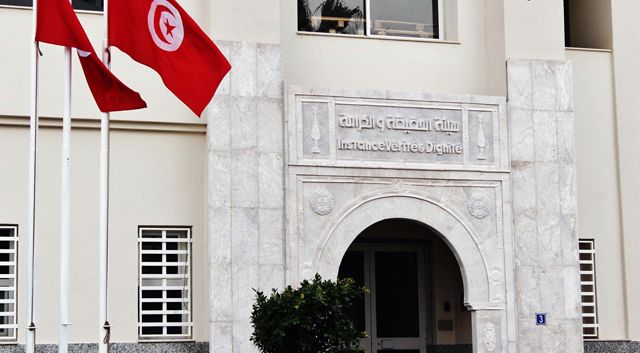
Prosecutors must perform an active role in proceedings before Tunisia’s Specialized Criminal Chambers (SCC), including by prosecuting the cases referred by the Truth and Dignity Commission (IVD) without indictment, and by ensuring the effective and timely execution of court decisions, such as judicial summons and other orders to compel the presence of the accused in court, the ICJ said today.
هذا البيان الصحفي متوفر باللغة العربية أيضاً
To date, prosecutors have automatically transferred around 200 cases, to the SCC pursuant to the Law on Transitional Justice. Beyond this, however, they have played little or no part in the conduct of trials thus far.
“Prosecutors are abdicating their primary responsibility to uphold the rule of law and the rights of victims, and, in so doing, they are contributing to perpetuate decades of impunity in Tunisia,” said Said Benarbia, ICJ MENA Director.
Accused are absent in most of the SCC trials. Measures ordered by the courts to compel their presence have remained mere ink on paper.
“The systematic absence of the accused defeats the very purpose of setting up the SCC as transitional justice mechanisms, including their role in establishing the truth about past abuses, and in granting victims their long overdue day in court,” added Benarbia.
Tunisian prosecutors and law enforcement officers acting under their authority must ensure that court summons and related orders be implemented in a timely manner.
Prosecutors should also ensure that effective investigations be conducted, evidence collected, and prosecutions instituted, when warranted, in those cases that the IVD referred to the SCC without indictment.
“The automatic transfer of cases to the SCC does not absolve prosecutors from their obligations under Tunisian and international law, including in respect of their duties as public interest representatives,” Benarbia added. “It’s high time for the prosecutorial authorities to live up to these obligations and uphold the rights of victims to truth, justice and effective remedies.”
Background information
The Specialized Criminal Chambers were established in 2014 to adjudicate cases involving alleged “gross human rights violations” perpetrated between 1955 and 2013 and referred by the Truth and Dignity Commission (Instance Verité et Dignité, IVD) to the SCC.
The 2013 Transitional Justice Law empowered the IVD to investigate crimes, collect evidence and refer cases to the SCC for prosecution.
At the end of its mandate in December 2018, the IVD’s referred to the SCC 200 cases of arbitrary deprivations of life, arbitrary deprivations of liberty, torture and other ill-treatment, enforced disappearance, rape and sexual assault and crimes against humanity committed by the past regime.
For more information see the ICJ Practical Guide Series on Accountability Through the Specialized Criminal Chambersand findings on the role of international law and standards in proceedings before the SCC (Practical Guide 1), the investigation and prosecution of gross human rights violations under Tunisian and international law (Practical Guide 2), and the application of principles and best practices on evidence in the administration of justice before the SCC (Practical Guide 3).
Download this press release in PDF form here.
Contact:
Said Benarbia, Director, ICJ Middle East and North Africa Programme, t: +41-22-979-3817; e: said.benarbia(a)icj.org
Valentina Cadelo, Legal Adviser, ICJ Middle East and North Africa Programme, e: valentina.cadelo(a)icj.org
Asser Khattab, Research and Communications’ Officer, ICJ Middle East and North Africa Programme, e: asser.khattab(a)icj.org
May 25, 2021 | News
As the third anniversary of the opening of trials before Tunisia’s Specialized Criminal Chambers (SCC) is approaching, the ICJ denounces the Tunisian authorities’ failure to adopt reforms necessary to advance accountability and justice for victims of gross human rights violations.
هذا البيان الصحفي متوفر باللغة العربية أيضاً
Trials before the SCC started on 29 May 2018. Since that first hearing, evident gaps and shortcomings in the Tunisian Criminal Code, the Code of Criminal Procedure and the Transitional Justice law have undermined efforts to hold perpetrators to account, bring justice to victims and prevent recurrence of gross human rights violations in the future.
“The Tunisian authorities have abdicated their responsibility to ensure the effective functioning of the SCC, depriving judges of basic tools to ensure that trials are conducted without undue delay and consistent with international fair trial standards,” said Said Benarbia, the ICJ’s MENA Programme Director.
Many offences referred by the Truth and Dignity Commission to the SCC are not adequately defined in the Tunisian law. Judicial rotation occurs mid-way through SCC trials, impacting the continuity of trials. Prosecutors are not effectively engaged in the conduct of trials. Accused are absent in most of the SCC trials, and the transitional justice framework does not provide for appeal chambers.
“By failing to address these obstacles, the Tunisian authorities are undermining the right of victims to truth and to effective remedies, and betraying the very promise of the transitional justice process to end impunity,” added Benarbia.” It’s high time for them to reverse course and live up to that promise.”
Background information
The ICJ has recommended reform to ensure the compliance of SCC proceedings with international law and standards, including through:
- Ensuring the adequate criminalization of gross human rights violations amounting to crimes under international law;
- Fully ensuring the rights of the accused to a fair trial;
- Ensuring the rights of victims, including their families, to an effective remedy and reparation;
- Ensuring the protection of victims and witnesses;
- Ensuring that the collection, admissibility and assessment of evidence guarantee the right of the accused to a fair trial and the victims’ right to an effective remedy.
In addition to the above reforms, the Tunisian authorities should remove all obstacles preventing the SCC and other judicial authorities from exercising their function in a manner that complies with international standards. To this end, the authorities should:
- Ensure that the Office of the Public Prosecutor and other investigative authorities carry out their mandate in an independent and impartial manner, as defined under the Code of Criminal Procedure;
- Ensure that the annual judicial rotation, as regulated by Organic Law No. 34 on the High Judicial Council, be consistent with the right of the accused to a fair trial
- Ensure that newly appointed SCC judges and prosecutors receive timely and adequate training in transitional justice as provided for by Organic Law No. 53 on Establishing and Organizing Transitional Justice;
- Ensure that, if the annual judicial rotation occurs mid-way through trials, safeguards be implemented with the view to ensuring that newly appointed judges hearing the case have the appropriate understanding of the evidence and arguments.
These recommendations are informed by the ICJ Practical Guide Series on Accountability Through the Specialized Criminal Chambers and findings on the role of international law and standards in proceedings before the SCC (Practical Guide 1), the investigation and prosecution of gross human rights violations under Tunisian and international law (Practical Guide 2), and the application of principles and best practices on evidence in the administration of justice before the SCC (Practical Guide 3).
The SCC were established in 2014 to adjudicate cases involving alleged “gross human rights violations” perpetrated between 1955 and 2013 and referred by the Truth and Dignity Commission (Instance Verité et Dignité, IVD) to the SCC.
At the end of its mandate in December 2018, the IVD’s referred to the SCC 200 cases of arbitrary deprivations of life, arbitrary deprivations of liberty, torture and other ill-treatment, enforced disappearance, rape and sexual assault and crimes against humanity committed by the former government.
In a briefing paper published in October 2020, the ICJ called on the Tunisian authorities to undertake substantial legal and policy reforms with a view to strengthening accountability and removing all obstacles preventing the SCC from functioning effectively.
Download this press release in PDF form here.
Contact:
Said Benarbia, Director, ICJ Middle East and North Africa Programme, t: +41-22-979-3817; e: said.benarbia(a)icj.org
Valentina Cadelo, Legal Adviser, ICJ Middle East and North Africa Programme, e: valentina.cadelo(a)icj.org
Asser Khattab, Research and Communications’ Officer, ICJ Middle East and North Africa Programme, e: asser.khattab(a)icj.org