Aug 2, 2018 | News
The ICJ condemns in the strongest terms the violence that erupted in Zimbabwe after the elections, and calls for the restoration of the rule of law and respect for human rights.
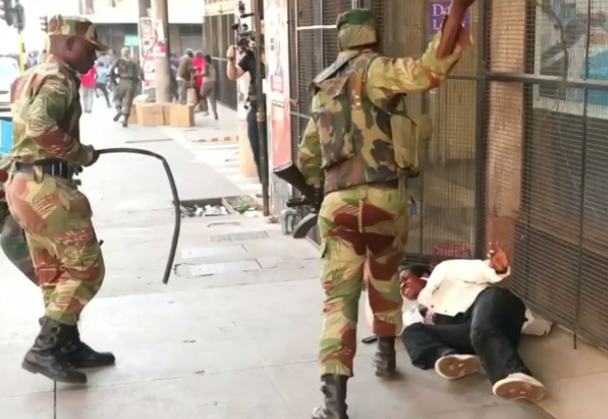
At least 3 people are reported to have died in Harare on 1 August as a result of the Zimbabwe Defence Forces’ (ZDF) use of live ammunition “to disperse” unarmed protestors in Harare’s Central Business District.
Members of the ZDF are reported to have fired live bullets against the fleeing crowd, and assaulted people indiscriminately, resulting in injuries and loss of life.
While the ICJ does not condone acts of violence carried out by protesters and party supporters, it strongly condemns the intentional use of lethal force and other actions of the ZDF, which were disproportionate and unnecessary in the circumstances.
According to the ICJ, the unrest could have been contained in a manner consistent with Zimbabwe’s international human rights law obligations, which, in turn, could have avoided loss of lives and injuries to protesters and bystanders.
“The use of lethal force on unarmed protesters must never be condoned,” said Sam Zarifi, the ICJ Secretary General.
“The intentional lethal use of firearms may only be made when strictly unavoidable in order to protect life,” he added.
The ICJ reminds the authorities in Zimbabwe of their commitment to rule of law, constitutionalism and protection of human rights as provided for under the Constitution and relevant international human rights law and standards.
The ICJ calls on them to uphold the rule of law and protect human rights during this post-election period.
The ICJ urges the responsible authorities to hold to account members of the ZDF responsible for the loss of life and limb during the protests on 1 August.
Contact:
Arnold Tsunga, Director of the Africa Regional Programme, International Commission of Jurists C: +263 77 728 3248, E: arnold.tsunga(a)icj.org
Background information
Protests erupted in the morning of 1 August 1 2018 during the announcement of the results for the National Assembly following “the Harmonised Elections” held on 30 of July 2018.
It is alleged by authorities that protesters were damaging property during the protest.
Media reports published later in the day indicate that the Zimbabwe Republic Police (ZRP) invoked section 37(1) of the Public Order and Security Act [Chapter 11 :17], which allows the Minister of Home Affairs upon request by the Commissioner General of Police to seek assistance from the Zimbabwe Defence Forces (ZDF) to quell civil commotion in any district and for the ZDF to assist.
The Zimbabwean Constitution recognizes and protects the rights of citizens to freely and peacefully demonstrate and petition.
It also guarantees the freedom of assembly and association.
Although section 86 of the Constitution makes clear the non-absolute nature of these rights, Zimbabwean authorities must be reminded that any limitations must be in terms of a law of general application and must be fair, reasonable, necessary and justifiable in a democratic society based on openness, justice, human dignity, equality and freedom.
Citizens of Zimbabwe are also reminded of these constitutional provisions and encouraged to exercise their rights within the confines of the law.
Jul 31, 2018 | News
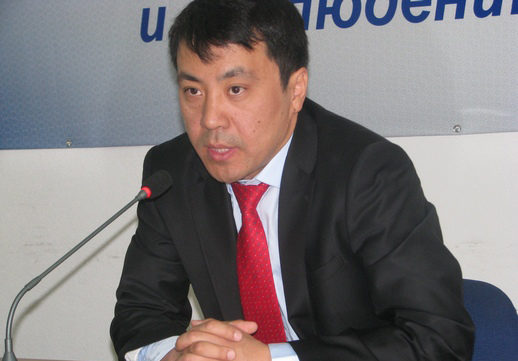
Today, the ICJ called on the government of Kazakhstan to drop all charges of “knowingly disseminating false information” against lawyer Bauyrzhan Azanov related to his representation of a child who is the alleged victim of sexual abuse by older children.
“The prosecution of Bauyrzhan Azanov in relation to statements he made as part of his representation of a child violates the lawyer’s freedom of expression, and prevent him from effectively representing his client,” said Temur Shakirov, Senior Legal Adviser for the ICJ’s Europe and Central Asia Programme.
“Instead of targeting a lawyer, the investigative authorities should use their resources to investigate the allegations of human rights violations in this case and ensure the protection of the rights of this child in accordance with Kazakhstan’s international obligations,” he added.
Bauyrzhan Azanov, a prominent lawyer in Kazakhstan, took up a high-profile case in which he represented a minor, an alleged victim of sexual and physical abuse over a prolonged period.
The case became public in March 2018 through media reports.
Once the case became public several district police officers were fired, and two heads of schools and some other state agents were suspended from office, reportedly in relation to their failure to report and investigate the case.
In his statements in the social media, Azanov alleged the investigation had been obstructed due to corrupt reasons.
In reaction to this, on 21 May 2018, the mother of the minor submitted a complaint against Azanov where she expressed concerns about “social tension”, “forming a negative image of the investigative body” and herself “as a mother”.
Following the mother’s complaint, on 24 July, the General Prosecutor’s Office initiated a criminal investigation against the lawyer for knowing dissemination of false information, which alleged that:
“The information disseminated by lawyer B. Azanov was deliberately distorted and untrue, which created a false idea among the public about the alleged corruption of justice system, investigative bodies, the mother of the child and other persons. This caused psycho-emotional and social tension among the public and created a threat of destabilization of the internal political situation, thereby creating a threat of violation of public order.”
Through the media, Azanov has denied the allegations against him and has stated that he acted in the best interests of his client and sought to ensure accountability for criminal acts.
On 1 June 2018, Nursultan Nazarbayev, President of the Republic of Kazakhstan commented on the case stating that unreasonable prolongation of the investigation is connected with the nepotism in the police and higher investigative authorities.
The Ombudsperson, members of the Kazakhstan Bar Association and human rights activists have made public statements in support of Bauyrzhan Azanov.
In these circumstances, the ICJ is concerned that criminal charges against lawyer Bauyrzhan Azanov for public comments in which he raised concerns about possible violations of human rights of his minor client, may violate the lawyer’s right to freedom of expression.
The right to freedom of expression is protected under international treaties to which Kazakhstan is a party, including by Article 19 of the International Covenant on Civil and Political Rights (ICCPR). As the UN Human Rights Committee stated in its General Comment 34 on the freedom of expression:
“When a State party invokes a legitimate ground for restriction of freedom of expression, it must demonstrate in specific and individualized fashion the precise nature of the threat, and the necessity and proportionality of the specific action taken, in particular by establishing a direct and immediate connection between the expression and the threat.”
According to the UN Basic Principles on the role of lawyers, lawyers have the right to take part in public discussion of matters concerning the law, the administration of justice and the promotion and protection of human rights without suffering professional restrictions by reason of their lawful action or their membership in a lawful organization (Principle 23).
It is of particular concern that the Prosecutor’s Office document uses vague concepts that may amount to arbitrary use of grounds for restriction of freedom of expression of the lawyer.
In particular, it is unclear how prosecutorial authorities measured “psycho-emotional and social tension of the public” or that on what basis the lawyer’s comments may have “created a threat of destabilization of the internal political situation” creating a threat to the public order.
These broadly and atypically worded justifications for prosecution are likely to lead to arbitrary interference with freedom of expression.
Prosecution of the lawyer for his attempts to raise human rights-related issues of his minor client, unsupported by any evidence or explanation what they may refer to, is also likely to have a chilling effect on those who defend human rights of victims of abuse.
The ICJ recalls that according to the UN Basic Principles on the Role of Lawyers, Governments must ensure that lawyers are able to perform all of their professional functions without intimidation, hindrance, harassment or improper interference (Principle 16).
Kazakhstan-Lawyer Azanov-News-web story-2018-ENG (full story, in PDF)
Kazakhstan-Lawyer-Azanov-News-Web-story-2018-RUS (full story in Russian, PDF)
Jul 30, 2018 | News
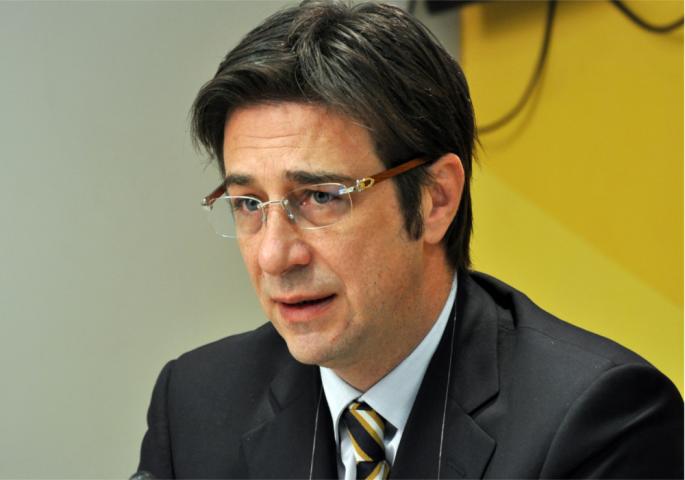
The killing of Serbian defense lawyer Dragoslav Ognjanović must be independently, promptly, and thoroughly investigated and the perpetrators brought to justice, the ICJ said today.
Dragoslav Ognjanović (photo), a prominent lawyer who had defended Slobodan Milosovic and had also represented defendants in cases of organized crime, was shot dead outside his home in Belgrade late on Saturday 28 July.
“Safety of lawyers is essential to the fair operation of the justice system and to protection of the rule of law. The Serbian authorities now need to take urgent steps to re-establish confidence that they can ensure the safety of lawyers who may be under threat, and to investigate and bring to justice the perpetrators of this crime,” said Justice Radmila Dragicevic-Dicic, of Serbia’s Supreme Court, Vice-President of the ICJ.
“Investigation and prosecution of this case will be a significant test for the Serbian authorities and the legal system,” she added.
The Serbian and Belgrade bar associations have called a week-long suspension of work by lawyers in order to express their concern at the risk of violence against lawyers.
Serbian authorities have blamed an ongoing turf war between organized crime groups competing to control the narcotics trade.
“The concerns of the Serbian legal profession should be taken seriously by the government and the prosecution service, and the bar associations should be consulted on means to ensure the safety of lawyers,” said Róisín Pillay, Director of ICJ’s Europe Programme.
Additional information
International human rights law, including the European Convention on Human Rights to which Serbia is a party, requires that states take steps to protect the life and physical integrity of persons who they know or ought to know are at real risk of violence.
In addition, the right to life, protected under Article 2 of the European Convention as well as under other international law standards, requires states to ensure an independent, prompt and effective investigation into killings, with a view to bringing to justice those responsible.
According to the UN Basic Principles on the Role of Lawyers, governments must ensure that lawyers are able to perform all of their professional functions without intimidation, hindrance, harassment or improper interference (principle 16). The UN Basic Principles specify that “[w]here the security of lawyers is threatened as a result of discharging their functions, they shall be adequately safeguarded by the authorities” (principle 17).
Jul 30, 2018 | News
On 25 July 2018, the ICJ facilitated an integrated meeting of governmental stakeholders in the justice chain involved in different aspects of combatting sexual and gender-based violence (SGBV) in the Kingdom of Eswatini (Swaziland), the first meeting of its kind.
The meeting was convened by ICJ Commissioner and Principal Judge of the High Court of Eswatini, Justice Q. M. Mabuza. It followed a meeting held in February 2018 on combating SGBV in Eswatini and an ICJ report on key challenges to achieving justice for gross human rights violations in Eswatini, the latter of which recommended that justice sector stakeholders involved in the investigation, prosecution and sanctioning of, and provision of redress to victims for, acts of SGBV should convene six-monthly meetings so as to develop a common and integrated approach to the effective combating of SGBV.
The integrated meeting involved senior officials from the Office of the Deputy Prime Minister, the Office of the Attorney General, the Office of the Director of Public Prosecutions, the police, correctional services, and the judiciary.
The meeting discussed the fight against SGBV in the context of the Guidelines on Combating Sexual Violence and its Consequences in Africa, and other international standards. It considered the national legal and policy framework on SGBV; practices and challenges in the investigation and prosecution of SGBV; the sanctioning of SGBV offences; and the rehabilitation of sexual and domestic violence offenders by correctional services. Perspectives of the Office of the Deputy Prime Minister, the police and the judiciary were emphasized during discussions.
Stakeholders discussed issues with a view to identifying gaps and challenges in national law, policy and practice when measured against regional and global standards and best practices, as well as with a view to considering potential solutions to those gaps and challenges. The meeting agreed on next steps, including on concrete action that aligns with and/or augments the National Strategy to End Violence. Stakeholders agreed that they should all be involved in the early stages of cases involving SGBV.
Stakeholders also agreed that the recently enacted Sexual Offences and Domestic Violence Act will only be effectively implemented if justice sector stakeholders are well coordinated. Stakeholders agreed that integrated meetings should be held regularly, at intervals of no less than six months including, if possible, before the end of 2018.
Jul 27, 2018 | News
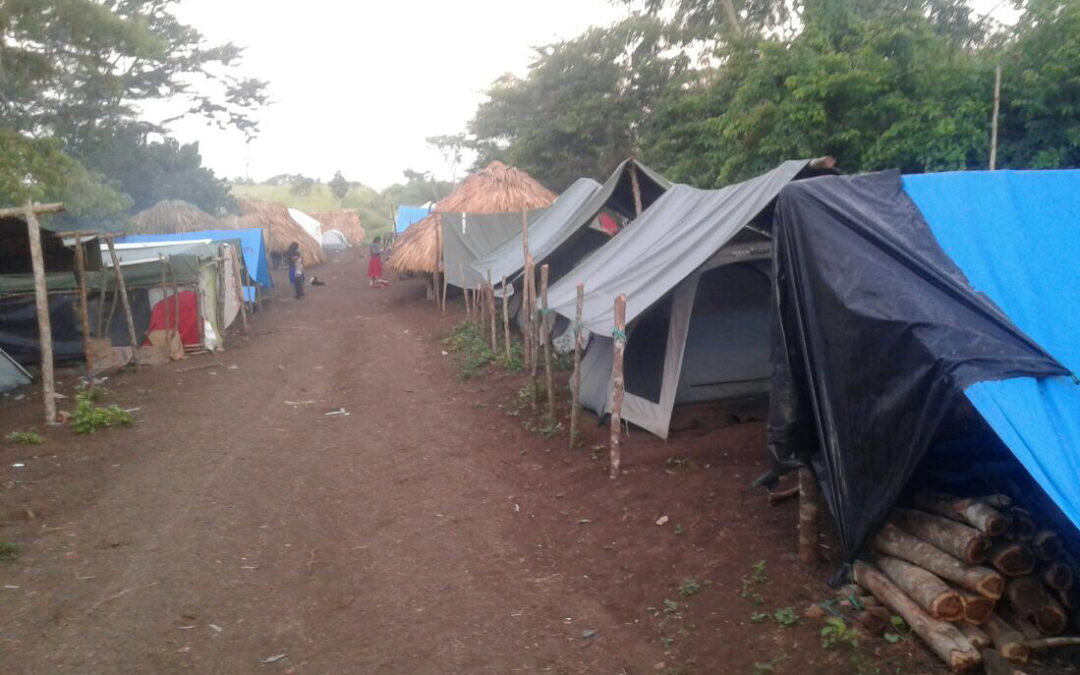
On 25 July, the ICJ visited the displaced persons of the Laguna Larga community, who were forcibly evicted from their homes over a year ago.
These displaced persons are now living in makeshift tents in infra-human conditions in the El Desengaño community, municipality of Candelaria, State of Campeche on the frontier between Guatemala and Mexico.
Their health and well-being are at serious risk.
On 8 September 2017, the Inter-American Commission on Human Rights (IACHR) granted precautionary measures in favour of the evicted and displaced community of Laguna Larga (Resolution 36/2017 Precautionary Measures No 412-17), calling on the Guatemalan authorities to adopt the “necessary measures to protect the rights to life and to personal integrity of the beneficiaries, through measures designed to improve, among other aspects, their sanitary and health conditions, in particular of children, women and the elderly”.
To date, the Guatemalan authorities have taken no action to implement the precautionary measures.
The ICJ was able to observe that the only measure adopted by the Guatemalan State has been to provide the displaced community with two teachers to give classes to the children.
However, the ICJ could also observe that the educational installations are precarious, too hot and very dark, which makes it difficult to give classes.
No sanitary nor health services have been provided by the Guatemalan authorities. On 24 July, a child died only 30 hours after her birth, seemingly a consequence of lack of medical attention.
Neither have other precautionary measures concerning food, access to water and housing been implemented.
The ICJ is deeply concerned that the Guatemalan State has not fulfilled the requirements of the IACHR and that after a year, the rights to life and personal integrity of the displaced community of Laguna Larga is at risk of irreparable harm.
In the face of the inaction of the Guatemalan authorities, members of the Laguna Larga community with the support of Mexican and Guatemalan organizations have managed to implement various projects to provide drinking water, electricity, food and health services.
However, despite these important efforts, this humanitarian support remains insufficient given the serious crisis.
While the efforts of the Laguna Larga community and Mexican and Guatemala non-governmental organizations have been an example of civil society organization, it in no way exonerates, substitutes or reduces the responsibility of the Guatemalan State to guarantee the rights to life and personal integrity of the displaced population and to implement the precautionary measures ordered by the IACHR.
Ramon Cadena, Director of ICJ’s Central American Office, said:
“Given this situation, the ICJ urges the Guatemalan authorities immediately to fulfil the Inter-American Commission on Human Rights’ precautionary measures 412-17 and to resume the dialogue that was started before the eviction. According to international standards, the State should provide reparations for all the harm and prejudice caused.”

Jul 27, 2018 | News
On 26 July 2018, the ICJ Secretary General, Sam Zarifi, met Myanmar’s Union Attorney General, U Tun Tun Oo.
The ICJ Legal Adviser Sean Bain and senior staff from the Union Attorney General’s Office (UAGO) joined the meeting in Nay Pyi Taw.
Rule of law developments in Myanmar were discussed, including progress integrating international standards into the work of the UAGO, such as the new “Code of Ethics for Law Officers”.
The participation of UAGO staff in the ICJ’s recent workshops on the Minnesota Protocol on the Investigation of Potentially Unlawful Deaths was another topic discussed.
Noting the UAGO’s stated reform commitments, Sam Zarifi renewed the ICJ’s call on Myanmar’s prosecution authorities to drop the charges against Wa Lone and Kyaw Soe Oo, two Reuters journalists, which do not appear to have a valid legal rationale.
Efforts to effectively prosecute the assassination of lawyer U Ko Ni were also discussed.
Sean Bain noted the UAGO’s efforts to draft an umbrella land law according to the government’s National Land Use Policy, and highlighted the importance of public participation and consultation in this process, to ensure compliance with Myanmar’s obligations under the International Covenant on Economic, Social and Cultural Rights.
The Attorney General thanked the ICJ for the organization’s ongoing honest advice and support for human rights.
The ICJ has worked with the UAGO since 2014 to provide assistance on prosecutorial independence and human rights in the context of Myanmar’s broader democratic reforms.