Nov 1, 2017 | News, Publications, Reports, Thematic reports
The arrest of absconding murder convict Bal Krishna Dhungel, a senior Maoist leader, highlights the weaknesses, as well as the promises, for victims seeking accountability through Nepal’s judicial system, said the ICJ as it released a report on accountability mechanisms in the country.
The ICJ’s report Achieving Justice for Gross Human Rights Violations in Nepal concludes that impunity for gross human rights violations is one of the major obstacles to the creation of a stable and legitimate democratic government and lies at the heart of the rule of law crisis in Nepal.
It found that a lack of commitment by Nepal’s political leadership to address past and ongoing human rights violations continues to allow perpetrators to escape justice and undermines victims’ right to effective remedies and reparation.
“In the past, the promise to shield perpetrators for human rights violations has been used as a bargaining chip to garner political support and build political alliances,” said Frederick Rawski, Director of the ICJ’s Asia Pacific Regional Programme.
“It is imperative that accountability for human rights violations remains a priority for Nepal’s political leadership after Parliamentary elections, and that alliances between political parties are not once again used as an excuse to undermine Nepal’s human rights obligations,” added Rawski.
Attempts to thwart justice have also included the cynical manipulation of justice sector actors, from the police to the Attorney General’s office, in a way that threatens the independence and credibility of the institutions responsible for safeguarding human rights and the rule of law in Nepal, the report highlights.
This pattern of impunity persists despite demands for accountability by civil society and victims’ organizations, as well as the National Human Rights Commission and Nepal’s Supreme Court.
“In many ways, the Supreme Court of Nepal has emerged as a beacon of hope for victims of human rights violations,” said Rawski.
“The Court has given domestic effect to Nepal’s obligations under international law and has set high standards for accountability, remedy and reparations,” he added.
However, the Government’s disregard of key judgments has limited the impact of the Supreme Court’s jurisprudence, the report says.
Attacks on the independence of the judiciary, as demonstrated by the impeachment motion against former Chief Justice Sushila Karki, also indicate a worrying trend.
The ICJ’s report found that the mandate and operation of transitional justice mechanisms fall short of international standards despite the repeated reinforcement of such standards by the Supreme Court.
Though ostensibly formed to provide a measure of public accountability, the practice of forming ad hoc commissions of inquiry to investigate rights violations has promoted impunity by diverting investigations from the criminal justice process – where they belong – into parallel mechanisms that are established by means that make them vulnerable to political interference and manipulation.
The ICJ’s report also concludes that gross human rights violations in Nepal are not a thing of the past, but are ongoing.
Notably in the Terai region, the State has responded to the Madhesh movement with excessive use of force, extrajudicial killings, and torture and other ill-treatment.
Political expediency has trumped calls for justice and accountability and the Government continues to use State machinery to shield perpetrators rather than serve the interests of justice.
“In a seemingly perpetual cycle, the weak rule of law in the country contributes to impunity for human rights violations, and this culture of impunity further erodes the rule of law,” said Rawski.
“The search for truth and justice in Nepal will not be realized unless this cycle is ended,” he added.
Additional information
Dhungel had been absconding since the Supreme Court upheld his conviction for murder in 2010. The arrest comes after a contempt of court petition was filed before the Supreme Court against the Inspector General of Police for failing to implement multiple Supreme Court orders directing Dhungel’s arrest.
Contact
Frederick Rawski, ICJ Asia Pacific Regional Director, t: +66 64 478 1121, e: frederick.rawski@icj.org
Alex Conte, ICJ Global Redress and Accountability Initiative, t: +41.79.957.2733; e: alex.conte@icj.org
Download
Nepal-GRA Baseline Study-Publications-Reports-Thematic reports-2017-ENG (full report in PDF)
Read also
ICJ Discussion Paper Nepal’s Transitional Justice Process: Challenges and Future Strategy (August 2017)
ICJ Report Authority without Accountability: The struggle for justice in Nepal (October 2013)

Nov 1, 2017 | News
The ICJ welcomes the Pattani Provincial Prosecutor’s decision to end the criminal prosecution of three prominent human rights defenders who raised allegations of torture in Thailand’s restive deep South: Ms Pornpen Khongkachonkiet, Mr Somchai Homlaor, and Ms Anchana Heemmina.
On 24 October 2017, the Region 9 Senior Expert Public Prosecutor, on behalf of the Pattani Provincial Prosecutor, informed the Superintendent of the Muang District Pattani Police Station of the decision to end the prosecution of the three defenders for criminal defamation and violation of the Computer Crime Act.
The ICJ has previously expressed concern that the prosecutions were unwarranted and abusive and were aimed at chilling the exercise of critical human rights work in Thailand.
“While we welcome the decision to end these prosecutions, they have already caused a tremendous amount of damage to complainants of serious human rights violations like torture and ill-treatment, civil society, and the local community in the deep South that must now be repaired,” said Kingsley Abbott, the ICJ’s Senior International Legal Adviser for Southeast Asia.
“An important first step would be to pass legislation which criminalizes torture and ill-treatment and provides meaningful protections for those who wish to come forward with allegations of violations,” he added.
On 28 February 2017, the UN Office of the High Commissioner for Human Rights announced that it had been informed that the Thai National Legislative Assembly (NLA) would not enact legislation then under consideration criminalizing torture and enforced disappearance, the Draft Prevention and Suppression of Torture and Enforced Disappearance Act (Draft Act).
The following day, an NLA official speaking to BBC Thai confirmed that the Draft Act would be “returned [to the Thai Cabinet] for more consultations… with Interior officials, police authorities, the national security sector, military authorities and prosecutors.”
The Draft Act remains with the Thai Cabinet.
“It is long past time for Thailand to make good on its repeated commitments on the international stage to pass this essential piece of legislation in accordance with its international human rights obligations,” added Abbott.
Contact
Kingsley Abbott, Senior International Legal Adviser, ICJ Asia Pacific Regional Office, t: +66 94 470 1345, e: kingsley.abbott(a)icj.org
Background
On 10 February 2016, three Thai organizations, the Cross Cultural Foundation (CrCF), Duay Jai Group (Hearty Support Group), and the Patani Human Rights Organization (HAP), issued a report that documented 54 cases of alleged torture and ill-treatment by the Thai security forces in the deep South since 2004.
In response, the Internal Security Operations Command (ISOC) Region 4 (Forward Command) – created to resolve the situation in the deep South – made complaints of criminal defamation against the three co-editors, Pornpen Khongkachonkiet (Director of the CrCF), Somchai Homlaor (Senior legal advisor to CrCF and Hearty Support Group), and Anchana Heemmina (founder and Director of the Hearty Support Group).
On 26 July 2016, the Thai police charged the three defenders with criminal defamation by means of publication under Article 326 and 328 of the Penal Code, and importing false information to a computer system under Article 14 (1) of the Computer-Related Crime Act B.E. 2550 (2007).
On 7 March 2017, the ISOC 4 Forward Command announced its intention to drop the complaints at a press conference in Bangkok.
Thailand is a State party to the International Covenant on Civil and Political Rights (ICCPR), the Convention against Torture and other Cruel, Inhuman or Degrading Treatment or Punishment (CAT) and has signed, but not yet ratified, the International Convention for the Protection of All Persons from Enforced Disappearance (ICPPED).
Further reading on these criminal proceedings
Thailand: ICJ welcomes dropping of complaints against human rights defenders but calls for investigation into torture
Thailand: stop use of defamation charges against human rights defenders seeking accountability for torture
Thailand: immediately withdraw criminal complaints against human rights defenders
Further reading on the Draft Prevention and Suppression of Torture and Enforced Disappearance Act
Thailand: ICJ commemorates international day in support of victims of enforced disappearances
Thailand: pass legislation criminalizing enforced disappearance, torture without further delay
Thailand-News-Pressreleases-humanrightsdefenders-2017-THAI (full press release in Thai, pdf)
Oct 31, 2017 | News, Publications, Reports, Thematic reports
Effective measures to end impunity for crimes of torture in detention are needed to tackle the systematic recourse to torture and other ill-treatment of detainees in Tajikistan, the ICJ concluded in a report released today.
The ICJ report, Achieving Justice for Gross Human Rights Violations in Tajikistan, finds that although Tajikistan’s criminal procedure law is often in line with international law, including fair trial and other relevant guarantees, in practice it does not lead to effective protection of human rights.
The system is in practice unable to remedy or establish accountability for the serious human rights violations that occur systematically in detention, the report says.
Even where complaints of torture are made, it appears that very few lead to investigation, prosecution or conviction.
“The systematic recourse to torture and ill-treatment in detention undermines the integrity of the criminal justice system in Tajikistan, as well as notions of fairness and justice and the operation of the rule of law in the country,” said Temur Shakirov, Senior Legal Adviser at the ICJ’s Europe Regional Programme.
“Torture must always be treated as one of the most serious crimes. International human rights law requires that allegations of torture must be independently, promptly and thoroughly investigated and, where those responsible are identified, they must be brought to justice,” added Shakirov.
An effective system of prevention of torture and other ill-treatment in detention and for the provision of effective remedies and reparation for such violations is needed to tackle the systematic recourse to their use, the report finds.
The ICJ’s report identifies numerous factors that foster the widespread use of torture and other ill-treatment in Tajikistan, including:
- the lack of independence of the judiciary;
- the judges’ failure to uphold equality of arms between the defence and prosecution;
- the frequent failure by courts to inquire into allegations of torture or other ill-treatment raised by the defence;
- the tendency of courts to accept prosecution denials of such treatment without question; and
- courts’ regular failure to exclude evidence obtained by torture.
With heavy reliance by judges on self-incriminating statements made by suspects in the first hours of detention, the presumption of innocence remains to a large extent illusory, the report adds.
The report also demonstrates that a lack of guarantees for confidential lawyer-detainee meetings prevents detainees from effectively exercising their right to qualified legal assistance and to complain about ill-treatment if necessary.
“Systemic torture cannot be effectively eradicated unless lawyers are both individually and institutionally independent of the executive, are protected in carrying out their duties, and have unimpeded access to their clients in the first hours of detention, as required by international law and standards”, Shakirov said.
The report provides a comprehensive list of recommendations following a detailed analysis of applicable laws and practices in Tajikistan, including based on the findings and recommendations of different bodies of the United Nations human rights system.
Contact
Temur Shakirov, Senior Legal Adviser, Europe Programme, t: +41.22.979.3832; e: temur.shakirov(a)icj.org
Alex Conte, ICJ Global Redress and Accountability Initiative, t: +41.79.957.2733; e: alex.conte(a)icj.org
Tajikistan-GRA Baseline Study-News-Press-Release-2017-RUS (Press Release, Russian PDF)
Download
Tajikistan-GRA Baseline Study-Publications-Reports-Thematic reports-2017-ENG (full report in PDF, English)
Read also
ICJ Report ICJ Recommendations on the Independence of the Legal Profession in the Republic of Tajikistan (February 2016)
ICJ legal submission Alternative Report to the UN Human Rights Committee on the Second Periodic Report of Tajikistan under the International Covenant on Civil and Political Rights (June 2013)
Oct 27, 2017 | News
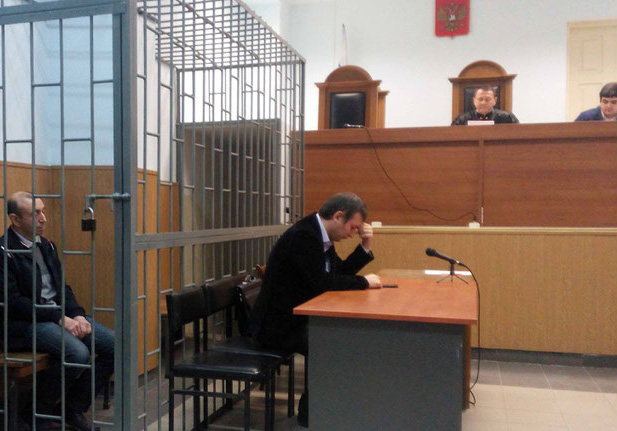
Today, the ICJ expressed concern at the allegations of harassment of lawyer Shamil Magomedov following an acquittal of his client Sulntankhan Ibragimov, who had been accused of murder.
The allegations should be investigated and authorities must make clear to law enforcement officials that such intimidation and harassment is prohibited, the ICJ said.
Yesterday, the lawyer alleged that on 19 October, while he was in Moscow, a law enforcement officer visited his home in Dagestan and questioned his family members about his whereabouts and “why he complained so much to law enforcement bodies”.
The lawyer believes this is related to the acquittal of his client, Sulntankhan Ibragimov, in whose case a decision had been delivered three days before.
When the matter was raised in court, Prosecutor Magomed Aliyev claimed the law enforcement officer’s visit was routine.
The ICJ considers that in the circumstances, the visit to and questioning by a law enforcement officer of a lawyer’s family about his professional activities could only reasonably be understood as a form of intimidation or harassment.
International standards, such as the UN Basic Principles on the Role of Lawyers, provide that governments must ensure that lawyers “are able to perform all of their professional functions without intimidation, hindrance, harassment or improper interference” and “shall not suffer, or be threatened with, prosecution or administrative, economic or other sanctions for any action taken in accordance with recognized professional duties, standards and ethics.”
The ICJ calls on the relevant prosecutorial and law enforcement authorities to make clear to all their officials that all intimidation and harassment of lawyers, including by visiting and questioning a lawyer’s family about the lawyer’s protected professional activities, is prohibited.
Background
Shamil Magomedov, a lawyer from Dagestan, defended Sultankhan Ibragimov in a case where he was charged with the muder of Alisultan Omarov, a Greco-Roman wrestling coach, in 2015 and the murder in 2016 of Nazim Gadjiev, the leader of the “Sadval” movement.
On 16 October, the jury trial found Sultankhan Ibragimov not guilty on all accounts.
Russia-Shamil Magomedov statement-News-web stories-2017-RUS (story in Russian, PDF)

Oct 24, 2017 | News
Today the ICJ expressed its grave concern at the arrest and arbitrary detention of 13 Tanzanian human rights defenders and lawyers on charges that are incompatible with international legal obligations binding on Tanzania. The ICJ has called for their immediate release.
On 17 October 2017 13 human rights defenders, some of whom are lawyers, were arrested and detained in Tanzania after participating in a legal consultation aimed at considering legal challenges to the Tanzanian government’s ban on drop-in centres serving people at risk of HIV and a ban on the importation of water-based lubricants that are an essential HIV prevention tool.
Those 13 human rights defenders are all affiliated with the Initiative for Strategic Litigation in Southern Africa (ISLA) and Tanzanian organisation Community Health Services and Advocacy (CHESA).
Though they have not been charged, they appear to be under investigation for promoting homosexuality and in terms of section 154 of the Penal Code, which prohibits having ‘carnal knowledge of any person against the order of nature’.
To date 12 of the 13 remain in custody. After initially being granted bail by the Tanzanian police services, their bail was revoked without specified reason on 20 October 2017 and the 13 continue to face the real threat of criminal prosecution.
Instead of releasing the detained on bail, on 24 October the Tanzanian police services approached a Tanzanian court seeking an order granting them permission to perform ‘medical tests’ in the form of ‘forced anal tests’.
The police sought to perform these tests on the nine men who remain in detention. These invasive and demeaning tests appear to have been aimed at obtaining evidence for their criminal prosecution for performing sexual acts with other men.
If carried out non-consensually such exams violate the prohibition against torture and cruel, inhuman or degrading treatment.
The 13 charged under archaic colonial-era criminal laws that prohibit ‘carnal knowledge against the order of nature’, and which criminalize consensual sexual conduct between consenting males a sentence of ‘imprisonment for life and … for a term of not less than thirty years’, in contravention of international standards.
The laws, which are inherently abusive under any circumstance, do not even appear to be in any way applicable the 13 persons who were meeting for purposes of HIV prevention and promoting the right to health and the right to life.
The ICJ is concerned that arrests have been undertaken in contravention of rights protected under the Tanzanian Constitution and international law, including the International Covenant on Civil and Political Rights and the African Charter on Human and Peoples Rights, treaties to which Tanzania is party.
The protected rights include freedom of expression, the right to liberty, including freedom from arbitrary deprivation of liberty and the right to equal protection of the law; and the right to non-discrimination.
If they are carried out, any ‘forced anal tests’ would violate the right to be free from torture and cruel, inhuman or degrading treatment or punishment.
In addition, the ICJ has previously denounced such tests as evidentially and medically worthless.
Tanzanian authorities also appear to be attempting to use this prosecution to clamp down on the activities of civil society organizations.
The registration of CHESA has been suspended in what appears to be an attempt to halt its operations.
This amounts to a violation of the right to freedom of association, which is protected by the Tanzanian Constitution, the African Charter and the International Covenant on Civil and Political Rights.
The ICJ urges the authorities to drop the charges against these 13 human rights defenders. Pending revocation or dismissal of the charges, the 12 remaining detainees should in any event be immediately released.
The ICJ condemns the attempts of the Tanzanian police services to perform forced anal tests on male detainees, which constitute ill-treatment under international law, and urges the authorities to immediately desist from this course of action.
Contact:
Arnold Tsunga, ICJ Director of the Africa Regional Programme, t: +27716405926, e: arnold.tsunga(a)icj.org
Tanzania-Statement illegal detention-News-Web Stories-2017-ENG (full statement with additional information, in PDF)
Oct 18, 2017 | News, Publications, Reports, Thematic reports
Cambodia is “weaponizing” the law and relying on judges and prosecutors who lack independence to silence dissent and dismantle democracy, says the ICJ in a report released today.
The release of the report Achieving Justice for Gross Human Rights Violations in Cambodia follows Monday’s unanimous decision of the National Assembly, attended only by law-makers from the ruling Cambodian People’s Party (CPP), to amend four election laws which would redistribute parliamentary seats held by the opposition Cambodia National Rescue Party (CNRP) to several minor parties in the event of the CNRP’s dissolution.
A Senior Cambodian CPP law-maker, Cheam Yeap, was reported as saying that the amendments were made “especially for the treasonous acts of the president of the CNRP, Kem Sokha, who committed treason in a red-handed crime.”
“These amendments are the latest in a long line of instances where the Government has shamelessly passed or amended laws with the specific purpose of legally harassing perceived opponents or weakening representative democracy within the country,” said Kingsley Abbott, Senior International Legal Adviser at the ICJ’s regional office in Bangkok.
Also of concern is that the Government is increasingly defending its actions by claiming it is merely applying the rule of law.
In a statement released by the Permanent Mission of Cambodia to the United Nations in Geneva on Monday, the Government claimed that “Prosecuting and punishing offenders by legitimate authorities, for the interest of justice, should not be read as a menace to democracy and human rights, but rather as an enforcement of the rules of law…upholding the rules of law means holding perpetrators accountable for their conducts”.
“The ‘rule of law’ is not only about passing and implementing laws, but rather ensuring they are drafted and applied in accordance with international human rights law and without discrimination, including discrimination based on political or other opinion,” added Abbott.
The ICJ’s report, which is being released against the backdrop of a rapidly deteriorating human rights situation, records that the “single largest problem facing the Cambodian justice system is the lack of independent and impartial judges and prosecutors,” which includes “an endemic system of political interference in high-profile cases and an equally entrenched system of corruption in all others”.
Contact
Kingsley Abbott, Senior International Legal Adviser, ICJ Asia Pacific Regional Office, t: +66 94 470 1345, e: kingsley.abbott(a)icj.org
Alex Conte, ICJ Global Redress and Accountability Initiative, t: +41 79 957 2733; e: alex.conte(a)icj.org
Background
On 3 September 2017, the leader of the CNRP, Kem Sokha, was arrested in a raid at his home and taken away by more than 100 policemen.
On 5 September 2017, the Phnom Penh Municipal Court formally charged Kem Sokha under Article 443 of the Cambodian Penal Code for alleged ‘collusion’ with foreign actors to “cause chaos” in Cambodia, otherwise known as treason.
On 6 October 2017, the Ministry of Interior filed a request to the Supreme Court to seek the dissolution of the CNRP pursuant to the Law on Political Parties, which was amended twice in 2017, and allows for the Supreme Court to dissolve political parties in certain circumstances including if one of the leadership is convicted of a crime.
The amendments to the four election laws would also mean that at the district and commune levels, in places where the CPP received the next highest number of votes, vacant seats would be redistributed to the CPP.
Download
Cambodia-GRA Baseline Study-Publications-Reports-Thematic reports-2017-ENG (full report in PDF)
Live Media Event
Watch the media event on the Human rights and democracy crisis in Cambodia live from the Foreign Correspondents’ Club of Thailand in Bangkok on FORUM-ASIA’s Facebook page
It starts at 10.00 Bangkok time (05:00 CET and 03:00 GMT).
Read also
Cambodia and the Rule of Law: UN Statement
Cambodia: UN Human Rights Council urged to address unfolding human rights crisis